
Chef Lupita
Aceite de Chiltepin Bajacaliforniano
Baja California's wild chiltepin steeped in olive oil with garlic, orejon, and lime peel, until the oil turns ruby-amber and carries the slow, sneaky burn of the desert coast.
A cooking platform built around craft, culture, and the stories behind what we eat.
Created by
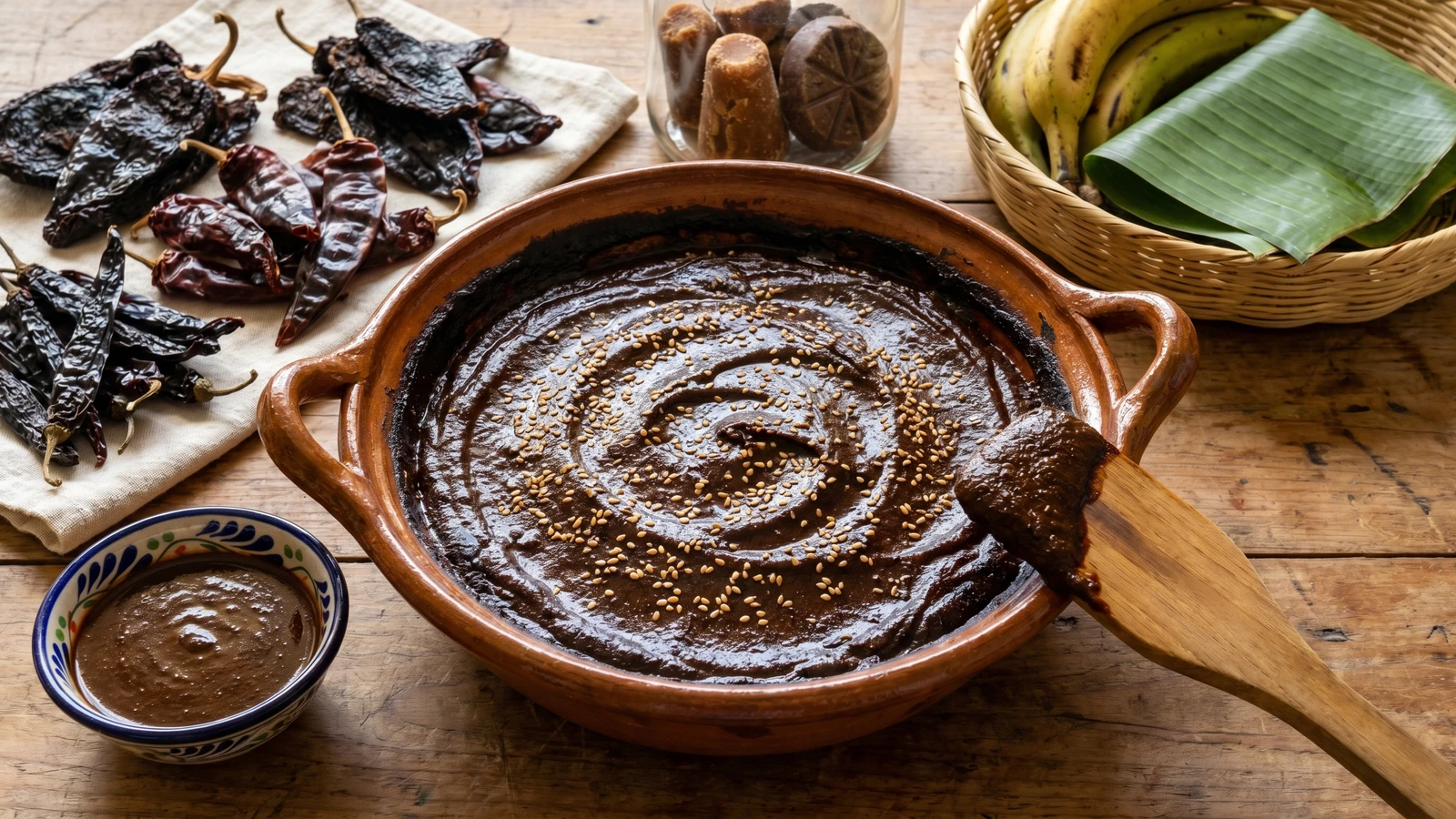
Veracruz's mountain-town mole paste from Xico, dark and glossy with chile ancho, mulato, plantain, chocolate, almonds, raisins, sesame, piloncillo, and the slow patience of festival kitchens.
Veracruz, the central mountain region around Xico, Coatepec, and Xalapa. That is where this mole lives. Not on the beach, not in a generic Mexican restaurant, but in the cool coffee hills where the market smells of dried chiles, piloncillo, banana leaves, and wet barro after rain.
Mole xiqueño is sweet, yes, but don't confuse it with chocolate sauce. The backbone is chile ancho and chile mulato, toasted until their oils wake up, then balanced with plantain, raisins, almonds, sesame, peanuts, piloncillo, Mexican chocolate, canela, clove, and black pepper. The sweetness is not decoration. It is Veracruz speaking: sugarcane, plantain, port spices, and mountain kitchens in one cazuela.
I learned this version from a señora near the Xico market who stirred her paste with a wooden pala and watched the surface more than the clock. She told me, 'Cuando brilla, ya entendió.' When it shines, it has understood. That is the lesson. You fry, grind, blend, and cook until the fat separates and the paste turns dark and glossy. No me vengas con atajos. This paste is made ahead for fiestas, baptisms, weddings, and the days when a family needs to feed half the street.
Make the paste one day, cook the sauce the next. Veracruz cooks know this. Cada estado, su propia cocina.
Mole xiqueño is tied to Xico, Veracruz, a Pueblo Mágico near Xalapa whose patronal feast for Santa María Magdalena in July is one of the town's major culinary moments. The dish reflects Veracruz's position as a Gulf port state: Old World spices such as canela, clove, and black pepper entered through trade, while plantain, sugarcane, sesame, and local nuts joined the older Mexican practice of grinding chiles into complex sauces. Unlike Puebla's mole poblano or Oaxaca's mole negro, mole xiqueño is recognized for its pronounced sweetness and glossy paste form, often sold by weight in Xico and carried home to be thinned with broth.
Quantity
8
stemmed, seeded, and wiped clean
Quantity
6
stemmed, seeded, and wiped clean
Quantity
3
stemmed, seeded, and wiped clean
Quantity
1/2 cup, plus more for serving
Quantity
1/2 cup
Quantity
1/2 cup
Quantity
1/3 cup
Quantity
1/2 cup
Quantity
1
peeled and sliced
Quantity
1
torn into pieces
Quantity
1 small bolillo or 2 slices
torn into pieces
Quantity
1 medium
sliced
Quantity
6
peeled
Quantity
2
halved
Quantity
1 tablet, about 3 ounces
chopped
Quantity
4 ounces
grated or chopped
Quantity
1 stick, about 3 inches
Quantity
4
Quantity
6
Quantity
3
Quantity
1/2 teaspoon
Quantity
1/2 teaspoon
Quantity
1/4 teaspoon
Quantity
1/4 teaspoon
Quantity
1/2 teaspoon, plus more to taste
Quantity
1 cup
divided
Quantity
4 to 5 cups
as needed for blending and finishing
Quantity
for serving
| Ingredient | Quantity |
|---|---|
| dried chile anchostemmed, seeded, and wiped clean | 8 |
| dried chile mulatostemmed, seeded, and wiped clean | 6 |
| dried chile pasilla mexicanostemmed, seeded, and wiped clean | 3 |
| sesame seeds | 1/2 cup, plus more for serving |
| raw peanuts | 1/2 cup |
| blanched almonds | 1/2 cup |
| pecans or walnuts | 1/3 cup |
| raisins | 1/2 cup |
| ripe plantainpeeled and sliced | 1 |
| corn tortillatorn into pieces | 1 |
| small bolillo or day-old white breadtorn into pieces | 1 small bolillo or 2 slices |
| white onionsliced | 1 medium |
| garlic clovespeeled | 6 |
| Roma tomatoeshalved | 2 |
| Mexican chocolate tabletchopped | 1 tablet, about 3 ounces |
| piloncillograted or chopped | 4 ounces |
| Mexican cinnamon stick | 1 stick, about 3 inches |
| whole cloves | 4 |
| black peppercorns | 6 |
| allspice berries | 3 |
| anise seed | 1/2 teaspoon |
| dried Mexican oregano | 1/2 teaspoon |
| dried thyme | 1/4 teaspoon |
| dried marjoram | 1/4 teaspoon |
| kosher salt | 1/2 teaspoon, plus more to taste |
| manteca de cerdodivided | 1 cup |
| warm chicken brothas needed for blending and finishing | 4 to 5 cups |
| cooked chicken, turkey, pork, or enchiladas (optional) | for serving |
Open the chile ancho, chile mulato, and chile pasilla with kitchen scissors. Remove stems, seeds, and veins. Wipe the skins with a barely damp cloth. Do not rinse them under water. You paid for flavor, not laundry.
Heat a dry comal over medium. Toast the chiles one at a time, pressing each flat for a few seconds per side until the skin softens, darkens slightly, and smells deep and fruity. The ancho will smell like raisins. The mulato will smell darker, almost like tobacco and dried fruit. Do not blacken them. Burned chile turns mole bitter and nobody at the table will forget it.
Place the toasted chiles in a bowl and cover with hot water for 20 minutes. Hot, not boiling. Boiling water roughens the skins and pulls out bitterness. Drain the chiles and save 1 cup of the soaking liquid only if it tastes clean. If it tastes bitter, throw it out and use broth.
On the same comal, toast the sesame seeds until pale gold and fragrant. Transfer them to a bowl. Toast the peanuts, almonds, and pecans or walnuts separately until they smell warm and nutty. Separate toasting matters because sesame burns before almonds even wake up. This is how you build flavor without wrecking it.
Melt 1/3 cup manteca de cerdo in a wide cazuela or heavy skillet over medium heat. Fry the plantain slices until deeply golden on both sides. Remove them. In the same fat, fry the tortilla pieces and bolillo until browned, then fry the raisins just until they puff. Pull them out quickly. Raisins go from plump to scorched in seconds.
Add the onion and garlic to the cazuela and cook until the onion softens and takes color at the edges. Add the tomato halves cut side down and cook until the skins wrinkle and the flesh slumps. You are not making tomato sauce. The tomato is there for roundness and acidity, not for color.
Toast the canela, cloves, black peppercorns, allspice, and anise seed on the comal for 30 to 45 seconds, just until fragrant. Grind them with the Mexican oregano, thyme, marjoram, and salt in a spice grinder or molcajete. The spice should smell warm and direct, not dusty.
Blend the soaked chiles with enough warm chicken broth to move the blades. Pour into a large bowl. Blend the nuts, sesame, plantain, tortilla, bread, raisins, onion, garlic, tomato, ground spices, chocolate, and piloncillo in batches, adding broth only as needed. Blend longer than you think. Mole paste should be smooth enough to coat a spoon, not gritty like beach sand.
Pass the blended mixtures through a medium or fine-mesh strainer into one bowl, pressing hard with a spoon. This is work. La cocina no es decoración, es trabajo. The strainer catches chile skins and stubborn nut pieces that would make the finished paste rough.
Melt the remaining 2/3 cup manteca de cerdo in a deep, heavy cazuela over medium heat. Add the strained mole puree carefully. It will sputter. Stir with a wooden paddle or strong spoon, scraping the bottom constantly, until the paste darkens, thickens, and the fat begins to shine at the edges. This takes 45 to 60 minutes. If you stop too early, the mole tastes raw.
Lower the heat and keep stirring until the mole becomes a thick, glossy paste that pulls away from the bottom of the cazuela for a second before settling back. Taste for salt. It should be sweet, dark, and chile-forward, with the spice behind it. Mole is not chocolate sauce. The chocolate supports the chiles. Así se hace y punto.
To store, cool the paste completely and pack it into clean jars with a thin layer of melted lard over the top. Refrigerate up to 2 weeks or freeze up to 3 months. To serve, thin 1 cup paste with 2 to 3 cups warm chicken broth in a cazuela, simmer 20 minutes, and spoon over cooked chicken, turkey, pork, or enchiladas. Sprinkle with toasted sesame seeds at the table.
1 serving (about 210g)
Culinary guides, cultural storytelling, and the editorial depth that makes cooking meaningful.
Discover Culinary ExplorerChef Lupita
Baja California's wild chiltepin steeped in olive oil with garlic, orejon, and lime peel, until the oil turns ruby-amber and carries the slow, sneaky burn of the desert coast.

Chef Lupita
Puebla's Lenten convent adobo, a brick-red vinegar chile paste of ancho, guajillo, garlic, oregano, and comino made to dress fish for the meatless calendar.
Chef Lupita
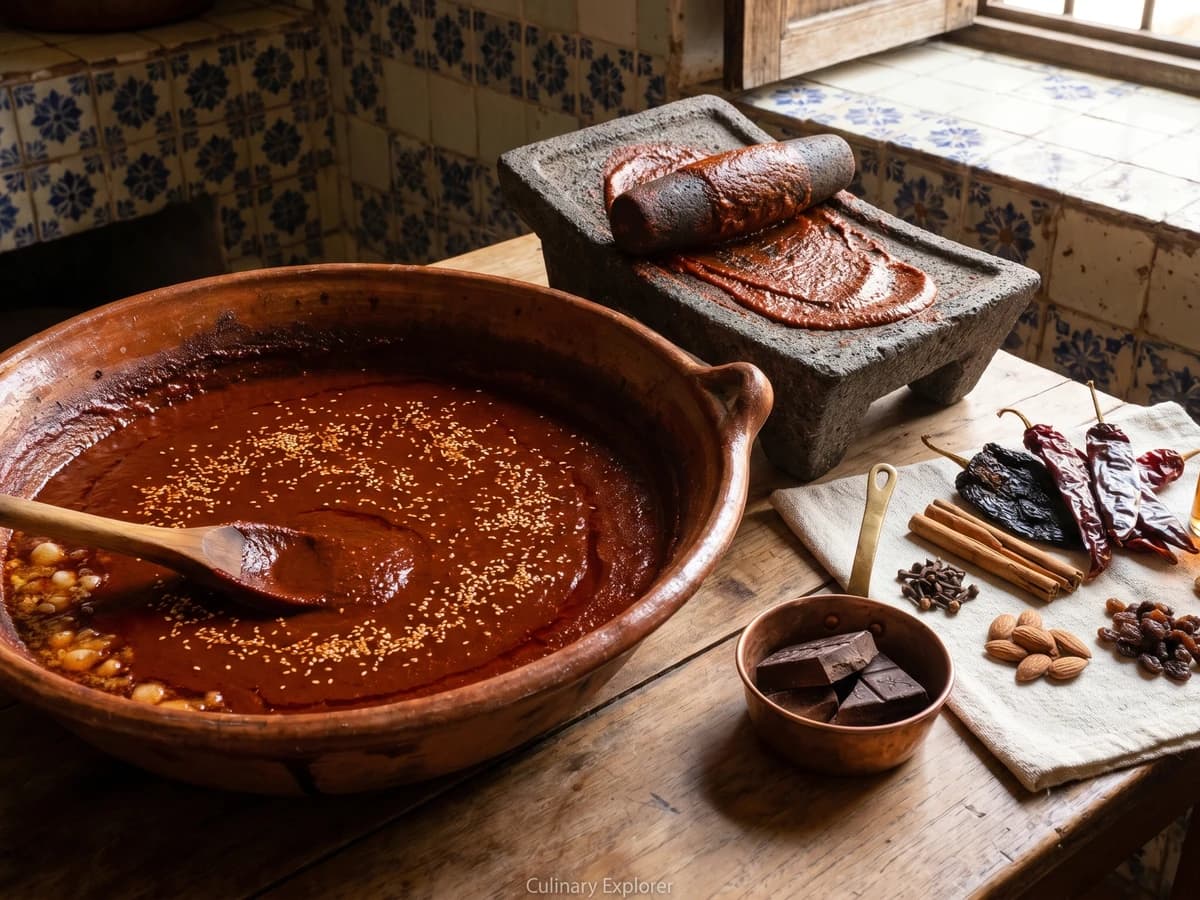
Zacatecas' wedding-table adobo, built from toasted guajillo and ancho, piloncillo, sour orange, chocolate, canela, clavo, almonds, sesame, and lard.

Chef Lupita
Puebla's convent kitchens built this adobo with ancho, guajillo, jerez, almonds, raisins, clove, and lard, a baroque marinade that stains pork loin and finishes as the sauce.