
Chef Graziella
Anelletti al Forno
The Sunday pasta of Palermo, where tiny rings of dried pasta bake with meat ragù, sweet peas, and melting cheese until a burnished crust forms that families fight over at the table.
A cooking platform built around craft, culture, and the stories behind what we eat.

Created by
Sicily's gift to the pasta canon: golden fried eggplant, honest tomato sauce, the sharp salt of aged ricotta, and basil that perfumes every bite. Named for an opera because it deserved the honor.
The Sicilians do not apologize for frying. They understand that eggplant, properly salted and fried in good olive oil until the edges crisp and the flesh turns silken, becomes something miraculous. Baked eggplant is a concession to guilt. Fried eggplant is a commitment to flavor.
This is a dish of contrasts that somehow harmonize: the sweetness of tomatoes against the meatiness of eggplant, the sharpness of ricotta salata cutting through the richness, fresh basil lifting everything with its green perfume. Each element is simple. Together they create something greater than their parts.
The garlic here is a whisper. You crush the cloves, warm them in oil until they release their fragrance, then remove them. What remains is essence, not presence. Sicilian cooking, like all Italian regional cooking, shows restraint where it matters. The eggplant is the star. Give it the stage.
Pasta alla Norma takes its name from Vincenzo Bellini's 1831 opera, considered his masterpiece. The dish originated in Catania, Bellini's birthplace, where the Sicilian playwright Nino Martoglio supposedly exclaimed 'This is a Norma!' upon tasting it, the highest compliment he could imagine. Whether the story is true matters less than what it reveals: Catanians believe this dish worthy of their greatest composer.
Quantity
2 medium (about 1 1/2 pounds total)
Quantity
for salting eggplant and pasta water
Quantity
1 cup, plus more as needed for frying
Quantity
3
peeled and lightly crushed
Quantity
1 can (28 ounces)
crushed by hand
Quantity
1 small handful, plus more for serving
Quantity
to taste
freshly ground
Quantity
1 pound
Quantity
4 ounces
grated or shaved
| Ingredient | Quantity |
|---|---|
| globe eggplants | 2 medium (about 1 1/2 pounds total) |
| kosher salt | for salting eggplant and pasta water |
| extra virgin olive oil | 1 cup, plus more as needed for frying |
| garlic clovespeeled and lightly crushed | 3 |
| San Marzano tomatoescrushed by hand | 1 can (28 ounces) |
| fresh basil leaves | 1 small handful, plus more for serving |
| black pepperfreshly ground | to taste |
| rigatoni or penne rigate | 1 pound |
| ricotta salatagrated or shaved | 4 ounces |
Slice the eggplants into rounds about half an inch thick. Layer them in a colander set over a bowl, salting each layer generously. Place a plate on top and weight it with something heavy, a can of tomatoes works well. Let stand for at least 30 minutes, preferably one hour. The eggplant will release bitter liquid and collapse slightly. This step is not optional.
Rinse the eggplant slices briefly under cold water to remove excess salt. Pat them very dry with clean kitchen towels. Press firmly. Any moisture remaining on the surface will cause the oil to spatter and prevent proper browning. The slices should feel almost leathery.
Pour olive oil into a large skillet to a depth of about one quarter inch. Heat over medium-high until the oil shimmers and a small piece of eggplant sizzles immediately when dropped in. Working in batches to avoid crowding, fry the eggplant slices until deep golden brown on both sides, about 3 minutes per side. The color should be the brown of well-toasted bread, not pale gold. Transfer to a plate lined with paper towels. Add more oil between batches as needed.
Pour off all but three tablespoons of oil from the skillet. Add the crushed garlic cloves and cook over medium heat until they turn pale gold and perfume the oil, about 2 minutes. Remove and discard the garlic. Add the crushed tomatoes carefully, as they will sputter. Season with salt and a few grindings of pepper. Let the sauce simmer, stirring occasionally, until it thickens and the raw tomato taste cooks away, about 20 minutes. Tear the basil leaves and stir them in during the last 5 minutes.
Bring a large pot of water to a vigorous boil. Salt it until it tastes like the sea. Add the rigatoni and cook, stirring occasionally, until it retains a firm core, about one minute less than the package suggests. Reserve one cup of pasta cooking water before draining.
Cut the fried eggplant into rough strips or bite-sized pieces. Add the drained pasta directly to the skillet with the tomato sauce. Toss over medium heat for one minute, adding splashes of pasta water to help the sauce cling. Fold in most of the eggplant pieces, reserving some for the top. Divide among warm bowls. Top each serving with the reserved eggplant, a generous snowfall of grated ricotta salata, and fresh basil leaves. Serve immediately. Once the pasta is sauced, invite your guests to put off talking and start eating.
1 serving (about 550g)
Culinary guides, cultural storytelling, and the editorial depth that makes cooking meaningful.
Discover Culinary ExplorerChef Graziella
The Sunday pasta of Palermo, where tiny rings of dried pasta bake with meat ragù, sweet peas, and melting cheese until a burnished crust forms that families fight over at the table.

Chef Graziella
Golden fried rice balls from Sicily, where Arab cooks first wrapped saffron-scented rice around meat and cheese. The exterior shatters; the interior yields. This is street food elevated to art.
Chef Graziella
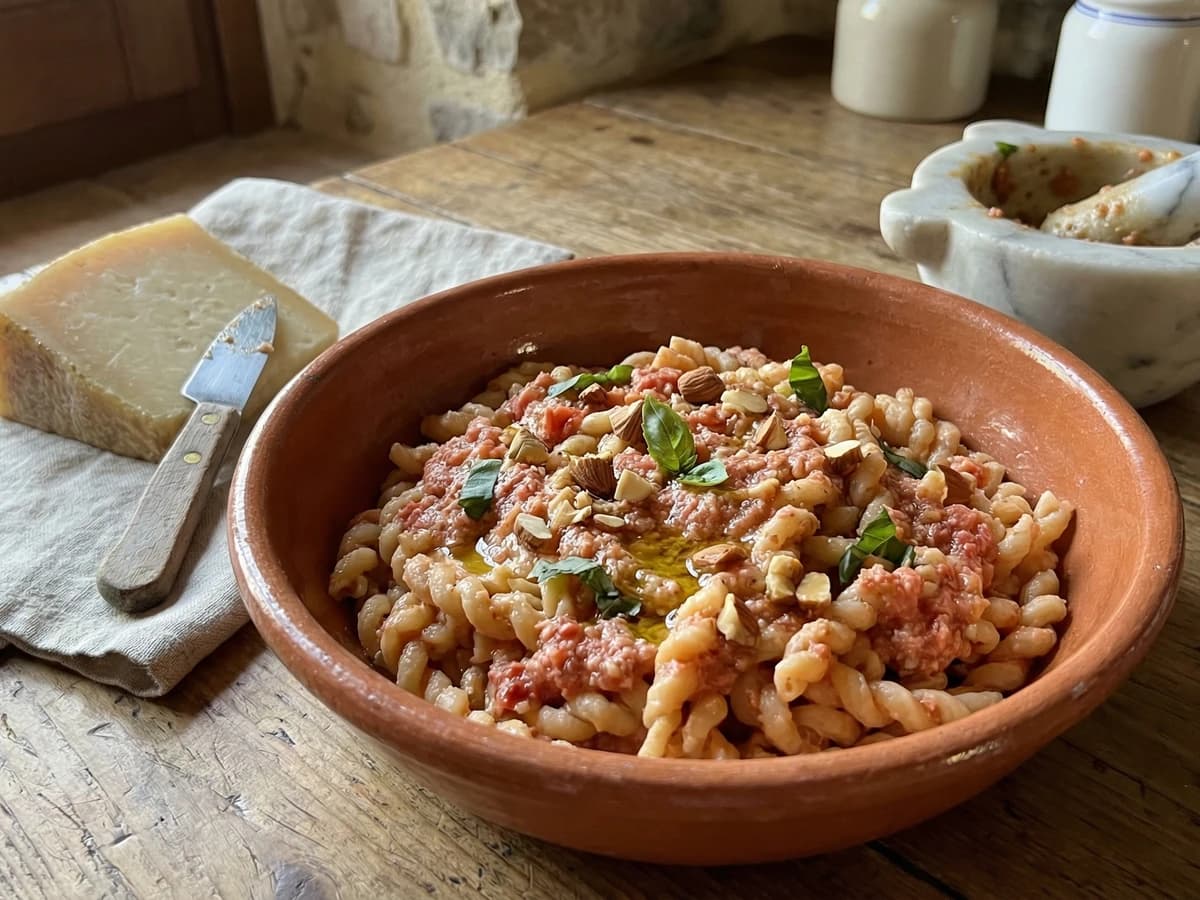
Sicily's raw tomato and almond pesto, pounded in a mortar as it has been for centuries, tossed with hand-twisted pasta that traps the sauce in every spiral. Trapani's gift to the world.

Chef Graziella
The great sweet-sour eggplant dish of Sicily, where each vegetable is fried separately then united in a tomato sauce sharpened with vinegar and softened with a little sugar. This is not a recipe to rush.