
Chef Graziella
Anguilla Arrosto alla Comacchiese
The legendary roasted eel of Comacchio, where the brackish lagoons of the Po Delta have produced Italy's finest anguilla for two thousand years. Bay leaves, salt, fire. Nothing more.
A cooking platform built around craft, culture, and the stories behind what we eat.
Created by
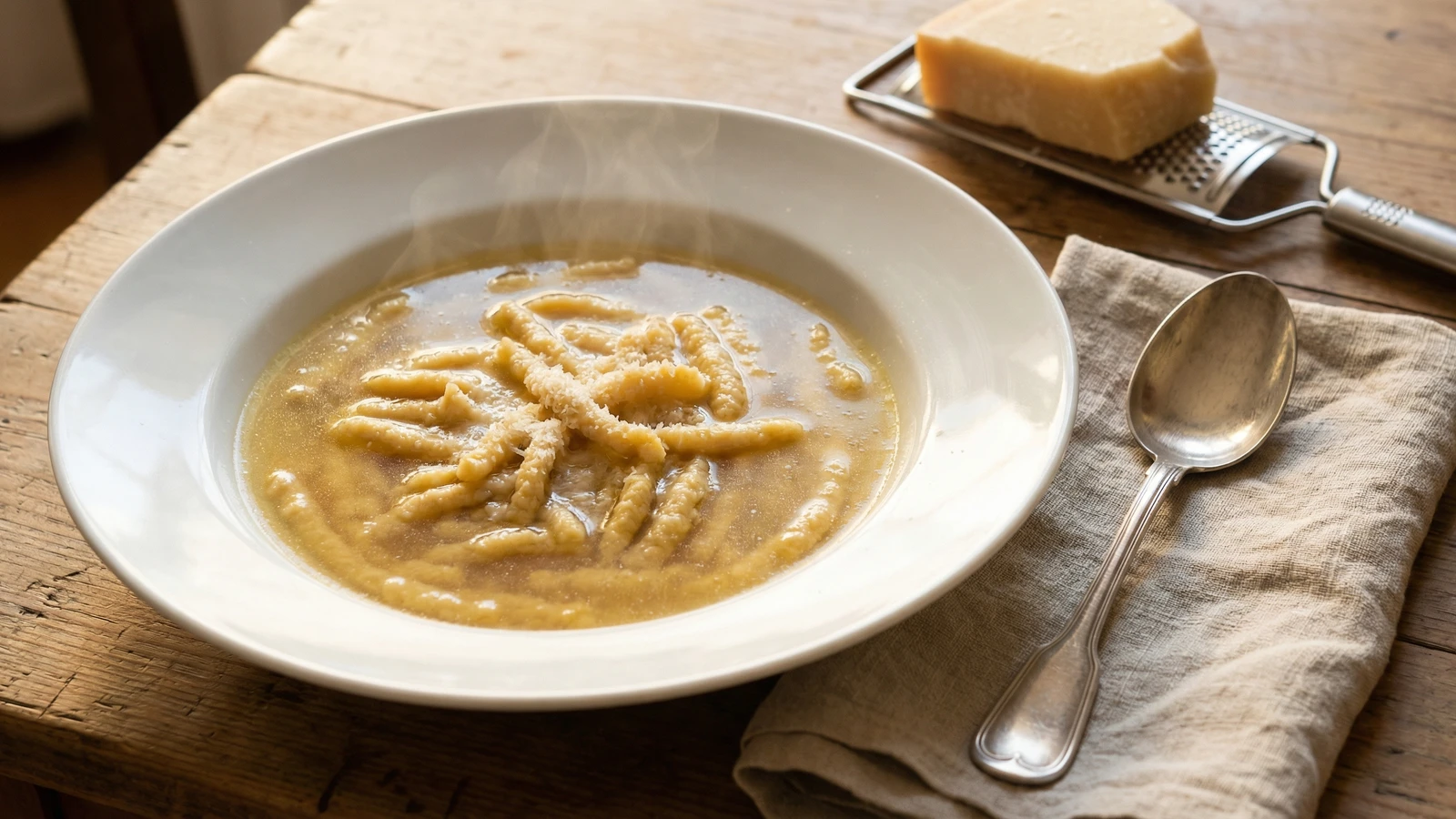
Breadcrumbs, aged Parmigiano, and eggs pressed directly into simmering broth. The first food of my childhood in Romagna, and the last food I would give up.
Passatelli is not pasta, though it acts like pasta. It is not a dumpling, though it has that softness. It is something else entirely: breadcrumbs bound with Parmigiano-Reggiano and egg, pushed through a special press directly into simmering broth, where it cooks in under two minutes and must be eaten at once.
Every grandmother in Romagna makes passatelli. They argue about whether to add lemon zest (I say yes), whether beef marrow belongs in the mixture (I say no), and whether the broth should be chicken or capon (capon if you can find one, chicken if you cannot). These arguments have continued for generations. They will continue after we are gone.
The dish cannot wait. Passatelli begin absorbing broth the moment they hit the bowl. Within five minutes they swell and soften. Within ten they become something else, still edible but not the same. You call your family to the table before you press the dough. They come immediately or they miss it.
Simple does not mean easy. The dough must be exactly right: firm enough to hold together in the press, soft enough to cook through quickly. The broth must simmer, never boil. The timing must be precise. These are not difficulties. They are the conditions of the dish.
Passatelli emerged in the provinces of Romagna, Marche, and parts of Umbria, where Parmigiano-Reggiano was abundant and stale bread was never wasted. The dish appears in regional cookbooks from the late 19th century but was certainly made in farmhouse kitchens long before anyone thought to write it down. The iron press, with its distinctive wide holes, became a wedding gift passed from mother to daughter.
Quantity
1 (about 4 pounds)
Quantity
1 pound
Quantity
2 medium
scrubbed and halved
Quantity
2
halved
Quantity
1 medium
halved and studded with 2 whole cloves
Quantity
1
halved
Quantity
6
Quantity
1 small bunch
Quantity
to taste
Quantity
1 1/2 cups (about 150 grams)
Quantity
1 1/2 cups (about 150 grams)
freshly grated
Quantity
3
Quantity
1/4 teaspoon
freshly grated
Quantity
from 1 small lemon
finely grated
Quantity
pinch
Quantity
for the table
freshly grated
| Ingredient | Quantity |
|---|---|
| whole chicken or capon | 1 (about 4 pounds) |
| beef bones with marrow | 1 pound |
| carrotsscrubbed and halved | 2 medium |
| celery stalks with leaveshalved | 2 |
| yellow onionhalved and studded with 2 whole cloves | 1 medium |
| ripe tomatohalved | 1 |
| whole black peppercorns | 6 |
| flat-leaf parsley stems | 1 small bunch |
| kosher salt | to taste |
| fine dry breadcrumbs | 1 1/2 cups (about 150 grams) |
| Parmigiano-Reggianofreshly grated | 1 1/2 cups (about 150 grams) |
| large eggs | 3 |
| nutmegfreshly grated | 1/4 teaspoon |
| lemon zestfinely grated | from 1 small lemon |
| fine sea salt | pinch |
| Parmigiano-Reggiano for servingfreshly grated | for the table |
Place the chicken and beef bones in a large stockpot. Cover with cold water by three inches, about five quarts. Set over medium-high heat and bring slowly to a simmer. This takes 30 to 40 minutes. Do not let it boil. As foam rises to the surface, skim it away with a ladle. Continue skimming until no more foam appears. This patient removal of impurities is what makes a clear, golden broth.
Once the broth is skimmed, add the carrots, celery, clove-studded onion, tomato, peppercorns, and parsley stems. Reduce heat to maintain the gentlest simmer, with bubbles barely breaking the surface. Simmer uncovered for 2 1/2 to 3 hours. The broth should reduce by about one-third and turn deep gold.
Strain the broth through a fine-mesh sieve lined with cheesecloth into a clean pot. Discard the solids or reserve the chicken meat for another use. Season the broth with salt. It should taste full and satisfying on its own. You need about 10 cups of finished broth. If you have less, add water. If more, you are fortunate.
In a large bowl, combine the breadcrumbs and grated Parmigiano. Mix thoroughly with your hands. Make a well in the center. Add the eggs, nutmeg, lemon zest, and salt. Beat the eggs lightly with a fork, then gradually incorporate the dry mixture until a soft, slightly sticky dough forms. It should hold together when squeezed but not feel wet. If too dry, add another half egg. If too wet, add breadcrumbs by the tablespoon.
Turn the dough onto a clean surface and knead briefly, just until it comes together into a smooth ball. Wrap in plastic and let rest at room temperature for 30 minutes. This rest allows the breadcrumbs to absorb the eggs fully. The dough will be easier to press.
Bring the strained broth to a steady simmer. It should bubble gently but not boil. Boiling broth makes the passatelli fall apart. Divide the dough into portions that fit comfortably in your press or potato ricer.
Hold the press directly over the simmering broth. Press the dough through in one firm, steady motion, cutting the passatelli into lengths of about two inches as they emerge. Use a knife or your finger to break them cleanly. They will sink, then float when cooked. This takes 60 to 90 seconds. Work in batches if your pot is small.
The moment the passatelli float and have cooked for one minute more, ladle them into warm bowls with generous amounts of the golden broth. Passatelli wait for no one. They absorb liquid and lose their texture within minutes. Pass Parmigiano-Reggiano at the table for those who want more. There is always someone who wants more.
1 serving (about 450g)
Culinary guides, cultural storytelling, and the editorial depth that makes cooking meaningful.
Discover Culinary ExplorerChef Graziella
The legendary roasted eel of Comacchio, where the brackish lagoons of the Po Delta have produced Italy's finest anguilla for two thousand years. Bay leaves, salt, fire. Nothing more.
Chef Graziella
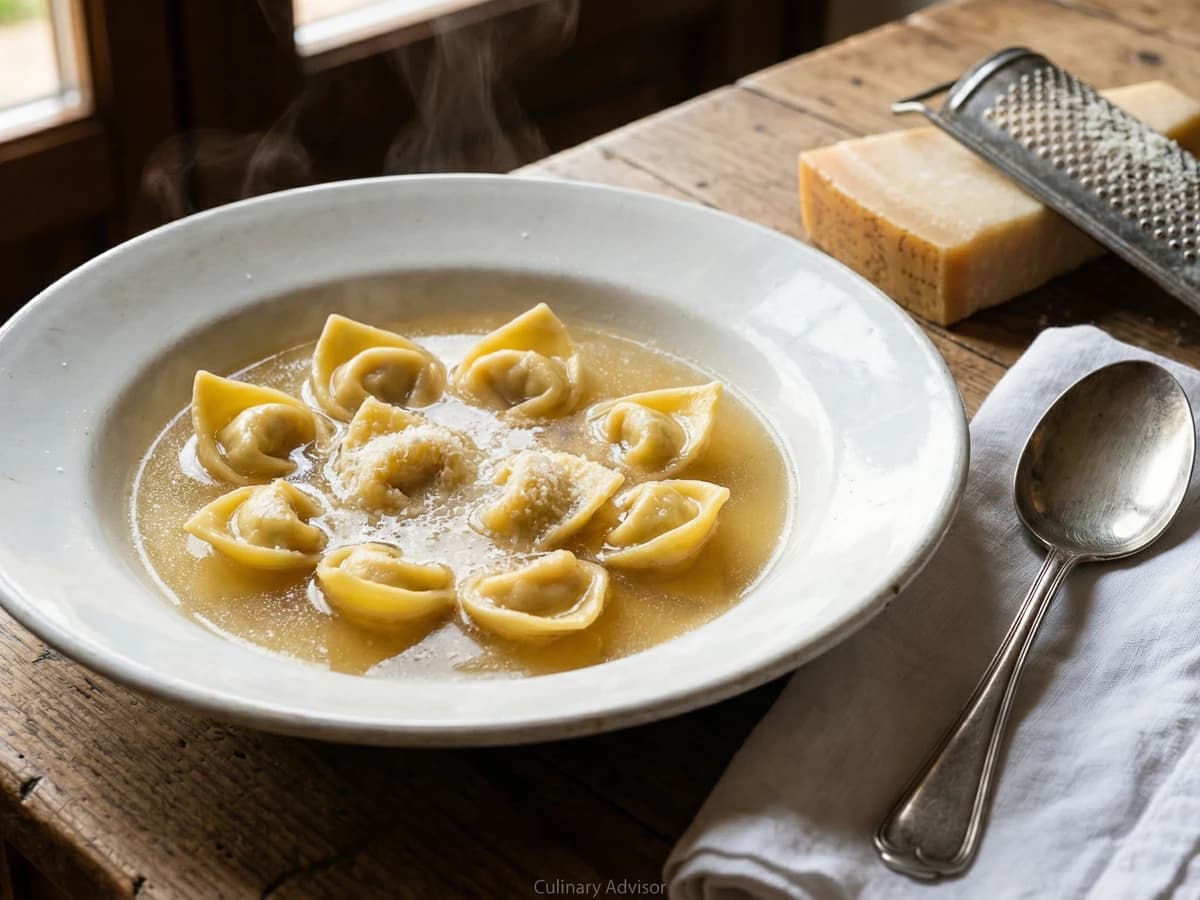
The cheese-filled pasta of Romagna, folded into little hats and floated in golden capon broth. This is Christmas dinner along the Adriatic, where the distinction between tortellini and cappelletti is a matter of regional pride.

Chef Graziella
The mixed seafood fry of the Adriatic, where shrimp, squid, and small fish wear only a whisper of flour before meeting hot oil. Served immediately with lemon wedges. Nothing more.

Chef Graziella
The pride of Romagna: a simple dough of breadcrumbs, aged cheese, and eggs pressed into simmering broth, creating something that defies category. Three ingredients transformed by technique into comfort itself.