
Chef Makoa
He Kao Kūtai (Māori Green-Lipped Mussel Fritters)
Green-lipped mussels from Aotearoa, chopped through a simple batter with onion and parsley, fried crisp at the edges and eaten with lemon while the whānau is still reaching.
A cooking platform built around craft, culture, and the stories behind what we eat.
Created by
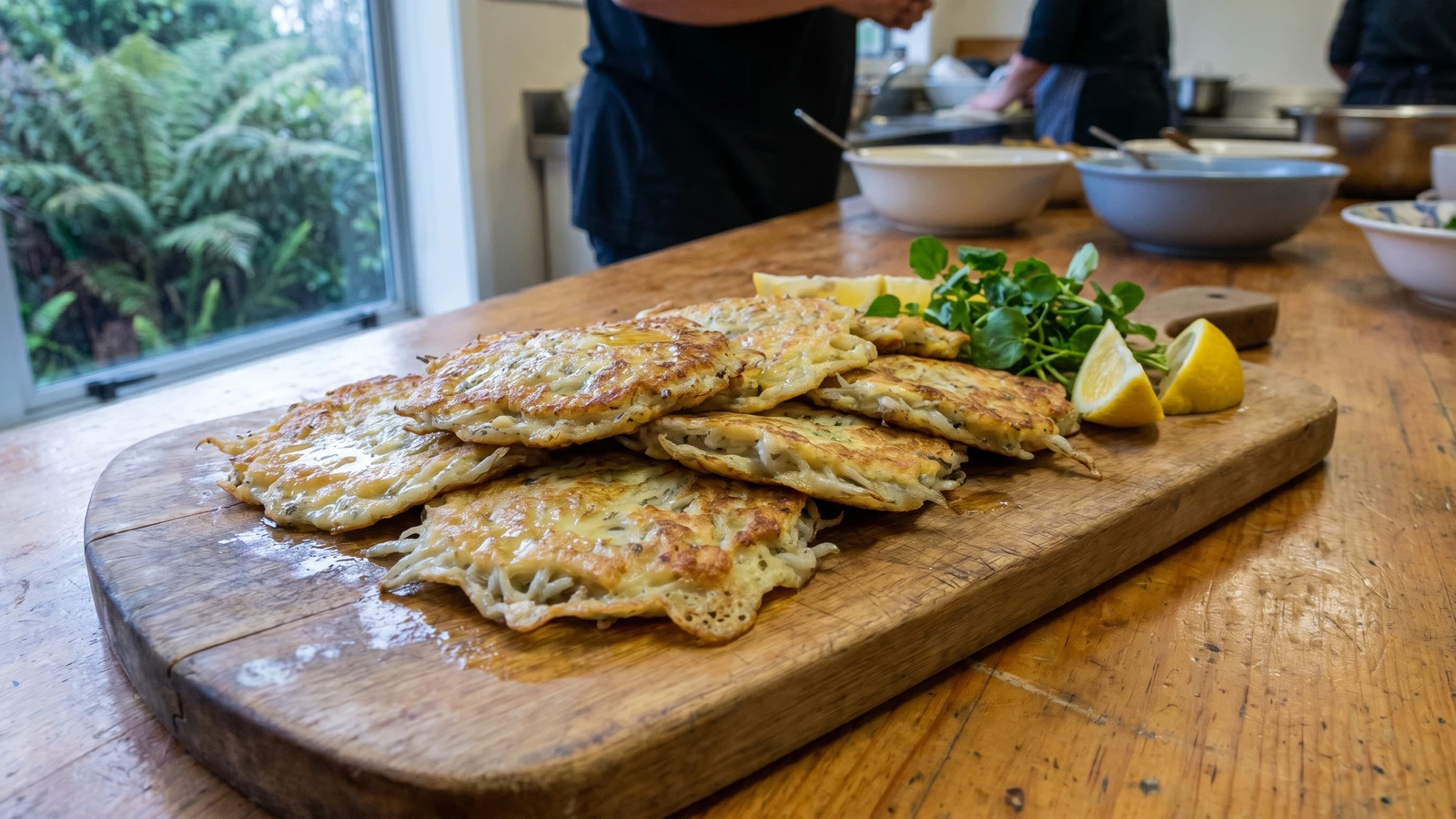
Aotearoa's tiny river whitebait, barely bound with egg and fried quick so they stay tender. Parai īnanga is Māori kai from the spring run, eaten hot at the whānau table.
The river has its own relatives, and in Aotearoa those tiny shining ones are īnanga, whitebait moving between freshwater and the sea. This is Māori kai, from the cold rivers and estuaries of Aotearoa, not my island's food, so I cook it open-handed and say it plain: for the deep tikanga, the right protocols and teachings around gathering, go sit with Māori elders and the whānau who hold that river.
I learned this one at a table where nobody made it precious. A bowl of whitebait, an egg, a little salt, sometimes a spoon of flour, and the pan hot enough to set the edges before the fish toughen. That's the whole wisdom. You don't bury the īnanga under batter. You let the river show.
Across the Triangle, every island has its small gathered kai, the reef fish, the shellfish, the fry, the things taken with timing and care. Back home I think of the reef and the moon; in Aotearoa the river mouth teaches the same lesson in a colder tongue. ʻĀina, kānaka, meaʻai, land, people, food. Or here, whenua, whānau, kai. Same law, different shore.
So fry them quick, eat them right away, and no waste what the river gave. A little bread, a squeeze of lemon if that's your table, watercress on the side. Warm, unfussy, real. One ocean, one canoe, one root, and each island still gets to speak in its own voice.
Īnanga, often called whitebait in Aotearoa, are juvenile native galaxiid fish that move between sea and river, and their spring runs have long been prized by Māori communities along estuaries and river mouths. The modern fritter, bound with egg and sometimes a little flour, reflects the colonial pantry meeting older gathered kai, a practical home form rather than a ceremonial hāngī food. Today the fishery is regulated because several whitebait species are under pressure, so sourcing by season, place, and local rules matters as much as the frying.
Quantity
1 pound
gently rinsed only if needed and well drained
Quantity
2
lightly beaten
Quantity
1 tablespoon
only if the mixture needs help holding
Quantity
1/2 teaspoon
Quantity
to taste
Quantity
2 tablespoons
Quantity
1 tablespoon
Quantity
for serving
Quantity
for serving
| Ingredient | Quantity |
|---|---|
| fresh whitebait (īnanga)gently rinsed only if needed and well drained | 1 pound |
| large eggslightly beaten | 2 |
| all-purpose flour or rice flour (optional)only if the mixture needs help holding | 1 tablespoon |
| sea salt | 1/2 teaspoon |
| freshly ground black pepper | to taste |
| butter | 2 tablespoons |
| neutral oil | 1 tablespoon |
| lemon wedges (optional) | for serving |
| watercress or pūhā (optional) | for serving |
Lay the whitebait in a sieve and let them drain well, then pat them gently with a clean towel if they are wet. Don't bruise them. These fish are tiny and tender, and water in the bowl makes the fritter spit in the pan instead of setting clean.
Beat the eggs with the salt and pepper, then fold in the īnanga. Add the flour only if the mixture looks too loose to hold together. The egg is there to carry the fish, not hide it. You should still see mostly silver-white little bodies, barely coated and glossy.
Set a heavy skillet over medium-high heat and add the butter and oil. When the butter foams and settles into a nutty shine, the pan is ready. Too cool and the fritters drink fat. Too hot and the edges brown before the middle sets.
Spoon in small fritters, about a quarter cup each, and flatten them lightly. Cook 1 to 2 minutes per side, just until the edges turn crisp and golden and the center sets soft. No need cook them hard. The īnanga should stay tender, not dry.
Lift the fritters to a warm plate or wooden board and salt them lightly while the surface still shines. Serve with lemon wedges if your table likes that, and watercress or pūhā on the side. These are best eaten from the pan, while the edges still have a little crisp under your teeth.
1 serving (about 140g)
Culinary guides, cultural storytelling, and the editorial depth that makes cooking meaningful.
Discover Culinary ExplorerChef Makoa
Green-lipped mussels from Aotearoa, chopped through a simple batter with onion and parsley, fried crisp at the edges and eaten with lemon while the whānau is still reaching.

Chef Makoa
Aotearoa's prized pāua, minced fine and folded through a light egg batter, fried golden at the whānau table and eaten with lemon while the cold coast still feels close.

Chef Juliette
Tiny éperlans, lightly floured and fried until their tails stand crisp, arrive in a generous heap on a napkin with fried parsley and grooved lemon, a weeknight lesson in heat and restraint.

Chef Juliette
Brandade de Morue turns salt cod, warm olive oil, and milk into a pale, silky emulsion: keep everything warm and add the oil slowly, then crown the generous dome with butter-fried bread.