Chef Juliette
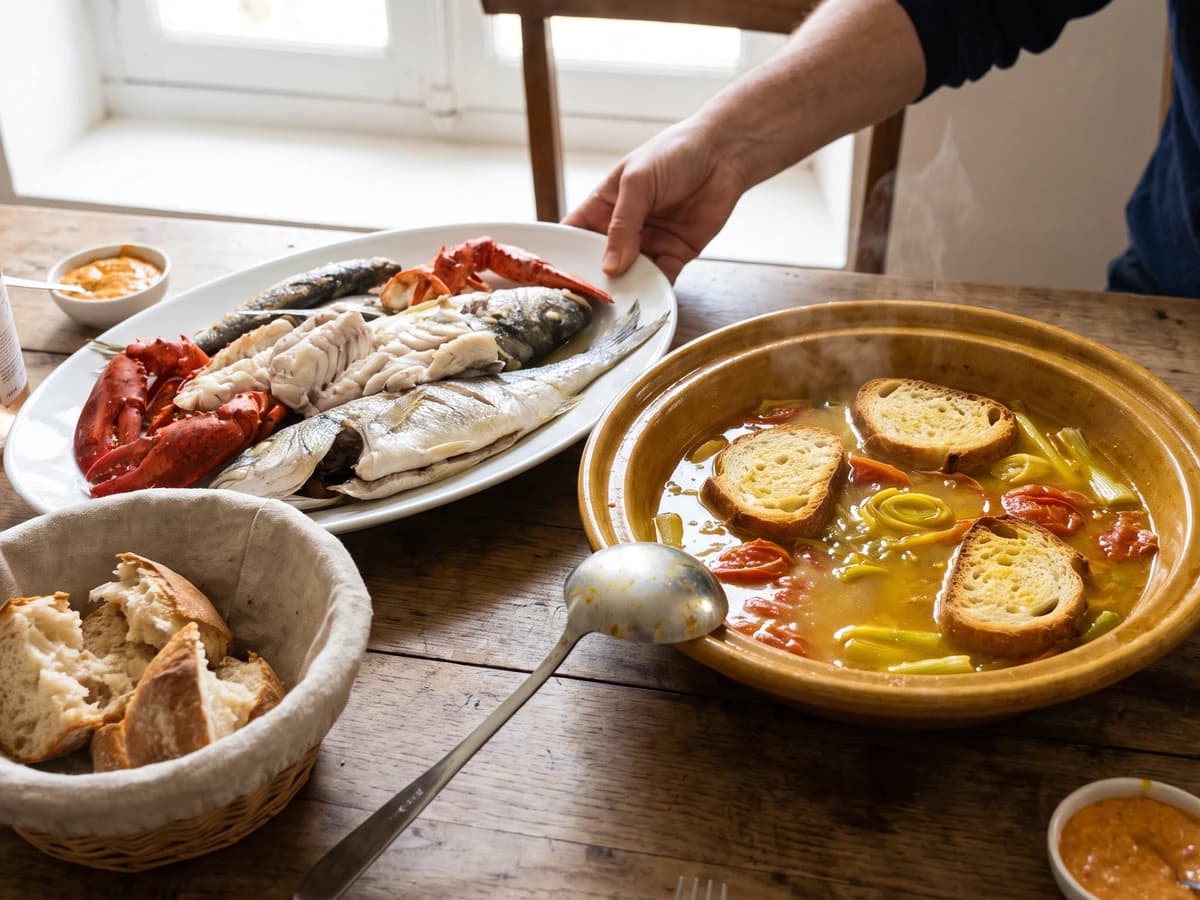
Bouillabaisse à la Marseillaise
Marseille's great fish stew, saffron-gold and garlic-scented, proves that a hard boil can be the careful choice: it binds olive oil into broth before the whole pot meets bread.
A cooking platform built around craft, culture, and the stories behind what we eat.
Created by
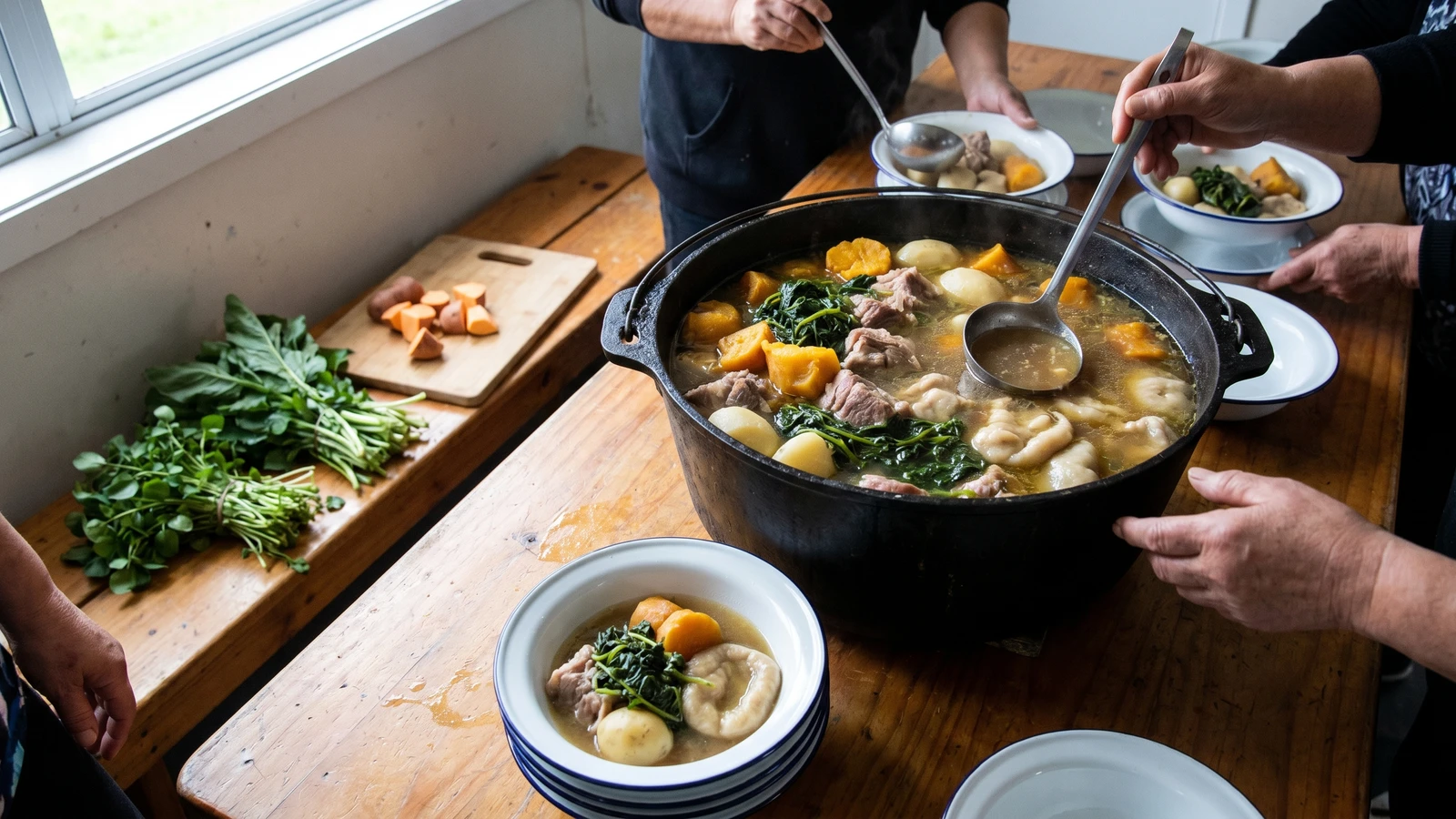
Aotearoa's whānau pot: pork bones simmered until the broth turns deep, pūhā or watercress folded through, kūmara soft at the edges, and doughboys floating heavy and tender.
The first time I sat at a Māori table for boil-up, I knew right away this was Aotearoa speaking in its own pot. Not Hawaiʻi. Not Sāmoa. Aotearoa, with the cold coast behind it, the bush close enough to smell after rain, and whānau, family, leaning over one big kōhua, the cooking pot, like the whole room had been waiting for that broth to come right.
Back home, my people talk to kalo as Hāloa, our elder brother. In Aotearoa the table leans different. Kūmara, the sweet potato carried by voyaging ancestors, stands closer to the center, and pūhā, the sow thistle gathered from field edges, brings that green bite that wakes up the pork. Same canoe memory, different ground. One ocean, one canoe, one root, but the island still has its own hand.
Boil-up is everyday kai, food, but don't mistake everyday for small. Pork bones give their fat and marrow to the water. The greens go in late enough to keep some life, long enough to soften their bitterness. The doughboys drop at the end and drink the broth until they sit heavy and good in the spoon. No need make it precious. This is the whānau pot, and the pot feeds whoever walks in.
I cook Māori kai open-handed, and for the deep tikanga, the right ways and obligations that sit around the marae table, I send you to Māori elders. They should tell their own story. I can stand beside the stove with you, keep the broth honest, and remind you what my kumu told me: Eat what you have. No blame the taro. Same law for the pot.
Boil-up is a living Māori one-pot kai from Aotearoa, shaped by older gathered foods like pūhā and watercress alongside post-contact pork, flour dumplings, and potatoes. Kūmara links the pot back to the voyaging world, since Māori ancestors carried and adapted sweet potato in a cooler southern climate where taro and breadfruit did not hold the same place. Like many island comfort foods, it shows the deep-food and mission-food line sitting in one bowl, older gathering knowledge beside the flour, pork, and potatoes that became part of how people actually eat now.
Quantity
3 pounds
Quantity
10 cups
plus more as needed
Quantity
1 large
quartered
Quantity
4
crushed
Quantity
2
Quantity
2 teaspoons
plus more to taste
Quantity
1 teaspoon
Quantity
1 1/2 pounds
peeled and cut into large chunks
Quantity
1 pound
peeled and cut into large chunks
Quantity
2 large
cut into thick pieces
Quantity
2 bunches
trimmed and rinsed well
Quantity
1 1/2 cups
Quantity
2 teaspoons
Quantity
1/2 teaspoon
Quantity
2 tablespoons
Quantity
2/3 cup
plus more if needed
| Ingredient | Quantity |
|---|---|
| meaty pork bones or pork neck bones | 3 pounds |
| cold waterplus more as needed | 10 cups |
| onionquartered | 1 large |
| garlic clovescrushed | 4 |
| bay leaves (optional) | 2 |
| sea saltplus more to taste | 2 teaspoons |
| black pepper | 1 teaspoon |
| kūmarapeeled and cut into large chunks | 1 1/2 pounds |
| potatoespeeled and cut into large chunks | 1 pound |
| carrotscut into thick pieces | 2 large |
| pūhā or watercresstrimmed and rinsed well | 2 bunches |
| all-purpose flour | 1 1/2 cups |
| baking powder | 2 teaspoons |
| sea salt, for the doughboys | 1/2 teaspoon |
| cold butter or pork fat | 2 tablespoons |
| cold water or milkplus more if needed | 2/3 cup |
Put the pork bones in a heavy pot with the cold water, onion, garlic, bay leaves if using, salt, and pepper. Bring it up slowly, then lower to a steady simmer. Skim the gray foam from the top until the broth clears and the pork smell turns clean and rich.
Let the bones simmer gently for about 1 hour 45 minutes, partly covered, until the meat starts to loosen and the broth has a glossy ring of pork fat on top. Keep the water level just above the bones. Don't boil it wild. A hard boil makes the broth cloudy and the meat tight.
Add the kūmara, potatoes, and carrots. Simmer 20 to 25 minutes, until the edges of the kūmara soften but the pieces still hold their shape. In Aotearoa, kūmara carries old canoe memory in a colder land, so treat it kind. Big chunks, gentle pot.
While the roots cook, mix the flour, baking powder, and salt in a bowl. Rub in the cold butter or pork fat with your fingertips until the flour feels like rough sand, then stir in the cold water or milk just until a soft, sticky dough forms. Stop there. Work it too much and the doughboys come out tough.
Taste the broth and salt it where it needs. Drop spoonfuls of dough over the surface, leaving room for them to swell. Cover the pot and simmer 12 to 15 minutes without lifting the lid, until the doughboys are puffed, set through, and heavy with broth.
Add the pūhā or watercress around the doughboys and press it down into the broth. Cover again for 5 to 8 minutes, just until the greens darken, soften, and lose their raw bite. Pūhā has a proud bitterness, same as some aunties have a proud mouth. You want it softened, not erased.
Lift the bones, roots, greens, and doughboys into deep bowls, then ladle the glossy broth over everything. Put the pot in the middle if the table is close enough. This is not one precious portion. It is kai for the whānau, and there should be enough broth for somebody to come back with bread.
1 serving (about 480g)
Culinary guides, cultural storytelling, and the editorial depth that makes cooking meaningful.
Discover Culinary ExplorerChef Juliette
Marseille's great fish stew, saffron-gold and garlic-scented, proves that a hard boil can be the careful choice: it binds olive oil into broth before the whole pot meets bread.
Chef Juliette
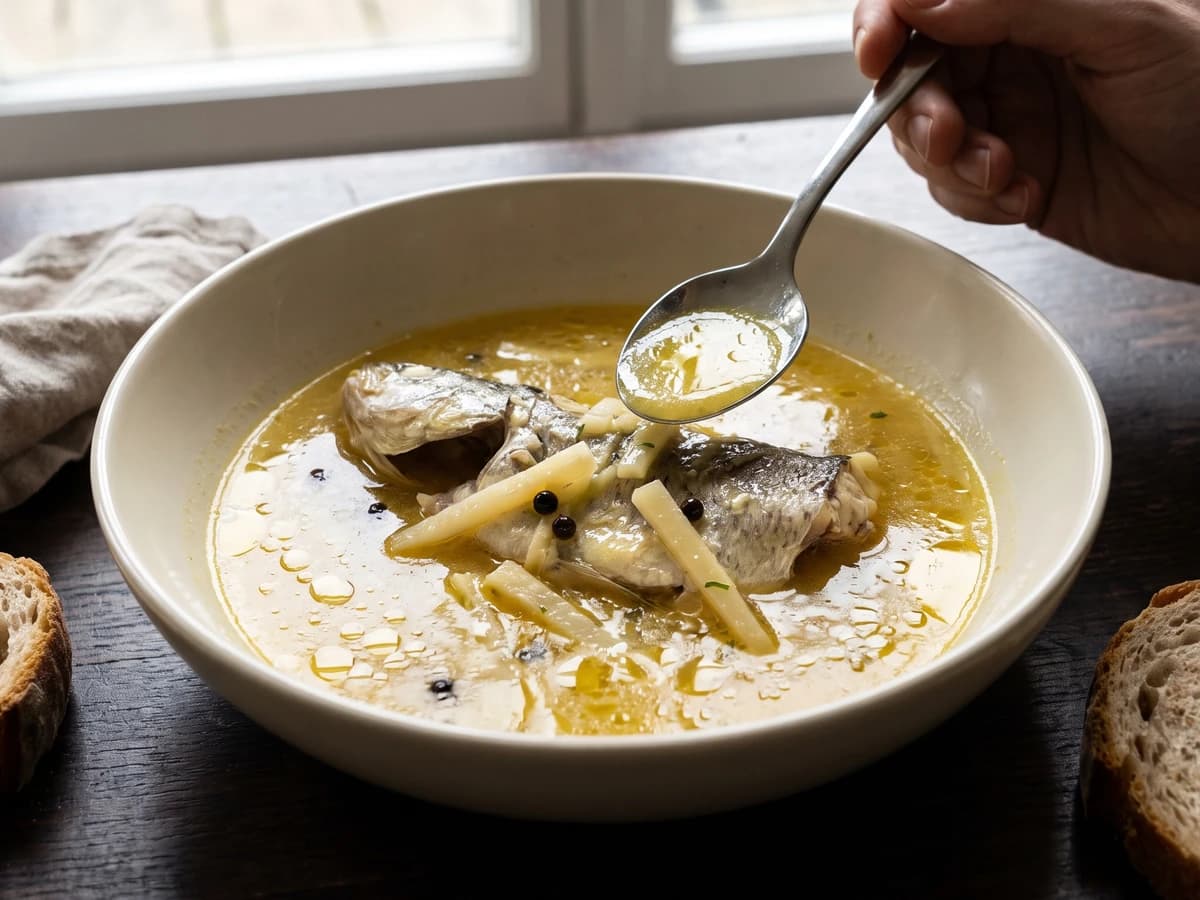
Waterzoi asks fresh, bone-in river fish to thicken its own buttery broth, with parsley root and pepper for company. No flour, no stockpot, just a brisk simmer watched closely.
Chef Juliette
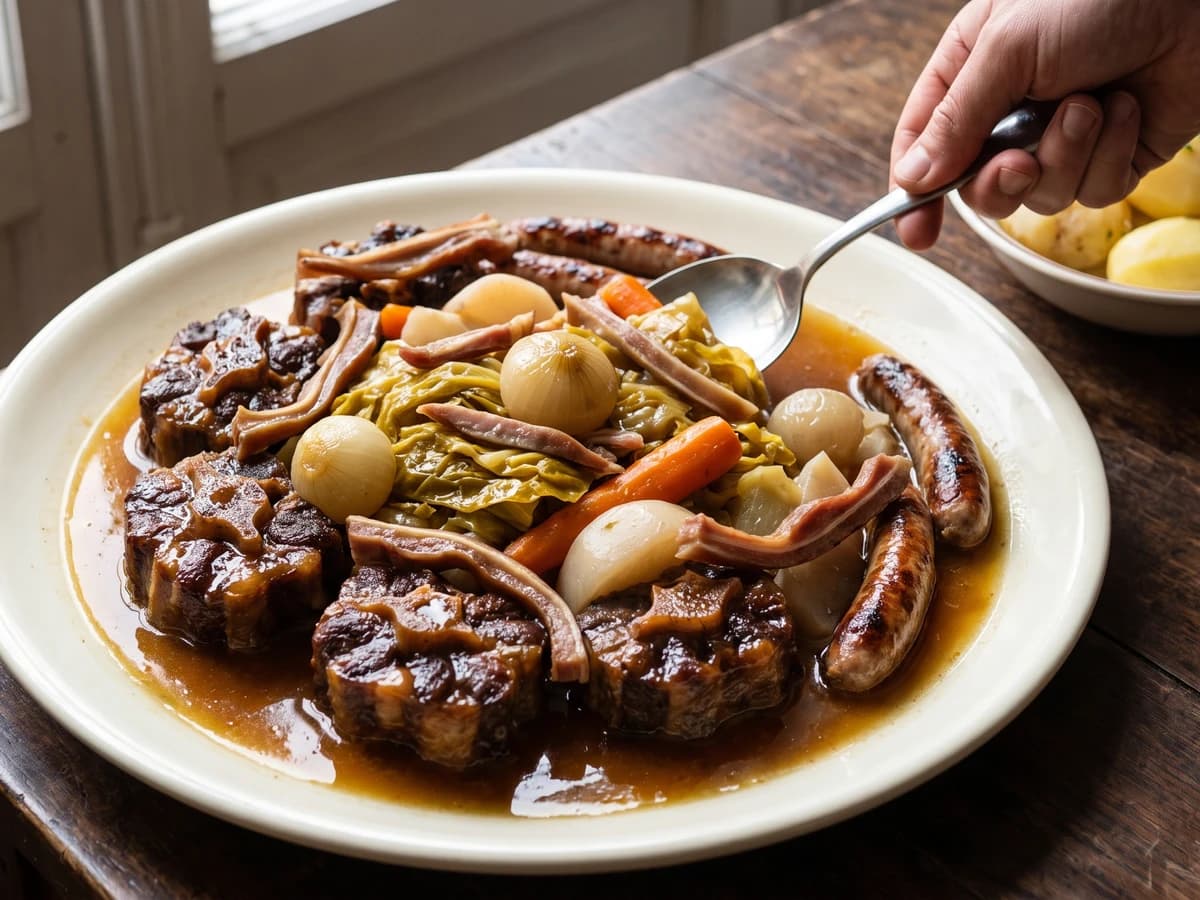
Queue de Bœuf en Hochepot gathers oxtail, pig's trotter and ear, cabbage, roots, and grilled chipolatas around a clear, gelatin-rich broth whose quiet simmer keeps every piece tender and distinct.
Chef Juliette
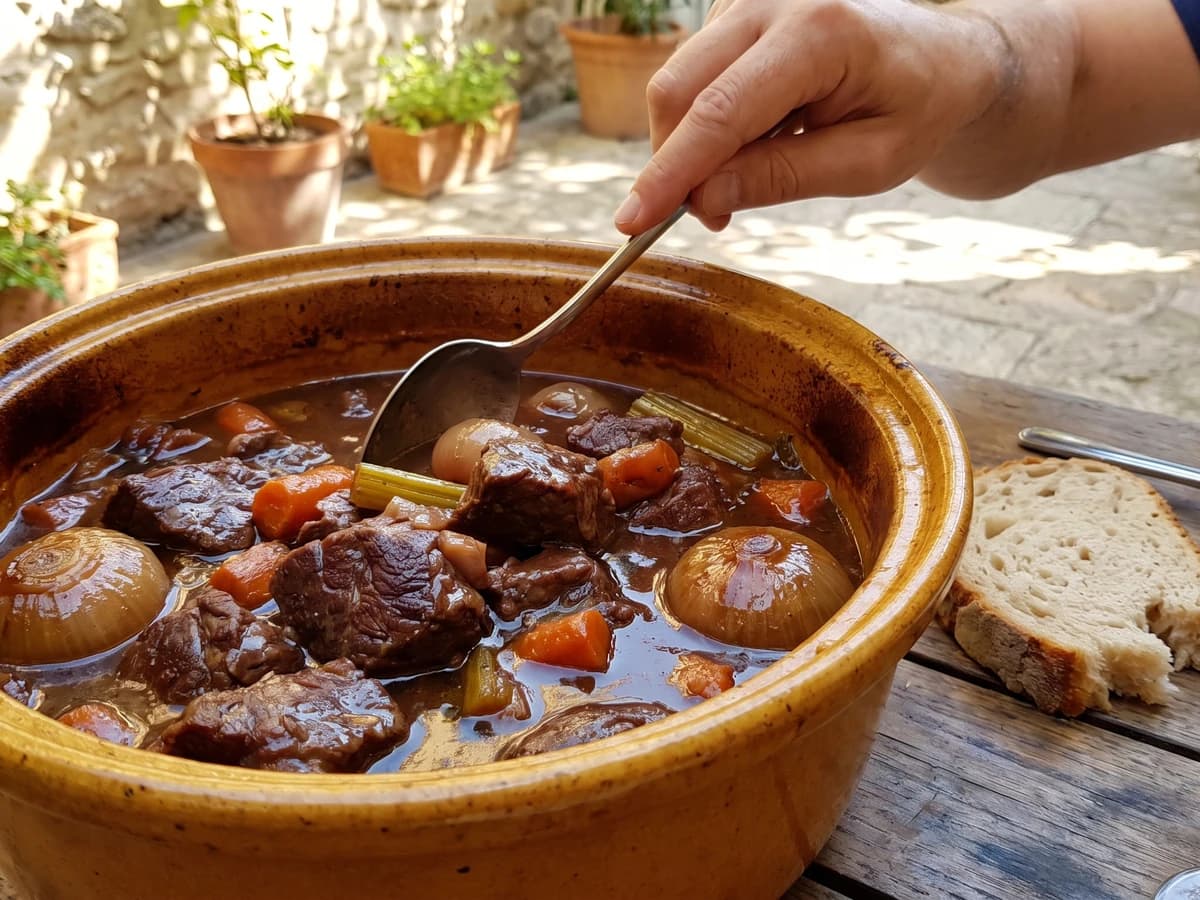
Beef shoulder larded with bacon, sharpened by red wine and vinegar, then sealed with garlic, vegetables, and dry lemon peel until the low oven turns it yielding and the gravy darkly glossy.