Culinary Explorer

A cooking platform built around craft, culture, and the stories behind what we eat.
Discover Culinary Explorer
He Kao Kūtai (Māori Green-Lipped Mussel Fritters)

He Kao Kūtai (Māori Green-Lipped Mussel Fritters)

Created by

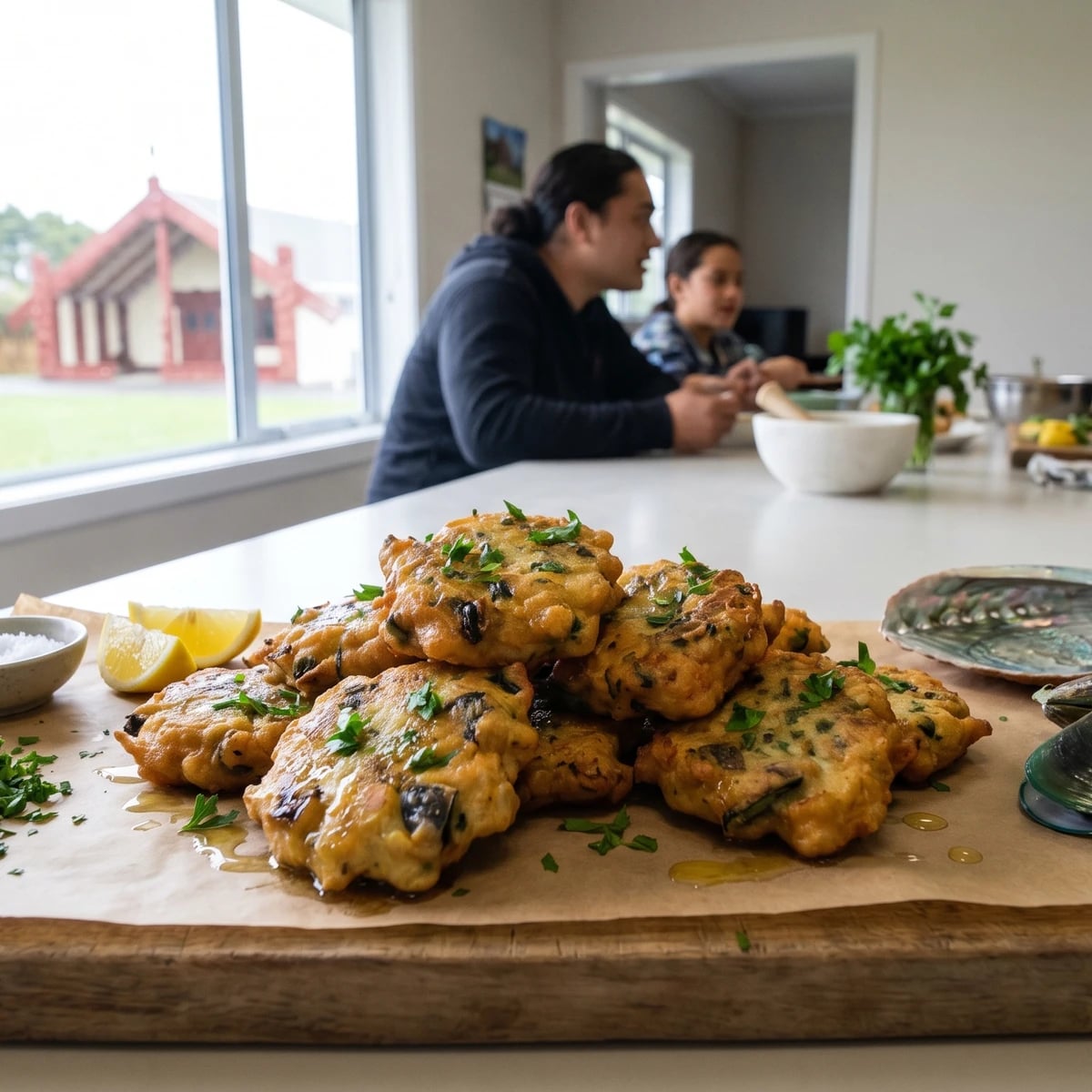
Green-lipped mussels from Aotearoa, chopped through a simple batter with onion and parsley, fried crisp at the edges and eaten with lemon while the whānau is still reaching.

Appetizers & Snacks
Polynesian, Māori
Comfort Food
Outdoor Dining
Quick Meal
20 min
Active Time
15 min cook35 min total
Yield12 fritters, 4 servings

The southern coast teaches a different kind of kinship. Back home I learned kalo in the mud, but in Aotearoa the Māori table listens hard to the cold sea, the river, the bush, the whenua, the land. Kūtai, the green-lipped mussel, holds to the rocks in black-and-jade shells, and when the whānau gathers them right, that's not just seafood. That's kaimoana, food from the sea, and it comes with responsibility before appetite.

This is Aotearoa's hand, not mine, and I cook it open-handed. He Kao Kūtai means mussel fritters, the gathered shellfish chopped rough and folded into batter with onion and parsley, then fried until the outside goes crisp and the inside stays tender. No need make it precious. This is the everyday table, the marae kitchen, the home stove after somebody came back from the rocks with enough to feed everyone.

Across the Triangle, every island has a way of honoring what the reef and shore give: Sāmoan oka, Tongan ʻota ʻika, Tahitian ʻia ota, Cook Islands ika mata, Hawaiian poke. Same ocean, different bowl. These fritters are not those dishes, and we don't blur them. They belong to Māori kai, where kūmara stands where taro often stands in the tropics, breadfruit is absent, and the cold coast has its own law.

Keep the mussels chunky so they still speak. Fry them shallow, not fancy, and eat them with lemon while the edges still crack under your teeth. For the deep tikanga, the proper cultural protocols around gathering and serving, go to Māori elders and the people of that place. They should tell their own story. I can only help you cook with respect.

Green-lipped mussels, kūtai or kuku, are native to Aotearoa and have long been part of Māori kaimoana gathered from rocky shores under local tikanga, including rules of place, season, and enough left for the bed to live. The fritter form reflects the living everyday table after wheat flour and pan-frying became common, sitting beside older Māori foodways like hāngī, boil-up, preserved seafood, and kūmara. It is a coastal Māori comfort food, not a generic island snack, and its closest kin across Polynesia is the shared respect for gathered sea food rather than one identical dish.

The technique, the tradition, and the story behind every dish.

Discover Culinary Explorer

Ingredients

fresh green-lipped mussels (kūtai)

Quantity

1 pound

steamed open, meat removed and roughly chopped, or 12 ounces cooked mussel meat

all-purpose flour

Quantity

1 cup

baking powder

Quantity

1 teaspoon

sea salt

Quantity

1/2 teaspoon

plus more to finish

freshly ground black pepper

Quantity

1/4 teaspoon

large eggs

Quantity

2

milk or mussel cooking liquor

Quantity

1/3 cup

cooled

onion

Quantity

1 small

finely diced

fresh parsley

Quantity

2 tablespoons

chopped

chives or green onion (optional)

Quantity

1 tablespoon

chopped

neutral oil

Quantity

for shallow frying

lemon wedges

Quantity

for serving

Equipment Needed

  • Heavy 10-inch cast-iron skillet or thick-bottom frying pan
  • Wire rack set over a tray
  • Slotted spatula

Instructions

  1. 1

    Check the kūtai

    Scrub the mussels and pull away any beards. If you are starting with live kūtai, cook them just until the shells open, then lift out the meat and let it cool. Throw away any mussel that stays shut after cooking, no argue with shellfish.

    Gather or buy from clean, trusted water. Kaimoana carries the place it came from, so sourcing comes first, always.
  2. 2

    Chop it rough

    Chop the mussel meat into rough pea-size pieces, with a few bigger bits left in there. Don't mince it to paste. You want the fritter to bite back with real kūtai, not hide the sea under batter.

  3. 3

    Mix the batter

    Whisk the flour, baking powder, salt, and pepper in a bowl. In another bowl beat the eggs with the milk or cooled mussel liquor, then stir the wet into the dry until it just comes together. A few small lumps are fine. Overmix it and the fritters get tough, and no blame the mussel for that.

  4. 4

    Fold in the kai

    Fold in the chopped kūtai, onion, parsley, and chives if using. The batter should hold together on a spoon, thick but not stiff. If it runs like pancake batter, add a spoonful of flour. If it sits heavy like dough, loosen it with a splash more milk.

  5. 5

    Fry shallow

    Heat about 1/4 inch of oil in a heavy skillet over medium heat until a small drop of batter sizzles right away. Spoon in small mounds, flatten them a little, and fry 2 to 3 minutes per side until deep golden at the edges and set through the middle. Work in batches so the pan stays lively.

  6. 6

    Drain and eat

    Lift the fritters onto a rack or paper towel, salt them lightly while the surface still shines, and serve with lemon wedges. They should be crisp on the rim, tender in the middle, and full of sweet-briny mussel. Eat them while the table is still warm and everybody's hands are moving.

Chef Tips

  • Use green-lipped mussels if you can. They are the Aotearoa taste here, big and sweet, with that clean shellfish richness. Smaller mussels work, but name the change honestly.
  • Mussel liquor is gold. Let it settle, pour off the clean top, and use a little in the batter instead of milk for a deeper sea taste.
  • Keep the fritters small. Big ones brown outside before the middle sets, and then you're fighting the pan instead of feeding people.
  • A spoon of sweet chilli sauce on the table is how plenty families eat now, and no shame in that. Lemon and salt are the straight line; the everyday table can hold both.

Advance Preparation

  • Cook and chop the mussels up to 1 day ahead, then keep them covered and cold.
  • Mix the dry ingredients a day ahead if you like, but combine the batter just before frying so it stays light.
  • Fritters are best fresh from the pan. Leftovers can be warmed in a 375F oven for 8 to 10 minutes until the edges crisp again.

Frequently Asked Questions

Nutrition Information

1 serving (about 180g)

Calories
445 calories
Total Fat
21 g
Saturated Fat
3 g
Trans Fat
0 g
Unsaturated Fat
16 g
Cholesterol
145 mg
Sodium
850 mg
Total Carbohydrates
34 g
Dietary Fiber
1 g
Sugars
2 g
Protein
28 g

Note: Chef personas and recipes are created with AI assistance. Cook with care: follow safe food-handling practices, check doneness with a thermometer when needed, and adapt for allergies and your kitchen.

Where cooking meets culture.

Culinary guides, cultural storytelling, and the editorial depth that makes cooking meaningful.

Discover Culinary Explorer

More from Aotearoa Māori Kai: Boil-up & Kaimoana

Browse the full collection