Chef Juliette
Mayonnaise de Volaille
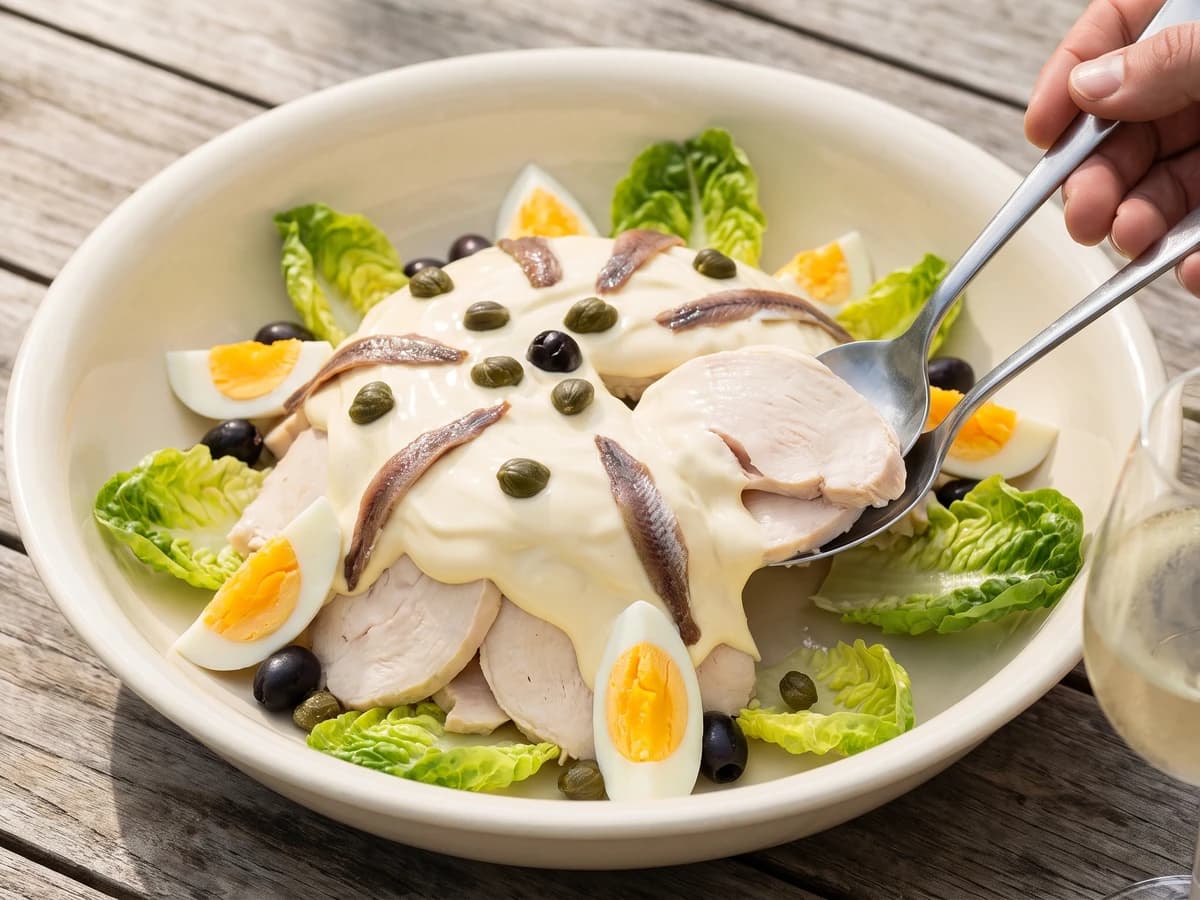
Cold roast chicken, ciseled lettuce, and a shining coat of homemade mayonnaise, arranged with capers, olives, anchovies, eggs, and lettuce hearts, then tossed at the table as the canon intends.
A cooking platform built around craft, culture, and the stories behind what we eat.
Created by
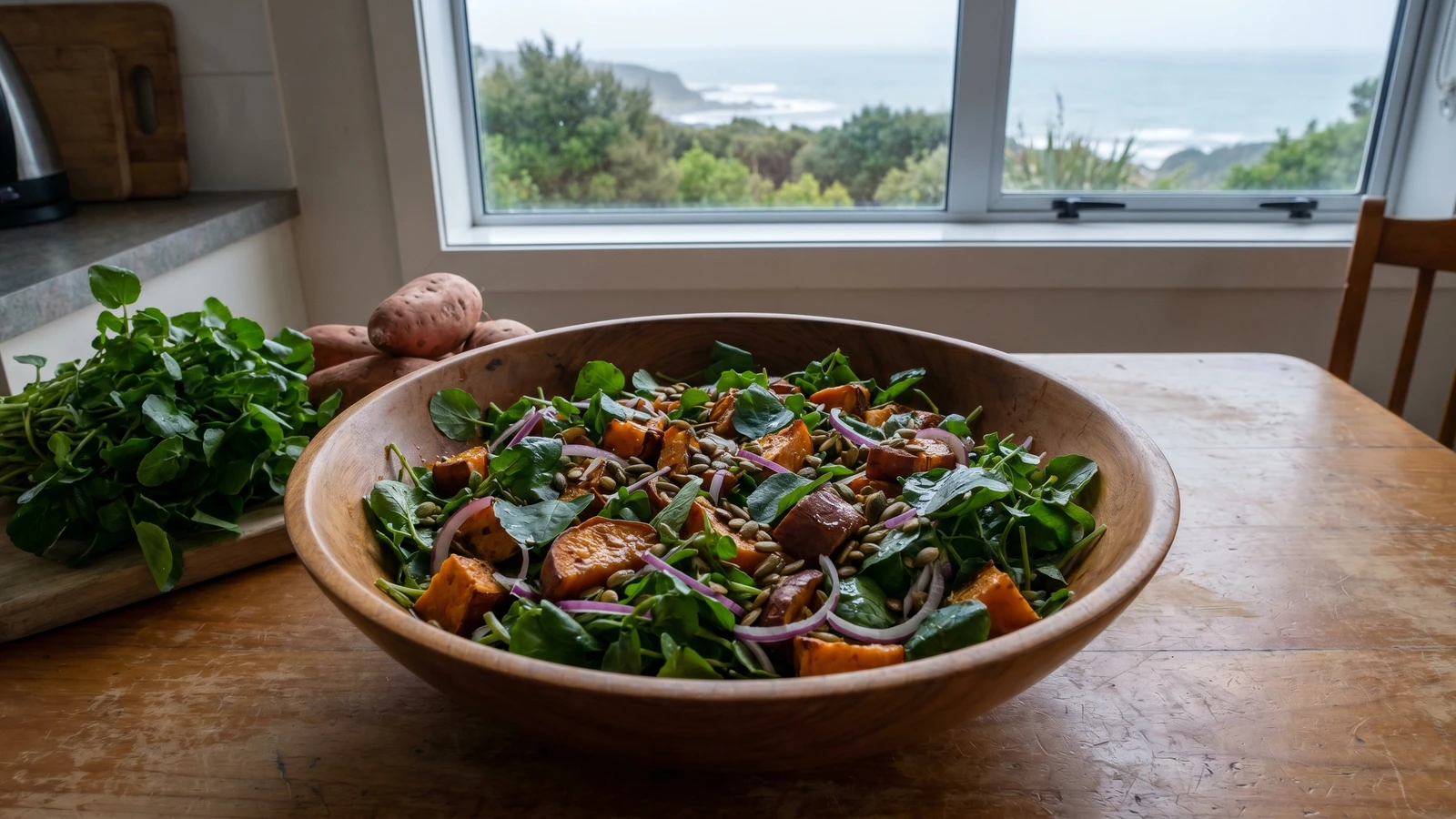
Roasted Māori kūmara from Aotearoa, caramel-edged and warm, tossed with peppery wātakirihi, watercress, red onion, and a bright honey-vinegar dressing. Cool southern light, whānau-table food.
The first time I sat at a Māori whānau table in Aotearoa, New Zealand, the cold changed what I thought I knew, but the kinship stayed the same. Back home my hands know kalo, Hāloa, and ʻuala. There, the kūmara, sweet potato, carries that old canoe memory into a cooler land, planted and stored with care because the whenua, the land, makes you work for it.
This is Māori kai, not a plain Polynesian salad. Aotearoa has its own hand. Breadfruit doesn't stand at this table, and taro does not rule the way it does in the warmer islands. The cousins still show themselves: Tongan kumala, Sāmoan ʻumala, Hawaiian ʻuala, all those names moving through one ocean, one canoe, one root. But in Aotearoa the kūmara learned the cold, and the people learned how to keep it.
Watercress, wātakirihi, came later. No need pretend otherwise. The people made room for it because it grew clean and peppery in cold streams, the kind of green that belongs in the kōhua, the big boil-up pot, beside pūhā, pork bones, potatoes, and whatever the day gave. That is keeper work too: deep food beside everyday food, the old garden beside the gathered green.
Because this is not my home seat, I cook Māori kai open-handed. For the deep tikanga, the right practice and protocol around marae food and old kūmara gardens, sit with Māori elders. They should tell their own story. I can show you this bowl for a home kitchen: roast the kūmara until the edges sweeten, dress it while warm, and fold the watercress in last so it keeps its pepper and its life.
Kūmara reached Aotearoa with Polynesian voyagers around the 13th century and became a guarded Māori crop, especially in the warmer north, where it was stored in rua kūmara, underground storage pits, because the cooler climate made it harder to grow than in the tropics. Watercress, wātakirihi, arrived after European contact and naturalized in cold streams, then moved into Māori boil-up and the everyday gathered table beside pūhā, pork bones, potatoes, and kaimoana. This salad is contemporary Māori kai: a pre-contact canoe crop beside a post-contact stream green, showing how the table keeps old knowledge while still eating what the whenua gives now.
Quantity
2 pounds
scrubbed and cut into 1-inch chunks
Quantity
2 tablespoons
for roasting
Quantity
1 teaspoon
plus more to taste
Quantity
1/2 teaspoon
Quantity
1 small
very thinly sliced
Quantity
3 tablespoons
Quantity
1 tablespoon
Quantity
1 teaspoon
Quantity
3 tablespoons
for the dressing
Quantity
2 bunches
tough lower stems removed, washed and dried
Quantity
1/3 cup
Quantity
1 teaspoon
finely chopped
| Ingredient | Quantity |
|---|---|
| kūmara (Māori sweet potatoes)scrubbed and cut into 1-inch chunks | 2 pounds |
| neutral oil or olive oilfor roasting | 2 tablespoons |
| flaky sea saltplus more to taste | 1 teaspoon |
| freshly cracked black pepper | 1/2 teaspoon |
| red onionvery thinly sliced | 1 small |
| apple cider vinegar or fresh lemon juice | 3 tablespoons |
| mānuka honey or mild honey | 1 tablespoon |
| prepared mustard | 1 teaspoon |
| neutral oil or olive oilfor the dressing | 3 tablespoons |
| watercress (wātakirihi)tough lower stems removed, washed and dried | 2 bunches |
| toasted pumpkin seeds | 1/3 cup |
| kawakawa leaf or mint (optional)finely chopped | 1 teaspoon |
Set the oven to 425F and line a rimmed sheet pan with parchment if the pan runs sticky. Scrub the kūmara, sweet potato, but keep the skins on unless they are scarred or tough. That skin has flavor, and we no throw out good food.
Toss the kūmara with 2 tablespoons oil, the sea salt, and black pepper, then spread it out with space between the pieces. Roast 25 to 30 minutes, turning once, until the edges go caramel-brown and the centers take a fork with no fight. Let it cool 10 minutes so it is warm, not hot enough to collapse the greens.
Put the sliced red onion in a large serving bowl with the vinegar or lemon juice, honey, mustard, and a pinch of salt. Let it sit while the kūmara roasts. The onion loses its sharp bite and gives the dressing a little pink edge.
Whisk the 3 tablespoons oil into the onion mixture until it turns glossy. Taste it. It should be bright enough to wake up the sweet kūmara and gentle enough that the watercress still tastes like itself.
Add the warm kūmara to the bowl and fold it through the dressing first, so the sweet edges drink a little of that acid and honey. Add the watercress, wātakirihi, last and turn it with your hands or two wide spoons, just until the leaves shine and soften at the edges.
Scatter over the toasted pumpkin seeds and the kawakawa or mint if you are using it. Serve warm or at room temperature, family-style, with the peppery greens still alive and the kūmara sweet underneath. This is a bowl for the whānau table, not one precious little stack.
1 serving (about 190g)
Culinary guides, cultural storytelling, and the editorial depth that makes cooking meaningful.
Discover Culinary ExplorerChef Juliette
Cold roast chicken, ciseled lettuce, and a shining coat of homemade mayonnaise, arranged with capers, olives, anchovies, eggs, and lettuce hearts, then tossed at the table as the canon intends.

Chef Juliette
Cold roast or poached chicken with fine ribbons of lettuce, dressed at the final moment with oil and vinegar: a composed salad whose freshness depends entirely on timing.

Chef Juliette
Five leaves, one living rule: laitue, romaine, chicorée, mâche, or pissenlit must be washed, dried, and dressed only as they go to the table, while every leaf still carries its light vinaigrette.

Chef Juliette
Salade de Betteraves proves that baking, not boiling, is the whole argument: concentrated garnet sweetness, tender baked onion, sharp mustard, and herbs cut into a weeknight salad worth making ahead.