Culinary Explorer

A cooking platform built around craft, culture, and the stories behind what we eat.
Discover Culinary Explorer
Kina (Māori Raw Sea Urchin from Aotearoa)

Kina (Māori Raw Sea Urchin from Aotearoa)

Created by

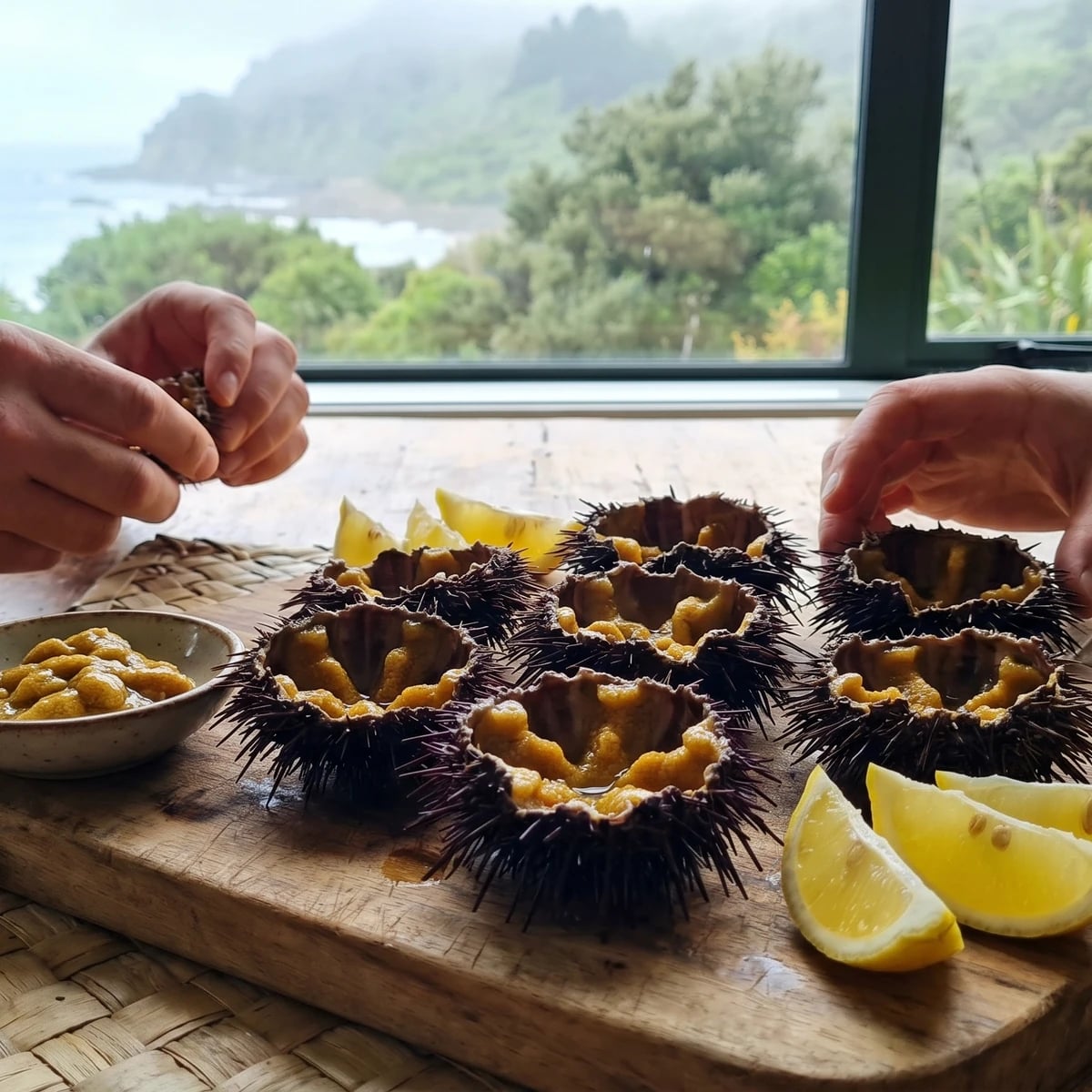
Cold-coast kaimoana from Aotearoa: kina cracked open at the table, golden roe lifted from the shell, briny and rich, eaten simply because the reef already did the seasoning.

Main Dishes
Polynesian, Māori
Special Occasion
Outdoor Dining
Quick Meal
20 min
Active Time
0 min cook20 min total
Yield4 servings

The cold coast teaches different from my home water. Back in Hawaiʻi, my hands know kalo and limu and the reef I grew up beside. In Aotearoa, Māori cousins bring you to the rocks for kaimoana, the food of the sea, and kina is one of those bites that tells you exactly where you are: sharp southern water, dark shell, gold inside.

This is Māori kai, and I cook it open-handed. The deep tikanga, the right ways of gathering, sharing, and speaking around that food, belongs to Māori elders and whānau who carry it. I can show you how to handle the kina clean in a kitchen, but for the deeper law, go to the people of that place. That's respect, not distance.

Kina doesn't need much from us. Crack, clean, taste. Same ocean family as the raw fish bowls of the Triangle, but not the same dish: Sāmoa has oka iʻa, Tonga has ʻota ʻika, Tahiti has ʻia ota, the Cooks have ika mata, and Hawaiʻi has poke. Kina stands on its own Māori table, raw and direct, the reef speaking without coconut or lime having to carry the story.

So buy it from somebody who can tell you where it came from, or gather only where it's legal, clean, and open. Eat what you have, but don't take what the moana cannot give. ʻĀina, kānaka, meaʻai, and down there, whenua, whānau, kai. Land, people, food. Same law, different shore.

Kina, the New Zealand sea urchin, is long-standing Māori kaimoana, gathered from rocky reefs and eaten raw, often right from the shell, as part of a wider coastal food system that includes pāua, kūtai, pipi, and finfish. Aotearoa's food grammar differs from the tropical islands: kūmara stands as the major canoe-crop starch, breadfruit is absent, and the cold coast and rivers shape the table as much as the garden does. Customary practice, legal limits, and rāhui, temporary closures placed to protect a place or resource, keep reminding the cook that seafood is never just seafood, it is relationship with the moana.

What Is Kina?

Kina is the Māori name for New Zealand's native sea urchin, a prized kaimoana (seafood) gathered from cold coastal rocks around Aotearoa. It is cracked open and the golden roe eaten raw straight from the shell: briny, rich, and tasting of the southern reef that seasoned it.

The technique, the tradition, and the story behind every dish.

Discover Culinary Explorer

Ingredients

live or very fresh kina (New Zealand sea urchin)

Quantity

12

gathered legally from clean water or bought from a trusted fishmonger

clean seawater or salted cold water

Quantity

1 cup

for a light rinse

lemon (optional)

Quantity

1

cut into wedges

plain bread or warm kūmara (optional)

Quantity

for serving

Equipment Needed

  • Sturdy kitchen scissors or sea urchin shears
  • Shallow bowl lined with a towel to steady the shells
  • Small spoon for lifting roe
  • Wooden board or shallow wooden tray for serving

Instructions

  1. 1

    Check the kina

    Keep the kina cold and alive, or as close to just-gathered as you can get. The spines should still move a little, the shell should feel heavy, and the smell should be clean ocean, not rot, not strong fish. If it smells wrong, no make it raw. Throw that one out.

    Follow local catch limits, size rules, rāhui, and water-quality warnings. Kaimoana starts with the place it came from, and the whenua and moana get the first say.
  2. 2

    Open the shell

    Set one kina mouth-side up in a shallow bowl or on a towel so it doesn't roll. With sturdy kitchen scissors, cut a small circle around the mouth, then widen the opening until you can see inside. Work steady. The shell is brittle and the spines remind you quick when your hands get careless.

  3. 3

    Drain and clean

    Tip out the dark liquid and loose bits, then use a small spoon to clear away the black gut without tearing the golden roe. Rinse only lightly with clean seawater or salted cold water. Fresh water steals the taste, and the whole point is that cold reef brine.

  4. 4

    Lift the roe

    The roe sits in five soft tongues against the inside of the shell, mustard-gold to orange, glossy and custard-soft. Lift each piece with a spoon, or leave it right there in the shell if you're eating the old easy way. Don't fuss it up. Kina already knows what it is.

  5. 5

    Serve right away

    Set the open shells or the lifted roe on a wooden board with lemon on the side if your table likes it. Eat it cold and same-day, straight from the shell or over plain bread, with warm kūmara if you want something sweet and earthy beside it. Rich, briny, a little wild. That's the taste of the rocks.

Chef Tips

  • Freshness is the whole recipe. Kina should smell like clean seawater and almost nothing else. If it smells sour, rotten, or heavy, don't bargain with it.
  • Use seawater for rinsing if you gathered from clean water. If not, use cold salted water. Fresh water flattens the roe and washes away the brine you're trying to taste.
  • Lemon is optional. Some tables like that little cut of acid, some want the kina plain from the shell. Both can sit together without argument.
  • This is gathered kai, so follow the rules of the place: catch limits, rāhui, closed areas, and water-quality warnings. The source comes first, always.
  • Kina is best the day it is opened. Keep it cold, work clean, and eat it right away. This one doesn't improve by waiting.

Advance Preparation

  • Do not open kina far ahead. Keep live kina cold and shaded, then crack and clean them close to the table.
  • Cut lemon wedges and prepare bread or kūmara before opening the shells, so the roe can be eaten right away.
  • If gathering yourself, check legal limits, rāhui, and water-quality notices before you leave home, not after the basket is full.

Frequently Asked Questions

Nutrition Information

1 serving (about 75g)

Calories
130 calories
Total Fat
4 g
Saturated Fat
1 g
Trans Fat
0 g
Unsaturated Fat
3 g
Cholesterol
220 mg
Sodium
220 mg
Total Carbohydrates
10 g
Dietary Fiber
0 g
Sugars
0 g
Protein
11 g

Note: Chef personas and recipes are created with AI assistance. Cook with care: follow safe food-handling practices, check doneness with a thermometer when needed, and adapt for allergies and your kitchen.

Where cooking meets culture.

Culinary guides, cultural storytelling, and the editorial depth that makes cooking meaningful.

Discover Culinary Explorer

More from Aotearoa Māori Kai: Boil-up & Kaimoana

Browse the full collection