Culinary Explorer
A cooking platform built around craft, culture, and the stories behind what we eat.
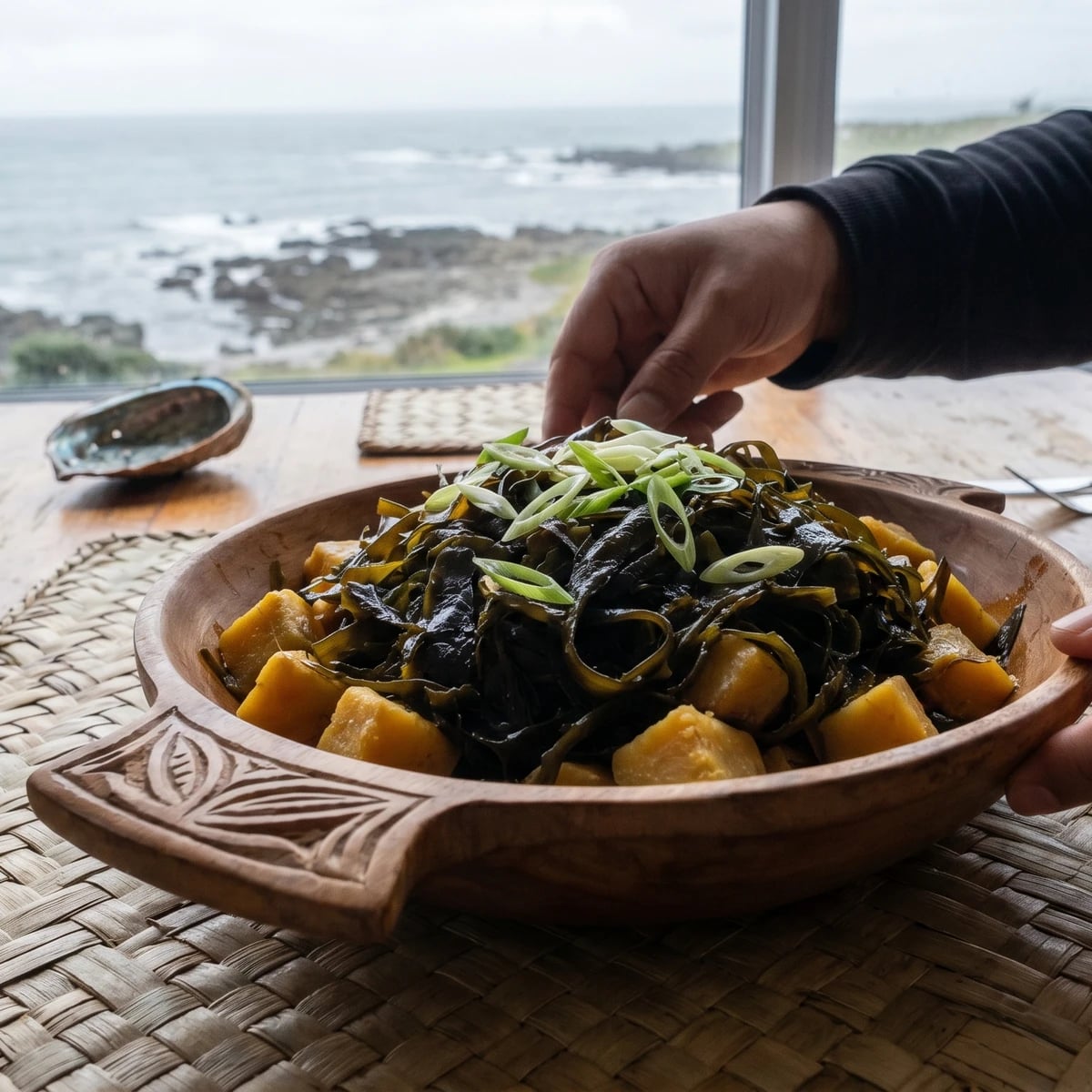
Karengo (Māori Seaweed Pan-Simmered from Aotearoa)
Created by Chef Makoa
Aotearoa's karengo, native seaweed gathered from the cold rocks, dried for keeping, then rehydrated and pan-simmered until dark, tender, salty, and shining.
The first thing is the coast. Aotearoa, the long white cloud, has a colder edge than my home water, and Māori kai, food, listens to that place: green-lipped mussels in black-and-jade shells, pāua clinging to rock, pūhā and watercress in the pot, kūmara where my islands would reach for kalo. Karengo belongs there, to Māori hands and Māori tides, and I cook it open-handed, with respect, not pretending the deeper tikanga, the right way and duty around gathering, is mine to teach.
An old Māori auntie would tell you the seaweed is not a garnish. It is kaimoana, food of the sea, gathered when the rocks and the rules allow, dried so it keeps, then brought back with water and patience. It smells like the cold coast, iodine and salt and clean stone. When it softens, it goes dark and glossy, almost black-green, and it carries the sea into the plainest pot of kūmara or potatoes.
Across the Triangle, every island has its sea-green hand. Back home in Hawaiʻi we know limu with poke and limu kohu when the reef is generous; the Cooks and Tahiti know their own reef greens; Aotearoa keeps karengo off the temperate rocks. Same ocean, different shore. Name the hand, yeah? This one is Māori.
So keep it simple. Rehydrate the dried karengo, rinse only enough to clear grit, then pan-simmer it with onion, garlic, a little fat, and sweet kūmara until everything tastes joined. No need make it precious. Eat what you have, but get the source right first.
Ingredients
dried karengo (Māori seaweed)
Quantity
1 ounce
warm water
Quantity
1 cup
for soaking, plus more as needed
neutral oil, butter, or rendered pork fat
Quantity
1 tablespoon
| Ingredient | Quantity |
|---|---|
| dried karengo (Māori seaweed) | 1 ounce |
| warm waterfor soaking, plus more as needed | 1 cup |
| neutral oil, butter, or rendered pork fat | 1 tablespoon |
Where cooking meets culture.
Culinary guides, cultural storytelling, and the editorial depth that makes cooking meaningful.
Discover Culinary Explorer