
Chef Lupita
Aceite de Chiltepin Bajacaliforniano
Baja California's wild chiltepin steeped in olive oil with garlic, orejon, and lime peel, until the oil turns ruby-amber and carries the slow, sneaky burn of the desert coast.
A cooking platform built around craft, culture, and the stories behind what we eat.
Created by
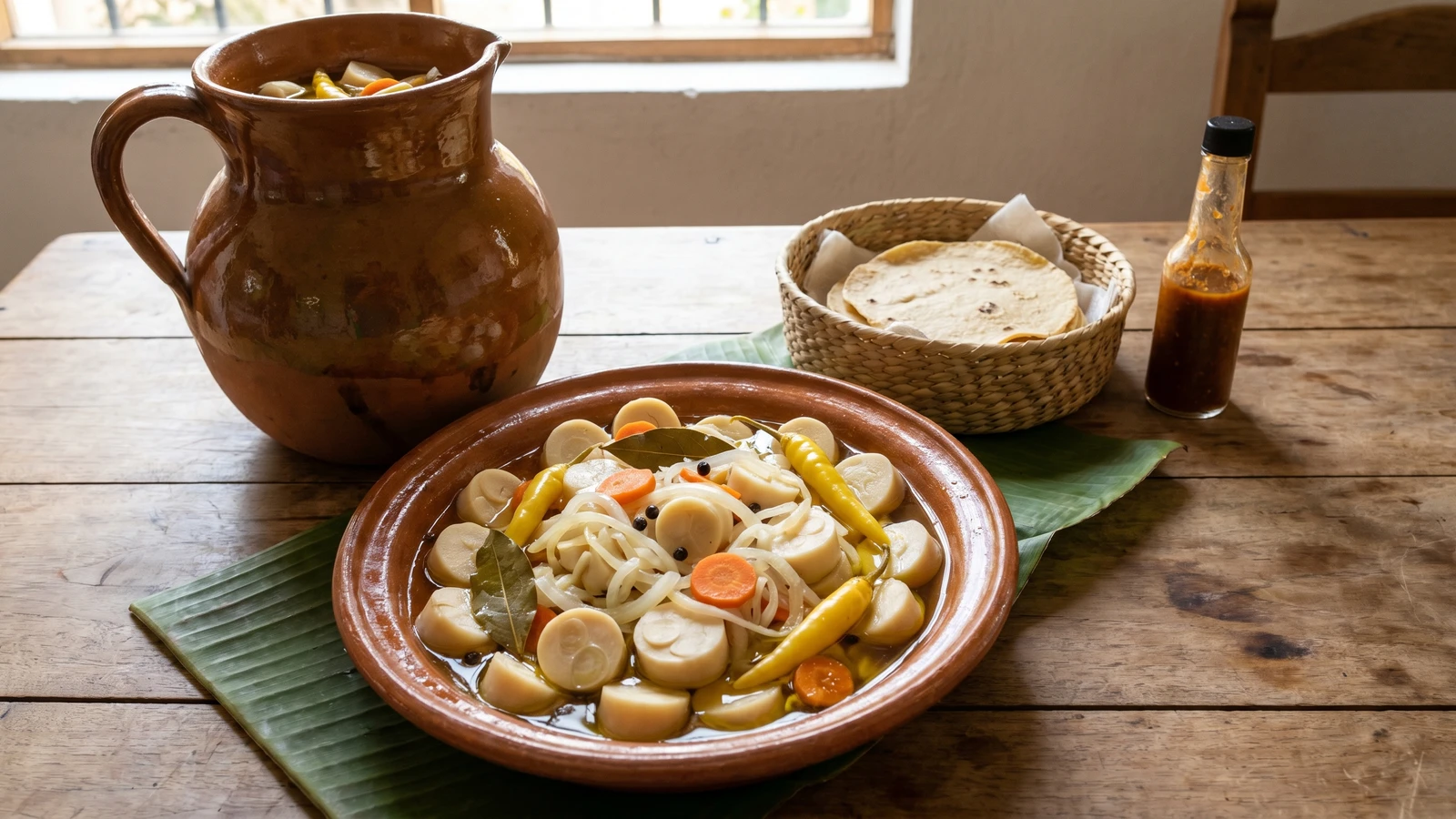
Veracruz's Huasteca palmito cured in vinegar with chiles gueros, onion, garlic, bay, and oregano, made ahead in clay jars for the table.
Veracruz, the Huasteca Veracruzana, Tantoyuca and the humid country north toward Tempoal, is where this palmito en escabeche belongs. This is Gulf jungle food, not a garnish from a hotel salad bar. The heart of palm comes from the land around the rivers and palms, then the women preserve it with vinegar, chiles gueros, onion, garlic, and dried herbs so it can sit ready for beans, fish, eggs, or a tortilla folded straight from the comal.
The defining ingredient is fresh palmito. Not canned salad hearts floating in anonymous brine if you can help it. Fresh palmito is crisp, faintly sweet, and a little grassy, and it takes vinegar like a good student takes correction. In Tantoyuca, a cook knows the difference between tender core and fibrous waste by the way the knife enters. Preguntale a las senoras del mercado. They will tell you which vendor cuts clean and which one sells you trunk.
The technique is escabeche, a Spanish word that Mexican kitchens made practical. Oil wakes the onion, garlic, chile guero, oregano, thyme, bay, pepper, and allspice. Vinegar does the preserving. Rest does the teaching. Eat it the same hour and you are impatient. Eat it the next day and you understand why jars like this belong on the Veracruz table. Cada estado, su propia cocina.
Escabeche entered Veracruz through colonial Gulf trade, where Iberian vinegar preserves met local chiles, herbs, and tropical vegetables that needed to survive heat and humidity. Hearts of palm have been eaten in Mexico's tropical regions since before industrial canning, but the modern Huasteca preparation reflects household preserving habits shaped by sugarcane vinegar, river-market commerce, and the need to hold fragile jungle ingredients for several days. Tantoyuca's cooking sits inside the wider Huasteca cultural region, shared across Veracruz, Hidalgo, San Luis Potosi, Tamaulipas, Puebla, and Queretaro, but the Gulf hand shows in the vinegar, herbs, and table jars.
Quantity
2 pounds
peeled to the tender white core and sliced into 1/2-inch rounds
Quantity
1 tablespoon, plus more for blanching water
Quantity
1 cup
Quantity
1/2 cup
Quantity
1 cup
Quantity
1/3 cup
Quantity
1 medium
sliced into thin half-moons
Quantity
6
slit lengthwise
Quantity
4
peeled and lightly crushed
Quantity
2
Quantity
1 teaspoon
Quantity
1/2 teaspoon
Quantity
1/2 teaspoon
Quantity
4
Quantity
1 teaspoon
Quantity
1
sliced into thin coins
| Ingredient | Quantity |
|---|---|
| fresh hearts of palmpeeled to the tender white core and sliced into 1/2-inch rounds | 2 pounds |
| kosher salt | 1 tablespoon, plus more for blanching water |
| white vinegar | 1 cup |
| cane vinegar or mild pineapple vinegar | 1/2 cup |
| water | 1 cup |
| olive oil | 1/3 cup |
| white onionsliced into thin half-moons | 1 medium |
| fresh chiles guerosslit lengthwise | 6 |
| garlic clovespeeled and lightly crushed | 4 |
| bay leaves | 2 |
| dried Mexican oregano | 1 teaspoon |
| dried thyme | 1/2 teaspoon |
| black peppercorns | 1/2 teaspoon |
| allspice berries | 4 |
| piloncillo or raw sugar | 1 teaspoon |
| small carrot (optional)sliced into thin coins | 1 |
Trim away every fibrous outer layer until only the tender white heart remains. Slice into 1/2-inch rounds. If your knife meets resistance, you are still in the tough part. Do not be stingy here. Tough palmito in escabeche is punishment, not food.
Bring a pot of salted water to a boil. Add the sliced palmito and cook 6 to 8 minutes, just until a piece yields when pierced but still keeps its shape. Drain well. This short blanch removes the raw edge and lets the vinegar enter cleanly without turning the palmito mushy.
In a clay cazuela or heavy saucepan, warm the olive oil over medium heat. Add the onion, chiles gueros, garlic, bay leaves, oregano, thyme, peppercorns, allspice, and carrot if using. Cook 4 to 5 minutes, stirring, until the onion turns glossy but not browned. Escabeche wants fragrance, not fried onion.
Add the white vinegar, cane vinegar, water, salt, and piloncillo. Bring to a lively simmer and stir until the salt and piloncillo dissolve. Taste carefully. It should be sharp, salty, lightly sweet, and aromatic. If it tastes flat now, it will taste flat tomorrow.
Add the drained palmito to the simmering escabeche and cook 2 minutes, just enough for the rounds to absorb the hot vinegar. Turn off the heat. The palmito should stay pale and firm, with the onion and chiles tucked around it. No me vengas con atajos. The resting time is what finishes the preserve.
Transfer everything into clean glass jars or a glazed clay jarra. Press the palmito below the liquid so every piece is covered. Cool to room temperature, cover, and refrigerate at least 24 hours before eating. Forty-eight hours is better. Serve cool or at room temperature with warm corn tortillas, beans, grilled fish, or a plain plate of rice.
1 serving (about 120g)
Culinary guides, cultural storytelling, and the editorial depth that makes cooking meaningful.
Discover Culinary ExplorerChef Lupita
Baja California's wild chiltepin steeped in olive oil with garlic, orejon, and lime peel, until the oil turns ruby-amber and carries the slow, sneaky burn of the desert coast.

Chef Lupita
Puebla's Lenten convent adobo, a brick-red vinegar chile paste of ancho, guajillo, garlic, oregano, and comino made to dress fish for the meatless calendar.
Chef Lupita
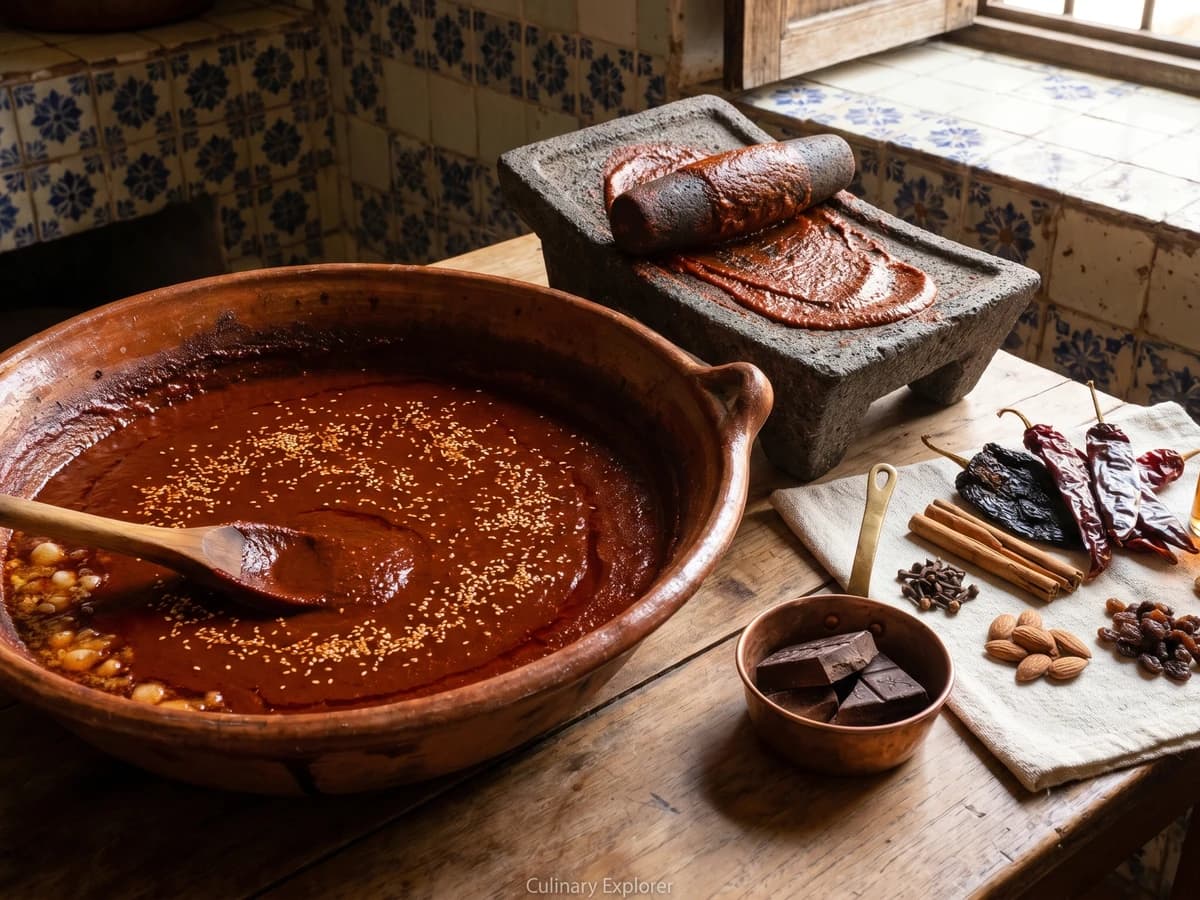
Zacatecas' wedding-table adobo, built from toasted guajillo and ancho, piloncillo, sour orange, chocolate, canela, clavo, almonds, sesame, and lard.

Chef Lupita
Puebla's convent kitchens built this adobo with ancho, guajillo, jerez, almonds, raisins, clove, and lard, a baroque marinade that stains pork loin and finishes as the sauce.