
Chef Lesia
Buzhenyna (буженина, garlic-studded roast pork)
A whole pork neck takes garlic into little knife pockets, roasts until the crust goes dark and fragrant, then rests overnight so every cold slice tastes better than shop ham.
A cooking platform built around craft, culture, and the stories behind what we eat.
Created by
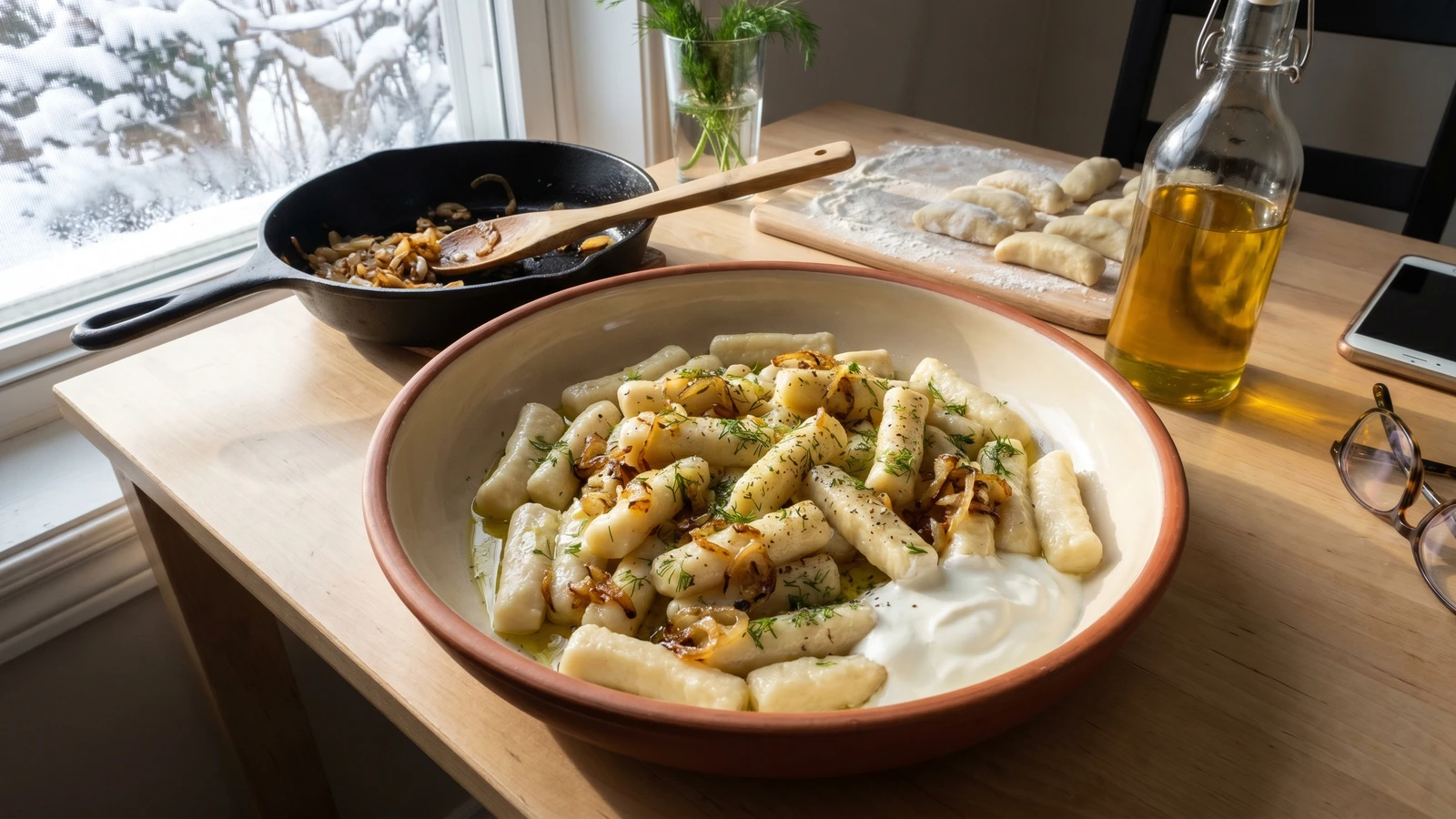
These little fingers are the dumpling you make when nobody has patience for folding: mashed potato, dry curd cheese, a knife, and a pan of onions sweet enough to perfume the whole flat.
The lazy thing about paliushky is that they ask for no folding, no pinching, no little ceremony. The dough is mashed potato brought back to life with dry curd cheese, flour just enough to hold it, then cut into short little fingers and dropped into salted water. They come up pale and soft, then the onions catch them: golden, sweet, sticky at the edges, loud with sunflower oil.
Where varenyky make you sit down and fold, these let you feed a table before the room gets cross. In the west, especially Halychyna and the Carpathian foothills, they belong to potato country and to kitchens that never wasted a cold boiled potato. Aunt Nadia's note in the shoebox says "not too much flour, Lesiu, or you make erasers," which is rude and correct.
The whole dish rests on dry, cooled potato. Hot wet mash drinks flour greedily; cold dry mash needs less, and less flour keeps the dumplings tender. Mix until it sounds right under your spoon, a soft scrape rather than a paste, then stop. If one breaks in the pot, you haven't failed. Fry more onions. Sit down.
The name paliushky is linked to palets, Ukrainian for finger, which fits the way the ropes are cut into short lengths instead of filled and folded like varenyky. Potato doughs became common after potatoes spread through Ukrainian village kitchens in the nineteenth century, and paliushky are especially rooted in Halychyna and the Carpathian foothills. Their near cousin across the Polish border is kopytka; that family resemblance tells the truth of market roads, marriages, and shared weather, while the onion, curd, and smetana keep the bowl recognizably Ukrainian.
Quantity
1.2 kg
peeled and cut into large chunks
Quantity
250g
well drained and crumbled
Quantity
1 large
Quantity
180g, plus up to 50g more
for dusting and adjusting
Quantity
1 tablespoon
only if the curd is wet
Quantity
1 1/2 teaspoons, plus more
for the boiling water
Quantity
1/2 teaspoon, plus more to serve
Quantity
3 large
thinly sliced
Quantity
4 tablespoons
Quantity
30g
or use more sunflower oil
Quantity
small bunch
finely chopped
Quantity
to serve
| Ingredient | Quantity |
|---|---|
| floury potatoespeeled and cut into large chunks | 1.2 kg |
| dry curd cheese, such as farmer's cheese or kyslomolochnyi syrwell drained and crumbled | 250g |
| egg | 1 large |
| plain flourfor dusting and adjusting | 180g, plus up to 50g more |
| potato starch (optional)only if the curd is wet | 1 tablespoon |
| fine sea saltfor the boiling water | 1 1/2 teaspoons, plus more |
| black pepper | 1/2 teaspoon, plus more to serve |
| onionsthinly sliced | 3 large |
| unrefined sunflower oil | 4 tablespoons |
| butter (optional)or use more sunflower oil | 30g |
| dillfinely chopped | small bunch |
| smetana or sour cream (optional) | to serve |
Put the potatoes in a big pot of cold salted water and bring them to a steady boil. Cook until a fork goes through without argument and the edges start to crumble, then drain well and return them to the warm pot. Mash or rice them until smooth, spread them out, and let the surface turn matte rather than wet. They should be warm enough to touch, not hot enough to cook the egg.
While the potatoes cool, warm the sunflower oil in a wide pan and add the onions with a pinch of salt. Let them soften slowly until the sharp onion smell changes into sweetness and the edges turn deep gold. Add the butter at the end if you're using it, so the onions shine and the fat tastes round. Keep the pan ready; this is where the dumplings will land.
Add the crumbled curd cheese, egg, salt, pepper, and 180g flour to the cooled potato. Mix with your hands or a spoon just until it comes together as a soft dough with no wet pockets. It should hold when pressed but still feel gentle, not bouncy like bread. Aunt Nadia's note in the shoebox says "not too much flour, Lesiu, or you make erasers," which is rude and correct.
Dust the board well and divide the dough into manageable pieces. Roll each one into a rope about as thick as your thumb, then cut it on a slight diagonal into short little fingers. Lay the paliushky on a floured tray as you work, with space between them so they don't glue themselves together and make comedy.
Bring a large pot of salted water to a lively boil, then lower it so the water moves without throwing the dumplings around. Slide in a batch of paliushky and nudge the bottom once with a spoon so nothing sticks. When they rise, give them a short breath in the water, then lift one and cut it open. The middle should be tender and one color, not raw-flour white.
Lift the dumplings straight from the pot into the pan of golden onions. Toss gently so each one gets coated in the green-gold oil and onion sweetness; add a spoon of cooking water if the pan looks dry. Serve in deep bowls with dill, black pepper, and cold smetana on the side. Make a big bowl. There is no tradition of a small one.
1 serving (about 310g)
Culinary guides, cultural storytelling, and the editorial depth that makes cooking meaningful.
Discover Culinary ExplorerChef Lesia
A whole pork neck takes garlic into little knife pockets, roasts until the crust goes dark and fragrant, then rests overnight so every cold slice tastes better than shop ham.
Chef Lesia
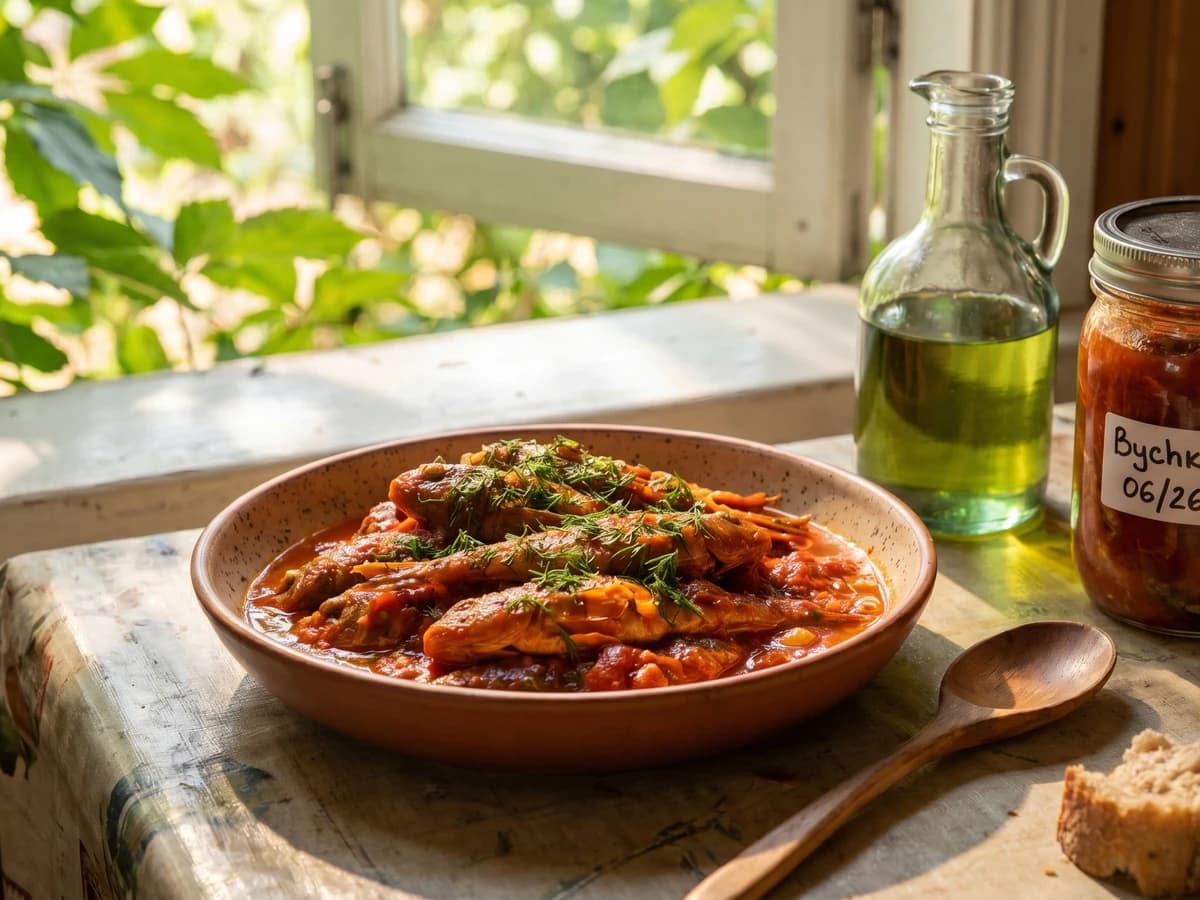
Small Azov gobies go into tomato bright as market cloth and come out soft enough that the bones give up. This is Mariupol food: cheap, red, generous, and better tomorrow.

Chef Lesia
The first sound is the meat against the board: flat, sharp, changing as the fibres loosen. Fry the cutlets fast, then let onion gravy do the soft finishing.

Chef Lesia
A heap of tiny silver fish becomes supper by the oldest Odesa trick: clean them, press them together, fry until the edges crackle, and let lemon and dill do the talking.