
Chef Lupita
Acitrón de Cidra Conventual
Puebla's convent-style acitrón, made from cidra peel instead of endangered biznaga, built through repeated syrup soakings until the cubes turn firm, translucent, and ready for rosca or chiles en nogada.
A cooking platform built around craft, culture, and the stories behind what we eat.
Created by
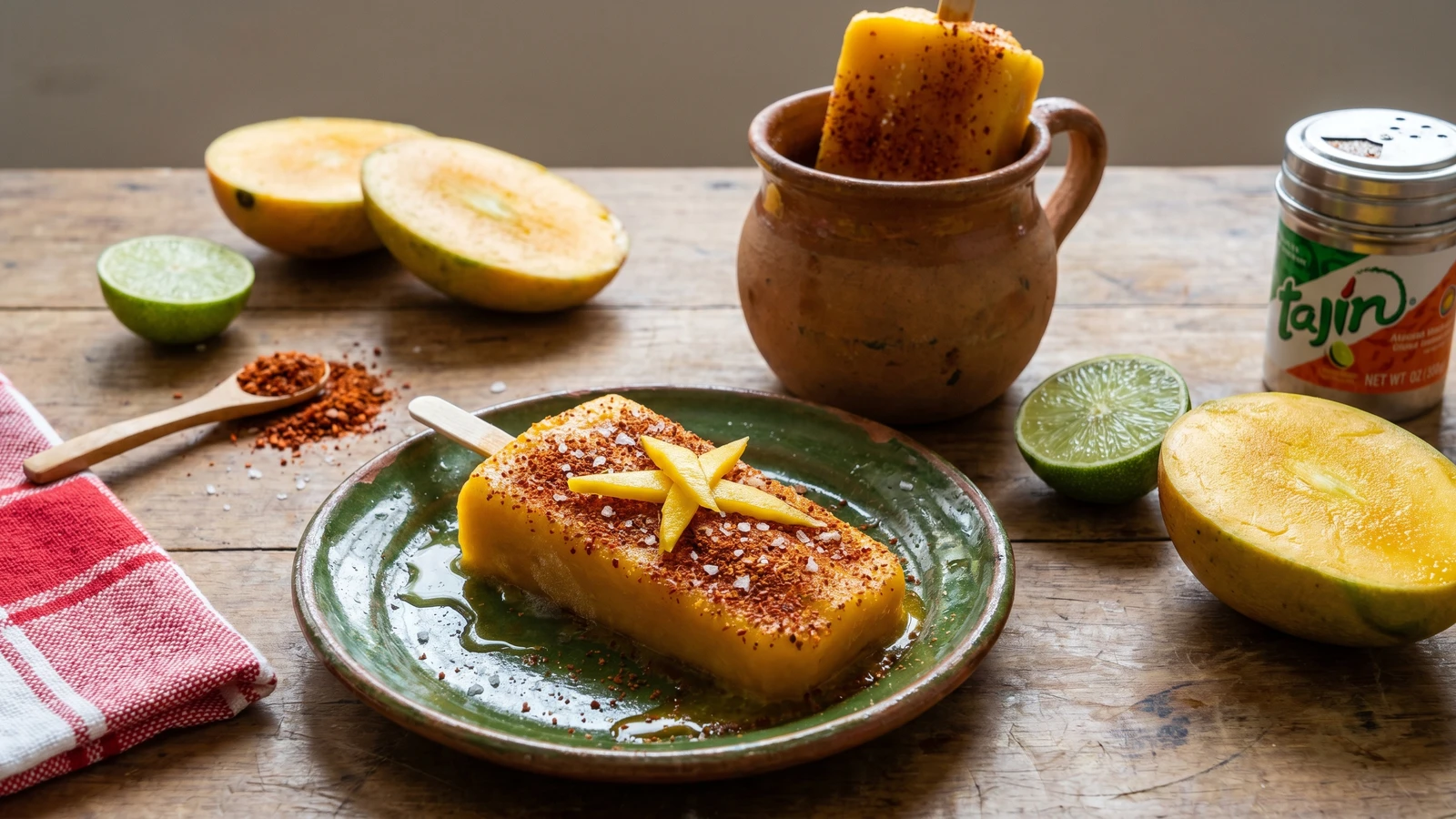
Sinaloa's ataulfo mango blended with lime and a pinch of salt, frozen on a stick, and finished with chile piquin. The paleta that defines a Mexican summer afternoon.
This paleta is from Sinaloa by way of every paleteria in Mexico. The mango that makes it work, the ataulfo, small, yellow, stringless, perfumed at the stem, is grown along Sinaloa's coastal valleys and shipped north every summer when the harvest comes in. Use that mango or wait until you can. The big red Tommy Atkins from the supermarket is a different fruit and it will make a different paleta, a worse one.
The technique is nothing. Blend, freeze, dust. The cuisine is in the sourcing and in the proportions. Lime cuts the sweetness. Salt sharpens the fruit. Chile piquin, the small dried red chile that vendors sell by the bag at every mercado, hits at the end and reminds you that mango and chile have been eaten together in Mexico since long before the paleta existed. La cocina no es decoracion, es trabajo, but sometimes the work is choosing the right mango at the right week of the year and trusting it to do the rest.
My mother kept a small bag of chile piquin and one of sal de grano in a tin on top of the refrigerator. In summer she would slice ataulfo mangoes into clay bowls and dust them at the table. The paleta is the same idea on a stick. Cada estado, su propia cocina, and Sinaloa gave the rest of Mexico the mango that made this possible.
The paleta as a frozen-fruit format originated in Tocumbo, Michoacan, in the 1940s, where local entrepreneurs founded the La Michoacana brand and exported the format to every corner of Mexico through a network of family-run paleterias. The marriage of mango with chile and lime, however, predates the paleta by centuries: pre-Columbian Mesoamerica seasoned tropical fruits with ground dried chile and salt long before sugar was introduced by the Spanish, a practice still visible at every Mexican mercado today. Sinaloa became the dominant producer of the ataulfo mango (also called manila or champagne mango) in the late 20th century, and the variety received Mexico's first agricultural denomination of origin for a fruit in 2003.
Quantity
6 (about 3 pounds whole)
yielding roughly 4 cups flesh
Quantity
1/3 cup (about 4 to 5 limes), plus 1 lime for finishing
Quantity
1/3 cup
adjusted to the sweetness of the fruit
Quantity
1/2 cup
Quantity
1 teaspoon
finely grated
Quantity
1/2 teaspoon
Quantity
2 teaspoons, plus more for dusting
Quantity
1 tablespoon, for dusting
Quantity
for finishing
| Ingredient | Quantity |
|---|---|
| ripe ataulfo mangoesyielding roughly 4 cups flesh | 6 (about 3 pounds whole) |
| fresh lime juice | 1/3 cup (about 4 to 5 limes), plus 1 lime for finishing |
| granulated sugaradjusted to the sweetness of the fruit | 1/3 cup |
| cold water | 1/2 cup |
| lime zestfinely grated | 1 teaspoon |
| kosher salt | 1/2 teaspoon |
| chile piquin, ground | 2 teaspoons, plus more for dusting |
| Tajin Clasico (optional) | 1 tablespoon, for dusting |
| flaky sea salt (optional) | for finishing |
Use ataulfo mango. The yellow ones, small and flat, with thin skin and stringless flesh. Sinaloa is the largest producer of ataulfo in Mexico and this paleta exists because of that fruit. The big red Tommy Atkins mango from the supermarket will give you a fibrous, watery paleta. No me vengas con atajos. The ataulfo should yield to gentle pressure and smell like perfume at the stem. If it is hard, leave it on the counter for two more days.
Stand each mango on its stem end. Slice down on either side of the flat pit. Score the flesh of each cheek in a crosshatch pattern down to the skin without cutting through. Press the skin inward to pop the cubes outward and slice them off into a bowl. Run your knife along the pit to catch what is left. Get every bit. Each mango holds more flesh than people think and the cook who throws away the pit cheeks is wasting money.
Combine the mango flesh, lime juice, sugar, water, lime zest, and kosher salt in a blender. Blend on high for 60 to 90 seconds, until completely smooth and a deep gold color. Taste it now. The mixture should taste a little too sweet and a little too salty for a drink. Cold dulls flavor. What tastes balanced at room temperature will taste flat once frozen. Adjust with more lime if it is flabby, more sugar if your mangoes were thin, more salt if it tastes one-note.
Stir the 2 teaspoons of ground chile piquin directly into the puree with a spoon, not the blender. You want streaks and pockets of chile suspended in the mango, not a uniform orange. As the paleta melts in the mouth, the chile hits in waves. That is the point. A perfectly mixed chile puree is a smoothie, not a paleta de mango con chile.
Pour the puree into paleta molds, leaving about a quarter inch of space at the top. The mixture expands as it freezes. Tap the molds against the counter a few times to release air bubbles trapped in the thick puree. Insert the wooden sticks. If your mold has a lid, set it. If you are using disposable cups, freeze for 90 minutes first until the puree is slushy, then push the sticks in so they stand upright.
Freeze for at least 6 hours, ideally overnight. Paletas are denser than American popsicles because of the fruit content, and they need real time to set through the center. A paleta pulled too early will collapse off the stick. Patience is the technique here.
Run the outside of the mold under warm tap water for 5 to 10 seconds. Pull each paleta out by the stick with a steady, even motion. Set them on a chilled plate. Just before serving, squeeze a little fresh lime over each paleta and dust generously with more chile piquin or Tajin and a few flakes of sea salt. The lime makes the chile cling. Eat immediately. A paleta in summer waits for nobody. Asi se hace y punto.
1 serving (about 95g)
Culinary guides, cultural storytelling, and the editorial depth that makes cooking meaningful.
Discover Culinary ExplorerChef Lupita
Puebla's convent-style acitrón, made from cidra peel instead of endangered biznaga, built through repeated syrup soakings until the cubes turn firm, translucent, and ready for rosca or chiles en nogada.

Chef Lupita
Ciudad de México's Tulyehualco alegría is popped huautli folded into piloncillo honey, pressed with peanuts, pepitas, and raisins, then cut into the rectangular bars that built a pueblo's identity.

Chef Lupita
Oaxaca's pre-Columbian amaranth bar, popped on a hot comal and bound with piloncillo, honey, and the sacred Zapotec grain that the Spanish tried, and failed, to outlaw.

Chef Lupita
Querétaro's mercado candy of popped amaranto pressed with dark piloncillo syrup, pepitas, pecans, and cacahuate, a Bajío sweet that respects the seed before it decorates the table.