
Chef Lupita
Acitrón de Cidra Conventual
Puebla's convent-style acitrón, made from cidra peel instead of endangered biznaga, built through repeated syrup soakings until the cubes turn firm, translucent, and ready for rosca or chiles en nogada.
A cooking platform built around craft, culture, and the stories behind what we eat.
Created by
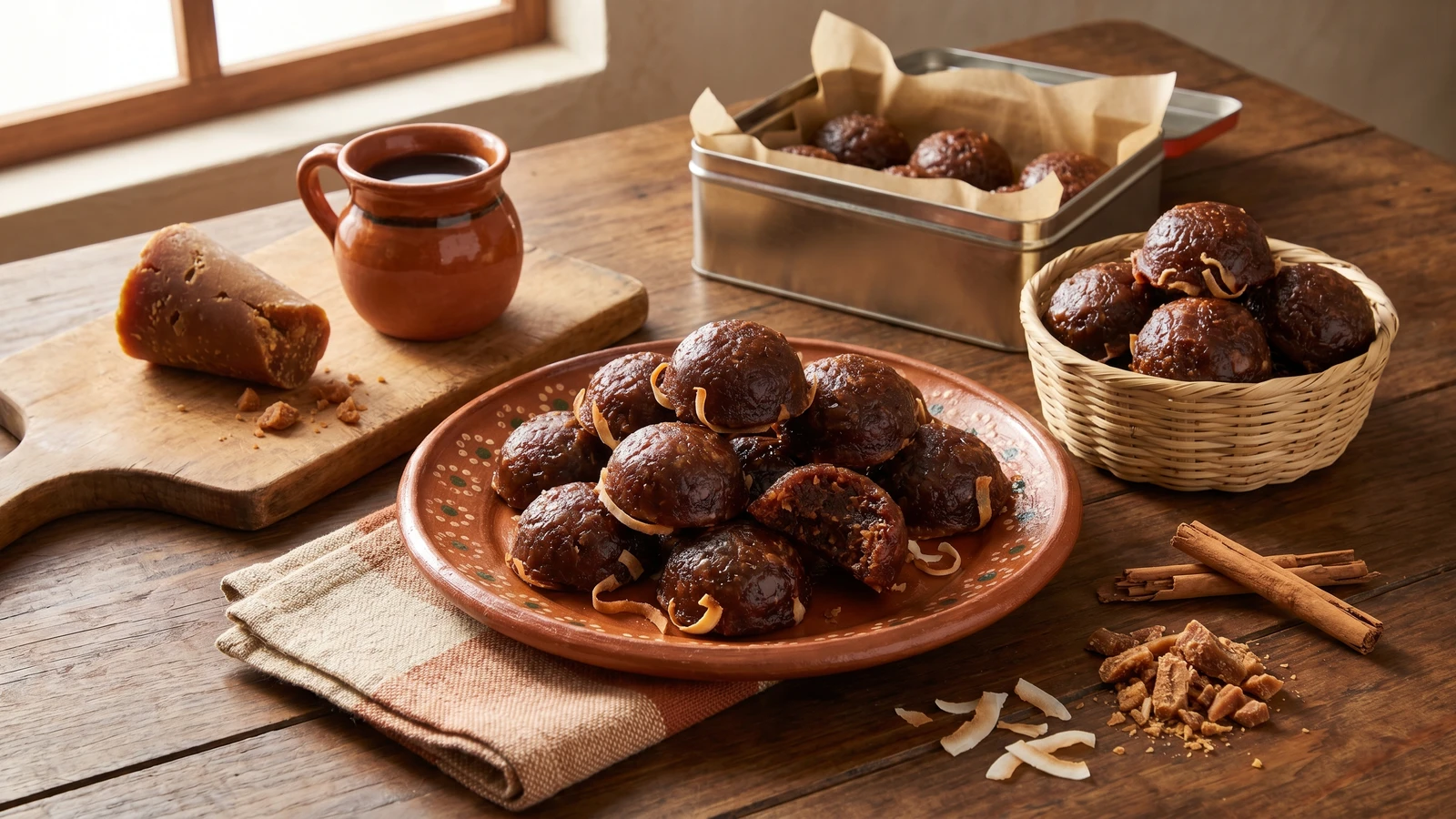
Sonora's piloncillo cocadas, shredded coconut cooked down with cane sugar syrup, canela, and a splash of condensed milk until the spoon stands, then set in craggy mounds with toasted edges and a chewy center.
These are cocadas from Sonora. Not the soft white ones from Veracruz, not the colored ones from Colima with the dyed coconut. Sonorense cocadas are dark, the color of piloncillo, with toasted edges and a chewy center that pulls at your teeth without sticking to them.
The north of Mexico is dulce country. Sonora, Chihuahua, Coahuila. Long traditions of cajetas, jamoncillos, glorias, and these piloncillo-bound cocadas that show up at every fiesta, every holiday, every market stall from Hermosillo to Navojoa. They are made from four things: piloncillo, water, dried coconut, and a splash of leche condensada to bind the mass and put a gloss on it. Canela goes into the syrup because in Sonora canela goes into nearly every dulce. That is the regional fingerprint.
My mother kept a tin of these in the alacena when I was small. She got the recipe from a senora at a wedding in Ciudad Obregon, written on a napkin and tucked into her notebook between the birria and the camarones. The note in the margin said: "hasta que la cuchara se pare," until the spoon stands. That is the only doneness test that matters. Cook the coconut until you drag your spoon across the bottom and the trail holds open before closing. Pull it sooner and the cocadas will weep sugar on the counter. Pull it later and they go from candy to brick. Recetas probadas y garantizadas.
This is a budget dessert in the best sense. A cone of piloncillo, a bag of dried coconut, half a can of condensed milk, and you have twenty pieces of candy that keep for two weeks in a tin. Saber cocinar es saber vivir.
Coconut is not native to Sonora. It traveled north along colonial trade routes from the Pacific coastal states of Colima, Guerrero, and Michoacan, where it had been introduced from the Philippines via the Manila Galleon trade in the 16th and 17th centuries. The cocada itself is a confection of clear Spanish-Arab descent, brought to New Spain by colonial nuns who adapted convent sugar-craft to the new ingredient, and northern Mexico's enduring sweet tooth, expressed in cajetas, jamoncillos, and piloncillo-based dulces, owes its character to the cattle and dairy economy that grew up alongside the sugar trade across Sonora, Chihuahua, and Coahuila. The distinct Sonorense version, dark with piloncillo and finished with a brief oven toast, is a 19th and 20th century evolution that broke from the white convent cocada of central Mexico by leaning into the rustic, molasses-forward sugar that defined northern home pantries.
Quantity
8 ounces (about 1 large cone)
chopped, or 1 packed cup dark brown sugar as a compromise
Quantity
1 cup
Quantity
1
Quantity
1/2
split lengthwise, or 1 teaspoon Mexican vanilla extract
Quantity
4 cups
Quantity
1/2 cup
Quantity
1/4 teaspoon
Quantity
2 tablespoons
Quantity
1
lightly beaten
| Ingredient | Quantity |
|---|---|
| piloncillochopped, or 1 packed cup dark brown sugar as a compromise | 8 ounces (about 1 large cone) |
| water | 1 cup |
| cinnamon stick (canela de Ceylan) | 1 |
| vanilla beansplit lengthwise, or 1 teaspoon Mexican vanilla extract | 1/2 |
| unsweetened shredded dried coconut (coco rallado sin azucar) | 4 cups |
| sweetened condensed milk (La Lechera) | 1/2 cup |
| kosher salt | 1/4 teaspoon |
| unsalted butter | 2 tablespoons |
| large egg yolk (optional)lightly beaten | 1 |
Put the chopped piloncillo, water, and cinnamon stick in a heavy-bottomed saucepan over medium heat. Stir occasionally until the piloncillo dissolves completely, about 8 to 10 minutes. The piloncillo is hard and stubborn. Do not raise the heat to rush it. You want a clean dark syrup, the color of strong coffee, not a burnt one. Scrape in the vanilla seeds, drop in the pod, and let it steep in the syrup as it cooks down.
Once the piloncillo has dissolved, raise the heat to medium and let the syrup bubble steadily for 5 to 7 minutes. It should reduce by about a third and thicken enough to coat the back of a wooden spoon. Drag a finger across the spoon. The trail should hold for a second before closing. That is the consistency you want before the coconut goes in.
Lower the heat to medium-low. Fish out the cinnamon stick and the vanilla pod. Stir in the coconut all at once and keep stirring. The mixture will look dry for a moment. Then pour in the condensed milk and the salt and keep working it with the spoon. La Lechera is not optional here. It is the binder and the gloss. This is how the senoras in Hermosillo and Navojoa do it, and that is the recipe.
Keep stirring over medium-low for 12 to 15 minutes. The coconut will drink the syrup and start to darken into a deep caramel color. The mixture goes from soupy to pasty to thick. You know it is ready when you drag the spoon across the bottom of the pan and the trail holds open for two full seconds before the coconut creeps back together. Stir in the butter and the egg yolk now, off the heat, until the butter melts and everything looks glossy.
Line a sheet pan with parchment paper. While the mixture is still hot, scoop heaping tablespoons of the coconut paste and drop them onto the parchment, leaving an inch between each one. Shape lightly with the back of a wet spoon into rough mounds about the size of a walnut. Do not press them flat. Cocadas are meant to be domed, with rough edges and a craggy top that catches the light.
Heat the oven to 350F. Slide the sheet pan in for 8 to 10 minutes, until the tops turn a deeper mahogany and the edges of the coconut shreds toast and curl. This step is what gives Sonorense cocadas the dry-edged, chewy-centered bite that distinguishes them from the soft, white cocadas of Veracruz. Cada estado, su propia cocina.
Let the cocadas cool completely on the pan, at least 30 minutes. They firm as they cool. Touch one when it is warm and it will still be soft. Touch it when it is cool and the outside is candy-firm with a chewy center. That is the cocada. Store in a tin with parchment between the layers.
1 serving (about 35g)
Culinary guides, cultural storytelling, and the editorial depth that makes cooking meaningful.
Discover Culinary ExplorerChef Lupita
Puebla's convent-style acitrón, made from cidra peel instead of endangered biznaga, built through repeated syrup soakings until the cubes turn firm, translucent, and ready for rosca or chiles en nogada.

Chef Lupita
Ciudad de México's Tulyehualco alegría is popped huautli folded into piloncillo honey, pressed with peanuts, pepitas, and raisins, then cut into the rectangular bars that built a pueblo's identity.

Chef Lupita
Oaxaca's pre-Columbian amaranth bar, popped on a hot comal and bound with piloncillo, honey, and the sacred Zapotec grain that the Spanish tried, and failed, to outlaw.

Chef Lupita
Querétaro's mercado candy of popped amaranto pressed with dark piloncillo syrup, pepitas, pecans, and cacahuate, a Bajío sweet that respects the seed before it decorates the table.