
Chef Makoa
Baked ʻUala (Hawaiian Sweet Potato in the Embers)
Whole Hawaiian ʻuala baked in embers or a hot oven until the skins char and the flesh goes honey-soft, finished plain with paʻakai so the canoe crop tastes like itself.
A cooking platform built around craft, culture, and the stories behind what we eat.
Created by
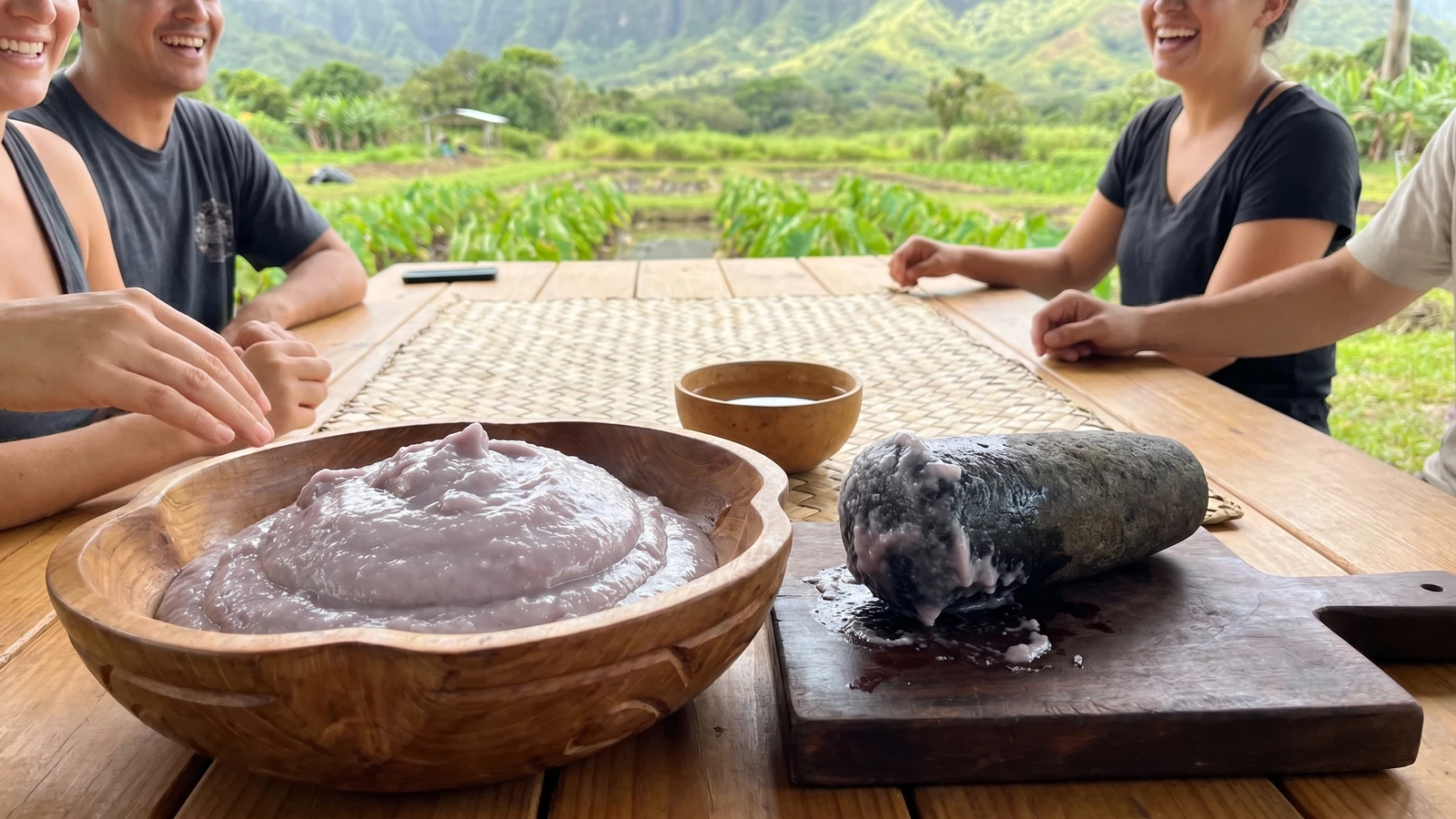
Hawaiian paʻiʻai is kalo steamed soft, cleaned, and pounded by hand until it shines, thick enough to lift from the stone, ready to eat as is or loosen into poi.
My kumu put the pōhaku, the stone pounder, in my hands before he put any speech in my ears. Pound first, talk after. This is Hawaiʻi's paʻiʻai, thick hand-pounded kalo, and before it's food on the board it is Hāloa, our elder brother, the one who came before us and still feeds us from under the ground.
Back home on Oʻahu, the papa kuʻi ʻai, the poi-pounding board, doesn't feel like a tool. It feels like a place to sit down with family. You steam the kalo until every bit of bitterness and bite has given way, peel it while it's still warm, then pound slow with small drinks of water. First it fights you. Then it catches. Then it turns glossy and lifts from the board in one smooth body, and that shine tells you more than any timer.
The cousins know this root too. Sāmoa has talo, the Cook Islands and Tahiti have taro and ʻuru beside it, the Marquesas have poʻe, and across the Triangle the old people kept pounded starch close to the center of the table. One ocean, one canoe, one root, but this hand here is Hawaiian, and we name it that clean.
No need make it precious. If you have a real stone and board, good. If not, a heavy mortar or sturdy stand mixer can carry you through a weeknight, though the hand knows things the machine doesn't. Just don't rush the cooking, and don't blame the taro if you did. No blame the taro. It's not the taro's fault.
Kalo was among the canoe plants carried by Polynesian voyagers across the Pacific, and in Hawaiʻi it became both staple food and genealogy through Hāloa, the elder sibling of the Hawaiian people. Paʻiʻai is the dense hand-pounded form, later thinned with water into poi, and its survival was strained by land loss, plantation agriculture, and the quieting of household pounding. The modern return to papa kuʻi ʻai work sits beside the voyaging canoe revival: people sailing, planting, and pounding their way back to ʻāina, kānaka, meaʻai, land, people, food.
Quantity
3 pounds
scrubbed
Quantity
as needed
for steaming
Quantity
1 to 1 1/2 cups
added little by little while pounding
| Ingredient | Quantity |
|---|---|
| whole mature kalo (Hawaiian taro corms)scrubbed | 3 pounds |
| waterfor steaming | as needed |
| cool wateradded little by little while pounding | 1 to 1 1/2 cups |
Set the scrubbed kalo in a steamer over steady water and cook until a knife slides through the thickest part with no chalky center, usually 1 to 1 1/2 hours depending on size. Raw or undercooked kalo can bite the throat, so don't pull it early. Let it go soft all the way through.
Let the kalo cool just enough to handle, then peel away the rough skin and trim off any dry or fibrous spots. Keep the flesh warm if you can. Warm kalo pounds smoother, like it wants to come together instead of arguing with you.
Cut the cooked kalo into rough chunks and set a few pieces on the papa kuʻi ʻai, the pounding board, or into a heavy mortar. Pound straight down at first, turning and gathering the pieces back together, until the chunks become a thick, sticky mass.
Dip your fingers or the pōhaku kuʻi ʻai, the poi pounder, in cool water and work in only a spoonful at a time. Pound, fold, scrape, and pound again. The paʻiʻai will move from lumpy and dull to tight, smooth, and glossy, lifting from the board in one clean body.
For paʻiʻai, stop while it is still dense enough to hold its shape and pull cleanly from the stone. For poi, keep adding small drinks of water and work it softer until it flows from two or three fingers. Same elder brother, different thickness.
Serve paʻiʻai warm or room temperature in an ʻumeke, a carved wooden bowl, with fish, greens, kālua puaʻa, or whatever your table has that day. Cover leftovers tight with a little water smoothed over the surface. Eat what you have, and keep the relationship alive.
1 serving (about 175g)
Culinary guides, cultural storytelling, and the editorial depth that makes cooking meaningful.
Discover Culinary ExplorerChef Makoa
Whole Hawaiian ʻuala baked in embers or a hot oven until the skins char and the flesh goes honey-soft, finished plain with paʻakai so the canoe crop tastes like itself.
Chef Makoa
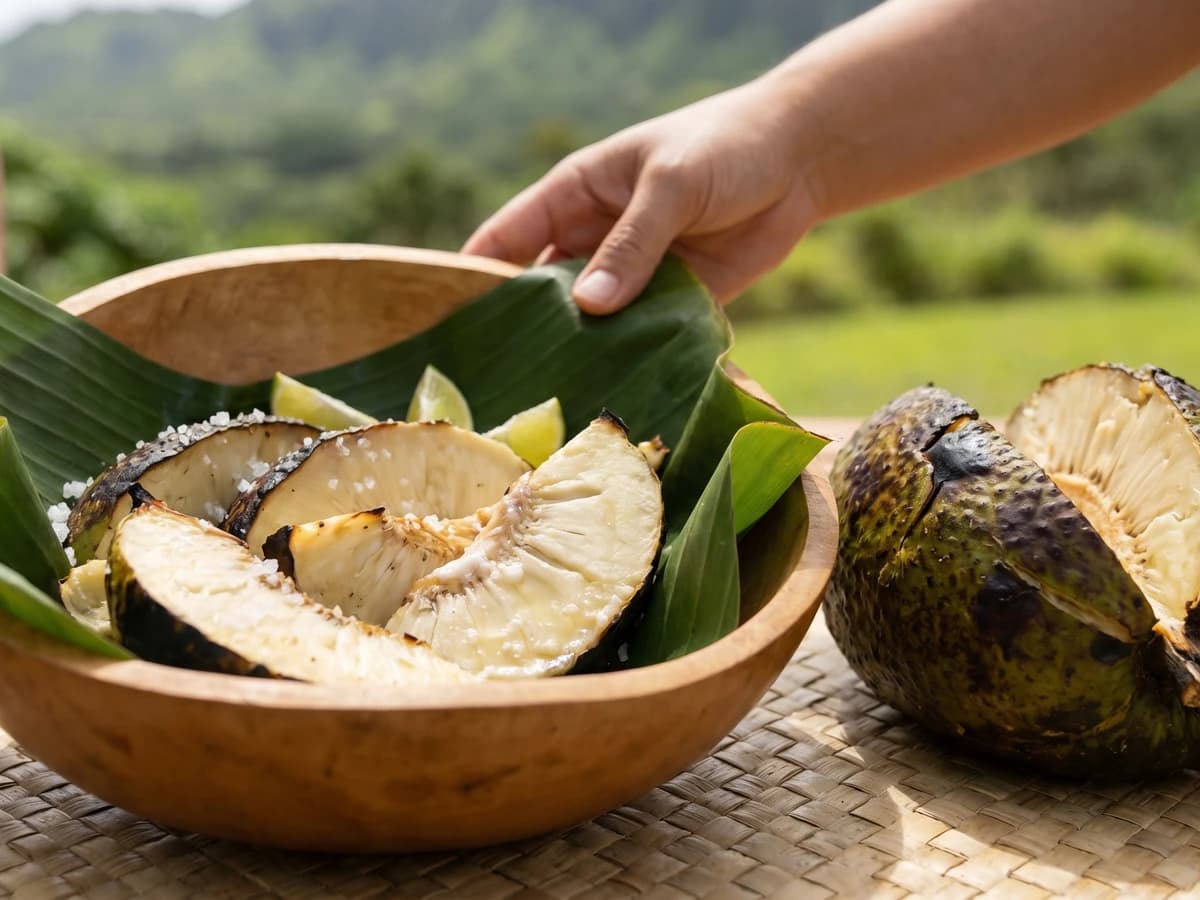
Hawaiʻi's ʻulu, breadfruit, roasted whole until the skin blackens and the inside turns soft and bread-like, the old canoe crop made real for a weeknight oven.
Chef Makoa
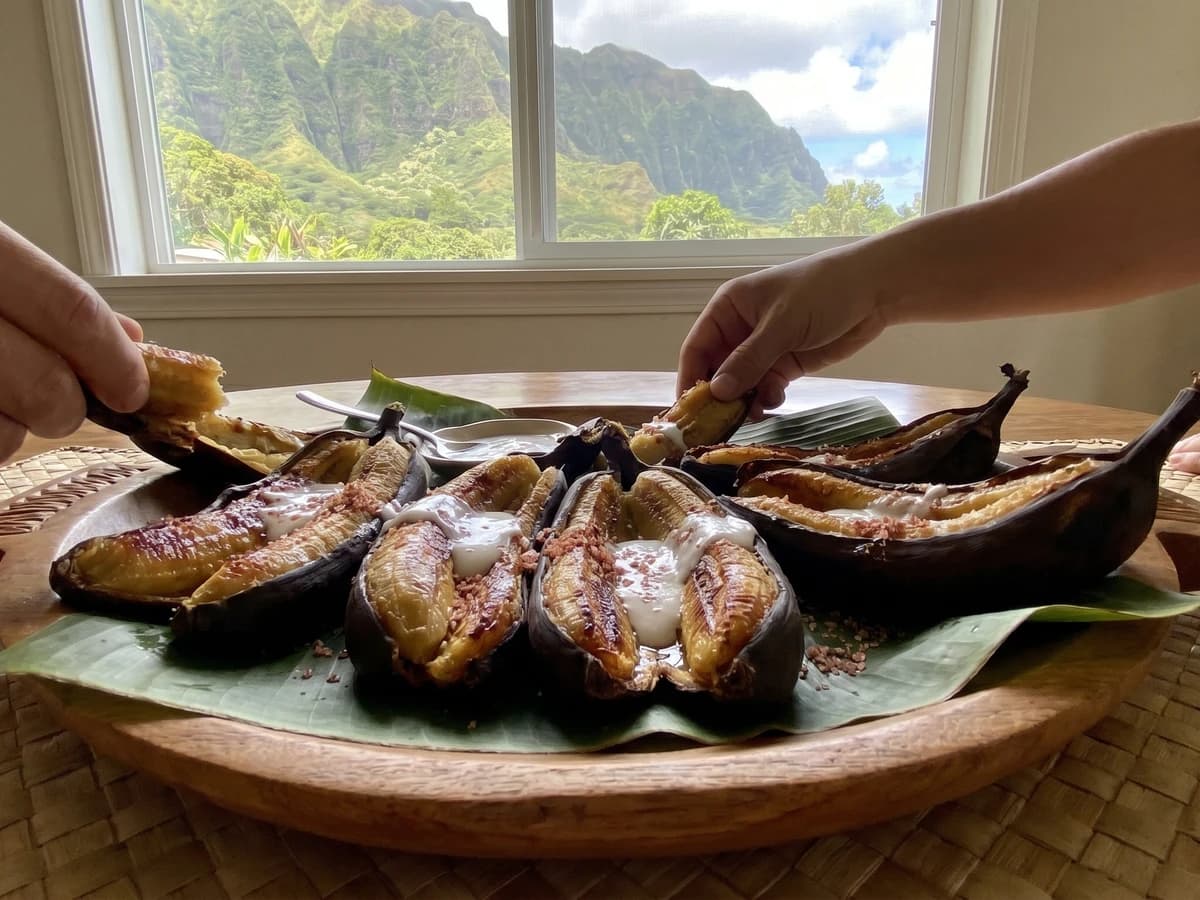
Firm Hawaiian maiʻa baked in its own skin until the starch relaxes into quiet sweetness, split open with coconut cream and paʻakai, a canoe-crop side for weeknight rice or a lūʻau table.
Chef Makoa
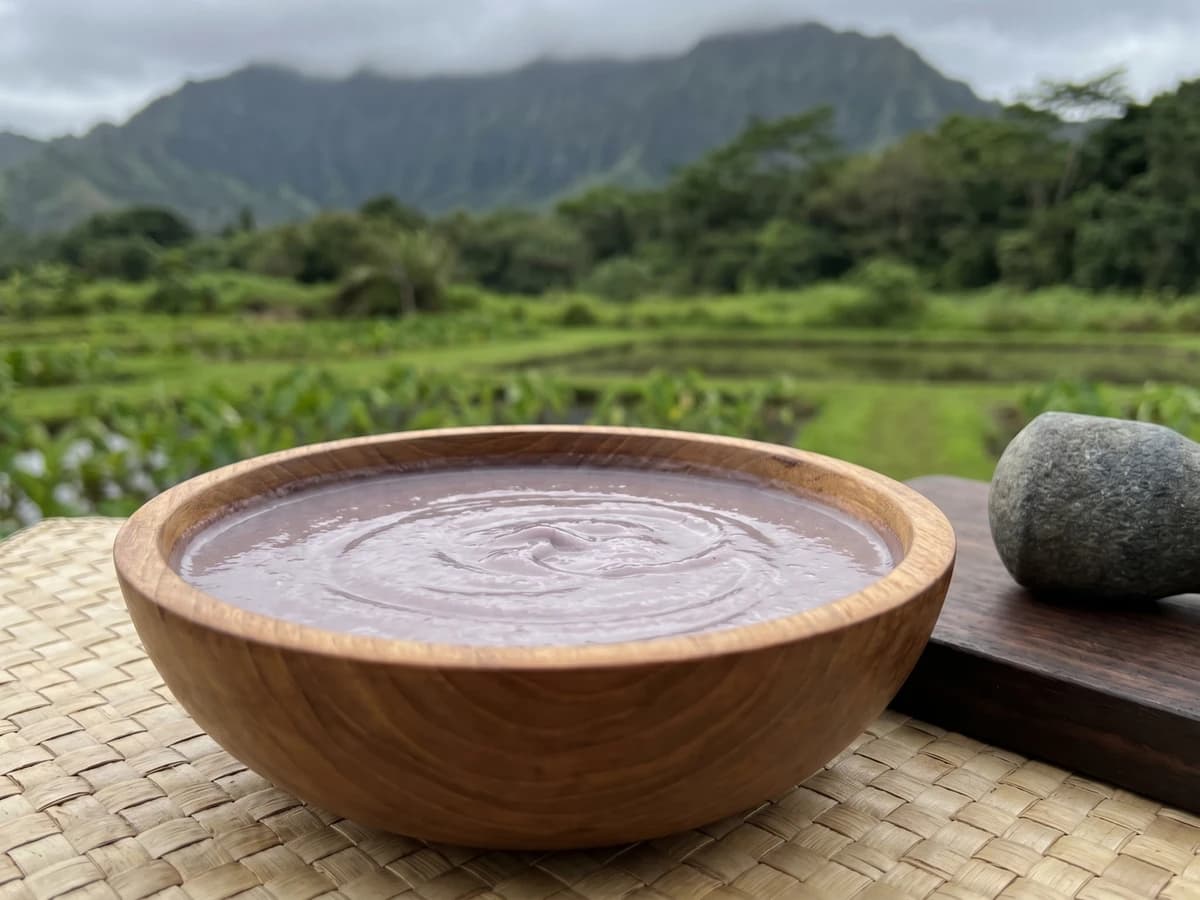
Fresh Hawaiian poi left to turn ʻawaʻawa, sour, over a few days, tangy and clean from its own kalo life, ready beside fish, kālua puaʻa, laulau, or tomorrow's plate lunch.