Chef Isabel
Abanico Ibérico a la Plancha
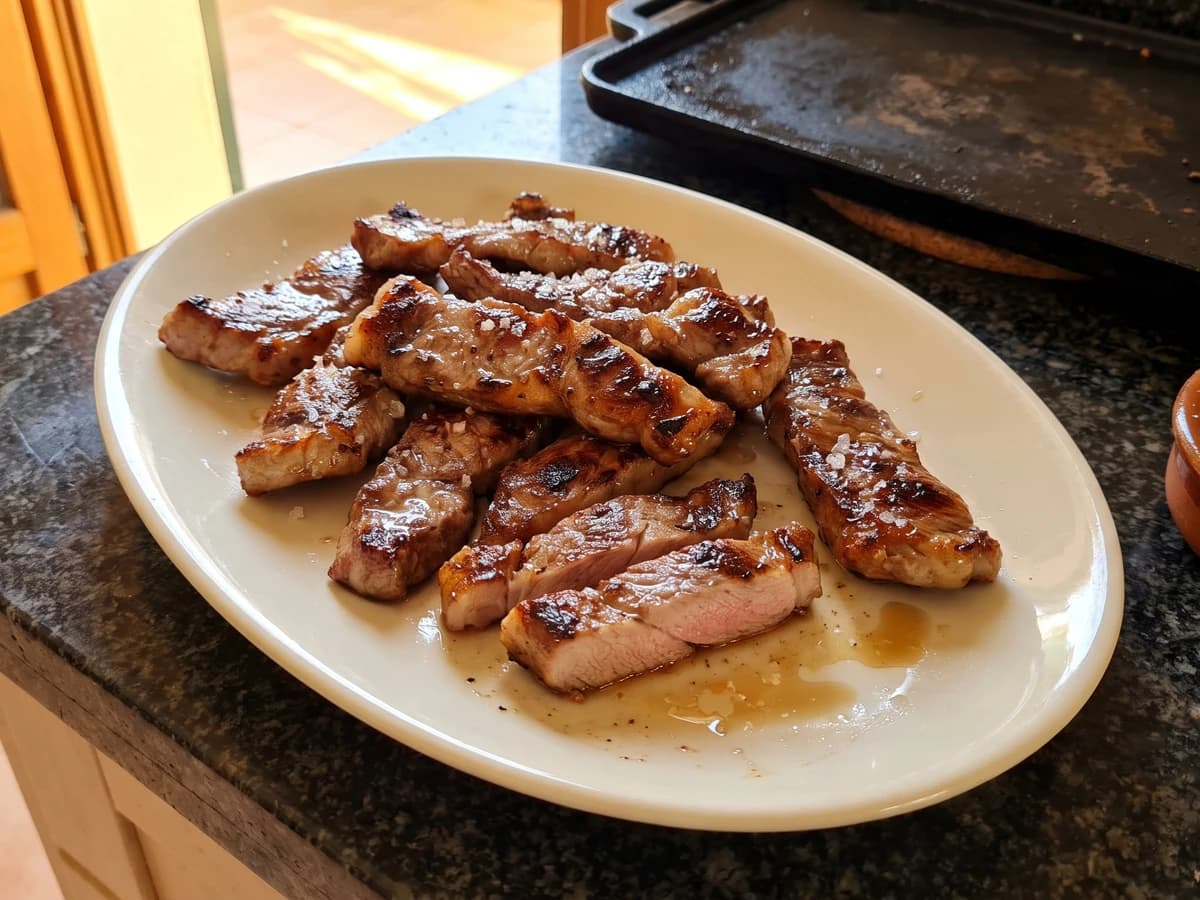
Extremadura's dehesa gives us this fan-shaped, marbled rib cut: salt it at the last moment, lay it on a fierce plancha, and count in seconds so the centre stays juicy.
A cooking platform built around craft, culture, and the stories behind what we eat.
Created by
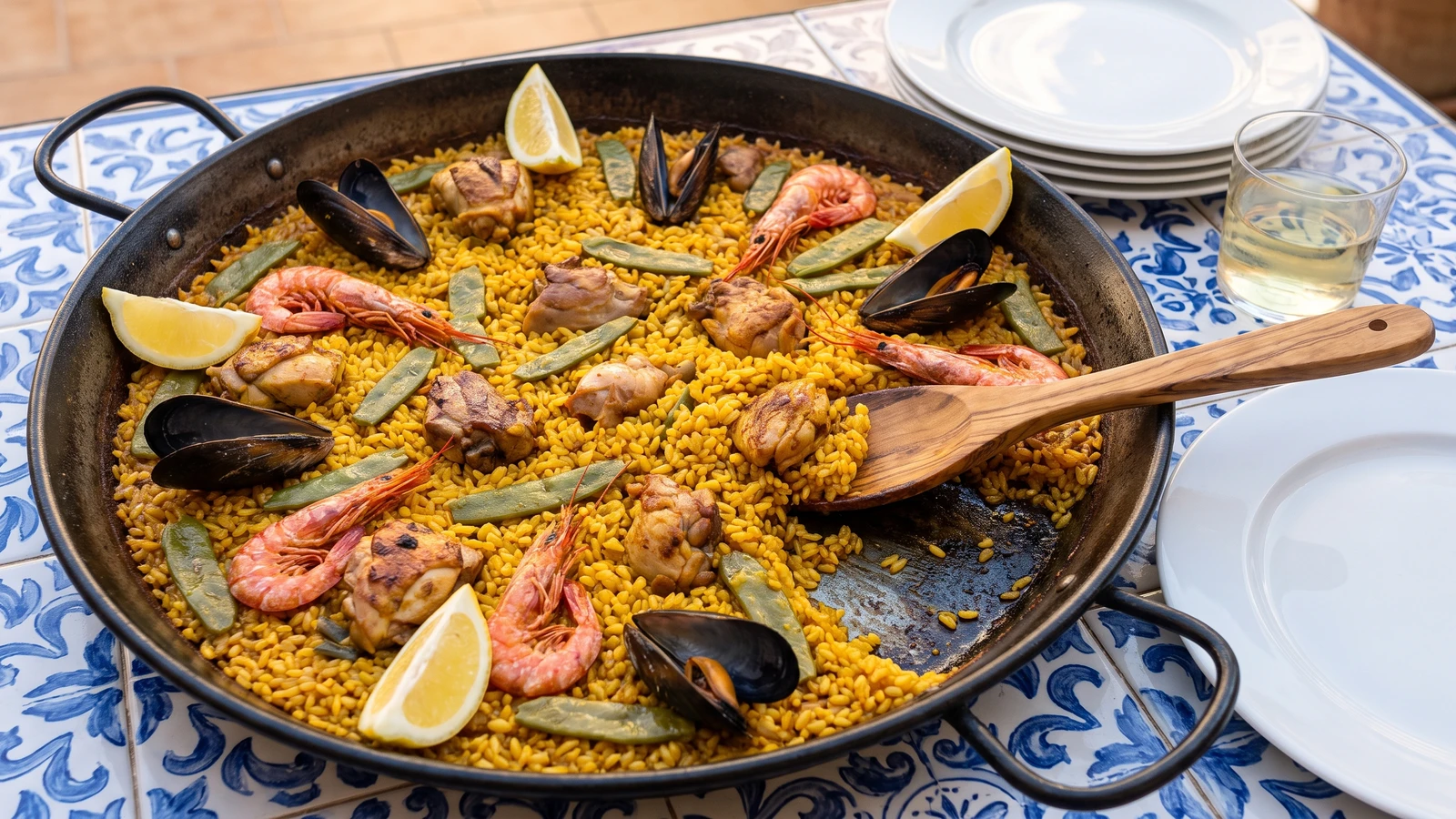
Paella mixta is Valencia's coastal rice of field and sea: chicken and rabbit, prawns and mussels, bomba rice stained with saffron, and the rule that matters once the stock goes in: don't stir.
Paella mixta belongs to the Valencian rice table, the coastal mar i muntanya side of it, where chicken and rabbit meet prawns and mussels in one shallow paellera. It is not the old Paella Valenciana from the fields around l'Albufera, and it should not pretend to be. This one looks inland and out to sea at once: browned meat, shellfish, saffron, tomato cooked down hard, and rice left dry and separate. No chorizo. That's another dish wearing the wrong hat.
The method that decides it is this: build the sofrito, the slow tomato base, until the grated tomato has lost its water and the oil comes back clear at the edges. Then move the rice through that oil until the grains look glassy. Hot stock goes in all at once, and from there you keep your spoon out. Stirring works the starch loose; paella wants separate rice and a dark socarrat, the toasted bottom, not a creamy pot of arroz.
If you're far from Valencia, buy bomba or Calasparra rice. If you must use arborio, use 100ml less liquid and expect a softer grain; it will feed you well, but it won't stand as firm. Use shell-on prawns and live mussels that close when tapped. If rabbit is hard to find, use more chicken, but don't replace the seafood with sausage. No hace falta haber pisado España, you don't need to have set foot in Spain. You do have to shop honestly.
Set the pan wide, keep the rice shallow, and rotate it if your burner heats unevenly. The Margin in my notebook says only this beside paella: "when the stock enters, hands off." Siempre sale, si lo sigues, it turns out if you follow it.
Paella belongs to Valencia, especially the rice lands around l'Albufera, where the wide pan was used over a low fire to cook a thin layer of local rice with what the field gave: rabbit, chicken, snails, flat beans, and garrofó. Paella mixta is a later coastal branch of that rice culture, not the old field recipe, bringing meat and shellfish into the same dry-rice method, a mar i muntanya habit natural to the Valencian and Catalan shore. The argument matters because not every arroz is paella: the name rests on the pan, the shallow layer, the uncovered cooking, and the rice left unstirred until the socarrat forms.
Quantity
450g
Quantity
600g
chopped into 4cm pieces
Quantity
400g
chopped into 4cm bone-in pieces, or use 400g more chicken
Quantity
12, about 400g
preferably heads-on
Quantity
750g
scrubbed and debearded
Quantity
300g
cut into rings and strips
Quantity
200g
trimmed and cut into 4cm pieces
Quantity
80ml
Quantity
250g
grated to pulp, skins discarded, or use 200g good canned crushed tomato
Quantity
4
finely chopped
Quantity
1
soaked and flesh scraped
Quantity
1 1/2 teaspoons
Quantity
0.2g
Quantity
1.3 litres total
strained mussel liquor topped up with light chicken stock and fish or shellfish stock
Quantity
100ml
for opening the mussels
Quantity
10g, divided, plus more to taste
Quantity
1
cut into wedges
| Ingredient | Quantity |
|---|---|
| bomba rice or Calasparra rice | 450g |
| bone-in chicken thighs or drumstickschopped into 4cm pieces | 600g |
| rabbitchopped into 4cm bone-in pieces, or use 400g more chicken | 400g |
| large shell-on prawnspreferably heads-on | 12, about 400g |
| musselsscrubbed and debearded | 750g |
| cleaned squidcut into rings and strips | 300g |
| flat green beanstrimmed and cut into 4cm pieces | 200g |
| extra virgin olive oil | 80ml |
| ripe tomatoesgrated to pulp, skins discarded, or use 200g good canned crushed tomato | 250g |
| garlic clovesfinely chopped | 4 |
| dried ñora pepper (optional)soaked and flesh scraped | 1 |
| sweet pimentón | 1 1/2 teaspoons |
| saffron threads | 0.2g |
| hot mixed stockstrained mussel liquor topped up with light chicken stock and fish or shellfish stock | 1.3 litres total |
| waterfor opening the mussels | 100ml |
| fine sea salt | 10g, divided, plus more to taste |
| lemon (optional)cut into wedges | 1 |
Scrub the mussels and pull away the beards. Discard any cracked ones and any open mussels that do not close when tapped. Put them in a small pan with 100ml water, cover, and cook over high heat for 2 to 3 minutes, shaking once, just until they open. Lift them out, discard any that stay shut, and strain the liquor through a fine sieve. Add enough hot chicken and fish stock to that liquor to make 1.3 litres total, then keep it hot.
Pat the chicken and rabbit dry and season them with 6g of the salt. Set a 38 to 40cm paella pan over a wide gas burner, outdoor ring, or two burners, and heat the olive oil. Sear the prawns for about 45 seconds on each side, just until the shells turn red and glossy, then lift them out. Add the chicken and rabbit and brown them well for 8 to 10 minutes, turning until the edges are golden and the pan smells meaty.
Add the flat green beans to the meat and cook for 3 minutes, scraping the browned bits from the pan. Add the squid and cook for 2 minutes more, until it turns opaque and gives up its first liquid. Keep the heat lively enough that the pan sizzles; if the squid sits in a puddle, the sofrito will have to fight through water before it can sweeten.
Lower the heat to medium. Add the garlic and the scraped ñora flesh, if using, and stir for 30 seconds. Add the grated tomato and 3g salt, then cook it down for 8 to 10 minutes, stirring now and then, until the tomato turns dark, thick, and almost jammy and the oil shows clear at the edges. Stir in the pimentón for 10 seconds only. Do not let it burn, or it turns bitter.
Sprinkle the rice evenly into the pan and move it through the sofrito for 1 to 2 minutes, until the grains look glassy and every grain is coated with oil and tomato. Pésalo, no lo adivines: the rice and stock balance is what keeps a paella dry rather than soupy. Level the rice into a thin, even layer.
Crush the saffron between your fingers into the hot stock, then pour the stock into the pan all at once. It should bubble hard straight away. Taste the liquid now; it should be well seasoned, a little stronger than a soup, because the rice will drink it. Use the spoon only to spread the rice evenly and tuck the meat through the pan. From this point, do not stir.
Boil briskly for 8 minutes. Lower the heat to medium-low and cook for 5 minutes more, still without stirring. Arrange the prawns and opened mussels over the top, pressing them lightly into the rice, and cook another 5 to 6 minutes, until the liquid has disappeared and the rice is just tender with a tiny firm point at the centre.
When the rice is nearly done and the pan looks dry, raise the heat for 60 to 90 seconds and listen for a fine crackle underneath. Smell for toast, not burn. That dark crust is the socarrat, the prize at the bottom. If the rice is still too firm and the pan is dry, spoon 50ml hot water or stock around the edges and cook 2 minutes more. If the rice is tender but wet, give it another minute over higher heat.
Take the paella off the heat, cover it loosely with a clean cloth or paper, and rest it for 5 to 10 minutes. Serve from the pan, with lemon wedges if you like them. Scrape the bottom fairly so everyone gets a little socarrat. Tal como se hace allí: the pan comes to the table, and people know where the good bits are.
1 serving (about 560g)
Culinary guides, cultural storytelling, and the editorial depth that makes cooking meaningful.
Discover Culinary ExplorerChef Isabel
Extremadura's dehesa gives us this fan-shaped, marbled rib cut: salt it at the last moment, lay it on a fierce plancha, and count in seconds so the centre stays juicy.
Chef Isabel
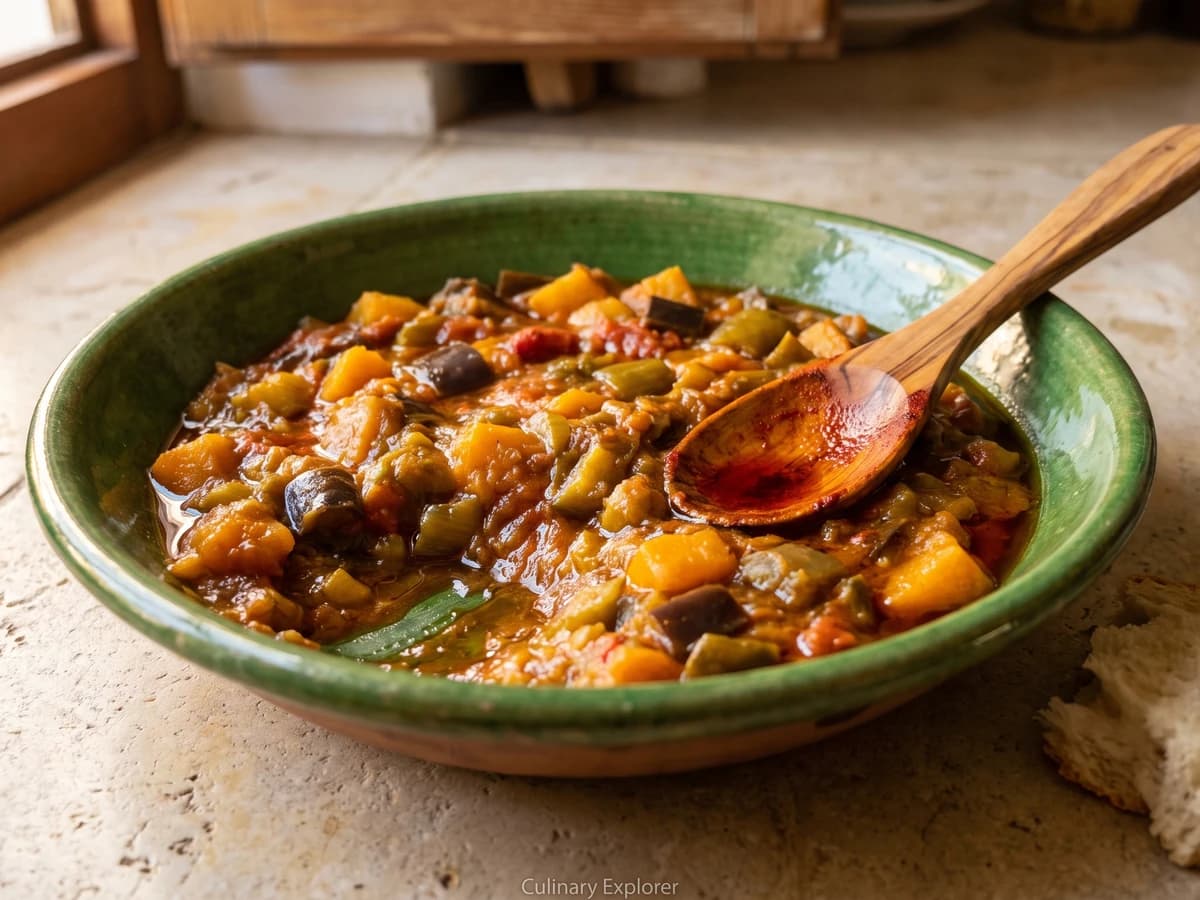
Alboronía is Andalucía's old pumpkin and aubergine stew, deepened with tomato, pimentón, and cumin, then cooked without hurry until the vegetables settle into a glossy, sweet, spoon-soft whole.

Chef Isabel
Aletría Murciana is Murcia's humble noodle guiso: fine fideos, pork ribs, potato, saffron, and a dark sweet sofrito. Get that base right and the pot knows where it's going.
Chef Isabel
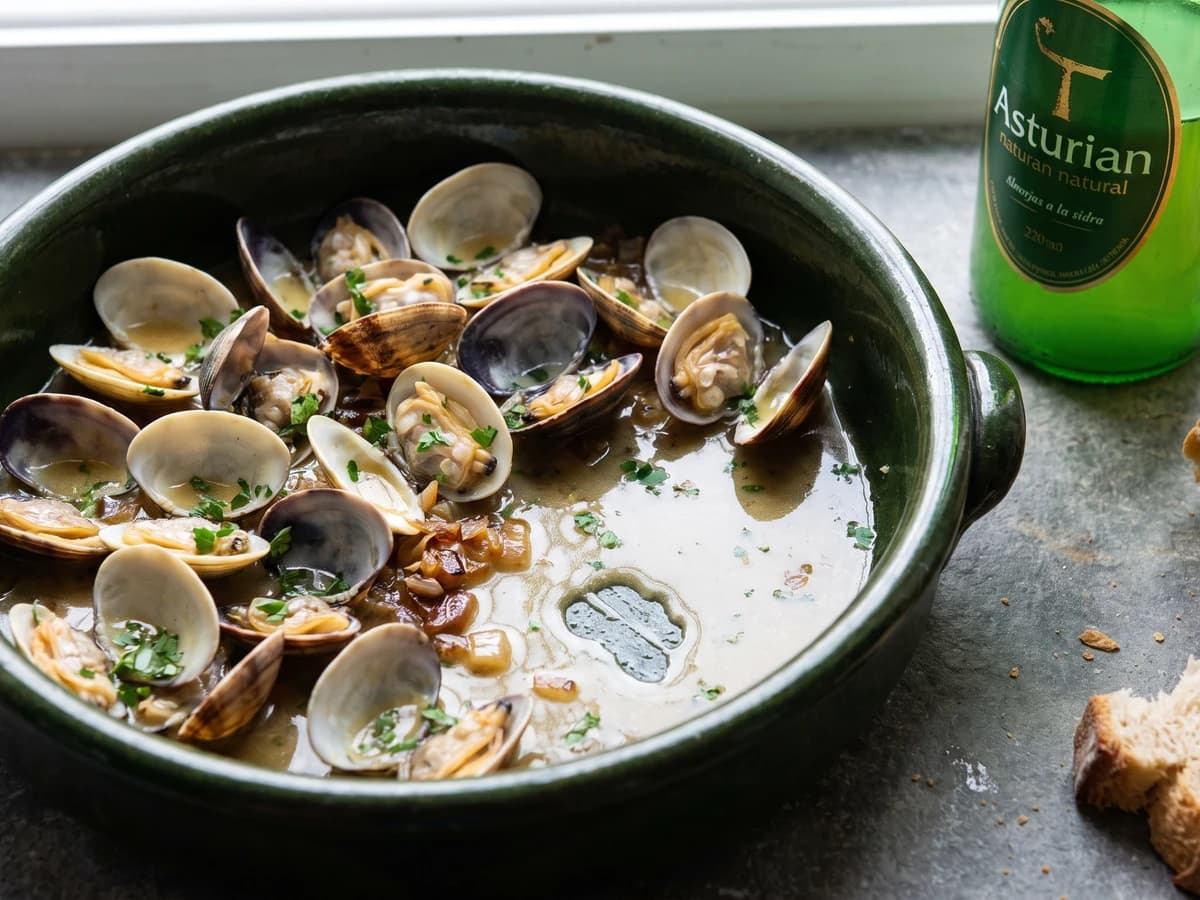
Asturias opens clams in tart natural cider over a slow onion and garlic sofrito, making a bright, briny sauce that asks for bread and rewards one rule: lift each clam as it opens.