Chef Isabel
Abanico Ibérico a la Plancha
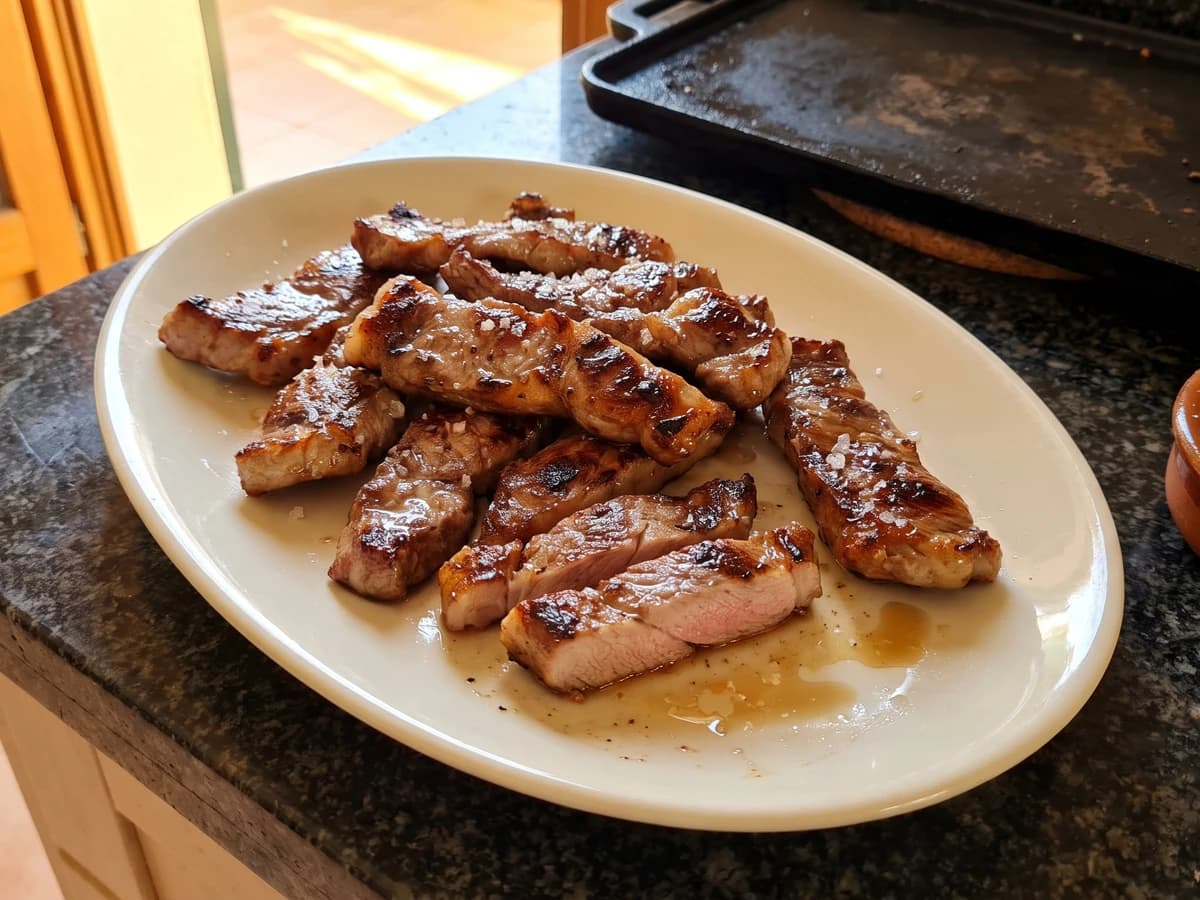
Extremadura's dehesa gives us this fan-shaped, marbled rib cut: salt it at the last moment, lay it on a fierce plancha, and count in seconds so the centre stays juicy.
A cooking platform built around craft, culture, and the stories behind what we eat.

Created by
Arròs amb ànec i anguila belongs to the Albufera of Valencia: duck from the marsh, eel from the water, and rice cooked dry until the bottom catches dark and good.
Arròs amb ànec i anguila is Valencian, from the Albufera, where the rice fields, the ducks, and the eels all belonged to the same wet landscape. This is not every arroz wearing the name paella. It is a dry rice, cooked wide and shallow, with duck for strength and eel for the dark, clean depth only eel gives.
The method that decides it is the beginning: brown the duck well, then cook the sofrito, the slow tomato and onion base, until it goes thick and sweet before the rice ever enters the pan. Toast the rice in that fat and tomato until the grains look glassy. After the broth goes in, leave it alone. Stirring gives you a soft rice pot, not this dish.
If you are far from the Albufera, no hace falta haber pisado España. Use bomba, senia, or another short Spanish rice, and look for cleaned fresh or frozen eel at a fishmonger. If eel is impossible, conger eel is the closest Spanish-kitchen answer; it gives gelatin and depth, though the flavor is more sea than lagoon. Smoked eel is for another plate, not for cooking into this rice.
Use a wide pan, weigh the rice, and trust the fire. Pésalo, no lo adivines. When the broth is nearly gone, listen for the faint crackle underneath and smell the toast, not burn. Siempre sale, si lo sigues.
Arròs amb ànec i anguila belongs to the Albufera, the freshwater lagoon and rice-growing country just south of Valencia city, where marsh duck, eel, and rice met naturally in the same larder. Eel was once one of the lagoon's defining foods, cooked in allipebre and in rice dishes that used its gelatin to deepen the broth. This arroz sits inside the Valencian tradition of dry rice cooked wide and shallow, related to but not identical with paella valenciana, and shaped by the wetland rather than the inland farmyard.
Quantity
350g
Quantity
700g
cut into 6 to 8 pieces
Quantity
400g
cut into 4cm pieces
Quantity
1.2L
kept hot
Quantity
200g
grated
Quantity
120g
finely chopped
Quantity
80g
cut into 4cm pieces
Quantity
80g
fresh or thawed
Quantity
3 cloves
finely chopped
Quantity
1
Quantity
0.2g
Quantity
1 teaspoon
Quantity
60ml
Quantity
10g, plus more to taste
Quantity
1 small
| Ingredient | Quantity |
|---|---|
| short-grain Valencian rice, preferably bomba, senia, or albufera | 350g |
| bone-in duck legs or thighscut into 6 to 8 pieces | 700g |
| cleaned fresh or frozen eelcut into 4cm pieces | 400g |
| light duck or chicken stockkept hot | 1.2L |
| ripe tomatograted | 200g |
| onionfinely chopped | 120g |
| flat green beans or bajoquetacut into 4cm pieces | 80g |
| garrofó or large lima beansfresh or thawed | 80g |
| garlicfinely chopped | 3 cloves |
| dried ñora pepper | 1 |
| saffron threads | 0.2g |
| sweet pimentón de la Vera | 1 teaspoon |
| extra virgin olive oil | 60ml |
| fine salt | 10g, plus more to taste |
| rosemary sprig (optional) | 1 small |
Put the dried ñora in a small bowl and cover it with hot water for 15 minutes. Scrape out the softened flesh with a teaspoon and discard the skin and seeds. Crush the ñora flesh with the garlic and saffron in a mortar to make a rough paste. This is small work, but it gives the rice its quiet depth.
Season the duck pieces with 6g of the salt. Heat the olive oil in a 38 to 42cm wide shallow rice pan over medium heat and brown the duck slowly on all sides, 18 to 22 minutes. Let the skin render and take real colour. Pale duck gives pale broth, and the rice will tell on you.
Push the duck to the edge of the pan. Add the onion to the fat in the centre and cook it gently for 10 minutes, scraping the browned bits from the pan. Add the grated tomato and cook until it is thick, dark, and almost dry, another 12 to 15 minutes. Stir in the ñora, garlic, and saffron paste, then the pimentón, and let it smell sweet for 20 seconds only. Pimentón burns quickly, and burnt pimentón is bitter.
Add 900ml of the hot stock, the green beans, the garrofó, and the remaining 4g salt. Bring it to a steady bubble, then cook for 25 minutes, turning the duck once or twice, until the meat is nearly tender and the stock tastes of duck and sofrito. Add a little more hot stock only if the pan threatens to dry before the duck softens.
Scatter in the rice and stir it through the duck fat and sofrito for 1 minute, until the grains look glassy at the edges. This is the step that keeps the rice separate later. Add enough hot stock to bring the liquid in the pan to about 900ml total, counting what is already there, and spread the rice flat in one even layer.
Lay the eel pieces between the duck pieces, skin side up where you can. Add the rosemary sprig for 3 minutes if using, then remove it. From this moment, do not stir. Cook over lively heat for 8 minutes, then lower to medium-low and cook 10 to 12 minutes more, until the rice is just tender and the surface looks dry.
When the liquid has disappeared, raise the heat for 45 to 90 seconds and listen for the fine crackle underneath. Smell for toast, not scorch. That dark crust, the socarrat, is the prize. If you are nervous, nadie nace sabiendo; stop early the first time and learn your pan.
Take the pan off the heat, cover it loosely with a clean towel, and rest for 5 minutes. Serve straight from the pan, giving each person duck, eel, beans, and a spoonful from the bottom. The rice should be dry, separate, glossy with oil, and lightly caught underneath.
1 serving (about 505g)
Culinary guides, cultural storytelling, and the editorial depth that makes cooking meaningful.
Discover Culinary ExplorerChef Isabel
Extremadura's dehesa gives us this fan-shaped, marbled rib cut: salt it at the last moment, lay it on a fierce plancha, and count in seconds so the centre stays juicy.
Chef Isabel
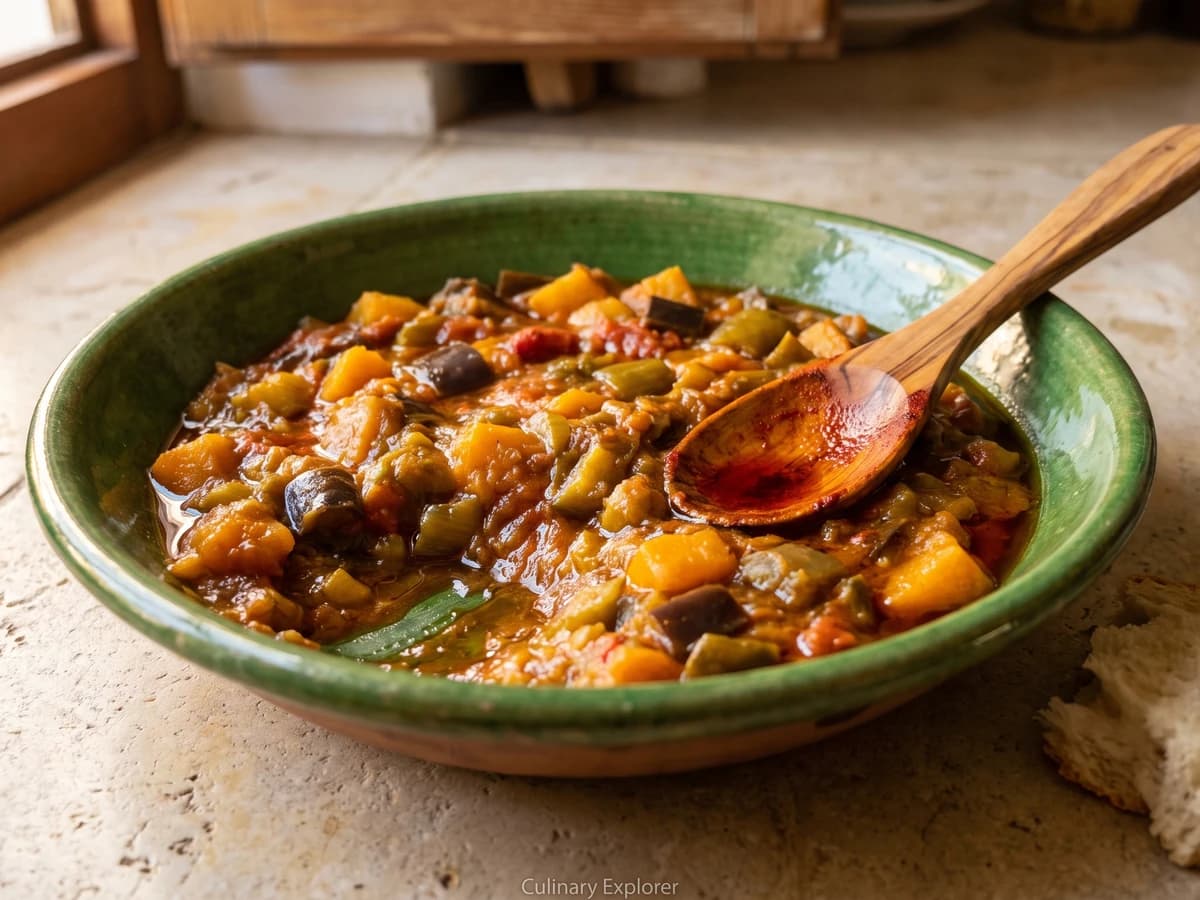
Alboronía is Andalucía's old pumpkin and aubergine stew, deepened with tomato, pimentón, and cumin, then cooked without hurry until the vegetables settle into a glossy, sweet, spoon-soft whole.

Chef Isabel
Aletría Murciana is Murcia's humble noodle guiso: fine fideos, pork ribs, potato, saffron, and a dark sweet sofrito. Get that base right and the pot knows where it's going.
Chef Isabel
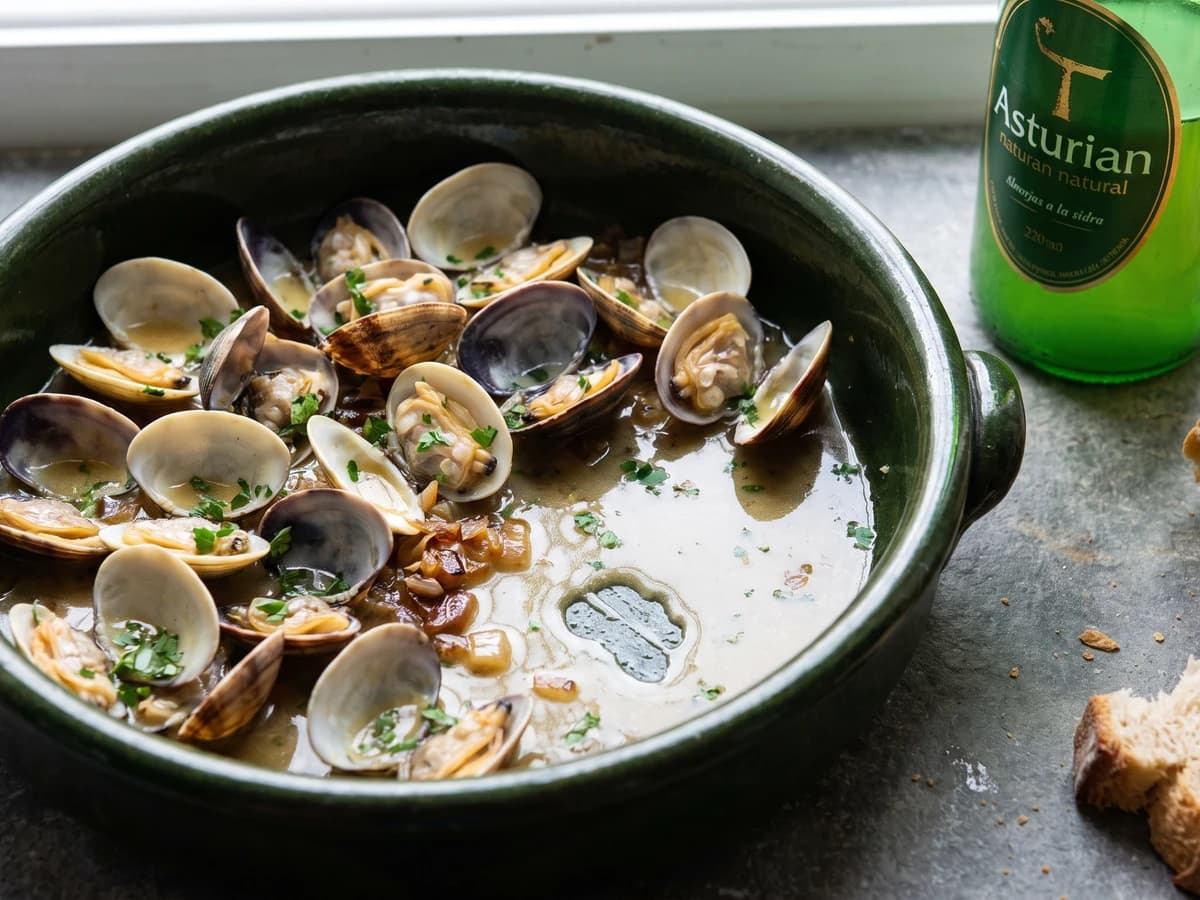
Asturias opens clams in tart natural cider over a slow onion and garlic sofrito, making a bright, briny sauce that asks for bread and rewards one rule: lift each clam as it opens.