
Chef Isabel
Arròs al Forn de Vigilia
Arròs al forn de vigilia is Valencia's meatless baked rice for Cuaresma: chickpeas, potato, tomato, and a whole garlic head set in a clay cazuela and baked dry, with no stirring.
A cooking platform built around craft, culture, and the stories behind what we eat.
Created by
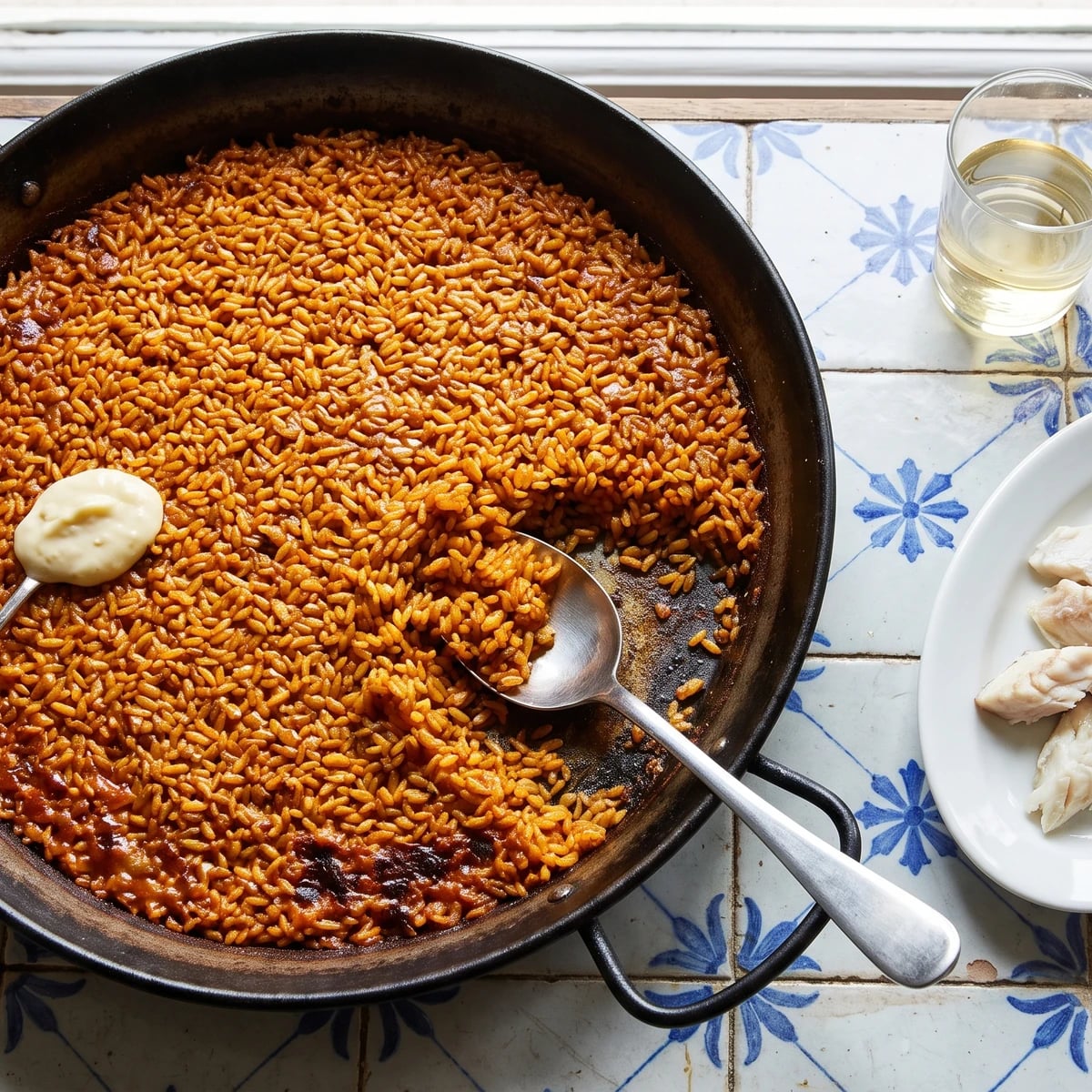
Arroz a banda is Alicante's fishermen's rice: dry rice cooked in fierce fish stock with salmorreta, the fish served apart, and allioli beside it. Not paella. Its own thing.
Arroz a banda is Alicante's, especially the rice country of the Valencian coast, and its name tells you the trick: the rice is cooked apart from the fish. First the fish gives itself to a deep fumet, then the rice takes that stock, salmorreta, and oil until it cooks dry and stained red-gold. The fish is served on the side, a banda, with allioli. That's what makes it this dish and not its neighbour.
The method that decides it is the stock and the stillness. Build a clean, strong fish fumet from heads, bones, and small rock fish if you can get them. Then make salmorreta, the Alicante base of ñora pepper, garlic, tomato, and parsley, cooked until the raw tomato is gone and the oil turns brick red. Toast the rice in that base before the stock goes in. Once the hot stock is added, spread the grains flat and leave them alone. Stirring wakes the starch and turns dry arroz into porridge. A fine porridge perhaps, but not arroz a banda.
If you're far from Alicante, no hace falta haber pisado España. Use bomba if you can, Calasparra if not, and a short-grain rice for paella at a pinch. For the stock, ask for firm white fish bones and heads, shrimp shells, or a few blue crabs; what changes is the depth, not the rule. Don't use salmon bones, they make the broth oily and loud. My Margin beside this one says only: hot stock, wide pan, no spoon. Siempre sale, si lo sigues.
Arroz a banda belongs to the fishermen of the Alicante coast, especially around Dénia and the Marina Alta, where humble fish from the day's catch was boiled for broth and served separately from the rice. The name means "rice apart," because the fish and potatoes or seafood from the caldero were eaten on one side while the rice cooked in the broth came on the other. Its close relatives along the coast, including caldero and arroz del senyoret, share the same seafaring larder, but arroz a banda keeps its identity in the separated fish and the dry, stock-fed rice.
Quantity
350g
Quantity
1.2 litres
kept hot
Quantity
450g
cut into large pieces
Quantity
250g
gills removed
Quantity
200g
for the fumet
Quantity
1 small
halved
Quantity
1
cleaned and sliced
Quantity
1
Quantity
2 litres
Quantity
3
Quantity
4
unpeeled
Quantity
300g
grated
Quantity
1 tablespoon
Quantity
90ml
divided
Quantity
1 teaspoon
Quantity
1 pinch
Quantity
to taste
Quantity
to serve
| Ingredient | Quantity |
|---|---|
| bomba rice or Calasparra rice | 350g |
| strong fish fumetkept hot | 1.2 litres |
| firm white fishcut into large pieces | 450g |
| fish bones and headsgills removed | 250g |
| shrimp shells or small rock fish (optional)for the fumet | 200g |
| onionhalved | 1 small |
| leekcleaned and sliced | 1 |
| bay leaf | 1 |
| cold water | 2 litres |
| dried ñora peppers | 3 |
| garlic clovesunpeeled | 4 |
| ripe tomatoesgrated | 300g |
| chopped parsley | 1 tablespoon |
| extra virgin olive oildivided | 90ml |
| sweet pimentón de la Vera | 1 teaspoon |
| saffron threads | 1 pinch |
| salt | to taste |
| allioli | to serve |
Put the fish bones and heads, shrimp shells or rock fish if using, onion, leek, bay leaf, and cold water in a wide pot. Bring it slowly to a bare simmer and skim the foam well. Cook gently for 30 minutes, no longer, or the broth turns muddy and tired. Strain it, press lightly on the solids, season with salt, and keep 1.2 litres hot for the rice.
Slip the large pieces of firm white fish into the strained fumet and simmer just until they flake, 4 to 6 minutes depending on thickness. Lift them out carefully to a warm dish and cover. This is the fish served a banda, apart from the rice, so keep it in good pieces rather than breaking it through the pan.
Remove the stems and seeds from the ñoras. Warm 60ml of the olive oil in the paella pan or a frying pan, fry the ñoras for a few seconds per side until fragrant, then lift them out before they scorch. Fry the unpeeled garlic until golden and soft. Peel the garlic, scrape the ñora flesh from the skins, and pound or blend both with the parsley, grated tomato, pimentón, saffron, and a pinch of salt. Return this paste to the oil and cook it low until thick, brick red, and no longer raw-tasting, 8 to 10 minutes.
Set the paella pan over medium heat with the remaining 30ml olive oil and the salmorreta. Add the rice and move it through the oil for 1 to 2 minutes, until the grains look glossy at the edges. Pésalo, no lo adivines: the rice and stock ratio is what gives you dry arroz instead of soup.
Pour in 1.2 litres of hot fumet all at once. Taste the liquid now; it should be well seasoned because the rice will drink it. Spread the rice evenly across the pan, then stop stirring. Boil briskly for 8 minutes so the grains set in place and the surface bubbles evenly from edge to centre.
Lower the heat to medium-low and cook 8 to 10 minutes more, still without stirring, until the stock is absorbed and the rice is just tender with a dry, separate finish. If the centre is lagging, turn the pan a quarter turn now and then, but don't drag a spoon through it. For a light socarrat, raise the heat for the final 60 to 90 seconds and listen for a faint crackle, then take it off before it smells burnt.
Cover the pan loosely with a clean cloth and rest the rice for 5 minutes. Serve the arroz from the pan, with the fish on a separate platter and allioli at the table. A small spoon of allioli beside the rice is right; drowning the pan in it is not. Tal como se hace allí.
1 serving (about 530g)
Culinary guides, cultural storytelling, and the editorial depth that makes cooking meaningful.
Discover Culinary Explorer
Chef Isabel
Arròs al forn de vigilia is Valencia's meatless baked rice for Cuaresma: chickpeas, potato, tomato, and a whole garlic head set in a clay cazuela and baked dry, with no stirring.

Chef Isabel
Arròs amb ànec i anguila belongs to the Albufera of Valencia: duck from the marsh, eel from the water, and rice cooked dry until the bottom catches dark and good.

Chef Isabel
Arròs amb fesols i naps is Valencian spoon rice from La Safor and La Marina: white beans, winter turnips, and pork cooked into a broth rich enough to take the rice without turning dry.

Chef Isabel
Arroz al horno is Valencian oven rice, born from cocido broth and leftovers, baked dry in a clay cazuela until the grains stand separate and the top catches.