Chef Isabel
Abanico Ibérico a la Plancha
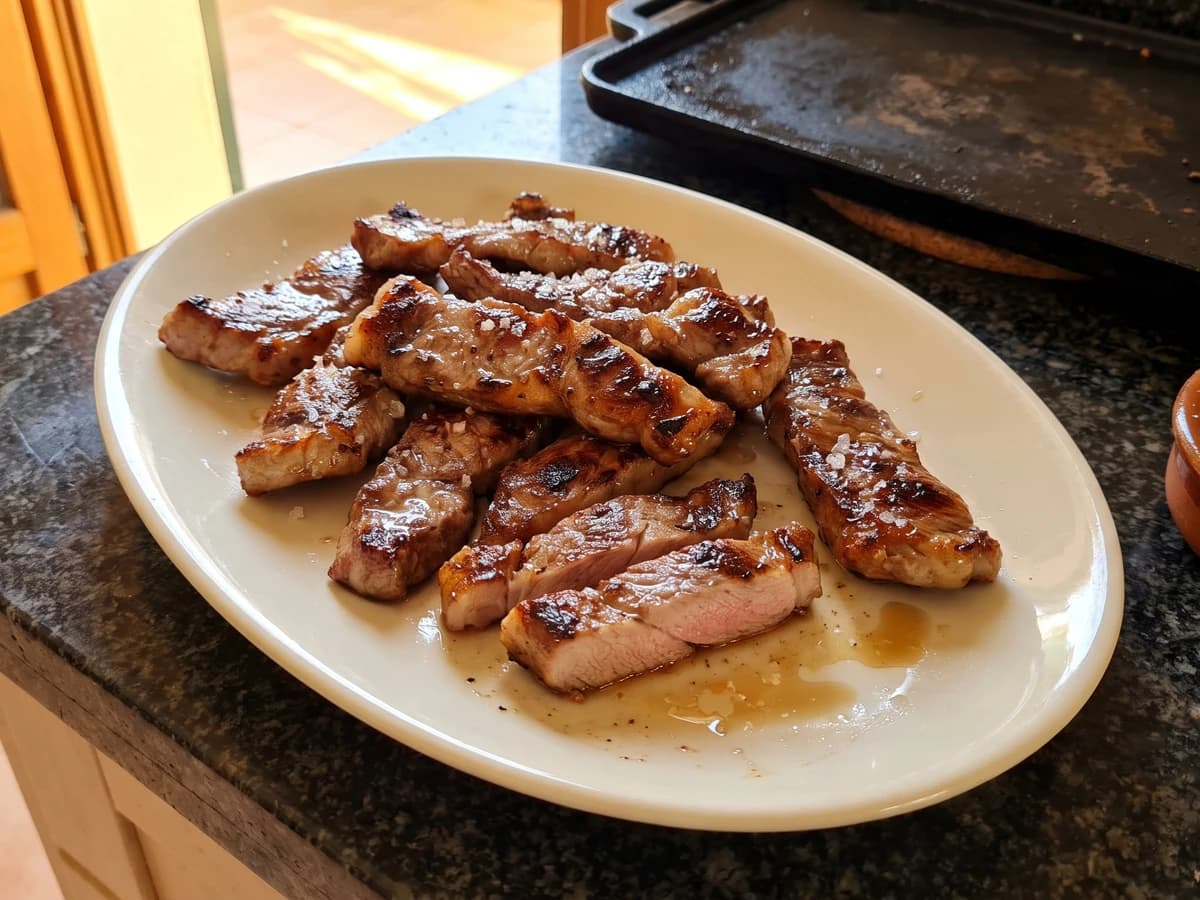
Extremadura's dehesa gives us this fan-shaped, marbled rib cut: salt it at the last moment, lay it on a fierce plancha, and count in seconds so the centre stays juicy.
A cooking platform built around craft, culture, and the stories behind what we eat.

Created by
Arroz al horno is Valencian oven rice, born from cocido broth and leftovers, baked dry in a clay cazuela until the grains stand separate and the top catches.
Arroz al horno is Valencian, and it is not paella wearing a different pan. This is oven-baked rice, arròs al forn, made in a cazuela de barro with pork ribs, morcilla, chickpeas, potato, tomato, and a whole head of garlic in the middle like it owns the place. It comes out dry, not soupy, with separate grains and a browned top that tells you the oven did its work.
The method that decides it is the broth-to-rice ratio. Once the hot broth goes in, the rice has one chance to drink exactly what it needs. Too much and you get soft, tired rice. Too little and the centre stays hard. For short-grain Valencian rice, use twice the volume of hot broth to rice, then bake hard and leave it alone. No stirring. Not every arroz is a paella, and this one certainly isn't.
If you have leftover cocido broth, use it. That is the old sense of the dish. If you don't, a good pork and chicken stock will do, with a little saffron and pimentón to bring it toward Valencia. No hace falta haber pisado España. You do need short-grain rice, real morcilla if you can find it, and a clay or heavy oven dish that holds heat well.
The cazuela should go to the table with the garlic head still at the centre, the potato rounds browned at the edges, the tomato softened into the rice, and the morcilla dark and rich. Let it rest ten minutes before you serve it. Siempre sale, si lo sigues.
Arroz al horno belongs to the Valencian kitchen, where rice is treated dish by dish rather than all folded into paella. It grew from the puchero or cocido, using its broth, chickpeas, and meats, then baking them with rice in a cazuela de barro. In many towns it was known as arròs passejat, the walked rice, because the filled cazuela was carried to the village bread oven and brought home browned and ready for the table.
Quantity
400g
Quantity
800ml
Quantity
450g
cut into small pieces
Quantity
150g
cut into thick strips
Quantity
2, about 180g total
Quantity
250g
drained
Quantity
1 medium, about 220g
peeled and sliced into 1cm rounds
Quantity
1 large
half grated and half sliced
Quantity
1
loose outer skin removed
Quantity
3 tablespoons
Quantity
1 teaspoon
Quantity
12 threads
Quantity
1 teaspoon, plus more to taste
Quantity
to taste
| Ingredient | Quantity |
|---|---|
| short-grain Spanish rice, preferably bomba, senia, or bahía | 400g |
| hot cocido broth or pork and chicken stock | 800ml |
| pork ribscut into small pieces | 450g |
| panceta or fresh pork bellycut into thick strips | 150g |
| morcillas de cebolla | 2, about 180g total |
| cooked chickpeasdrained | 250g |
| potatopeeled and sliced into 1cm rounds | 1 medium, about 220g |
| ripe tomatohalf grated and half sliced | 1 large |
| whole head of garlicloose outer skin removed | 1 |
| olive oil | 3 tablespoons |
| sweet pimentón | 1 teaspoon |
| saffron threads | 12 threads |
| fine salt | 1 teaspoon, plus more to taste |
| freshly ground black pepper | to taste |
Heat the oven to 220C. Put the broth in a saucepan with the saffron and keep it hot. Taste it now; it should be well seasoned but not harsh, because the rice will take all its salt from the liquid.
Set a 32 to 34cm cazuela de barro or heavy ovenproof pan over medium heat with the olive oil. Salt the ribs and panceta lightly, then brown them until the edges take good colour, about 8 to 10 minutes. You are building the taste of the rice here, so don't hurry the browning into pale meat.
Lift the pork to a plate. Add the potato rounds to the same oil and cook them until lightly golden on both sides, about 5 minutes. They don't need to cook through yet. Lift them out and keep them for the top.
Lower the heat. Add the grated half tomato to the oil and cook it down for 3 to 4 minutes, until it darkens and the water has gone. Stir in the pimentón for just a few seconds, then add the rice and move it through the oil until the grains look glossy. This little toast helps the rice stay separate in the oven.
Return the pork to the cazuela and stir in the chickpeas. Spread everything into an even layer. Set the whole head of garlic in the centre, nestle in the morcillas, and arrange the potato rounds and tomato slices on top. Pésalo, no lo adivines: 400g rice wants 800ml hot broth for this dry baked finish.
Pour the hot broth evenly over the rice. It should bubble as it hits the cazuela. Taste one last drop of the liquid if you can do it safely, and correct the salt now, because once it goes into the oven you leave it alone.
Transfer the cazuela to the oven and bake for 20 to 25 minutes, until the rice has absorbed the broth, the top is browned in places, and the edges look dry and glossy with pimentón-stained oil. Do not stir. Stirring works the starch loose and gives you the wrong texture for arroz al horno.
Take the cazuela from the oven and let it rest for 10 minutes. The rice finishes settling in that rest and loosens from the clay. Serve from the dish, with a little pork, chickpeas, morcilla, potato, tomato, and a spoonful of soft garlic for each person.
1 serving (about 430g)
Culinary guides, cultural storytelling, and the editorial depth that makes cooking meaningful.
Discover Culinary ExplorerChef Isabel
Extremadura's dehesa gives us this fan-shaped, marbled rib cut: salt it at the last moment, lay it on a fierce plancha, and count in seconds so the centre stays juicy.
Chef Isabel
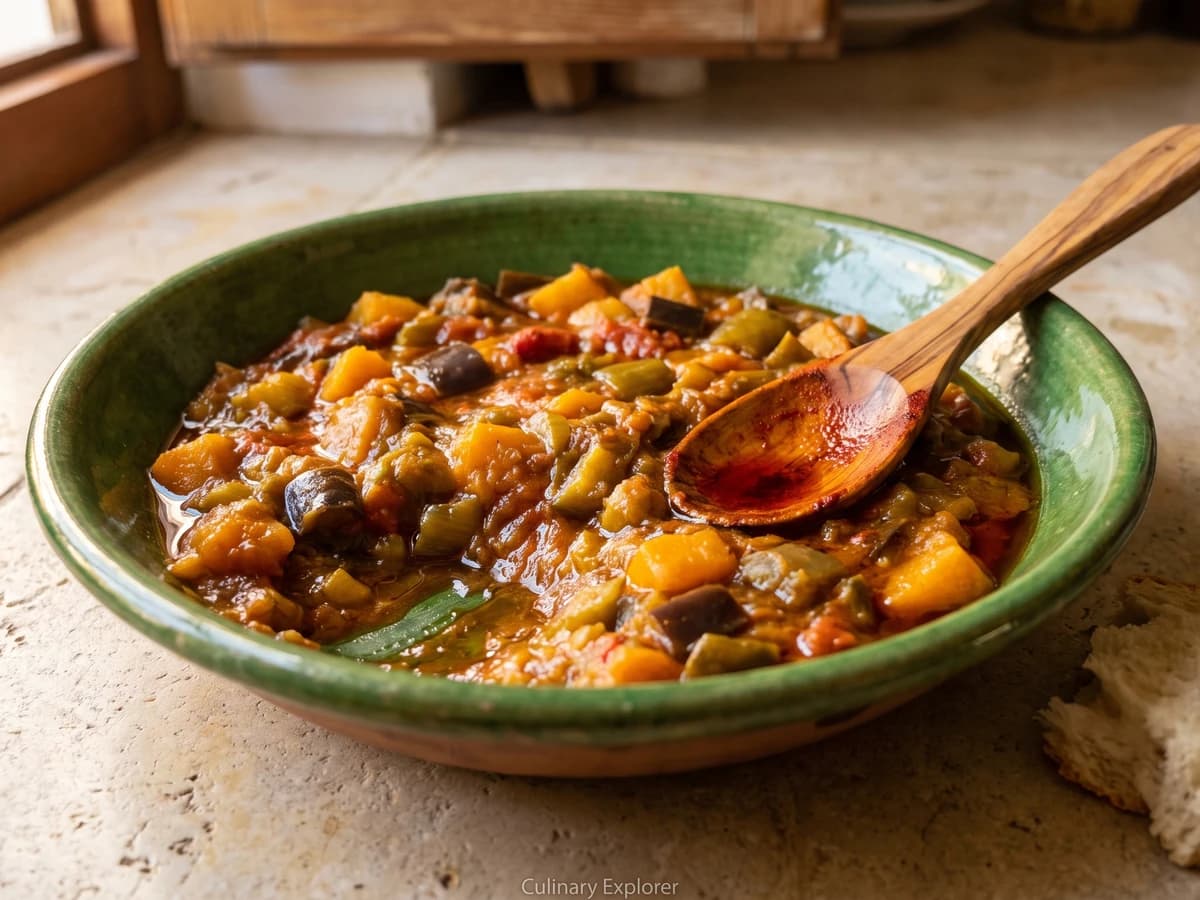
Alboronía is Andalucía's old pumpkin and aubergine stew, deepened with tomato, pimentón, and cumin, then cooked without hurry until the vegetables settle into a glossy, sweet, spoon-soft whole.

Chef Isabel
Aletría Murciana is Murcia's humble noodle guiso: fine fideos, pork ribs, potato, saffron, and a dark sweet sofrito. Get that base right and the pot knows where it's going.
Chef Isabel
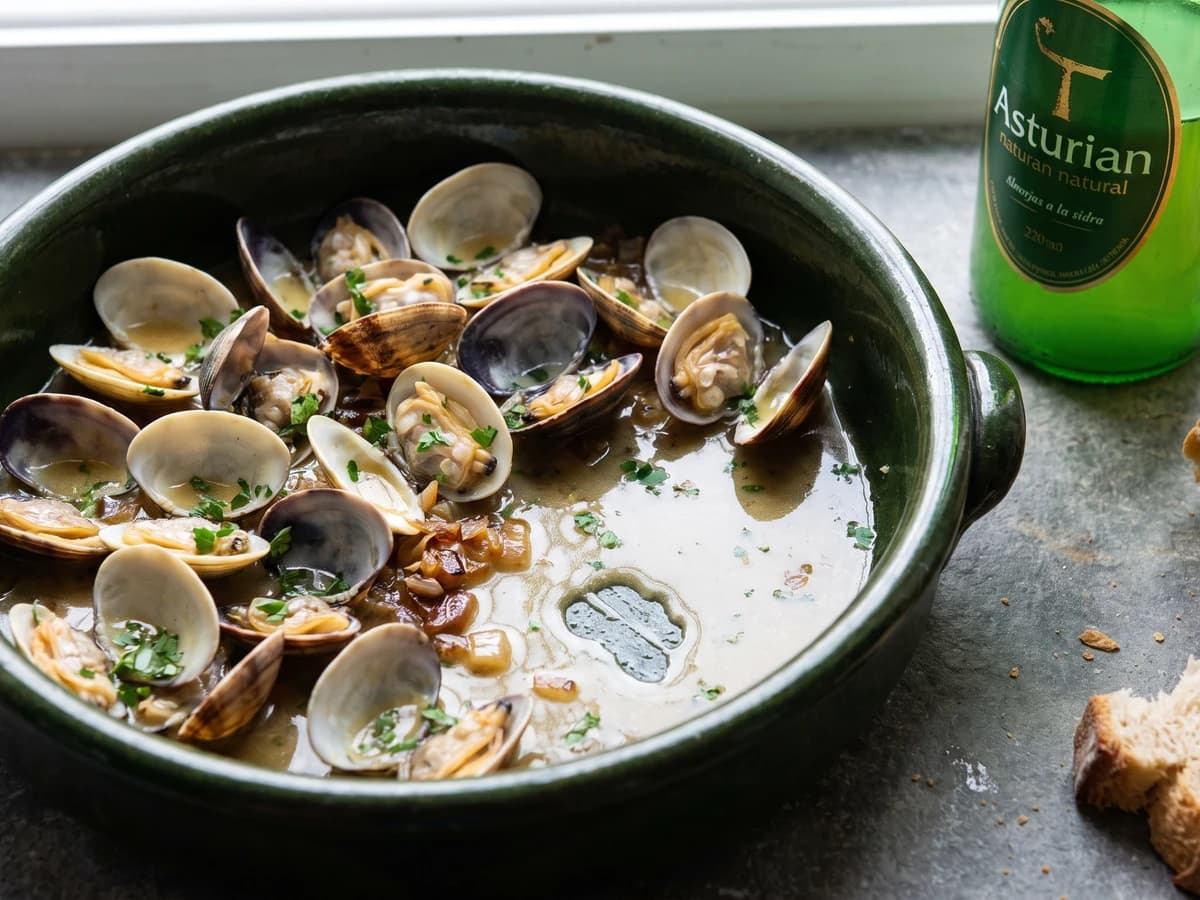
Asturias opens clams in tart natural cider over a slow onion and garlic sofrito, making a bright, briny sauce that asks for bread and rewards one rule: lift each clam as it opens.