Culinary Explorer

A cooking platform built around craft, culture, and the stories behind what we eat.
Discover Culinary Explorer
Paella de Fetge de Bou

Paella de Fetge de Bou

Created by

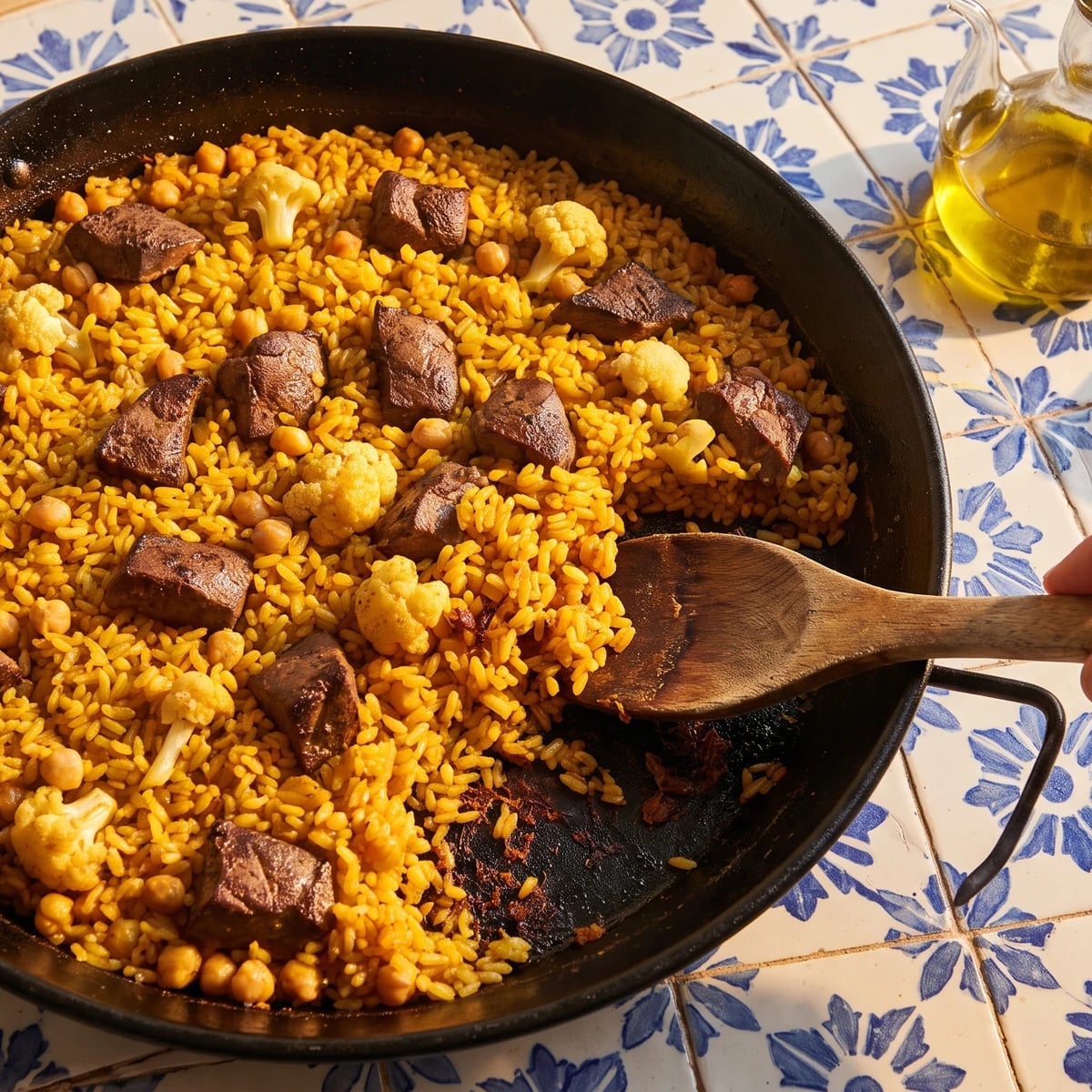
Meliana's paella de fetge de bou from L'Horta Nord is a Valencian rice of thrift and nerve: fresh beef liver, chickpeas, tomato, and saffron, cooked wide and dry until the socarrat catches.

Main Dishes
Spanish
Comfort Food
Special Occasion
Budget Friendly
25 min
Active Time
45 min cook1 hr 10 min total
Yield4 servings

Paella de fetge de bou is Meliana's, from L'Horta Nord in Valencia: a dry rice cooked wide in a paellera with fresh beef liver, chickpeas, tomato, pimenton, saffron, and the dark crust underneath. It isn't paella Valenciana with the chicken traded out. The liver names the dish, and it gives the rice its deep, mineral backbone.

The method that decides it is simple and unforgiving in the usual rice way. Brown the liver quickly, then let the tomato sofrito cook down until the oil shines through and no raw water is left. Add the water, reduce it to the right level, spread the rice, and leave it alone. Stir after the rice goes in and you've made another thing, not this one.

If you're far from Meliana, no hace falta haber pisado España. Use fresh calf liver if beef liver is hard to find; it is milder, less iron-dark, but it behaves well in the pan. For the rice, bomba or Calasparra will forgive you most. Arborio works at a pinch, but it finishes softer and won't give quite the same dry, separate grain. My Margin for this one is short: fresh liver, wide pan, no stirring.

Paella de fetge de bou belongs to Meliana, in L'Horta Nord, the market-garden country north of Valencia where rice from the Albufera met vegetables, legumes, and the thrifty use of fresh offal after slaughter. Beef liver had to be cooked quickly after the matanca, the slaughter day, before the preserved meats went to the larder, and a wide paellera let a small amount feed many mouths. It sits apart from paella Valenciana: the mark of the dish is not chicken, rabbit, or green beans, but the mineral liver and the dry socarrat at the bottom.

The technique, the tradition, and the story behind every dish.

Discover Culinary Explorer

Ingredients

Valencian short-grain rice, preferably bomba, senia, or bahia

Quantity

400g

fresh beef liver or calf liver

Quantity

350g

trimmed and cut into 2cm cubes

cauliflower

Quantity

250g

cut into small florets

cooked chickpeas

Quantity

180g

drained

ripe tomato

Quantity

160g

grated

garlic

Quantity

3 cloves

finely chopped

extra virgin olive oil

Quantity

80ml

sweet pimenton

Quantity

5g

saffron threads

Quantity

0.2g

lightly crushed

hot water

Quantity

1.35 litres

simmered down before the rice goes in

fine sea salt

Quantity

12g, plus more if needed

Equipment Needed

  • 38-40cm paellera for 4 servings
  • Wide gas burner or two-ring hob
  • Box grater for the tomato
  • Clean kitchen towel for resting

Instructions

  1. 1

    Mark the pan

    Set a 38-40cm paellera level over the heat. Pour in 1.2 litres of water, notice where it sits against the side of the pan, then pour it out. That mark is your rice-cooking level later. Pésalo, no lo adivines. Weigh it, don't guess.

    A thin layer of rice is the point. If your pan is smaller than 36cm, reduce the rice to 300g and the water mark to 900ml.
  2. 2

    Brown the liver

    Pat the liver dry and season it with a pinch of the measured salt. Heat the olive oil over medium-high heat and brown the liver quickly, in one loose layer, about 60-90 seconds per side. It should catch colour at the edges but stay tender inside. Lift it to a plate and keep every drop of juice that gathers there.

  3. 3

    Brown the cauliflower

    Add the cauliflower to the same oil and cook until the edges take a little gold, 4-5 minutes. Lower the heat, add the garlic, and stir for 20 seconds. Add the grated tomato and cook it down until it turns dark, thick, and glossy, 6-8 minutes. This sofrito, the slow tomato base, is where the sweetness comes from.

  4. 4

    Build the broth

    Pull the pan briefly off the heat, stir in the sweet pimenton, then add 1.35 litres of hot water. Return the pan to the heat, add the chickpeas, saffron, and remaining salt, and boil steadily for 8-10 minutes, until the liquid drops back to the 1.2 litre mark. Taste the broth. It should be a little saltier than soup, because the rice will take it in.

  5. 5

    Add the rice

    Scatter in the rice across the pan and spread it into an even layer. Add the browned liver and its juices, tucking the pieces between the grains. From this moment, do not stir. Stirring loosens starch and gives you a soft arroz instead of a dry paella. Boil hard for 8 minutes, rotating the pan if your heat is uneven.

    If a few grains sit above the liquid at the start, press them under once with the back of a spoon. After that, leave them alone.
  6. 6

    Finish the socarrat

    Lower the heat to medium-low and cook 8-10 minutes more, until the surface looks dry and the grains are tender with a little bite. Raise the heat for the last 60-90 seconds and listen for the dry crackle underneath. The smell should be toasted, not burnt. Take the pan off the heat, cover it with a clean towel, and rest 5 minutes before serving. Siempre sale, si lo sigues.

Chef Tips

  • Buy liver from a butcher with good turnover. It should look glossy and deep red-brown, never dry at the edges or sour-smelling. Calf liver is the honest substitute abroad; it tastes gentler, so the rice will be less dark and mineral.
  • Bomba is the safest rice for a first paella because it takes up liquid without bursting. Senia or bahia are beautiful Valencian rices, but they soften faster. Long-grain rice is for another kitchen.
  • Canned chickpeas are fine here if they are firm. Rinse them well and add them with the broth. If you cook dried chickpeas yourself, 75g dried chickpeas gives about the right amount after soaking and simmering.
  • Use a wide paellera, not a deep pot. A deep pot gives you a thick bed of rice, and a thick bed steams before it dries. The socarrat needs width.
  • Don't add chorizo, peas, or red pepper strips to dress it up. This is Meliana's rice, and the liver is the point. Tal como se hace alli.

Advance Preparation

  • Cook dried chickpeas up to 3 days ahead, or use firm canned chickpeas and rinse them well.
  • Grate the tomato and cut the cauliflower earlier the same day, then keep them covered in the refrigerator.
  • Trim the liver up to 4 hours ahead and keep it cold, but salt it only just before browning.
  • Do not cook the paella ahead. The rice is best after its 5 minute rest, while the bottom is still crisp and the grains are separate.

Frequently Asked Questions

Nutrition Information

1 serving (about 475g)

Calories
740 calories
Total Fat
24 g
Saturated Fat
4 g
Trans Fat
0 g
Unsaturated Fat
20 g
Cholesterol
240 mg
Sodium
1270 mg
Total Carbohydrates
101 g
Dietary Fiber
7 g
Sugars
5 g
Protein
30 g

Note: Chef personas and recipes are created with AI assistance. Cook with care: follow safe food-handling practices, check doneness with a thermometer when needed, and adapt for allergies and your kitchen.

Where cooking meets culture.

Culinary guides, cultural storytelling, and the editorial depth that makes cooking meaningful.

Discover Culinary Explorer

More from Valencian Paellas & Dry Rices

Browse the full collection