
Chef Takumi
Aji Fry (アジフライ, panko-fried horse mackerel)
Aji fry is weeknight fish with no mystery: fresh horse mackerel opened cleanly, breaded lightly, and fried until the panko crackles while the flesh stays sweet.
A cooking platform built around craft, culture, and the stories behind what we eat.

Created by
Osaka okonomiyaki is not a pancake trying to be clever. It is cabbage held together with just enough batter, pork belly crisped on top, and one patient flip.
Okonomiyaki looks like a dish that wants confidence. It doesn't. It wants cabbage, cut finely enough to soften, and a batter loose enough to bind without becoming heavy. The fear is the flip, of course. Everyone thinks the whole supper will land on the stove looking like a committee decision.
The first secret is proportion. In Osaka, we mix the cabbage, egg, dashi, flour, and grated nagaimo together before cooking, then lay the pork belly on top. The nagaimo gives lift, the dashi gives quiet depth, and the cabbage does most of the work. This is not a flour pancake with vegetables hiding in it. It is a heap of cabbage barely persuaded to stay together.
Cook it gently and don't press it flat. Pressing squeezes out the moisture that should turn to tenderness inside, and it makes the pork steam instead of brown. Shape it, leave it alone, flip it once, and let the pan finish what your hands began. Sauce, aonori, katsuobushi, and mayonnaise go on at the end, not to hide anything, but to give the top its familiar Osaka gloss.
This is everyday food, the sort that sits happily between rice-table discipline and weeknight comfort. Honmono here is not severity. It is the right looseness of the batter, the sweetness of good cabbage, and the nerve to stop fussing once it is in the pan.
Okonomiyaki grew from earlier flour-and-water snacks such as funoyaki, which were served in Japan by the early modern period, but the Osaka style took its modern form after the shortages and urban rebuilding of the twentieth century. The name means roughly 'grilled as you like,' and Kansai cooks distinguish their mixed-batter style from Hiroshima okonomiyaki, where the ingredients are layered rather than stirred together. Pork belly, sauce, aonori, katsuobushi, and mayonnaise became the familiar finish of the postwar Osaka version.
Quantity
1 small piece (about 5g)
Quantity
1 cup
Quantity
10g
Quantity
100g
Quantity
1/4 teaspoon
Quantity
2
Quantity
80g
peeled and finely grated
Quantity
350g
finely shredded
Quantity
2
thinly sliced
Quantity
2 tablespoons
Quantity
1 tablespoon
finely chopped
Quantity
120g
Quantity
1 tablespoon
Quantity
3 tablespoons
Quantity
to finish
Quantity
to finish
Quantity
to finish
| Ingredient | Quantity |
|---|---|
| konbu (dried kelp) | 1 small piece (about 5g) |
| cold water | 1 cup |
| katsuobushi (bonito flakes) | 10g |
| all-purpose flour | 100g |
| fine sea salt | 1/4 teaspoon |
| large eggs | 2 |
| nagaimopeeled and finely grated | 80g |
| green cabbagefinely shredded | 350g |
| scallionsthinly sliced | 2 |
| tenkasu (tempura bits) | 2 tablespoons |
| beni shoga (red pickled ginger)finely chopped | 1 tablespoon |
| thinly sliced pork belly | 120g |
| neutral oil | 1 tablespoon |
| okonomiyaki sauce | 3 tablespoons |
| Japanese mayonnaise (optional) | to finish |
| aonori | to finish |
| katsuobushi | to finish |
Wipe the konbu with a damp cloth, but don't wash it. Put it in the cold water and warm it slowly until small bubbles climb the sides of the pan, then lift the konbu out before the water boils. Add the katsuobushi, take the pan off the heat, and let the flakes sink for two minutes. Strain without squeezing. Boiling the kelp dulls the stock, and squeezing the flakes presses out rough, oily flavors you don't need here.
Shred the cabbage finely, about the width of matchsticks, and keep the pieces short enough to fold easily into the batter. Big, long shreds make the pancake fall apart when you turn it. Fine cabbage softens quickly and lets the batter hold it without asking for more flour.
Whisk the flour and salt together, then stir in 3/4 cup cooled dashi until smooth. Add the grated nagaimo and eggs and stir just until loose and even. Don't beat it hard. You want the nagaimo's light, slippery body, not a tough batter.
Add the cabbage, scallions, tenkasu, and beni shoga to the batter and fold with a spoon until every shred is lightly coated. It should look like too much cabbage and not enough batter. That's correct. If it pours like cake batter, it will cook like cake, and this dish has better manners than that.
Heat a wide skillet or hot plate over medium-low heat and brush it with oil. Mound half the mixture into a round about 6 inches across and 1 inch thick, then lay half the pork belly slices across the top in a single layer. Shape the edges lightly with a spatula, but don't compact it. Air inside the cabbage is what keeps the center tender.
Cook for 5 to 6 minutes, until the underside is deeply golden and the edges begin to set. The sound should be a steady, quiet sizzle, not an angry crackle. Too much heat browns the outside before the cabbage has softened, and then the center stays raw and sulky.
Slide one wide spatula under the okonomiyaki and steady the top with a second spatula, then turn it in one confident motion so the pork is underneath. Cook 5 to 6 minutes more, until the pork is browned and the pancake feels set when you press the edge. Do not press the surface. Pressing drives out moisture and flattens the lift you made with the nagaimo.
Turn the okonomiyaki back pork-side up if you like the pork visible, or leave the browned side down for a softer top. Brush with okonomiyaki sauce, stripe with Japanese mayonnaise, and finish with aonori and katsuobushi. Serve at once, while the surface is glossy and the inside still soft.
1 serving (about 460g)
Culinary guides, cultural storytelling, and the editorial depth that makes cooking meaningful.
Discover Culinary ExplorerChef Takumi
Aji fry is weeknight fish with no mystery: fresh horse mackerel opened cleanly, breaded lightly, and fried until the panko crackles while the flesh stays sweet.
Chef Takumi
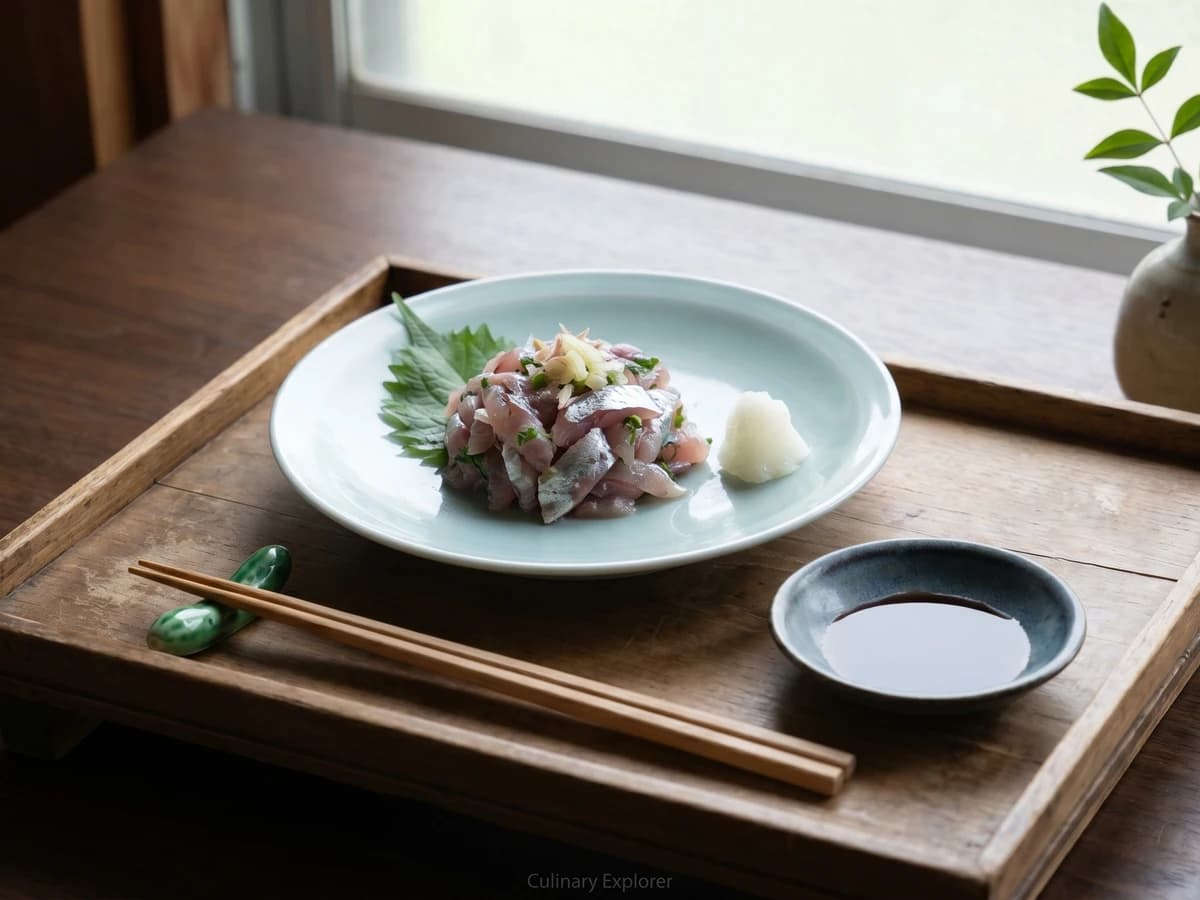
Summer horse mackerel, chopped just enough to catch ginger and scallion, becomes a cool, clean main dish with rice. The secret is fresh fish and a knife that does not bruise it.
Chef Takumi
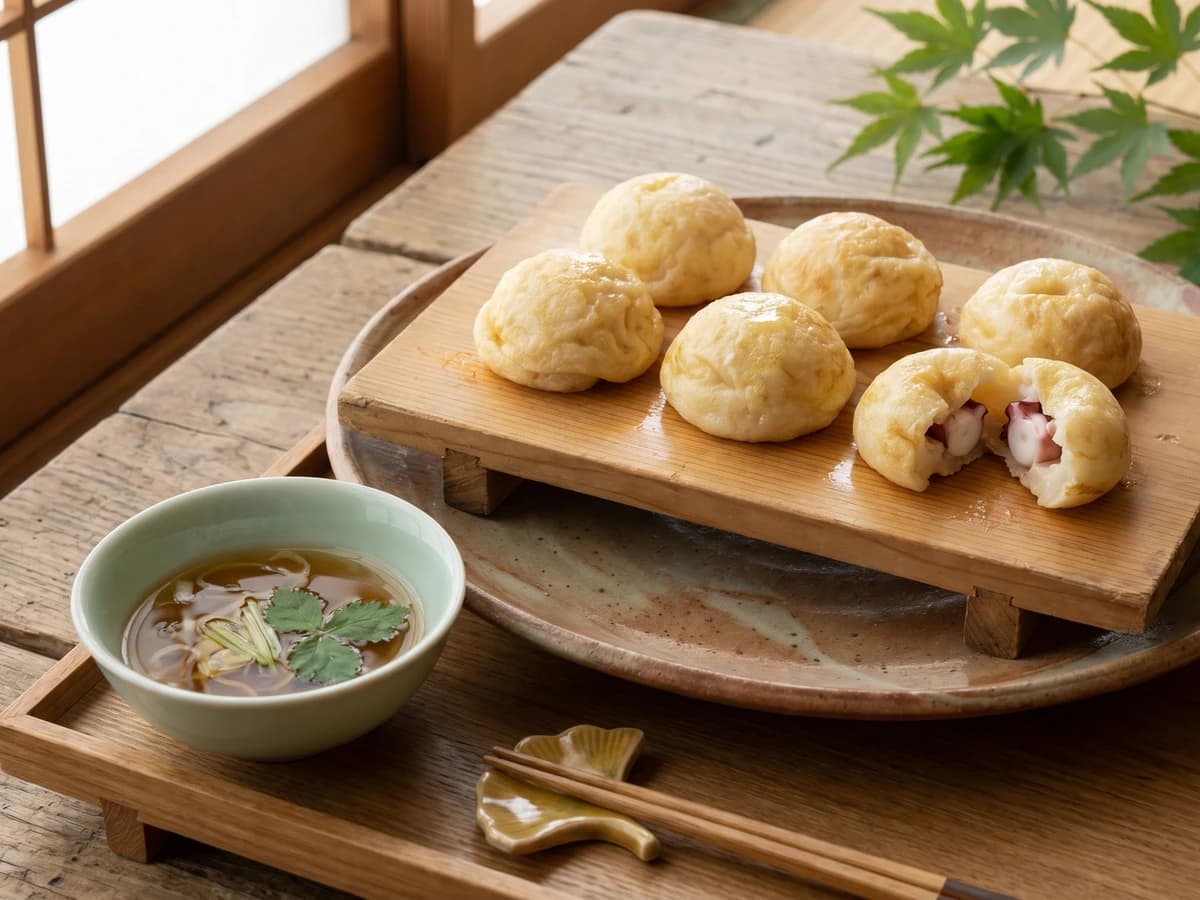
Akashi-yaki is not sauced takoyaki. It is egg-rich batter, tender octopus, and clear dashi, cooked pale and soft so each ball can be dipped like a small custard dumpling.

Chef Takumi
A whole anago looks like a test of nerve. It is mostly good sourcing, a dry skin, cold batter, and oil hot enough to leave the eel sweet under its lace.