
Chef Takumi
Aji Fry (アジフライ, panko-fried horse mackerel)
Aji fry is weeknight fish with no mystery: fresh horse mackerel opened cleanly, breaded lightly, and fried until the panko crackles while the flesh stays sweet.
A cooking platform built around craft, culture, and the stories behind what we eat.
Created by
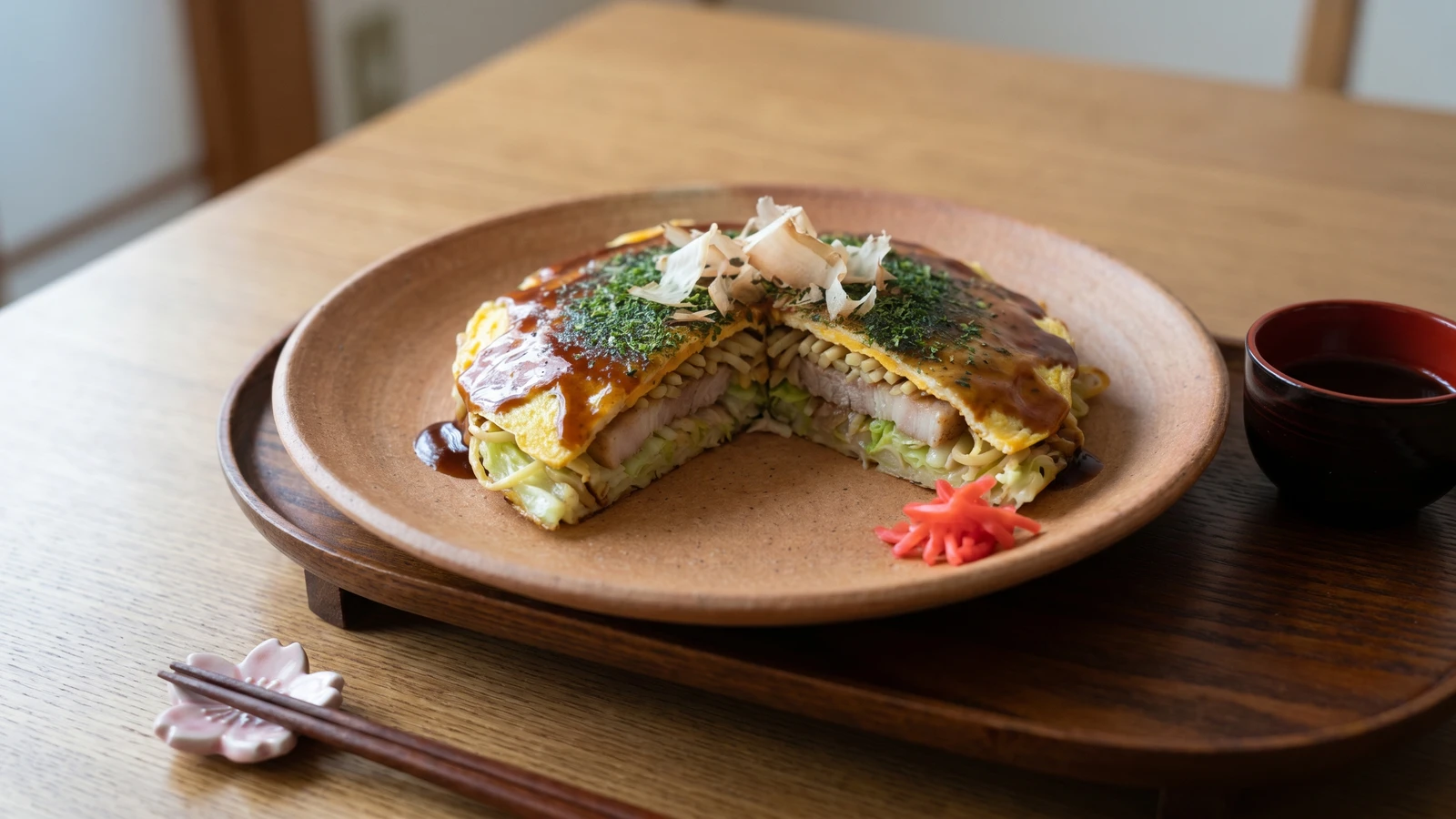
Hiroshima okonomiyaki looks complicated because it stacks what Osaka stirs together. Keep the layers in order, let the cabbage collapse slowly, and the dish becomes plain, generous work.
The heap of cabbage is the part that frightens people. It sits on the griddle like a small green hill, far too tall to become dinner. Give it time under a lid and it settles into sweetness, and suddenly the dish makes sense.
Hiroshima-style okonomiyaki is built in layers: a thin crepe, cabbage, bean sprouts, pork, noodles, egg, and sauce. You don't mix the batter through the filling. The batter is only the floor, and the cabbage steams above it while the pork lends fat and salt. That is the first detail to trust. Press too hard and you make it heavy; leave it alone and the vegetables cook down light and tender.
This is honmono street food, but it doesn't need theater. A wide skillet and a patient hand will do. The method is the whole character of the dish: griddle heat below, covered heat above, then a careful turn so the layers stay in conversation. It belongs to the everyday appetite, the late supper, the gathering where one hot plate keeps everyone near. Finish it with sauce, aonori, and a little benishōga if you like. Plenty is happening already, so leave it room.
Okonomiyaki in its modern form grew after the Second World War, when flour, cabbage, and inexpensive toppings became practical street food in a damaged and rebuilding Japan. Hiroshima's version developed around layered cooking and the addition of noodles, especially yakisoba, and became closely tied to the city by the 1950s and 1960s. The regional debate with Osaka is simple and persistent: Osaka mixes the fillings into the batter, while Hiroshima stacks and steams them.
Quantity
1/2 cup
Quantity
2/3 cup
Quantity
1 teaspoon
Quantity
1 pinch
Quantity
4 cups
finely shredded
Quantity
1 cup
trimmed if long
Quantity
2
thinly sliced
Quantity
4 slices (about 100g)
Quantity
2 portions (about 300g)
Quantity
2 teaspoons
divided
Quantity
2
Quantity
2 tablespoons, plus more for serving
Quantity
1 teaspoon
Quantity
1 teaspoon
Quantity
for finishing
Quantity
for finishing
Quantity
for serving
Quantity
for serving
| Ingredient | Quantity |
|---|---|
| all-purpose flour | 1/2 cup |
| water | 2/3 cup |
| mirin | 1 teaspoon |
| sea salt | 1 pinch |
| green cabbagefinely shredded | 4 cups |
| bean sproutstrimmed if long | 1 cup |
| scallionsthinly sliced | 2 |
| thin-sliced pork belly | 4 slices (about 100g) |
| fresh yakisoba noodles | 2 portions (about 300g) |
| neutral oildivided | 2 teaspoons |
| large eggs | 2 |
| okonomiyaki sauce | 2 tablespoons, plus more for serving |
| soy sauce | 1 teaspoon |
| Worcestershire sauce | 1 teaspoon |
| aonori | for finishing |
| katsuobushi | for finishing |
| benishōga (red pickled ginger) (optional) | for serving |
| mayonnaise (optional) | for serving |
Whisk the flour, water, mirin, and salt until smooth and thin, closer to crepe batter than pancake batter. Let it rest ten minutes while you prepare the vegetables. Resting lets the flour hydrate, so the crepe spreads easily and doesn't taste raw at the center.
Shred the cabbage finely and keep the bean sprouts loose and dry. Thin cabbage is not a pretty extra here; it cooks quickly and collapses into sweetness before the crepe scorches. Separate the pork slices and loosen the noodles with your hands so everything is ready before the griddle is hot.
Heat a wide griddle or large nonstick skillet over medium heat and brush with a little oil. Pour in half the batter and spread it into a thin circle about 8 inches across. Scatter on half the scallions, then pile on half the cabbage and half the bean sprouts. The crepe should look almost too thin; its job is to hold the layers, not become bread.
Lay two slices of pork belly across the cabbage and drizzle a spoonful of batter over the top to help the pork cling when you turn it. Cover with a dome lid or a large overturned bowl and cook 5 to 7 minutes, until the cabbage has settled and the pork has lost its raw color at the edges. The lid traps gentle heat, steaming the vegetables without stirring them into paste.
Slide a wide spatula under the crepe, hold the top steady with a second spatula, and flip the whole stack so the pork is against the griddle. Don't press it flat. A light settling press is enough. Cook covered 5 minutes more, until the pork is browned and the cabbage is tender but not wet.
Beside the stack, oil the griddle lightly and fry one portion of yakisoba noodles until they loosen and pick up a few browned spots. Season with half the soy sauce, half the Worcestershire sauce, and a small spoonful of okonomiyaki sauce. Shape the noodles into a round the same size as the cabbage stack. Browning gives the noodles their own character, so they don't disappear into softness.
Lift the cabbage and pork stack onto the noodle round, pork side down. Let it cook together for 1 to 2 minutes. This short joining time matters: the noodles catch the pork fat and sauce, while the cabbage finishes settling into the layer above.
Crack one egg onto the griddle and break the yolk, spreading it into a thin round. While the surface is still glossy, lift the okonomiyaki onto the egg. Cook just until the egg sets and clings, about 1 minute, then flip so the egg faces up. The egg is the cap, not an omelet; overcook it and the top turns tough.
Brush the top with okonomiyaki sauce until it shines, then scatter with aonori and katsuobushi. Add benishōga on the side and mayonnaise only if you want it. Repeat with the remaining batter and fillings. Serve at once, cut into wedges, while the layers are still distinct and the sauce sits glossy on top.
1 serving (about 520g)
Culinary guides, cultural storytelling, and the editorial depth that makes cooking meaningful.
Discover Culinary ExplorerChef Takumi
Aji fry is weeknight fish with no mystery: fresh horse mackerel opened cleanly, breaded lightly, and fried until the panko crackles while the flesh stays sweet.
Chef Takumi
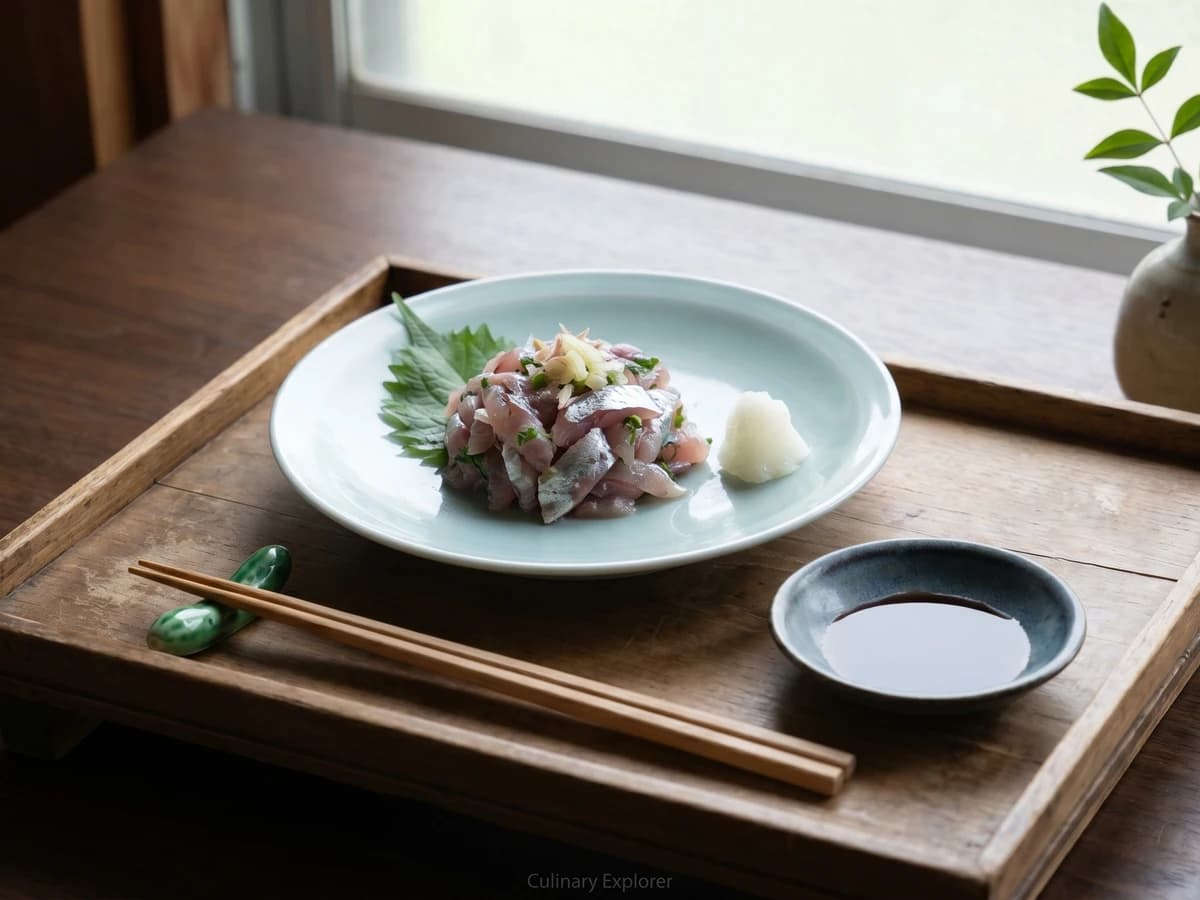
Summer horse mackerel, chopped just enough to catch ginger and scallion, becomes a cool, clean main dish with rice. The secret is fresh fish and a knife that does not bruise it.
Chef Takumi
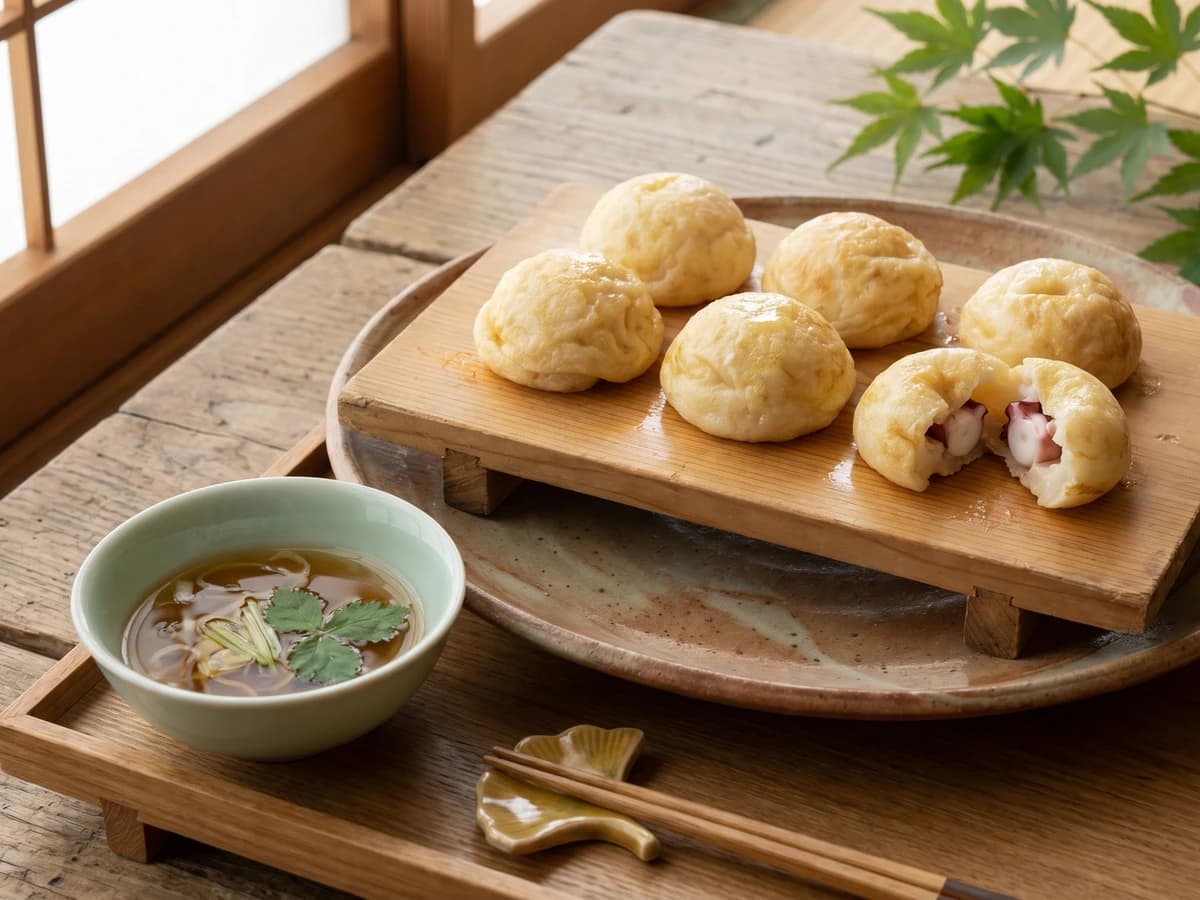
Akashi-yaki is not sauced takoyaki. It is egg-rich batter, tender octopus, and clear dashi, cooked pale and soft so each ball can be dipped like a small custard dumpling.

Chef Takumi
A whole anago looks like a test of nerve. It is mostly good sourcing, a dry skin, cold batter, and oil hot enough to leave the eel sweet under its lace.