
Chef Takumi
Akashi-yaki (明石焼き, dashi-dipped octopus dumplings)
Akashi-yaki is not sauced takoyaki. It is egg-rich batter, tender octopus, and clear dashi, cooked pale and soft so each ball can be dipped like a small custard dumpling.
A cooking platform built around craft, culture, and the stories behind what we eat.
Created by
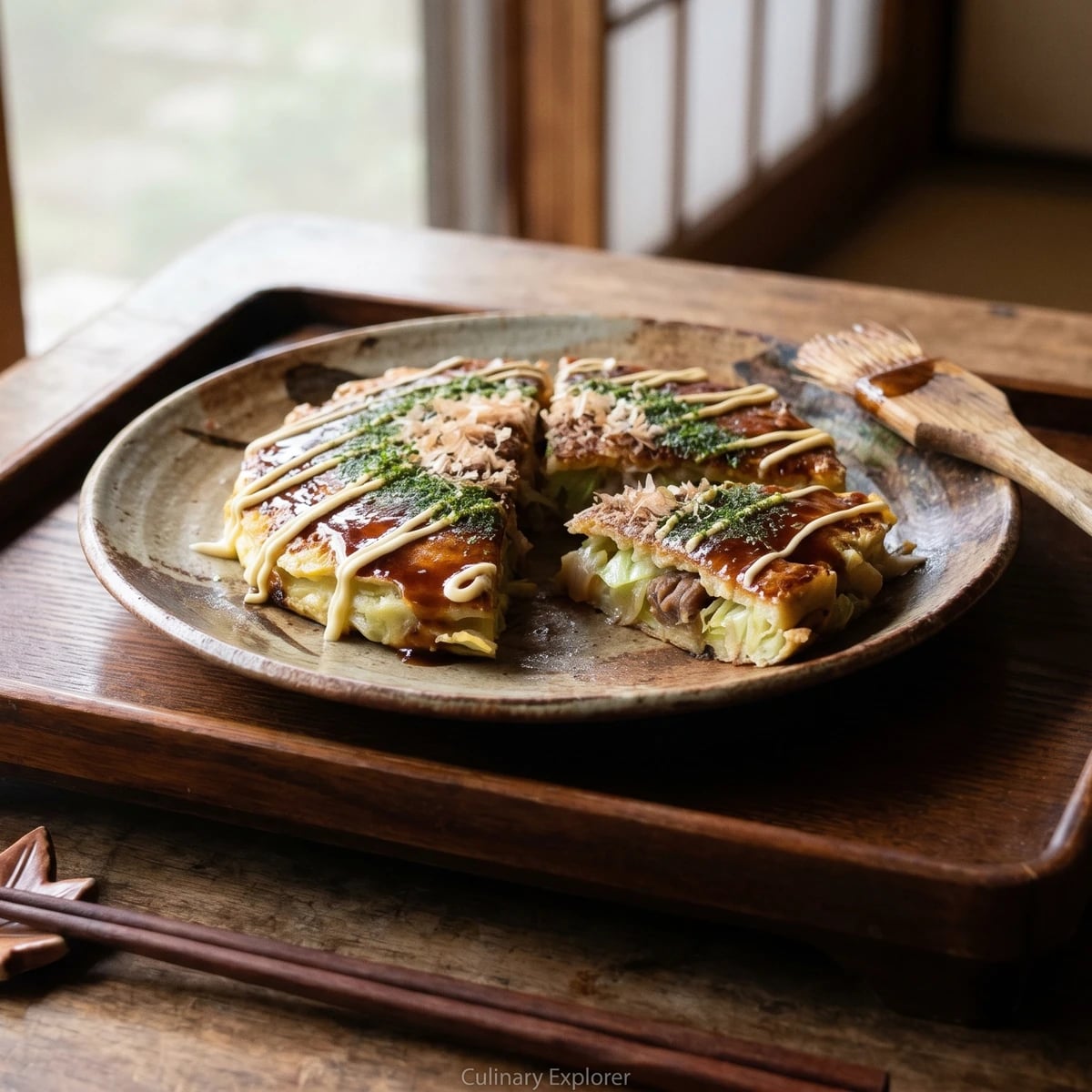
Kobe's griddle cake asks only for patience first: simmer the tendon until tender, fold it through cabbage batter, and let the rich little pieces season the whole pancake.
Beef tendon frightens people because it looks like work. It is work only in the way a clock is work: set it moving, give it time, and don't keep poking at it. For bokkake, we simmer gyūsuji, beef tendon, with konnyaku until the meat softens and the broth turns soy-dark and glossy. That is the heart of the dish.
The okonomiyaki itself is not the difficult part. Flour, dashi, egg, cabbage, and nagaimo make a loose batter that holds together just enough. The bokkake goes into it in small pieces, not as a topping pretending to be grand. Each bite carries a little chew, a little sweetness, and the clean salt of soy. Nothing hidden. The richness does the seasoning from inside.
The one detail that decides it is the tendon. Stop too soon and it stays rubbery, no matter how handsome the pancake looks. Cook it until a chopstick slips through with only a little resistance, then cool it in its broth so it drinks back flavor. After that, the griddle asks for calm hands. Press it flat and you squeeze out the air. Leave it alone, and the cabbage steams tender while the outside browns.
Bokkake is the Kobe name for sujikon, beef tendon and konnyaku simmered in soy sauce and sweetness, and it is especially associated with Nagata Ward. The dish grew from working-class kitchens that made good use of inexpensive tendon, turning a tough cut into a filling side dish for rice, noodles, and griddled foods. After the 1995 Great Hanshin earthquake, Nagata's bokkake and sobameshi became stronger symbols of local recovery and neighborhood food culture.
Quantity
450g
rinsed
Quantity
200g
cut into small cubes
Quantity
4 cups, plus more for blanching
Quantity
1 thumb
sliced
Quantity
3 tablespoons
Quantity
2 tablespoons
Quantity
2 tablespoons
Quantity
1 tablespoon
Quantity
1 1/2 cups
Quantity
160g
Quantity
120g
peeled and grated
Quantity
4
Quantity
500g
finely chopped
Quantity
4
thinly sliced
Quantity
2 tablespoons
Quantity
for finishing
Quantity
for finishing
Quantity
for finishing
Quantity
for finishing
| Ingredient | Quantity |
|---|---|
| beef tendonrinsed | 450g |
| konnyakucut into small cubes | 200g |
| water | 4 cups, plus more for blanching |
| gingersliced | 1 thumb |
| soy sauce | 3 tablespoons |
| sake | 2 tablespoons |
| mirin | 2 tablespoons |
| sugar | 1 tablespoon |
| dashi | 1 1/2 cups |
| all-purpose flour | 160g |
| nagaimopeeled and grated | 120g |
| large eggs | 4 |
| green cabbagefinely chopped | 500g |
| scallionsthinly sliced | 4 |
| neutral oil | 2 tablespoons |
| okonomiyaki sauce | for finishing |
| Japanese mayonnaise (optional) | for finishing |
| aonori | for finishing |
| katsuobushi (optional) | for finishing |
Put the beef tendon in a pot, cover with cold water, and bring it to a boil. Boil for five minutes, then drain and rinse the tendon and pot clean. This first boil is not for tenderness. It washes away scum and strong odors so the final broth tastes clean, not heavy.
Return the tendon to the clean pot with 4 cups water and the sliced ginger. Simmer gently, partly covered, for 1 1/2 to 2 hours, until a chopstick enters with only a little resistance. Keep the surface quiet. A hard boil clouds the broth and tightens the tendon before it has time to soften.
Lift out the tendon, let it cool enough to handle, and cut it into small bite-size pieces. Add the konnyaku, soy sauce, sake, mirin, and sugar to the pot, then return the tendon. Simmer uncovered for 25 to 35 minutes, until the liquid is reduced and glossy. Small pieces matter here because bokkake should season the okonomiyaki in many little places, not sit in one heavy lump.
Take the pot off the heat and let the bokkake cool in its cooking liquid for at least 20 minutes. Cooling is when the tendon drinks back seasoning. Drain before using, saving a spoonful of the thickened liquid if you want a deeper batter.
Whisk the dashi, flour, grated nagaimo, and eggs until just combined. Don't beat it smooth like cake batter. A few small lumps are harmless, and overmixing makes the finished okonomiyaki tough. Fold in the cabbage, scallions, and about 1 1/2 cups drained bokkake.
Heat a teppan or wide heavy skillet over medium heat and film it with oil. Spoon in one-quarter of the mixture and shape it into a round about 2cm thick. Cook for 4 to 5 minutes, until the underside is browned and the edge looks set. Flip once, calmly, then cook the second side another 4 to 5 minutes. Don't press. Pressing forces out the air and juices, which is a very efficient way to make a sad pancake.
Brush the top with okonomiyaki sauce while the surface is still hot enough to turn it glossy. Add thin lines of Japanese mayonnaise if using, then a light scatter of aonori and katsuobushi. Serve at once, but leave the plate some room. Even comfort food should be allowed to sit properly.
1 serving (about 530g)
Culinary guides, cultural storytelling, and the editorial depth that makes cooking meaningful.
Discover Culinary Explorer
Chef Takumi
Akashi-yaki is not sauced takoyaki. It is egg-rich batter, tender octopus, and clear dashi, cooked pale and soft so each ball can be dipped like a small custard dumpling.

Chef Takumi
Fujinomiya yakisoba is street food with a scholar's trick: firm steamed noodles, a dry finish, pork-fat crunch, and sardine powder doing quiet work at the end.

Chef Takumi
Hiroshima okonomiyaki looks complicated because it stacks what Osaka stirs together. Keep the layers in order, let the cabbage collapse slowly, and the dish becomes plain, generous work.

Chef Takumi
Ōta yakisoba is not a crowded stir-fry. Thick noodles, dark sauce, cabbage, and a hot griddle do the work, with just enough gloss to make the noodles shine.