
Chef Takumi
Aji Fry (アジフライ, panko-fried horse mackerel)
Aji fry is weeknight fish with no mystery: fresh horse mackerel opened cleanly, breaded lightly, and fried until the panko crackles while the flesh stays sweet.
A cooking platform built around craft, culture, and the stories behind what we eat.

Created by
Akashi-yaki is not sauced takoyaki. It is egg-rich batter, tender octopus, and clear dashi, cooked pale and soft so each ball can be dipped like a small custard dumpling.
The first thing to forget is the sauce. Akashi-yaki looks enough like takoyaki to confuse a person, then refuses almost everything takoyaki teaches you: no sweet brown glaze, no mayonnaise, no noisy toppings. Here the balls are pale, soft, and egg-rich, and you dip them into clear dashi the way we do it in Akashi. Quieter food can be very stern about its standards.
The one detail that decides it is heat. Too hot, and you make a browned shell before the inside has set. Too cool, and the batter leaks and sulks in the pan. Keep the pan at a steady medium heat, turn each ball as soon as the edge holds, and stop while the center is still tender. You are cooking an egg custard with octopus inside, not frying a snack into armor.
Sourcing comes first. Use tender cooked octopus with a clean, sea-sweet smell, diced small enough that each bite meets it without wrestling. The dashi should be first-pressing dashi from konbu and katsuobushi, because there is nothing hidden here. The broth is not an accessory; it is the second half of the dish.
In a meal, Akashi-yaki works best as the warm center of a small gathering, passed out in odd numbers with a little bowl of broth for each person. Leave it room on the board. The pleasure is in the contrast: pale egg, firm octopus, clear stock, and a dish that turns out to be less difficult than unfamiliar.
Akashi-yaki is the outside name for the dish that cooks in Akashi, Hyōgo Prefecture, traditionally call tamagoyaki, literally egg-grilled. Its origin is usually placed in the late Edo period, and its round, octopus-filled form became one of the models for Osaka takoyaki, which Tomekichi Endō of Aizuya popularized in 1935. The local difference remains clear: Akashi's batter is heavy with egg and eaten in warm dashi, reflecting the city's long dependence on octopus from the fast tides of the Seto Inland Sea.
Quantity
15g
Quantity
5 cups
Quantity
30g
Quantity
5
Quantity
2 cups
reserved from the dashi
Quantity
80g
Quantity
25g
or potato starch if needed
Quantity
1/2 teaspoon
for the batter
Quantity
200g
diced into 1/2-inch pieces
Quantity
2 tablespoons
for the pan
Quantity
2 cups
for dipping
Quantity
1 tablespoon
Quantity
1 teaspoon
Quantity
1/4 teaspoon
plus more to taste
Quantity
a few
for the dipping dashi
| Ingredient | Quantity |
|---|---|
| konbu (dried kelp) | 15g |
| cold water | 5 cups |
| katsuobushi (bonito flakes) | 30g |
| large eggs | 5 |
| cooled dashireserved from the dashi | 2 cups |
| cake flour or low-protein flour | 80g |
| wheat starch (ukiko or jinko)or potato starch if needed | 25g |
| sea saltfor the batter | 1/2 teaspoon |
| cooked octopusdiced into 1/2-inch pieces | 200g |
| neutral oilfor the pan | 2 tablespoons |
| dashifor dipping | 2 cups |
| usukuchi shōyu (light soy sauce) | 1 tablespoon |
| mirin | 1 teaspoon |
| sea saltplus more to taste | 1/4 teaspoon |
| mitsuba leaves or finely sliced scallion (optional)for the dipping dashi | a few |
Wipe the konbu with a damp cloth, but don't wash it. That pale bloom on the surface is flavor, not dirt. Put the konbu in the cold water and bring it up slowly over low heat, about ten to twelve minutes. Lift it out when the water trembles and small bubbles climb the sides, before the boil rolls. Boil the kelp and the stock turns faintly bitter and slick, which is a poor trade for impatience.
Bring the water to a gentle boil, add the katsuobushi all at once, and take the pot off the heat. Leave it alone until the flakes sink, two or three minutes. Strain through a cloth or fine sieve and let it drip by itself. Don't squeeze. Squeezing presses out the strong, oily flavors that cloud the clear stock you were guarding.
Combine 2 cups dashi, usukuchi shōyu, mirin, and 1/4 teaspoon salt in a small pot. Warm it gently just long enough to take the raw edge off the mirin, then taste. It should be clear, savory, and lightly salted, because the balls themselves are mild. Keep it warm and add the mitsuba or scallion just before serving.
Dice the cooked octopus into pieces about 1/2 inch across and pat them dry. Too large, and they tear the soft balls as you turn them. Too wet, and they spit oil and loosen the batter. If the octopus smells strong or looks dull and dry, change the dish. Akashi-yaki has no heavy sauce to hide a tired ingredient.
Whisk the eggs gently in a bowl, just until the yolks and whites are one color. Whisk in the 2 cups cooled dashi. Sift in the flour, wheat starch, and 1/2 teaspoon salt, then whisk only until smooth and strain into a pitcher or spouted cup. The batter should be thin, closer to light cream than pancake batter. The egg and dashi give the soft set; the starch keeps the texture tender without making it bready.
Set an Akashi-yaki pan or takoyaki pan over steady medium heat and brush each well with a thin film of oil. Copper is the old tool because it responds quickly, but cast iron or an electric pan works if you let it heat evenly. Drop in a spoonful of batter to test: it should murmur and set at the edge, not darken at once.
Fill the wells nearly to the rim with batter, then put one piece of octopus in each. When the edges hold and the underside is pale gold, use two bamboo skewers to loosen and turn each ball a quarter turn. Turn again as the new edge sets, coaxing the batter into a round shape. If a ball has a gap, spoon in a little more batter and keep turning. Stop when the outside is set and the center still gives softly, usually three to five minutes.
Lift the Akashi-yaki onto a small board or shallow plate. They are softer than takoyaki, so be gentle and forgive one imperfect sphere. Set a bowl of the warm dipping dashi beside each serving. Dip one ball briefly, eat, and continue. A long soak makes it fall apart, and the point is the meeting of egg, octopus, and clear broth in one bite.
1 serving (about 360g)
Culinary guides, cultural storytelling, and the editorial depth that makes cooking meaningful.
Discover Culinary ExplorerChef Takumi
Aji fry is weeknight fish with no mystery: fresh horse mackerel opened cleanly, breaded lightly, and fried until the panko crackles while the flesh stays sweet.
Chef Takumi
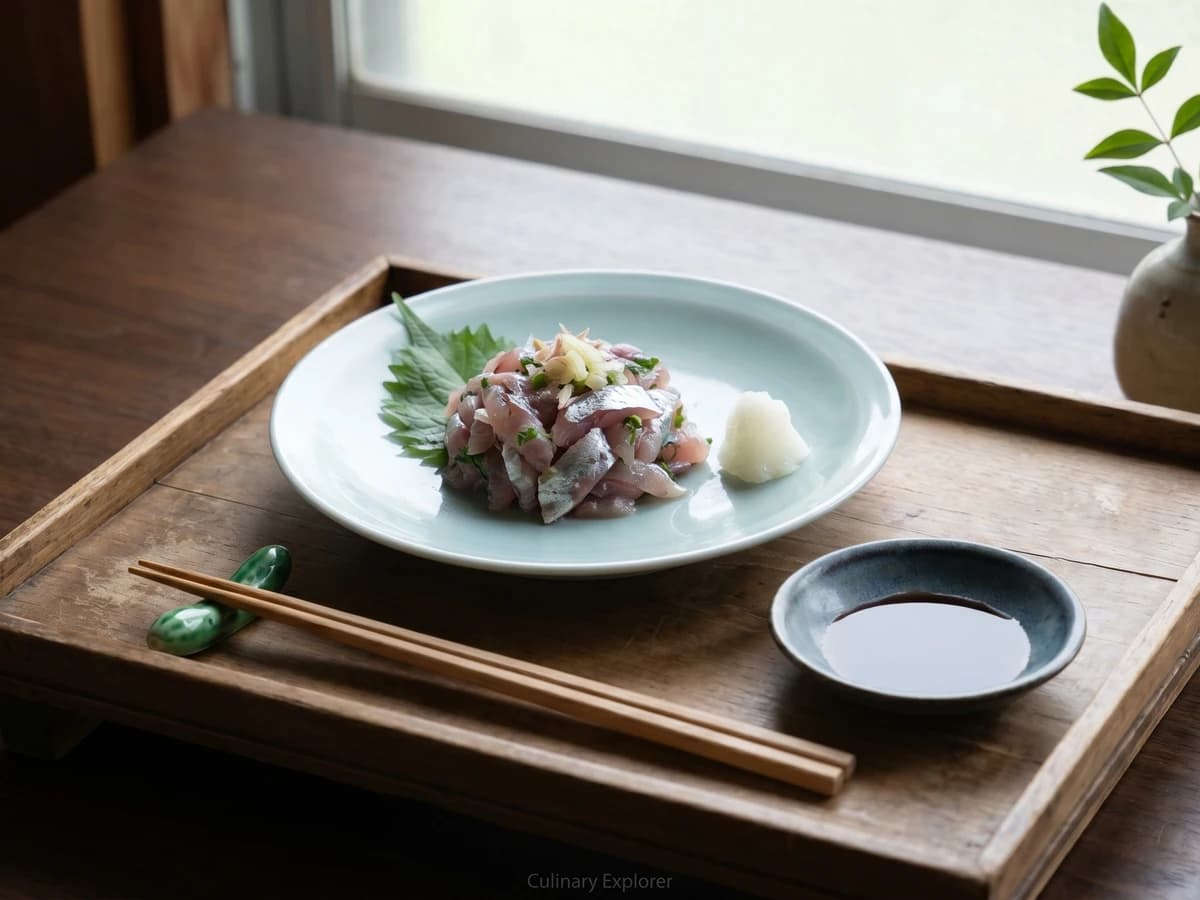
Summer horse mackerel, chopped just enough to catch ginger and scallion, becomes a cool, clean main dish with rice. The secret is fresh fish and a knife that does not bruise it.

Chef Takumi
A whole anago looks like a test of nerve. It is mostly good sourcing, a dry skin, cold batter, and oil hot enough to leave the eel sweet under its lace.

Chef Takumi
Aomori's ika-menchi is thrift with a clean crackle: chopped squid, cabbage, and onion fried into small patties, sweet from the vegetables, springy from the squid, and honest beside rice.