
Chef Takumi
Aji Fry (アジフライ, panko-fried horse mackerel)
Aji fry is weeknight fish with no mystery: fresh horse mackerel opened cleanly, breaded lightly, and fried until the panko crackles while the flesh stays sweet.
A cooking platform built around craft, culture, and the stories behind what we eat.

Created by
Fujinomiya yakisoba is street food with a scholar's trick: firm steamed noodles, a dry finish, pork-fat crunch, and sardine powder doing quiet work at the end.
The noodle decides this dish. Fujinomiya yakisoba is not soft stir-fried spaghetti in a sweet sauce, though it has suffered that accusation in distant kitchens. The real thing has a chew to it, a pull against the teeth, because the noodles are steamed and left firm before they ever meet the griddle.
That chew is the first secret, and the second is restraint. We cook the cabbage until it shines and softens at the edge, add the noodles with only enough water to loosen them, then let the sauce coat and dry against the pan. If it swims, it isn't Fujinomiya yakisoba. The sauce should cling, not puddle, because the final bite needs noodle, cabbage, pork-fat scrap, and sardine powder all speaking clearly.
Nikukasu, the crisp pork-fat scraps, gives the dish its old workman's richness. Dashiko, a powder of sardine and bonito, is scattered at the end so its aroma stays high and a little briny. This is comfort food, yes, but there is nothing careless about it. Keep the pan lively, keep the portion modest, and leave the noodles room to taste like themselves.
Fujinomiya yakisoba developed in Fujinomiya, Shizuoka Prefecture, after World War II, when local noodle makers supplied firm, steamed noodles that held up well on an iron griddle. The dish became nationally known after Fujinomiya Yakisoba Gakkai, a local promotional group founded in 2000, helped define and publicize its traits: local-style noodles, nikukasu, and dashiko. It won the first B-1 Grand Prix in 2006, making a regional everyday dish into one of Japan's best-known examples of gotōchi gurume, local specialty food.
Quantity
2 portions (about 300g total)
Quantity
80g
cut into bite-size pieces
Quantity
2 tablespoons
Quantity
200g
cut into 1-inch pieces
Quantity
1/2 small
thinly sliced
Quantity
2 tablespoons
Quantity
1/4 cup
Quantity
3 tablespoons
Quantity
1 tablespoon
Quantity
2 teaspoons, plus more for serving
Quantity
1 tablespoon
Quantity
for serving
| Ingredient | Quantity |
|---|---|
| Fujinomiya yakisoba noodles | 2 portions (about 300g total) |
| thinly sliced pork bellycut into bite-size pieces | 80g |
| nikukasu (crisp pork-fat scraps) | 2 tablespoons |
| green cabbagecut into 1-inch pieces | 200g |
| onionthinly sliced | 1/2 small |
| neutral oil | 2 tablespoons |
| water | 1/4 cup |
| yakisoba sauce, preferably Worcestershire-based chūnō-style sauce | 3 tablespoons |
| soy sauce | 1 tablespoon |
| dashiko (sardine and bonito powder) | 2 teaspoons, plus more for serving |
| beni shōga (red pickled ginger) (optional) | 1 tablespoon |
| aonori (optional) | for serving |
Separate the noodles gently with your fingers before they go near the pan. Fujinomiya noodles are firm and steamed, so forcing them apart over heat breaks them into short pieces. If they feel stiff from the refrigerator, splash them with a spoonful of water and let them sit five minutes while you cut the vegetables.
Heat a wide skillet or iron griddle over medium-high heat and add the oil. Add the pork belly and nikukasu, then cook until the pork loses its raw color and the fat scraps smell nutty and crisp at the edges. That rendered fat is part of the seasoning, so let it flavor the pan before the vegetables arrive.
Add the cabbage and onion and toss them through the pork fat. Cook for two or three minutes, just until the cabbage turns bright, glossy, and tender at the edges while keeping some bite. If you cook it soft now, it gives up water later and the noodles lose their dry finish.
Set the noodles on top of the vegetables and pour the water around the edge of the pan. Cover for one minute, then uncover and tease the noodles apart with chopsticks or tongs. The brief cover softens the noodles without boiling them, keeping the chew that makes Fujinomiya yakisoba what it is.
Add the yakisoba sauce and soy sauce, then toss steadily until every strand is stained brown and glossy. Keep cooking for another minute or two, spreading the noodles across the pan so excess moisture cooks away. The pan should sound lively, not wet. When the sauce clings and the bottom strands pick up a little color, stop.
Turn off the heat and scatter over the dashiko, tossing once or twice. Add it at the end because its fish aroma is quick and delicate, and hard heat flattens it. Plate the noodles in a modest mound, then finish with aonori, a little more dashiko, and beni shōga at the side.
1 serving (about 390g)
Culinary guides, cultural storytelling, and the editorial depth that makes cooking meaningful.
Discover Culinary ExplorerChef Takumi
Aji fry is weeknight fish with no mystery: fresh horse mackerel opened cleanly, breaded lightly, and fried until the panko crackles while the flesh stays sweet.
Chef Takumi
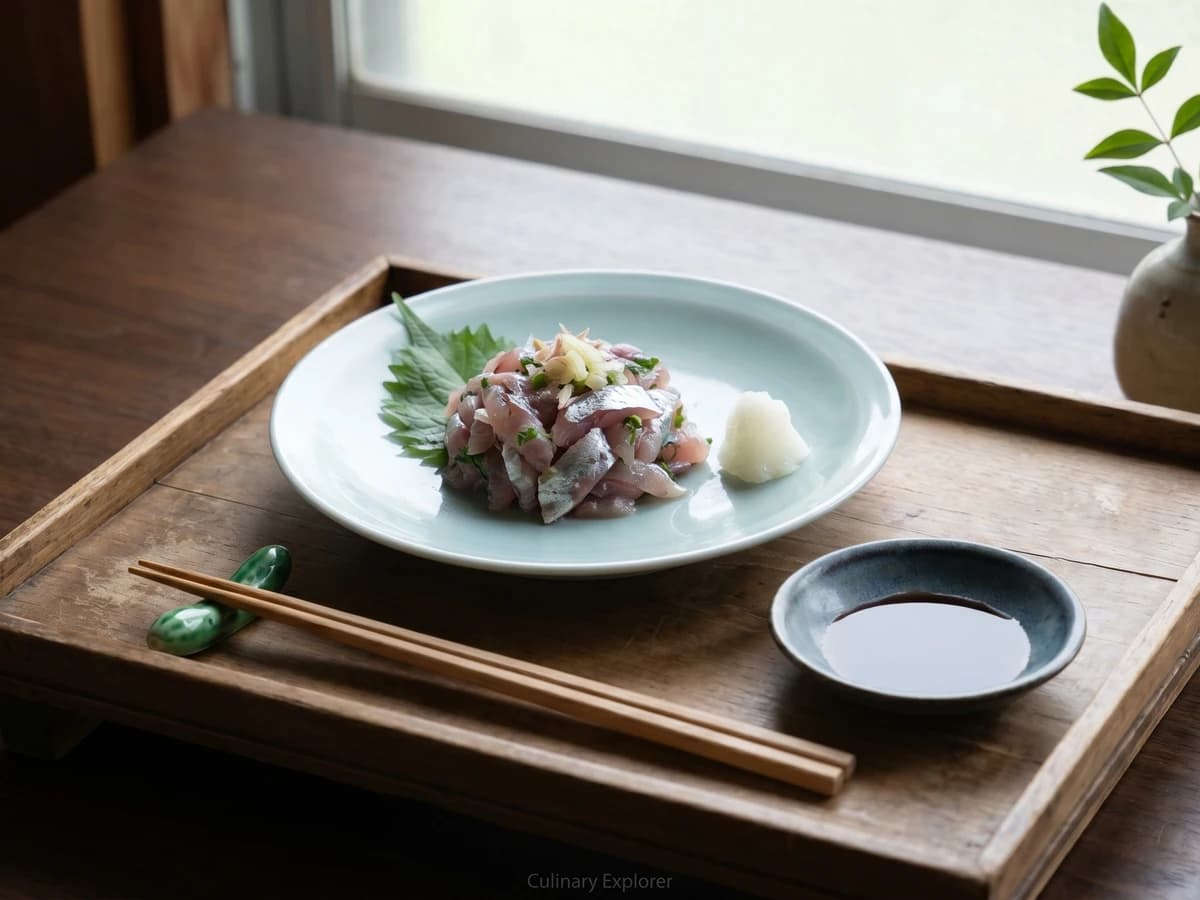
Summer horse mackerel, chopped just enough to catch ginger and scallion, becomes a cool, clean main dish with rice. The secret is fresh fish and a knife that does not bruise it.
Chef Takumi
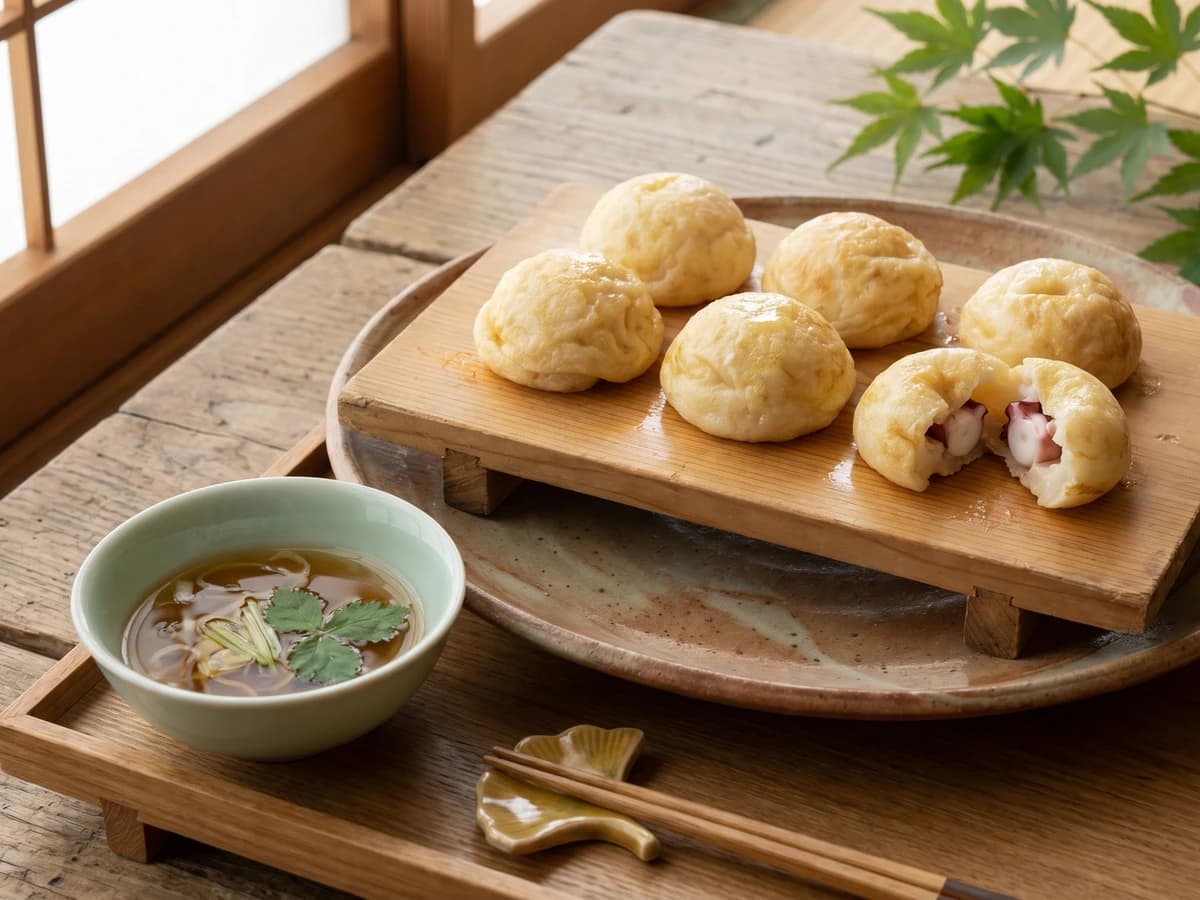
Akashi-yaki is not sauced takoyaki. It is egg-rich batter, tender octopus, and clear dashi, cooked pale and soft so each ball can be dipped like a small custard dumpling.

Chef Takumi
A whole anago looks like a test of nerve. It is mostly good sourcing, a dry skin, cold batter, and oil hot enough to leave the eel sweet under its lace.