
Chef Graziella
Agnello al Forno con Patate
The Sunday lamb of Puglia, roasted with potatoes until they absorb every precious drop of rendered fat. In this dish, the potatoes become the reason you came to the table.
A cooking platform built around craft, culture, and the stories behind what we eat.

Created by
The pasta of Puglia dressed in nothing but sweet summer tomatoes, olive oil, and the sheep's milk cheese that belongs there. Parmigiano-Reggiano has no place in this bowl.
Every region guards its own cheese. In Emilia-Romagna, we reach for Parmigiano-Reggiano without thinking. But Puglia is not Emilia-Romagna. What grows there, what grazes there, what the shepherds make there, that is what belongs on the table. To put Parmigiano on this dish is to announce that you do not understand where the food comes from.
Cacioricotta is made from sheep's milk, sometimes goat's, using a method that falls between fresh ricotta and aged pecorino. It is firm enough to grate but milky and mild, with a slight tang that complements the sweetness of summer tomatoes. The cheese melts into the sauce rather than sitting on top. This is the difference between a dish that is whole and one that is merely assembled.
Orecchiette means little ears, and the shape is not decorative. Those small cups catch the sauce. The tomatoes nestle inside. The cheese clings to the ridged surface where Puglian grandmothers dragged the dough across wooden boards with their thumbs. Simple does not mean easy. It means every element must earn its place.
Orecchiette has been made in Puglia since at least the 12th century, likely introduced through Norman or Swabian influence. In the old quarter of Bari, on the Strada delle Orecchiette, women still sit outside their homes shaping the pasta by hand on wooden boards, selling it fresh to passersby. The technique has passed from grandmother to granddaughter for thirty generations.
Quantity
1 pound
Quantity
1 1/2 pounds
halved
Quantity
1/4 cup, plus more for finishing
Quantity
2
lightly crushed
Quantity
1/4 teaspoon
Quantity
to taste
Quantity
4 ounces
finely grated
Quantity
small handful
| Ingredient | Quantity |
|---|---|
| dried orecchiette | 1 pound |
| ripe cherry tomatoeshalved | 1 1/2 pounds |
| extra virgin olive oil | 1/4 cup, plus more for finishing |
| garlic cloveslightly crushed | 2 |
| red pepper flakes | 1/4 teaspoon |
| kosher salt | to taste |
| cacioricotta cheesefinely grated | 4 ounces |
| fresh basil leaves | small handful |
Place a large skillet over medium heat. Add the olive oil and the crushed garlic cloves. Let the garlic warm gently until fragrant, about two minutes. It must not brown. Remove and discard the garlic. What remains is perfume, not presence.
Add the halved cherry tomatoes to the oil in a single layer. Add the red pepper flakes and a generous pinch of salt. Cook without stirring for three minutes, then stir gently. Continue cooking until the tomatoes collapse and release their juices, another eight to ten minutes. Some will hold their shape. Some will burst. Both are correct. The sauce should be loose and bright, not thick like a long-cooked ragù.
Meanwhile, bring abundant salted water to a vigorous boil. The water should taste of the sea. Add the orecchiette and cook until tender but with pleasant resistance. This takes longer than you think, often twelve to fourteen minutes for dried orecchiette. The pasta should be cooked through but still have texture. Reserve one cup of pasta water before draining.
Drain the pasta and add it directly to the skillet with the tomatoes. Toss vigorously over medium heat for one minute, adding splashes of pasta water as needed. The starchy water helps the sauce cling to the little cups of pasta. Remove from heat.
Add half the grated cacioricotta and toss again. The cheese should melt into the sauce, not sit on top in clumps. Tear the basil leaves and scatter them through. Taste for salt. Divide among warm bowls, drizzle with olive oil, and pass the remaining cheese at the table. Once the pasta is sauced, serve it promptly, inviting your guests and family to put off talking and start eating.
1 serving (about 400g)
Culinary guides, cultural storytelling, and the editorial depth that makes cooking meaningful.
Discover Culinary ExplorerChef Graziella
The Sunday lamb of Puglia, roasted with potatoes until they absorb every precious drop of rendered fat. In this dish, the potatoes become the reason you came to the table.

Chef Graziella
The little hollowed shells of Puglia and Molise, shaped with nothing more than two fingers and a wooden board. The motion takes practice. The result catches sauce like nothing else.
Chef Graziella
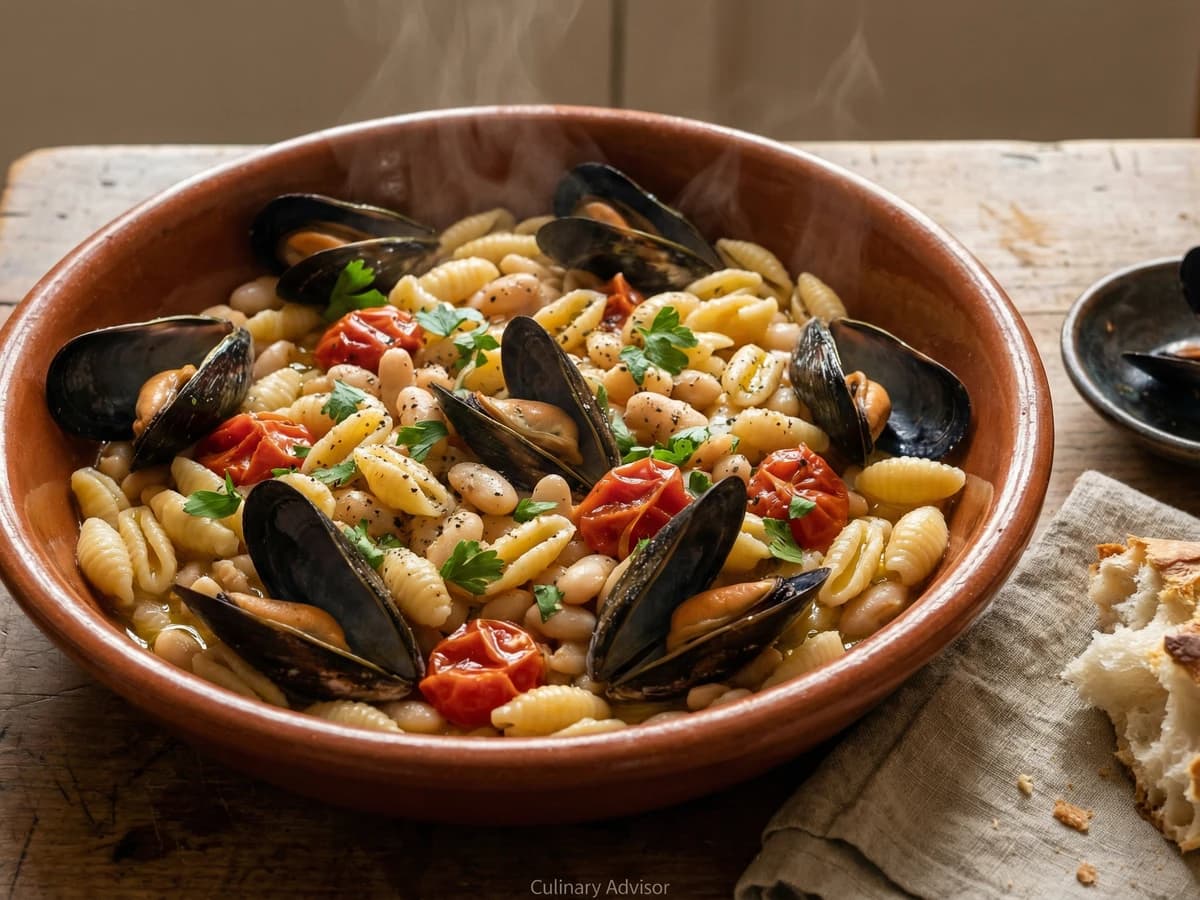
Where the Adriatic meets the wheat fields of Puglia: briny mussels, creamy cannellini, and chewy cavatelli dressed in nothing but good olive oil and the juice the shellfish surrender.

Chef Graziella
Puglia's beloved gratinated mussels, where briny shellfish meet a golden crust of breadcrumbs, pecorino, and parsley. Simple enough for a weeknight, impressive enough to close a dinner party.