
Chef Takumi
Agar Jelly with Anko and Fruit (あんみつ, Anmitsu)
Anmitsu looks like a tray of small tasks, but the work is calm: dissolve the kanten fully, chill the pieces clean, then let fruit, anko, and kuromitsu do the speaking.
A cooking platform built around craft, culture, and the stories behind what we eat.
Created by
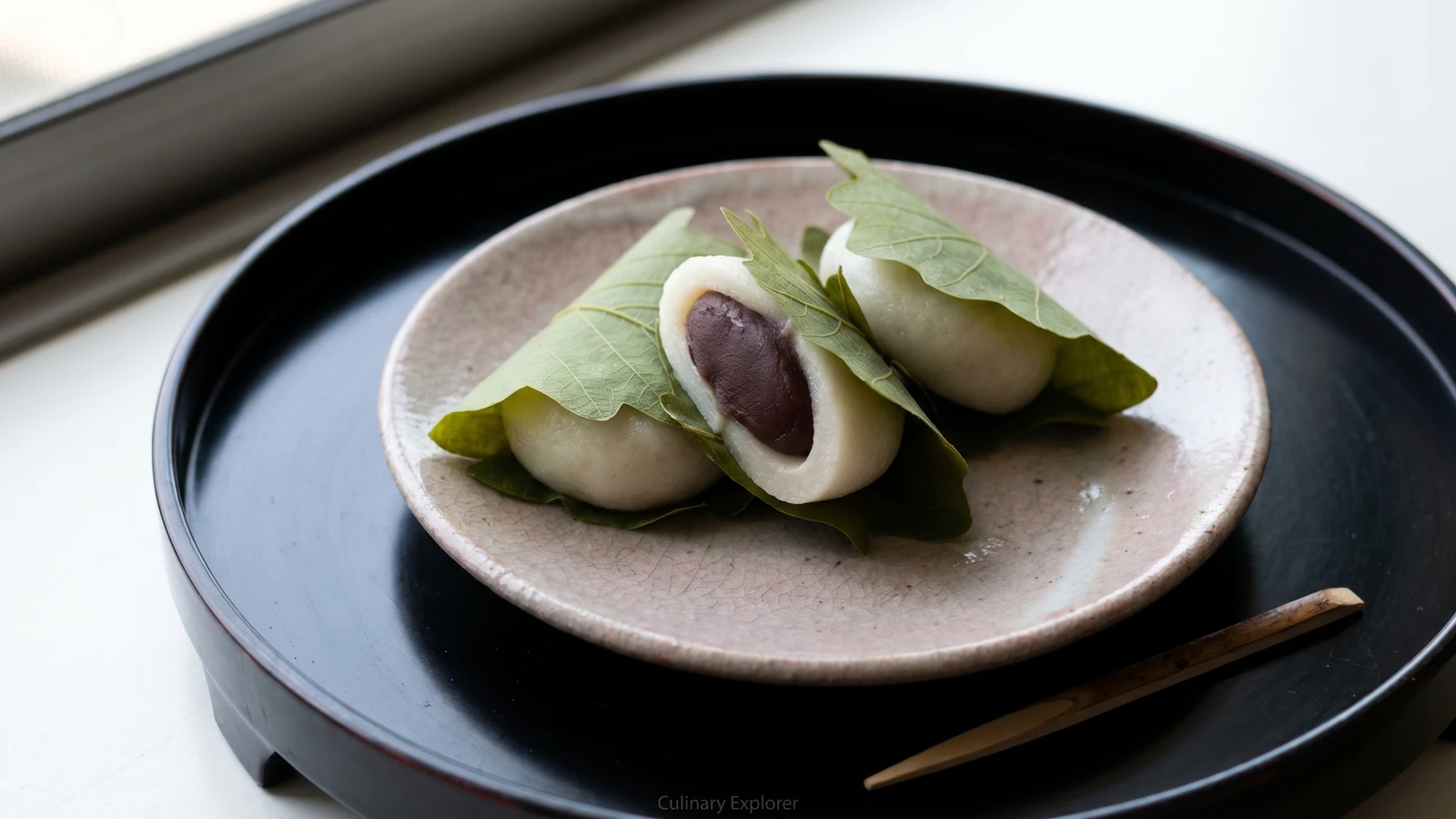
Kashiwamochi is Children's Day in the hand: plain rice dough, sweet bean paste, and an oak leaf whose fragrance makes the little folded cake feel unmistakably spring.
An oak leaf tells you the month before the sweet reaches your mouth. Kashiwamochi belongs to early May, when the new green is still soft and Children's Day arrives with carp streamers in the wind. The mochi is plain, folded around sweet anko, but the kashiwa leaf gives it a clean green fragrance and an old meaning: the leaf holds on until new buds come, so the family line continues.
You may think a leaf-wrapped wagashi must be difficult. It isn't. This is rice flour dough, steamed, kneaded until glossy, then folded around a ball of bean paste. The detail that decides it is moisture. Too dry and the dough cracks at the fold; too wet and it slumps. Aim for soft, warm clay, and keep your hands damp enough that the dough obeys you.
We make this for a holiday, but the method is wonderfully plain. Jōshinko gives the gentle bite that belongs to kashiwamochi, while a little shiratamako keeps the dough supple as it cools. The leaf is not eaten. It lends its scent, holds the shape, and then steps aside. Honmono is often like that: one proper ingredient, handled without fuss.
Kashiwamochi became tied to Tango no Sekku, the fifth-day, fifth-month festival, during the Edo period, especially in Edo, where the kashiwa leaf's habit of staying on the tree until new buds appear made it a symbol of family continuity. Western Japan kept the older May 5 sweet chimaki, rice dumplings wrapped in bamboo grass, more strongly, so wagashi shops still show an east-west divide in what marks the holiday. In 1948, Japan's Public Holiday Law established May 5 as Kodomo no Hi, Children's Day, carrying the older festival into a modern national holiday.
Quantity
8
fresh leaves blanched briefly, or brined leaves soaked and rinsed
Quantity
240g
chilled and divided into 8 balls
Quantity
200g
Quantity
40g
Quantity
25g
Quantity
1/4 teaspoon
Quantity
220ml, plus 1 to 2 tablespoons more if needed
| Ingredient | Quantity |
|---|---|
| food-grade kashiwa oak leavesfresh leaves blanched briefly, or brined leaves soaked and rinsed | 8 |
| anko (sweet azuki bean paste), preferably smooth koshianchilled and divided into 8 balls | 240g |
| jōshinko (Japanese non-glutinous rice flour) | 200g |
| shiratamako (glutinous rice flour) | 40g |
| sugar | 25g |
| fine sea salt | 1/4 teaspoon |
| warm water | 220ml, plus 1 to 2 tablespoons more if needed |
Rinse the kashiwa leaves. If they are packed in brine, soak them in cool water for 10 to 15 minutes, then rinse again and pat dry. If they are fresh, dip them briefly in boiling water and cool them in water so they bend without tearing. Roll the anko into 8 balls, about 30g each, and chill them while you make the dough; cold anko holds its shape and won't smear into the warm mochi.
Put the shiratamako in a bowl and crush the grains with a little of the warm water until smooth and milky. Add the jōshinko, sugar, salt, and most of the remaining water, then mix to a soft paste, adding more water a spoonful at a time if it looks dry. The dough should be soft enough to spread, but thick enough to hold a mound.
Line a steamer with a damp sarashi cloth, or set the dough in a heatproof bowl. Steam over steady heat for 20 to 25 minutes, until the dough is hot through, slightly glossy, and no powdery white center remains when you pull open a small piece. Rice flour needs full heat to gelatinize; stop early and the texture tastes chalky no matter how neatly you shape it.
Tip the hot dough into a bowl or mortar moistened with water. With a wet surikogi or sturdy spatula, pound and fold it for 3 to 5 minutes, dipping the tool in water when it sticks. It will move from rough and grainy to smooth, stretchy, and satin-glossy. This kneading is what turns steamed rice flour into mochi; skip it and you have a polite rice dumpling, which is not the same thing.
When the dough is warm enough to handle, wet your hands lightly and divide it into 8 pieces. Keep the waiting pieces covered with a damp cloth, because the surface dries fast and a dry edge cracks at the fold. Flatten each piece into an oval about 10cm long, thicker in the center and thinner at the edges.
Set one anko ball just below the center of each oval and fold the dough over it into a soft half-moon. Press the rim gently, not like sealing a gyoza. The filling should be enclosed, but the edge should stay tender; the leaf will help hold the shape.
Lay each mochi on a kashiwa leaf, glossy face out for this red-bean version, with the center vein running along the fold. Wrap the leaf around the mochi and let the pieces rest, covered, for 20 minutes at room temperature. The leaf's fragrance needs a little time to settle into the rice dough. It is a wrapper, not something to chew.
Serve the kashiwamochi the same day, at room temperature. If serving young children, cut the mochi into smaller bites and stay at the table; mochi is gentle, but it still asks to be chewed. Peel back the leaf as you eat, and leave it on the plate.
1 serving (about 85g)
Culinary guides, cultural storytelling, and the editorial depth that makes cooking meaningful.
Discover Culinary ExplorerChef Takumi
Anmitsu looks like a tray of small tasks, but the work is calm: dissolve the kanten fully, chill the pieces clean, then let fruit, anko, and kuromitsu do the speaking.

Chef Takumi
A cool square of almond-scented milk, set softly and served with mikan in thin syrup, is dinner-party food without theater. The only stern demand is restraint with the fragrance.

Chef Takumi
Azuki bar asks for patience twice: once while the beans soften, and once while the frozen bar yields. That hardness is not a flaw. It is the character of the thing.
Chef Takumi
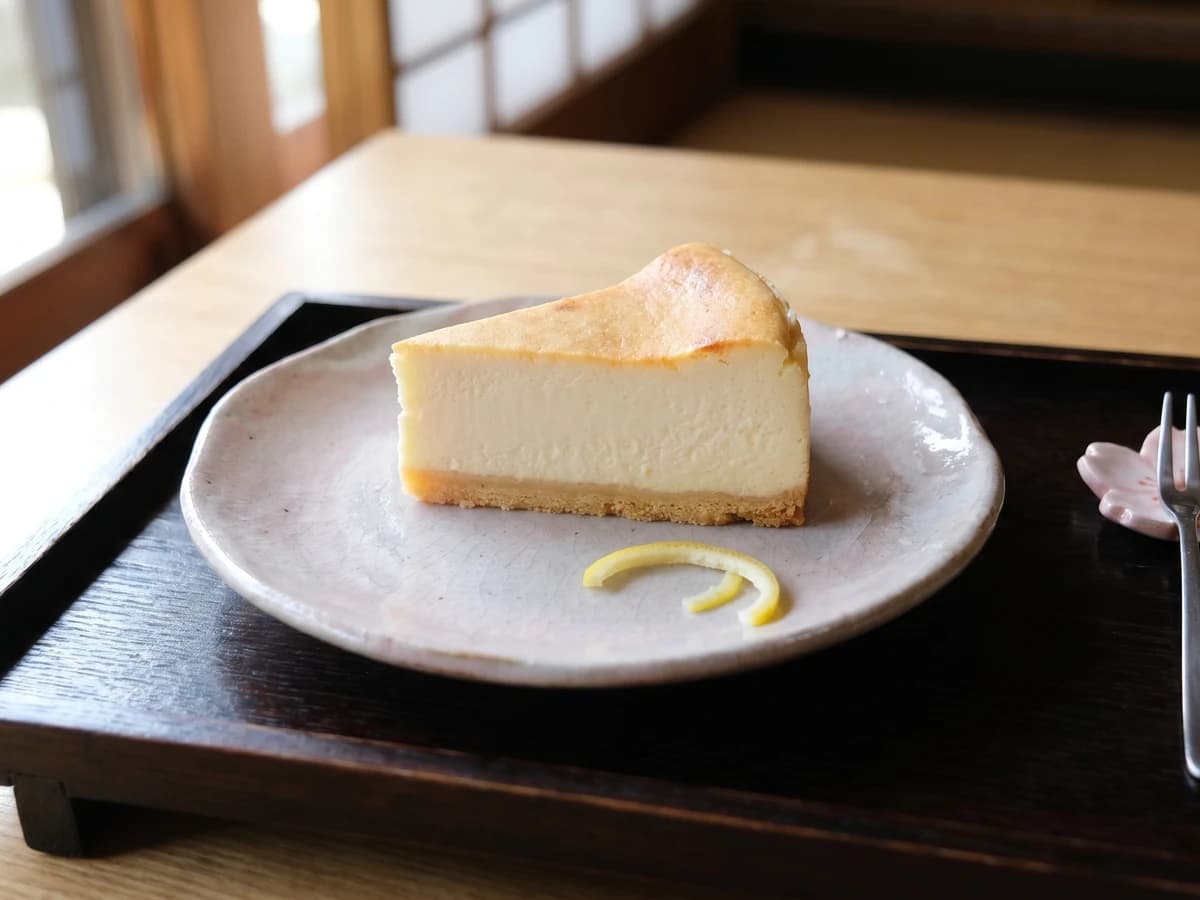
A Japanese baked cheesecake is not trying to float away. It is dense, smooth, and quietly tart, with a clean slice doing the work of decoration.