Culinary Explorer

A cooking platform built around craft, culture, and the stories behind what we eat.
Discover Culinary Explorer
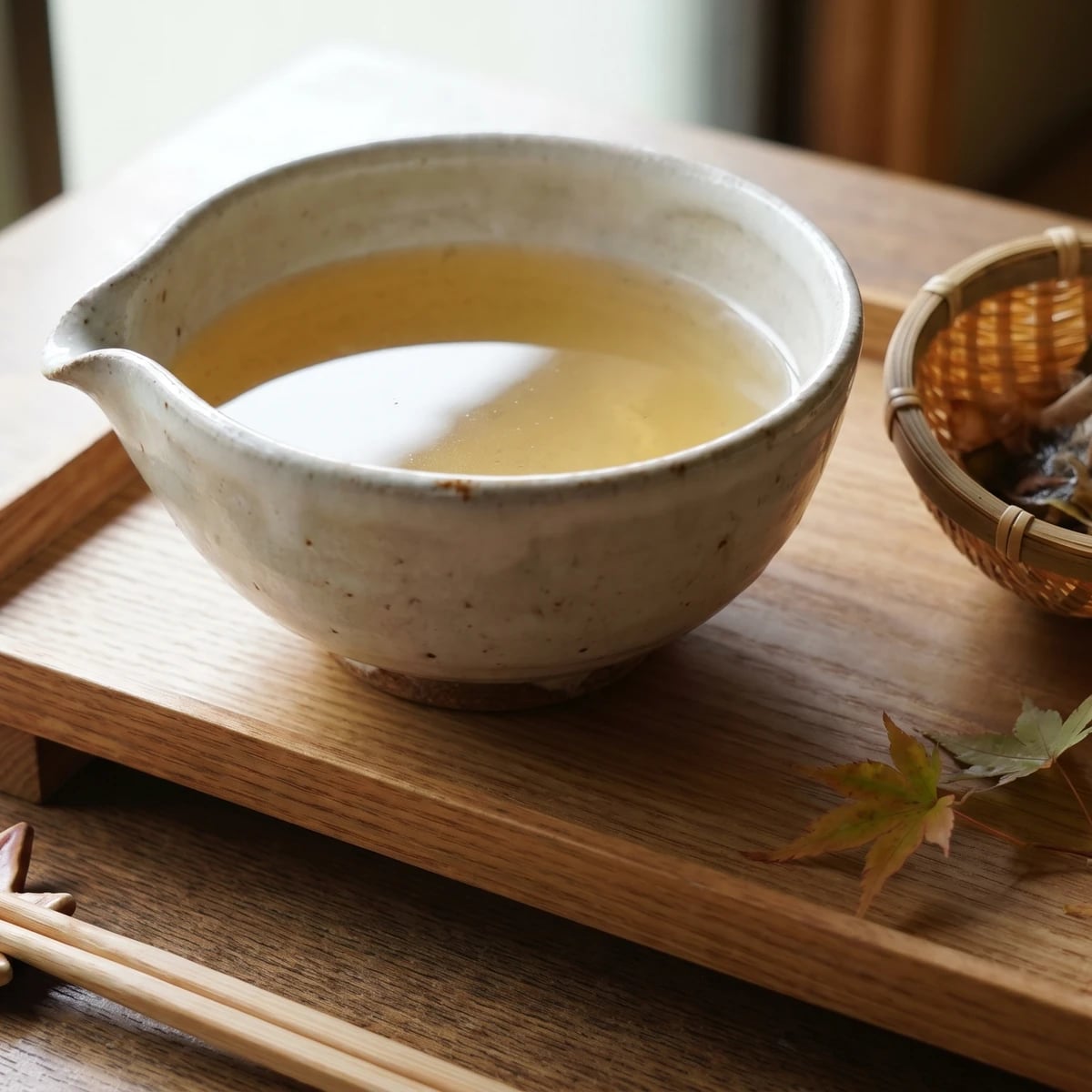
Niban Dashi (二番だし, second dashi)

Niban Dashi (二番だし, second dashi)

Created by

Niban dashi is thrift with standards: the second pull from konbu and bonito, less perfumed than the first stock, but round enough for simmered dishes.

Sauces & Condiments
Japanese
Make Ahead
Meal Prep
Budget Friendly
5 min
Active Time
15 min cook20 min total
YieldAbout 4 cups

The quiet genius of niban dashi is that it begins with what another cook might throw away. Konbu and katsuobushi have already given their first, most fragrant flavor to ichiban dashi. They are not finished. They only need a longer conversation with the water.

This is the stock for nimono, miso soup, and the dishes that cook a little longer. It doesn't need the perfume of the first pull. It needs body, steadiness, and enough depth to carry soy sauce, miso, or a sweet simmering broth without disappearing. We simmer it gently because the ingredients are already spent on the surface, and the remaining flavor sits deeper.

The one detail that decides it is restraint at the end. Add a small fresh handful of katsuobushi to wake the stock, then strain without squeezing. Press the flakes and you force out rough, oily flavors. Let them drip on their own and you keep the dashi honest. Nothing hidden, nothing wasted.

The distinction between ichiban dashi and niban dashi became especially important in professional and school kitchens of the Edo and modern periods, where careful stock use shaped both taste and economy. First dashi was reserved for clear soups and delicate dishes, while second dashi supplied the everyday backbone for simmering, miso soup, and sauces. The practice reflects a broader washoku habit: extracting full value from an ingredient without making the flavor coarse.

The technique, the tradition, and the story behind every dish.

Discover Culinary Explorer

Ingredients

used konbu from ichiban dashi

Quantity

1 piece

about 10g dry weight before first use

used katsuobushi from ichiban dashi

Quantity

about 20g

saved after straining first dashi

cold water

Quantity

5 cups

fresh katsuobushi

Quantity

5g

added at the end

Equipment Needed

  • Medium pot
  • Fine-mesh strainer
  • Clean cotton cloth, sarashi, or strong unscented paper towel

Instructions

  1. 1

    Save the materials

    After making ichiban dashi, set aside the used konbu and katsuobushi. Don't let them sit warm for hours. If you're not making niban dashi at once, cool them quickly and refrigerate them, because old wet flakes turn dull before they turn useful.

  2. 2

    Start in water

    Put the used konbu and katsuobushi in a pot with 5 cups cold water. Starting cold gives the konbu time to release what remains without shocking it into a slick, cloudy stock. Bring it slowly to a bare simmer over medium-low heat.

  3. 3

    Simmer gently

    Keep the pot at a quiet simmer for 10 minutes. A few bubbles should rise, not a hard boil. Niban dashi is allowed more heat than ichiban dashi because you're drawing out deeper flavor, but a violent boil still roughens the broth and makes it taste tired.

    This is the difference between first and second dashi. The first protects fragrance. The second asks for body, so it gets time.
  4. 4

    Add fresh flakes

    Add the fresh katsuobushi, turn off the heat, and let it stand for 2 minutes. That last handful restores aroma to a stock made from used materials. It should smell clean and faintly smoky, not heavy.

  5. 5

    Strain without pressing

    Strain through a fine-mesh strainer lined with cloth or a strong paper towel. Let the liquid pass through on its own. Don't squeeze the flakes, tempting as it is, because squeezing brings bitter, oily notes into the stock. The loss of a spoonful is cheaper than spoiling the pot.

    A clear stock comes from patience at the strainer. Let gravity do the polite work.
  6. 6

    Use or cool

    Use the niban dashi for miso soup, simmered vegetables, noodle broth, or sauces. If saving it, cool it quickly, cover, and refrigerate. It should taste round and savory, less bright than ichiban dashi but still clean.

Chef Tips

  • Make niban dashi the same day you make ichiban dashi if you can. The used konbu and flakes are still clean and sweet then, and the second stock tastes alive instead of stale.
  • Don't ask niban dashi to do the work of ichiban dashi. For clear soup, use the first pull. For simmering and miso soup, the second pull is exactly right.
  • If you need a meatless stock, use konbu and dried shiitake instead. That is shōjin dashi, the temple-kitchen way, and honmono in its own right, not a substitute pretending to be bonito stock.
  • Never use instant powder for this lesson. Powder can season a weeknight bowl in a hurry, but it cannot teach you how konbu and katsuobushi change from first pull to second.

Advance Preparation

  • Used konbu and katsuobushi from ichiban dashi can be refrigerated for up to 24 hours before making niban dashi.
  • Finished niban dashi keeps 2 days refrigerated. Reheat gently and use it in dishes where it will be seasoned or simmered.
  • For longer storage, freeze in 1-cup portions for up to 1 month. The aroma softens, but it remains useful for nimono and miso soup.

Frequently Asked Questions

Nutrition Information

1 serving (about 240g)

Calories
10 calories
Total Fat
0 g
Saturated Fat
0 g
Trans Fat
0 g
Unsaturated Fat
0 g
Cholesterol
1 mg
Sodium
80 mg
Total Carbohydrates
0.4 g
Dietary Fiber
0 g
Sugars
0 g
Protein
2 g

Note: Chef personas and recipes are created with AI assistance. Cook with care: follow safe food-handling practices, check doneness with a thermometer when needed, and adapt for allergies and your kitchen.

Where cooking meets culture.

Culinary guides, cultural storytelling, and the editorial depth that makes cooking meaningful.

Discover Culinary Explorer

More from Dashi & Tare: The Two Foundations

Browse the full collection