
Chef Graziella
Asparagi e Uova alla Veneta
The Venetian celebration of spring, where prized white asparagus meets butter-fried eggs and the yolk becomes the only sauce you need. This is restraint as philosophy.
A cooking platform built around craft, culture, and the stories behind what we eat.
Created by
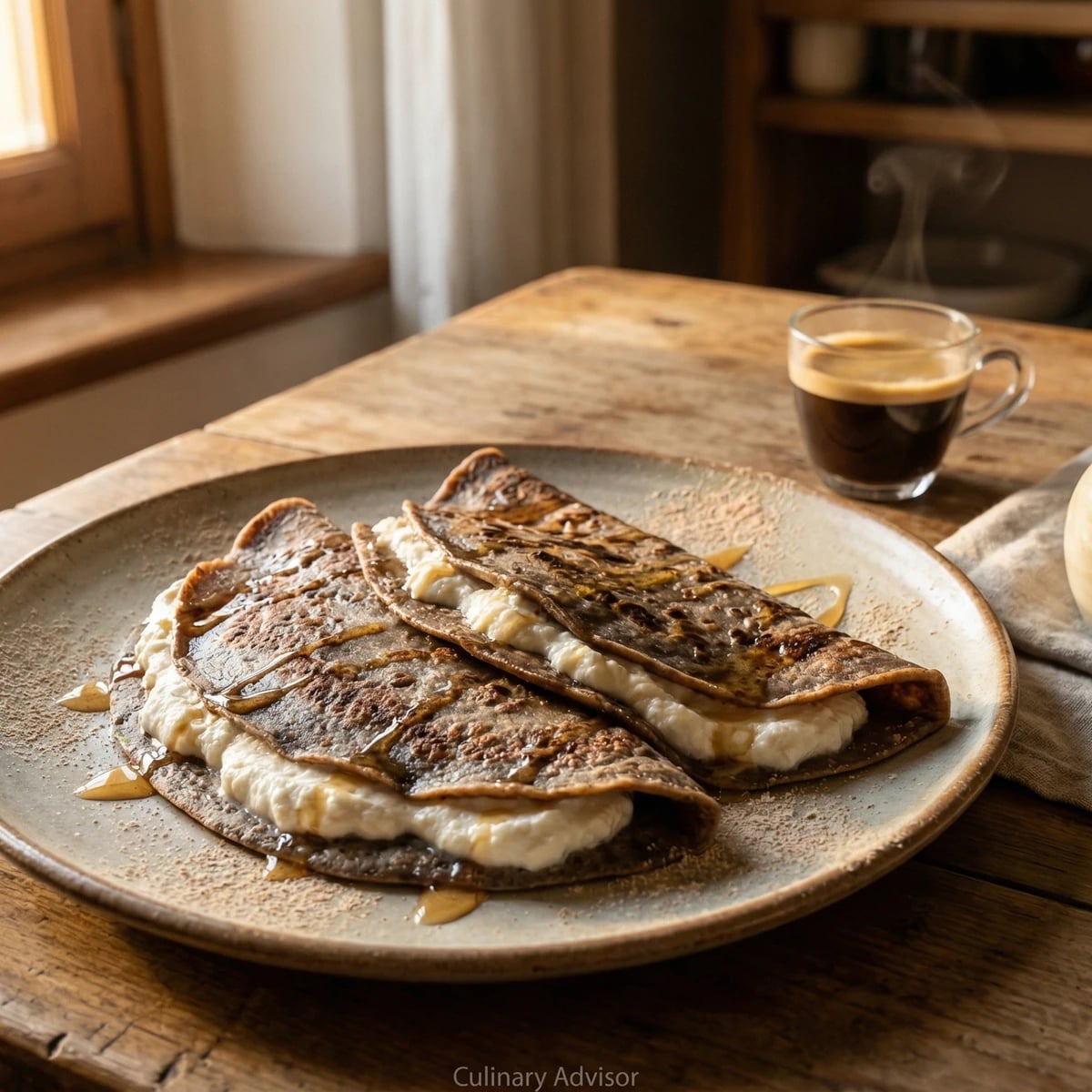
The ancient chestnut crepes of the Tuscan mountains, where three ingredients and an iron griddle create something that proves poverty often produces genius. The ricotta is not optional.
In the mountains of the Garfagnana, where the chestnut forests have fed families for a thousand years, they make these crepes the same way they always have: chestnut flour, water, salt. Nothing more. The flour itself provides sweetness, earthiness, and a depth of flavor that wheat cannot approach. Americans hear 'crepe' and think of thin, delicate French things rolled around strawberries and cream. Necci are not that.
These are peasant crepes, cooked traditionally between two cast iron paddles called testi, held over an open fire. The paddles would be greased with lardo, and the batter spread thin. You likely do not have testi. A good nonstick pan will work, though you sacrifice some of the smoky char that defines the original. What you must not sacrifice is the quality of the flour.
Chestnut flour should smell like autumn, like the woods, like something alive. If your flour smells stale or dusty, it has oxidized and will taste bitter. Find fresh flour from the current season's harvest, or do not begin. The ricotta must be fresh, preferably from sheep's milk as they make it in Tuscany. Stuff the crepes while they are still warm. Eat them immediately. There is nothing else to say.
Chestnuts were the 'bread of the poor' in the Apennine mountains for centuries, and necci represented the most direct way to transform the flour into something substantial. The name likely derives from the blackening of the crepes when cooked over open flame. In the Garfagnana, October's chestnut harvest still marks the beginning of necci season, and families guard their grandmother's testi like heirlooms.
Quantity
200 grams
fresh
Quantity
300 milliliters
at room temperature
Quantity
1/4 teaspoon
Quantity
250 grams
preferably sheep's milk
Quantity
for drizzling
Quantity
for the pan
| Ingredient | Quantity |
|---|---|
| chestnut flour (farina di castagne)fresh | 200 grams |
| waterat room temperature | 300 milliliters |
| fine sea salt | 1/4 teaspoon |
| fresh ricottapreferably sheep's milk | 250 grams |
| mild honey (optional) | for drizzling |
| unsalted butter or lard | for the pan |
Sift the chestnut flour into a bowl. This removes any lumps and aerates the flour. Add the salt and stir. Pour in the water gradually, whisking as you go, until you have a smooth, thin batter. It should be thinner than pancake batter, closer to heavy cream in consistency. Let it rest for 10 minutes. The flour will hydrate and the batter will thicken slightly.
If your ricotta is wet, drain it in a fine-mesh strainer for 10 minutes while the batter rests. Wet ricotta will make the crepes soggy. The ricotta should hold its shape when spooned. Do not season it. Do not sweeten it. The chestnut flour provides enough complexity. Leave the ricotta alone.
Set a nonstick pan or well-seasoned cast iron skillet over medium heat. Add a small amount of butter or, if you want authenticity, lard. Swirl to coat. The fat should shimmer but not smoke. Wipe out any excess with a paper towel. You want the thinnest possible film.
Pour about 3 tablespoons of batter into the pan, immediately tilting and rotating to spread it thin. The crepe should be perhaps 7 inches across and quite thin. Cook until the edges begin to pull away from the pan and the surface looks dry, about 90 seconds. Flip carefully and cook for 30 seconds more. The crepe will have dark spots. This is correct. Stack the finished crepes on a plate and cover with a clean towel to keep warm.
Work quickly while the crepes are warm. Place a generous spoonful of ricotta in the center of each crepe and fold it in half, or roll it loosely. Arrange two crepes on each plate. Drizzle with honey if you like sweetness, though the chestnut flour provides its own. Serve immediately. These do not wait.
1 serving (about 165g)
Culinary guides, cultural storytelling, and the editorial depth that makes cooking meaningful.
Discover Culinary Explorer
Chef Graziella
The Venetian celebration of spring, where prized white asparagus meets butter-fried eggs and the yolk becomes the only sauce you need. This is restraint as philosophy.

Chef Graziella
The magnificent ring-shaped Easter bread of Naples, its enriched dough wrapped around cubes of sharp cheese and salami, crowned with eggs that bake in their shells. This is what Neapolitan families bring to the table on Easter morning.

Chef Graziella
Delicate Italian crepes wrapped around mushrooms sautéed in the trifolati manner, where olive oil, a breath of garlic, and fresh parsley create something far greater than the sum of their parts.

Chef Graziella
Delicate Italian crepes wrapped around spinach and ricotta, blanketed with bechamel and baked until the top turns golden and the edges bubble. This is Florentine home cooking at its most elegant.