
Chef Jeong-sun
Aehobak-guk (애호박국, Korean Zucchini Soup)
A clean summer soup of Korean zucchini and salted shrimp, built on quick anchovy-kelp broth and finished before the half-moons lose their shape on a weeknight table.
A cooking platform built around craft, culture, and the stories behind what we eat.
Created by
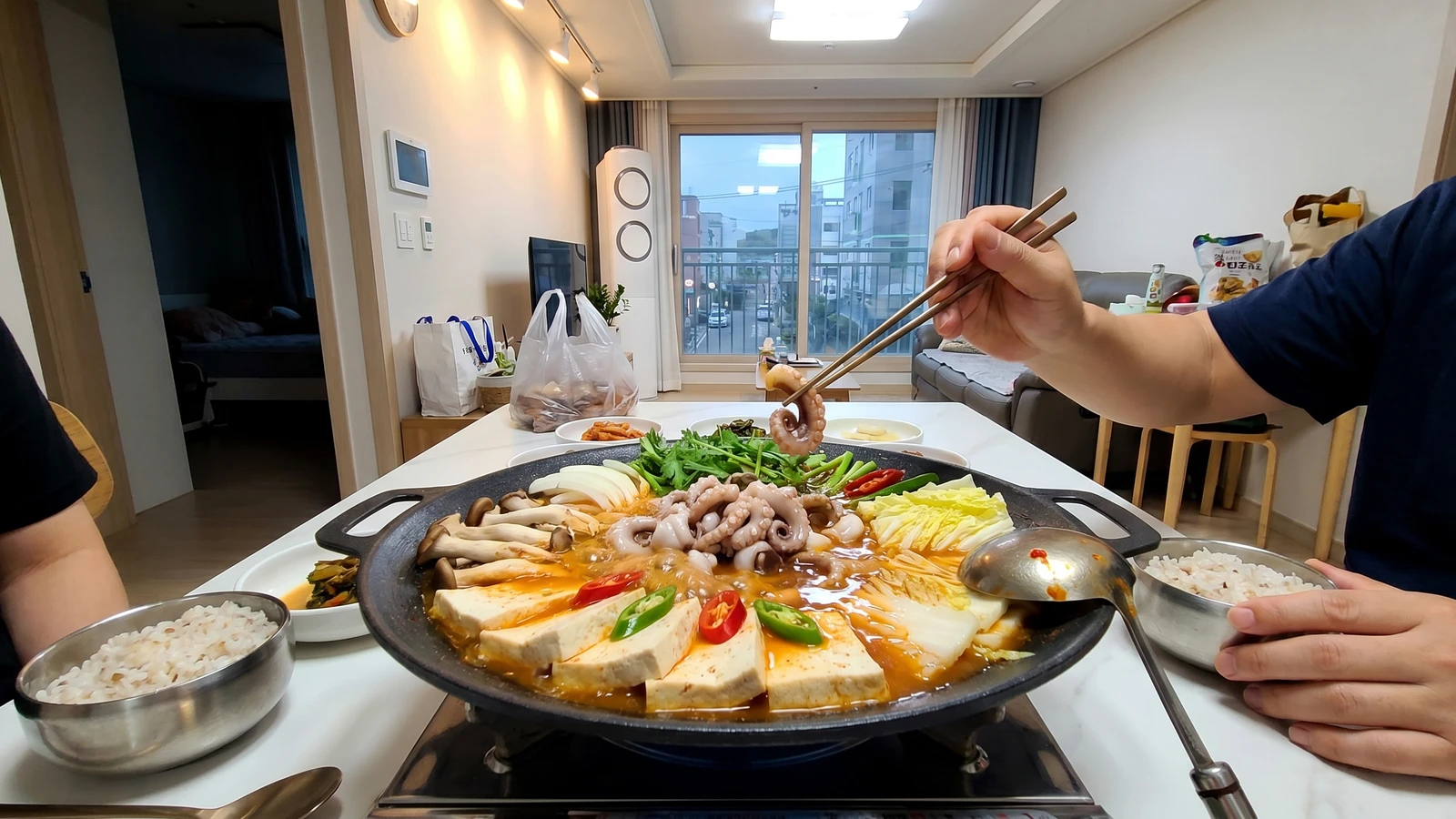
A shared jeongol pan of small octopus, mushrooms, tofu, and greens in a clean spicy broth, cooked at the table so the nakji curls tender instead of turning tough.
Jeongol is not jjigae in a wider pan. Jjigae usually begins with one main thing and comes to the table already finished; jeongol arrives arranged, several ingredients facing each other, and the table cooks it together. That is why you lay the radish, mushrooms, tofu, greens, and octopus by color before the broth goes in. The arrangement is not decoration. It controls the cooking, so the hardy pieces meet the heat first and the tender nakji waits.
Master Seong-nyeo used to tap the side of the pot when an apprentice left octopus in too long. One tap, no speech. Small octopus is generous for about two minutes, then it punishes you for talking. Let the anchovy-kelp broth become clear and savory, pull the kelp before it turns bitter, season with gochugaru and only a little gochujang, then put the nakji in last. Lift it the moment the legs curl and the flesh turns opaque.
Tonight this asks for a shallow pan, a portable burner, and people close enough to watch the pot. A sinseollo brazier can become a shabu pot; 시대가 바뀌면 음식도 바뀌어야 해요 (when times change, food must change too). The timing does not change. 손맛 is real; I measure it anyway, because the cook who writes down one good pot can make it again when the table asks.
Nakji, Korea's small octopus, is tied to the tidal-flat coasts, especially the west and southwest, with places such as Muan in South Jeolla known for mudflat nakji and autumn market dishes. Jeongol is a Korean tabletop hot pot format: ingredients are arranged in a shallow vessel and cooked as people eat, a different logic from jjigae, which usually names one main ingredient and arrives finished. Nakji-jeongol is a coastal seafood jeongol, not a borrowed court dish, though it shares the arranged-table format with older festive hot pots such as sinseollo.
Quantity
5 cups
Quantity
12
heads and guts removed
Quantity
1 piece, about 4 inches square
Quantity
120g
peeled and cut into 1/4-inch half-moons
Quantity
2
Quantity
2 tablespoons
Quantity
1 tablespoon
Quantity
1 tablespoon
Quantity
1 tablespoon
Quantity
1 tablespoon
Quantity
4 cloves
minced
Quantity
1 teaspoon
grated
Quantity
1 teaspoon
Quantity
1/4 teaspoon
freshly ground
Quantity
2 tablespoons
for loosening the seasoning paste
Quantity
2 to 3, about 600g total
Quantity
2 tablespoons
for cleaning the octopus
Quantity
1 tablespoon
for cleaning the octopus
Quantity
150g
cut into 2-inch pieces
Quantity
150g
rinsed
Quantity
1/2 medium
sliced 1/2 inch thick
Quantity
1/2 small
cut into 1/2-inch half-moons
Quantity
200g
cut into 8 rectangles
Quantity
100g
oyster, enoki, or fresh shiitake, trimmed
Quantity
50g
soaked 20 minutes and drained
Quantity
80g
cut into 3-inch lengths
Quantity
2
cut into 2-inch lengths
Quantity
1
sliced on the diagonal
Quantity
1
sliced on the diagonal
Quantity
1 teaspoon
for finishing
Quantity
to serve
| Ingredient | Quantity |
|---|---|
| water | 5 cups |
| large dried anchovies (myeolchi)heads and guts removed | 12 |
| dried kelp (dasima) | 1 piece, about 4 inches square |
| Korean radishpeeled and cut into 1/4-inch half-moons | 120g |
| dried shiitake mushrooms (optional) | 2 |
| gochugaru (Korean chili flakes) | 2 tablespoons |
| gochujang (Korean chili paste) | 1 tablespoon |
| soup soy sauce (guk-ganjang) | 1 tablespoon |
| Korean anchovy sauce (myeolchi-aekjeot) or fish sauce | 1 tablespoon |
| rice wine, mirim, or soju | 1 tablespoon |
| garlicminced | 4 cloves |
| gingergrated | 1 teaspoon |
| sugar | 1 teaspoon |
| black pepperfreshly ground | 1/4 teaspoon |
| prepared brothfor loosening the seasoning paste | 2 tablespoons |
| cleaned small octopus (nakji) | 2 to 3, about 600g total |
| all-purpose flourfor cleaning the octopus | 2 tablespoons |
| coarse sea saltfor cleaning the octopus | 1 tablespoon |
| napa cabbagecut into 2-inch pieces | 150g |
| soybean sproutsrinsed | 150g |
| onionsliced 1/2 inch thick | 1/2 medium |
| Korean zucchini (aehobak)cut into 1/2-inch half-moons | 1/2 small |
| firm tofucut into 8 rectangles | 200g |
| mixed mushroomsoyster, enoki, or fresh shiitake, trimmed | 100g |
| dangmyeon (sweet potato glass noodles) (optional)soaked 20 minutes and drained | 50g |
| minari (Korean water dropwort)cut into 3-inch lengths | 80g |
| scallionscut into 2-inch lengths | 2 |
| red chilisliced on the diagonal | 1 |
| green chilisliced on the diagonal | 1 |
| toasted sesame oil (optional)for finishing | 1 teaspoon |
| cooked short-grain rice (optional) | to serve |
Put the water, anchovies, kelp, radish, and dried shiitake mushrooms, if using, in a pot over medium heat. When the water reaches a gentle simmer, pull out the kelp right away, because kelp left too long turns the broth slick and bitter. Simmer the anchovies, radish, and mushrooms 10 more minutes, then strain. You should have about 4 cups of clean, savory broth.
In a small bowl, stir together the gochugaru, gochujang, soup soy sauce, anchovy sauce, rice wine, garlic, ginger, sugar, black pepper, and 2 tablespoons of the prepared broth. Let it sit 10 minutes while you prepare the vegetables. The gochugaru needs time to bloom, and using only 1 tablespoon gochujang keeps the pot from turning sweet and muddy.
If your nakji is not fully cleaned, remove the innards from the head, cut out the beak, and trim away the eyes. Rub the octopus with the flour and coarse salt for 2 minutes, working between the legs where grit hides, then rinse under cold running water until the skin feels clean and no longer slippery. Drain well and keep cold. Do not cut it small yet; whole or large pieces are easier to pull from the pot the moment they curl.
Set a wide shallow jeongol pan on a portable burner. Put the napa cabbage, soybean sprouts, and onion across the bottom first; they protect the pot and sweeten the broth as they cook. Arrange the zucchini, tofu, mushrooms, drained dangmyeon if using, half the minari, and the scallions in separate sections around the pan. Spoon the seasoning paste into the center. Lay the red and green chilies on top for color. This is not decoration. Jeongol is arranged before it is cooked, so every ingredient meets the broth at the right time.
Pour 3 1/2 cups of broth around the edge of the pan, not directly onto the seasoning paste, so the arrangement stays clear. Bring it to a steady simmer at the table, then gently loosen the seasoning into the broth with a spoon. Cook 5 to 6 minutes, until the cabbage softens, the soybean sprouts lose their raw edge, and the tofu is hot through. Add the remaining 1/2 cup broth only if the pan looks crowded or too reduced.
Lay the cleaned nakji over the simmering broth and vegetables. Turn it once as the legs tighten. The moment the legs curl firmly and the flesh turns opaque, usually 90 seconds to 2 1/2 minutes depending on size, lift it out to a plate. If you use an instant-read thermometer, the thickest part should read 63 C or 145 F. Leave it in while people talk and it turns to rubber. My teacher needed only one tap on the pot to say that.
Use kitchen shears to cut the octopus into bite-size lengths. Return the pieces to the pan for 20 to 30 seconds only, just long enough to coat them in the broth. Scatter the remaining minari over the top and add the sesame oil if you want a rounder finish. Taste the broth before adding anything else. It should be spicy, clean, and sea-sweet, not buried under paste.
Keep the burner low so the broth barely moves while people eat. Ladle vegetables, tofu, broth, and octopus into small bowls and serve with rice. If you used dangmyeon, eat it before it drinks up the broth. If you want a second round, add a little rice to the remaining broth after the octopus is gone and cook it into a loose juk. That last spoonful is why people linger.
1 serving (about 850g)
Culinary guides, cultural storytelling, and the editorial depth that makes cooking meaningful.
Discover Culinary ExplorerChef Jeong-sun
A clean summer soup of Korean zucchini and salted shrimp, built on quick anchovy-kelp broth and finished before the half-moons lose their shape on a weeknight table.
Chef Jeong-sun
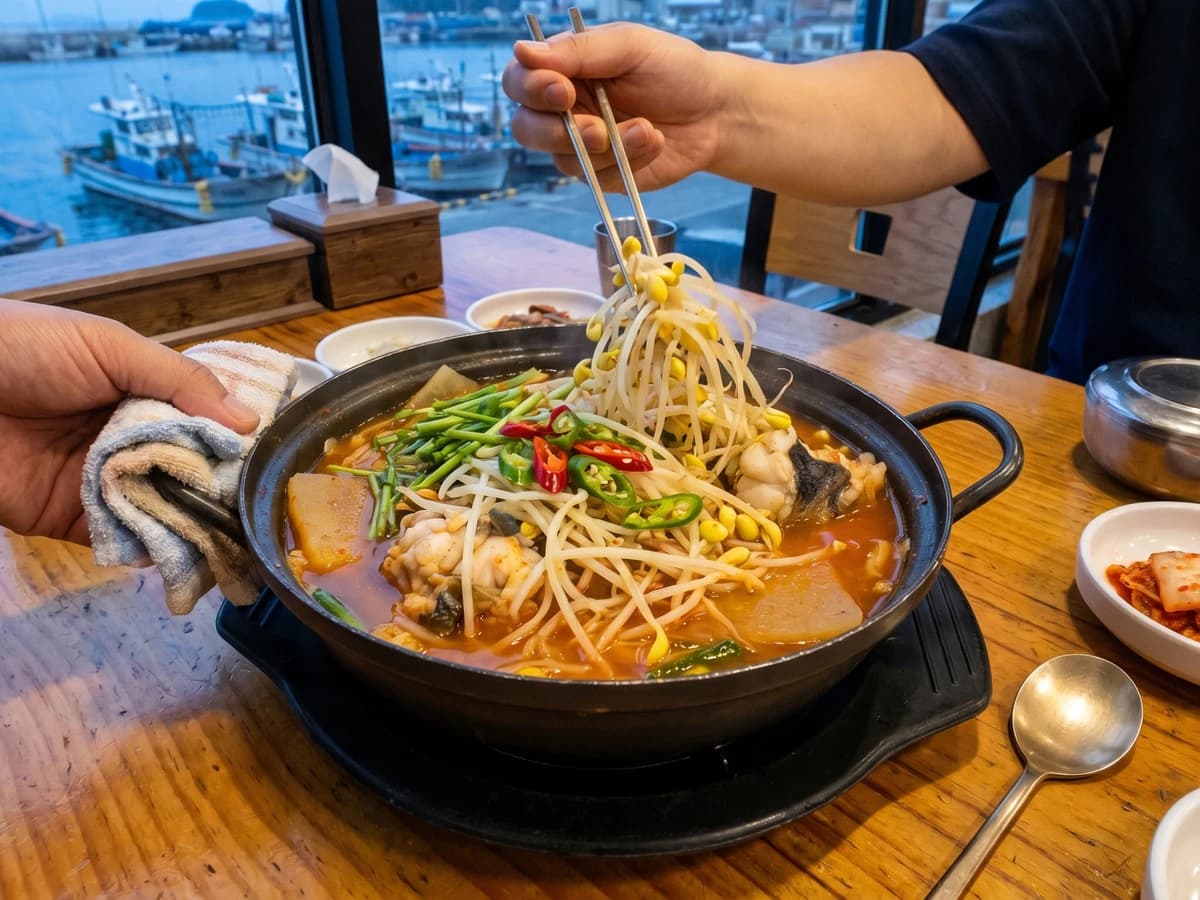
A Masan coast monkfish stew with firm white meat, gelatin at the bones, soybean sprouts for crunch, and a red broth seasoned to carry the fish, not bury it.

Chef Jeong-sun
A weeknight fish roe stew with radish and crown daisy in a clean spicy broth, where the whole success depends on adding the roe late enough that it sets tender, not chalky.

Chef Jeong-sun
Late-summer mallow leaves rubbed with salt until the bitter green water runs off, then simmered in a clean doenjang broth with dried shrimp, the quiet soup a Korean weeknight deserves.