
Chef Jeong-sun
Aehobak-guk (애호박국, Korean Zucchini Soup)
A clean summer soup of Korean zucchini and salted shrimp, built on quick anchovy-kelp broth and finished before the half-moons lose their shape on a weeknight table.
A cooking platform built around craft, culture, and the stories behind what we eat.

Created by
Pear-sweetened bulgogi, mushrooms, greens, and a modest bundle of dangmyeon arranged in a shallow pot, then simmered at the table so dinner happens from the center outward.
Bulgogi-jeongol is not bulgogi with too much broth. Treat it that way and the beef tightens, the noodles drink everything, and the mushrooms all taste of sugar. A jjigae (stew) can come from the kitchen already finished. A jeongol (arranged hot pot) must show its ingredients first, then cook where people can see it.
In Master Seong-nyeo's kitchen, the beef never hid the mushrooms. Shiitake, scallion, carrot, tofu, greens, noodles, each had its place in the pan, not because she was decorating dinner, but because arrangement controls cooking. The hardy things sit nearer the bubbling edge. The delicate greens wait where you can lift them before they go dull. A charcoal brazier is beautiful, but a portable burner does the work honestly. The vessel may change. The order may not.
Tonight this dish asks you to do three things carefully: make a clean broth, marinate the beef briefly, and arrange the pot before the broth goes in. Use pear for sweetness, not a heavy hand with sugar. Keep the dangmyeon (sweet potato starch noodles) to 80 grams for this size pot. Notebook 41 says that is enough. The noodle is welcome; it is not the host. 손맛 is real, the hand-taste your grandmother trusted, and I still measure it so it can be handed on.
Jeongol is the Korean family of arranged hot pots: several prepared ingredients are laid in a wide pan, broth is added, and the pot cooks at the table, which distinguishes it from jjigae, a kitchen-finished stew usually named for one main ingredient. Bulgogi's sweet-soy, thin-sliced form took its modern shape in twentieth-century Seoul, drawing on older grilled beef dishes such as neobiani without being the same dish. Bulgogi-jeongol is a later home and restaurant adaptation, made practical by portable tabletop burners, cultivated mushrooms, and dangmyeon becoming ordinary market ingredients.
Quantity
5 cups
Quantity
1 piece, about 4 inches square
Quantity
10
heads and guts removed
Quantity
1 tablespoon
Quantity
1/2 teaspoon, plus 1/4 teaspoon more if needed
Quantity
600g
sliced paper-thin against the grain
Quantity
1/2 cup, about 150g
grated
Quantity
1/4 cup, about 60g
grated
Quantity
5 tablespoons
Quantity
1 tablespoon
Quantity
1 tablespoon
Quantity
1 tablespoon
Quantity
4 cloves
minced
Quantity
1 tablespoon, plus 1 teaspoon for finishing
Quantity
1/4 teaspoon
Quantity
80g dry
soaked 25 minutes and cut once
Quantity
1
sliced into 1/2-inch wedges
Quantity
200g
cut into 2-inch pieces
Quantity
200g
cut into 1/2-inch slabs
Quantity
100g
stems removed and caps sliced
Quantity
100g
separated into small clusters
Quantity
100g
trimmed
Quantity
1/2 medium, about 70g
cut into thin matchsticks
Quantity
3
cut into 2-inch lengths
Quantity
80g
cut into 2-inch lengths
Quantity
1
thinly sliced
Quantity
to serve
| Ingredient | Quantity |
|---|---|
| water | 5 cups |
| dried kelp (dasima) | 1 piece, about 4 inches square |
| large dried anchovies (myeolchi)heads and guts removed | 10 |
| soup soy sauce (guk-ganjang) | 1 tablespoon |
| fine sea salt | 1/2 teaspoon, plus 1/4 teaspoon more if needed |
| beef ribeye or sirloinsliced paper-thin against the grain | 600g |
| Korean peargrated | 1/2 cup, about 150g |
| onion for marinadegrated | 1/4 cup, about 60g |
| soy sauce | 5 tablespoons |
| sugar | 1 tablespoon |
| mirin or rice wine | 1 tablespoon |
| toasted sesame oil | 1 tablespoon |
| garlicminced | 4 cloves |
| toasted sesame seeds | 1 tablespoon, plus 1 teaspoon for finishing |
| freshly ground black pepper | 1/4 teaspoon |
| dangmyeon (sweet potato starch noodles)soaked 25 minutes and cut once | 80g dry |
| small onionsliced into 1/2-inch wedges | 1 |
| napa cabbage or green cabbagecut into 2-inch pieces | 200g |
| firm tofucut into 1/2-inch slabs | 200g |
| fresh shiitake mushroomsstems removed and caps sliced | 100g |
| oyster mushroomsseparated into small clusters | 100g |
| enoki mushroomstrimmed | 100g |
| carrotcut into thin matchsticks | 1/2 medium, about 70g |
| scallionscut into 2-inch lengths | 3 |
| minari (Korean water parsley) or crown daisycut into 2-inch lengths | 80g |
| red chili (optional)thinly sliced | 1 |
| cooked short-grain rice (optional) | to serve |
Put the dangmyeon in warm water for 25 minutes, then drain and cut the long tangle once with kitchen scissors. Do not add more than 80 grams for this pot. Too much noodle turns jeongol into a starch pot, and it steals the broth before the beef has done its work.
Put the water, kelp, and cleaned anchovies in a pot over medium heat. When the water reaches a gentle simmer, pull the kelp out right away, because kelp left too long turns the broth slick and bitter. Simmer the anchovies 10 minutes more, then strain. You should have about 4 cups of clean broth. Season it with the soup soy sauce and 1/2 teaspoon salt, then keep it warm.
In a large bowl, stir together the grated pear, grated onion, soy sauce, sugar, mirin, sesame oil, minced garlic, 1 tablespoon sesame seeds, and black pepper. Taste a drop from a spoon. It should be salty-sweet, but not candy-sweet. The pear tenderizes and sweetens cleanly, so the sugar can stay modest.
Separate the beef slices with your fingers, add them to the marinade, and turn gently until every piece is coated. Let the beef sit 20 minutes at room temperature if cooking soon, or refrigerate up to 2 hours. Thin beef does not need the night. Long soaking with pear and soy makes it soft and salty.
Use a wide, shallow jeongol pan, about 12 inches across. Lay the sliced onion and cabbage on the bottom as a sweet bed. Arrange the tofu, shiitake, oyster mushrooms, enoki, carrot, scallions, soaked dangmyeon, and most of the minari in separate bands around the pan, keeping the colors clear. Mound the marinated beef in the center and spoon any marinade over it. This arrangement is not vanity. It lets the table see what is being shared, and it lets each ingredient cook at its own pace.
Set the pan on a portable burner at the table. Pour 3 1/2 cups of the warm broth around the edge of the pan, not directly over the beef, so the arrangement stays intact until the simmer begins. Keep the remaining broth beside the burner. Dangmyeon drinks as it cooks, and a jeongol cook should be ready.
Bring the broth to a lively simmer, then use clean tongs to loosen the beef slices into the broth. Cook 6 to 8 minutes, turning the beef once or twice, until it has just lost its red color and the mushrooms are tender. Do not boil hard for a long time. The broth will cloud, and the beef will tighten before anyone has had a proper first bite.
Taste the broth only after the beef has cooked, because the marinade seasons the pot as it releases. If it tastes flat, add the remaining 1/4 teaspoon salt or 1 teaspoon more soup soy sauce. If it tastes too strong, add some of the reserved broth or a splash of water. Scatter over the remaining minari, sliced red chili if using, and 1 teaspoon sesame seeds. Let the greens soften for 1 minute, then start eating from the pot.
Keep the burner low once the first round is cooked. The beef is best eaten early, while the noodles and mushrooms can stay a little longer. Add reserved broth as the level drops. Serve with rice and banchan (side dishes), and let people take from the center. That is the meaning of this pot.
1 serving (about 750g)
Culinary guides, cultural storytelling, and the editorial depth that makes cooking meaningful.
Discover Culinary ExplorerChef Jeong-sun
A clean summer soup of Korean zucchini and salted shrimp, built on quick anchovy-kelp broth and finished before the half-moons lose their shape on a weeknight table.
Chef Jeong-sun
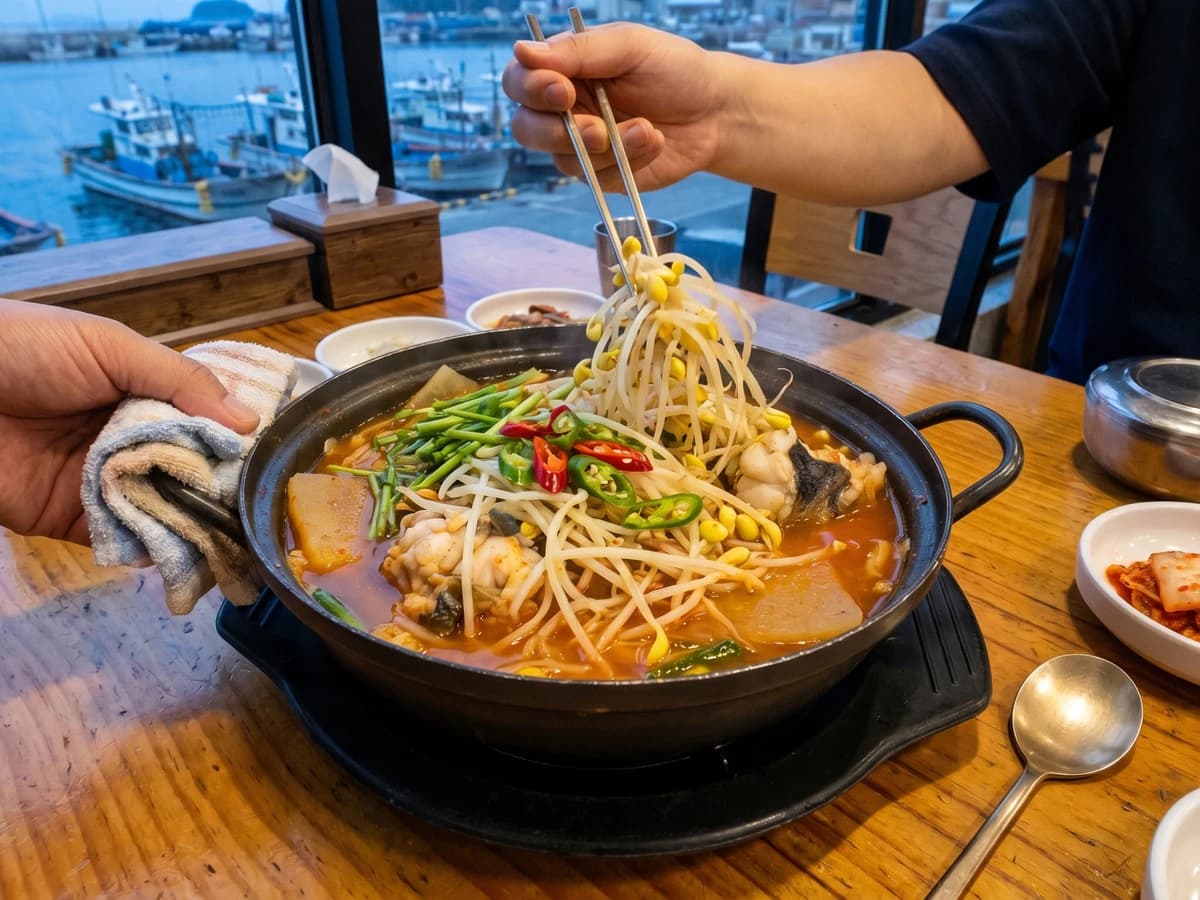
A Masan coast monkfish stew with firm white meat, gelatin at the bones, soybean sprouts for crunch, and a red broth seasoned to carry the fish, not bury it.

Chef Jeong-sun
A weeknight fish roe stew with radish and crown daisy in a clean spicy broth, where the whole success depends on adding the roe late enough that it sets tender, not chalky.

Chef Jeong-sun
Late-summer mallow leaves rubbed with salt until the bitter green water runs off, then simmered in a clean doenjang broth with dried shrimp, the quiet soup a Korean weeknight deserves.