
Chef Jeong-sun
Aehobak-guk (애호박국, Korean Zucchini Soup)
A clean summer soup of Korean zucchini and salted shrimp, built on quick anchovy-kelp broth and finished before the half-moons lose their shape on a weeknight table.
A cooking platform built around craft, culture, and the stories behind what we eat.

Created by
A wide shallow pot of autumn mushrooms, thin beef, tofu, and clear anchovy-kelp broth, arranged by color first and simmered at the table so every mushroom still tastes like itself.
Autumn is when mushrooms start arguing in the market, each one with a different shape and price, and that is when beoseot-jeongol belongs on the table. Cook the month you're standing in. Buy three kinds if you can: shiitake for depth, oyster for chew, enoki for the last soft tangle. If the wild baskets look tired or uncertain, leave them there. Cultivated mushrooms handled well make a better pot than proud mushrooms handled carelessly.
Jeongol is not jjigae in better clothes. Jjigae is usually named for the thing that leads it; jeongol carries several ingredients arranged together, cooked at the table, and eaten as it changes. The arranging is not vanity. It controls timing. Firm king oyster and shiitake can take the first simmer, beef gives the broth body, and minari goes in late so it doesn't disappear.
Tonight this dish asks for a clear broth and patient cutting. Pull the kelp before it turns bitter, wipe the mushrooms instead of soaking them, season the beef lightly, and pour the broth around the edge so the colors stay visible. Keep the fire gentle once the pot is eating-ready. Let the mushrooms taste like themselves, and feed the person nearest you first. That is how a hot pot becomes dinner instead of just a pot of soup.
Jeongol is a Korean table-cooked hot pot served in a wide, shallow pan, distinct from jjigae because several prepared ingredients are arranged together before broth is added. Early twentieth-century cookbooks such as Joseon Mussang Sinsik Yorijebeop record many jeongol variations, while the popular story that the form began with soldiers cooking in iron helmets is repeated often but remains unproven. Beoseot-jeongol belongs to the autumn household table rather than the sinseollo court vessel: mushrooms, once gathered from mountain markets and now mostly cultivated, are stretched with a little beef into a clear shared broth.
Quantity
5 1/2 cups
Quantity
1 piece, about 4 inches square
Quantity
10 large
heads and guts removed
Quantity
2
rinsed
Quantity
1 piece, about 100g
peeled
Quantity
1 1/2 tablespoons, plus more for adjusting
Quantity
1/2 teaspoon, plus more as needed
Quantity
200g
Quantity
1 tablespoon
Quantity
1 teaspoon
Quantity
1 teaspoon
Quantity
1 teaspoon
minced
Quantity
1/2 teaspoon
Quantity
1/4 teaspoon
Quantity
120g
stems trimmed, caps sliced 1/4 inch thick
Quantity
150g
torn into large clusters
Quantity
150g
sliced 1/4 inch thick
Quantity
100g
root end trimmed and bundles loosened
Quantity
4 leaves, about 160g
cut into 2-inch pieces
Quantity
1/2 medium
sliced 1/4 inch thick
Quantity
1 small, about 70g
cut into matchsticks
Quantity
200g
cut into 1/2-inch slabs
Quantity
50g
soaked 20 minutes and drained
Quantity
6
cut into 2-inch lengths
Quantity
1 cup
trimmed
Quantity
1
thinly sliced
Quantity
3 tablespoons
Quantity
1 tablespoon
Quantity
1 tablespoon
Quantity
1 teaspoon
Quantity
1/2 teaspoon
| Ingredient | Quantity |
|---|---|
| water | 5 1/2 cups |
| dried kelp (dasima) | 1 piece, about 4 inches square |
| dried anchovies (myeolchi)heads and guts removed | 10 large |
| dried shiitake mushroomsrinsed | 2 |
| Korean radishpeeled | 1 piece, about 100g |
| soup soy sauce (guk-ganjang) | 1 1/2 tablespoons, plus more for adjusting |
| fine sea salt | 1/2 teaspoon, plus more as needed |
| thinly sliced beef brisket or ribeye | 200g |
| soy sauce | 1 tablespoon |
| toasted sesame oil | 1 teaspoon |
| rice wine or mirin | 1 teaspoon |
| garlicminced | 1 teaspoon |
| sugar | 1/2 teaspoon |
| ground black pepper | 1/4 teaspoon |
| fresh shiitake mushroomsstems trimmed, caps sliced 1/4 inch thick | 120g |
| oyster mushroomstorn into large clusters | 150g |
| king oyster mushroomssliced 1/4 inch thick | 150g |
| enoki mushroomsroot end trimmed and bundles loosened | 100g |
| napa cabbage leavescut into 2-inch pieces | 4 leaves, about 160g |
| onionsliced 1/4 inch thick | 1/2 medium |
| carrotcut into matchsticks | 1 small, about 70g |
| firm tofucut into 1/2-inch slabs | 200g |
| dangmyeon (sweet potato starch noodles) (optional)soaked 20 minutes and drained | 50g |
| scallionscut into 2-inch lengths | 6 |
| minari (Korean water dropwort) or crown daisytrimmed | 1 cup |
| red chili (optional)thinly sliced | 1 |
| soy sauce, for dipping sauce | 3 tablespoons |
| rice vinegar, for dipping sauce | 1 tablespoon |
| hot pot broth, for dipping sauce | 1 tablespoon |
| Korean mustard (yeongyeoja), for dipping sauce (optional) | 1 teaspoon |
| toasted sesame oil, for dipping sauce | 1/2 teaspoon |
Put the water, kelp, anchovies, dried shiitake mushrooms, and radish in a pot over medium heat. When the water reaches a gentle simmer, about 8 to 10 minutes, pull out the kelp. Leave it longer and the broth turns slick and bitter, and then people blame the mushrooms. Simmer the anchovies, shiitake, and radish 10 minutes more, then strain. Save the shiitake caps, slice them, and use them in the hot pot. Stir 1 1/2 tablespoons soup soy sauce and 1/2 teaspoon salt into the broth. You should have about 4 1/2 to 5 cups; add water if you are short.
Toss the sliced beef with 1 tablespoon soy sauce, 1 teaspoon sesame oil, rice wine, garlic, sugar, and pepper. Let it sit 10 to 20 minutes while you cut the vegetables. This is not bulgogi, so don't sweeten it heavily. The beef is here to season the broth and give the pot body, not to take the mushrooms' place.
Wipe the fresh mushrooms with a damp towel if they are clean; rinse quickly and dry well only if they are gritty. Slice shiitake and king oyster mushrooms thick enough to keep their shape, tear oyster mushrooms along their natural seams, and loosen enoki into small bundles. Different cuts are not fussiness. They let each mushroom cook at its own pace and keep its own texture.
Stir together 3 tablespoons soy sauce, rice vinegar, 1 tablespoon of the hot pot broth, Korean mustard if using, and 1/2 teaspoon sesame oil. Divide it among small bowls. The sauce should be sharp and light, because the broth is already seasoned and the mushrooms should still taste like themselves.
Set a wide shallow jeongol pan on the table burner, off the heat. Lay napa cabbage and onion across the bottom, then arrange the raw ingredients by color before the broth goes in: shiitake, oyster, king oyster, tofu, carrot, scallions, sliced broth shiitake, enoki, and the seasoned beef in its own section near the center. Keep the minari and red chili aside for the last minutes. The arrangement is not decoration. Jeongol cooks at the table, and separate sections let you see what is done first instead of boiling everything into one heap.
Pour 4 cups of broth around the edge of the pan, not straight over the top, so the arrangement stays clear. Turn the burner to medium-high and bring the edge to a steady bubble, then lower to medium. Cook 6 to 8 minutes, nudging the beef apart with chopsticks as it firms and letting the mushrooms release their own liquid. Add more broth a little at a time if the pot gets crowded or the noodles will go in.
If using dangmyeon, slip the soaked noodles into the broth and cook 3 to 4 minutes, until clear and springy. Add the minari and red chili for the final minute, just long enough for the greens to bend. Taste the broth before adjusting. If it tastes flat, add 1/2 teaspoon soup soy sauce. If it has enough depth but needs salt, add a pinch, about 1/8 teaspoon. 손맛 is real; I measure it anyway, so the next pot can be cooked properly too.
Keep the burner low while everyone eats from the shared pot, lifting mushrooms, beef, tofu, and greens into individual bowls with a little dipping sauce on the side. Do not keep boiling hard after the first round; mushrooms toughen and the broth grows muddy. Add the remaining broth as needed, and serve with rice and simple banchan. This is the work of jeongol: several things kept distinct, gathered in one pot.
1 serving (about 660g)
Culinary guides, cultural storytelling, and the editorial depth that makes cooking meaningful.
Discover Culinary ExplorerChef Jeong-sun
A clean summer soup of Korean zucchini and salted shrimp, built on quick anchovy-kelp broth and finished before the half-moons lose their shape on a weeknight table.
Chef Jeong-sun
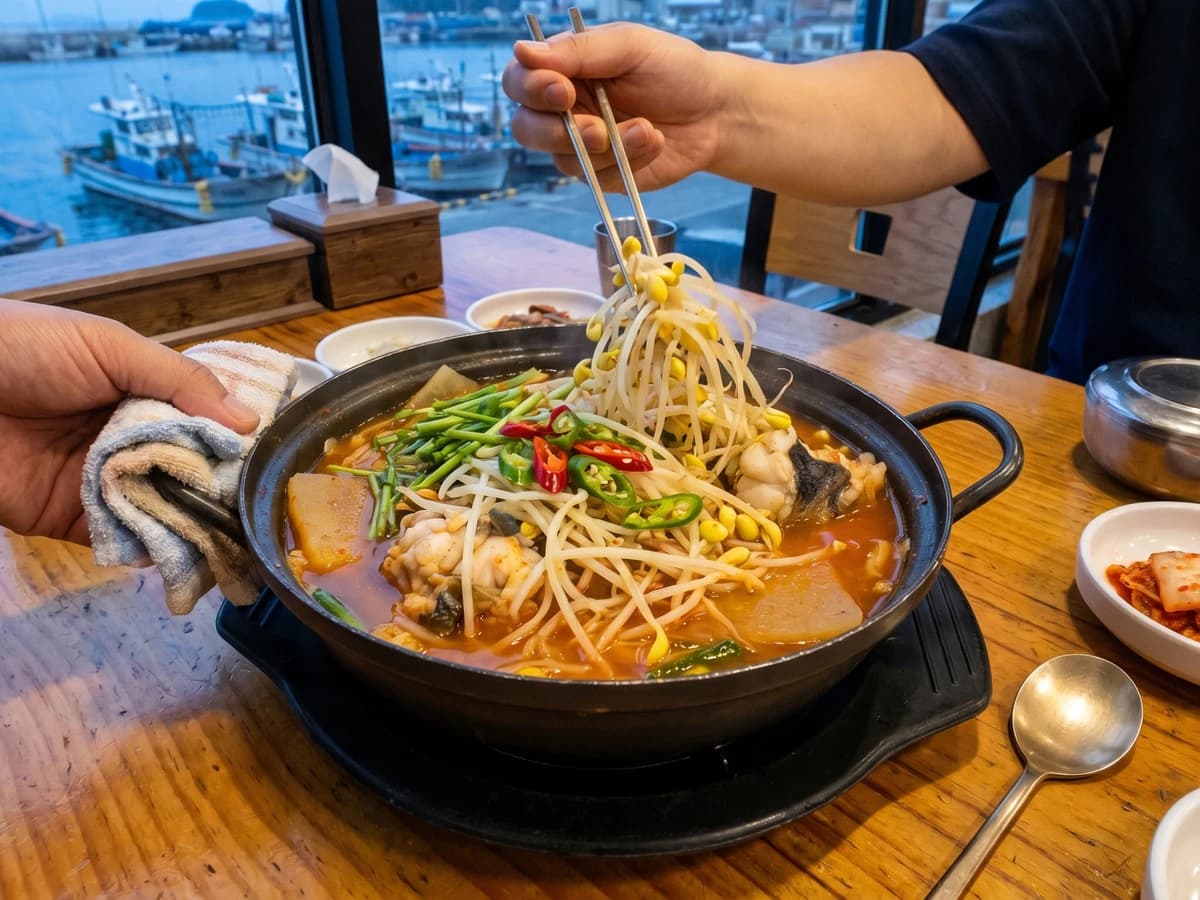
A Masan coast monkfish stew with firm white meat, gelatin at the bones, soybean sprouts for crunch, and a red broth seasoned to carry the fish, not bury it.

Chef Jeong-sun
A weeknight fish roe stew with radish and crown daisy in a clean spicy broth, where the whole success depends on adding the roe late enough that it sets tender, not chalky.

Chef Jeong-sun
Late-summer mallow leaves rubbed with salt until the bitter green water runs off, then simmered in a clean doenjang broth with dried shrimp, the quiet soup a Korean weeknight deserves.