
Chef Jeong-sun
Aehobak-guk (애호박국, Korean Zucchini Soup)
A clean summer soup of Korean zucchini and salted shrimp, built on quick anchovy-kelp broth and finished before the half-moons lose their shape on a weeknight table.
A cooking platform built around craft, culture, and the stories behind what we eat.
Created by
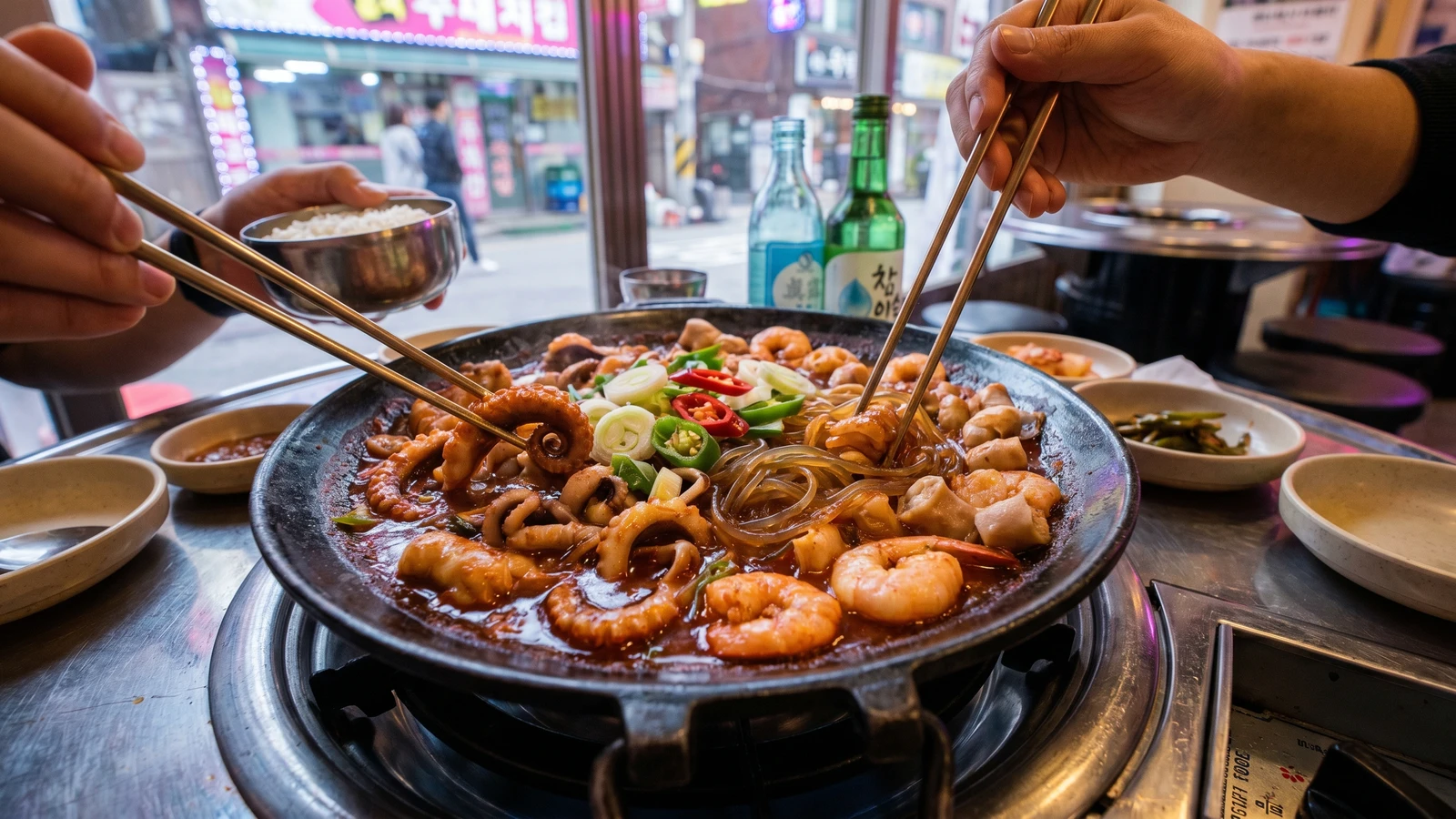
A Busan table pot of octopus, beef gopchang, and shrimp, arranged raw, simmered in red sauce, then reduced until the last spoonful belongs over rice.
Nakgopsae belongs to Busan at night, when the table is crowded and the pan is wider than the appetite of the people who ordered it. The name is blunt: nakji (small octopus), gopchang (beef intestine), saeu (shrimp). Three strong ingredients, one red sauce, one burner in the middle. It is not polite food, but it has manners.
Nakgopsae is closely tied to Busan's Beomil-dong Jobang area, named for the old Joseon Textile Company neighborhood, where nakji and gopchang restaurants became a local specialty in the late twentieth century. The dish grew from the city's market and port life rather than from court cooking: seafood was near, offal was economical, and tabletop pots suited workers and late-night groups. Today Jobang nakgopsae is one of Busan's proud local foods, usually finished with rice stirred into the reduced sauce.
Quantity
2 cups
Quantity
1 piece, about 4 inches square
Quantity
10 large
heads and guts removed
Quantity
350g
cleaned and cut into 2-inch pieces
Quantity
250g
cleaned, parboiled, and cut bite-size
Quantity
250g
peeled and deveined
Quantity
1 medium
sliced 1/4 inch thick
Quantity
1 cup
cut bite-size
Quantity
1/2 cup
cut into thin matchsticks
Quantity
1 small
cut into half-moons
Quantity
2
cut into 2-inch lengths
Quantity
1
sliced on the diagonal
Quantity
1
sliced on the diagonal
Quantity
100g
soaked in warm water 20 minutes and drained
Quantity
2 tablespoons
Quantity
1 1/2 tablespoons
Quantity
2 tablespoons
Quantity
1 tablespoon
Quantity
1 tablespoon maesil-cheong or 2 teaspoons sugar
Quantity
1 tablespoon
Quantity
4 cloves
minced
Quantity
1 teaspoon
minced
Quantity
1 tablespoon, plus 1 teaspoon for rice
Quantity
1/4 teaspoon
Quantity
1 tablespoon
Quantity
4 bowls
Quantity
1 sheet
crushed
| Ingredient | Quantity |
|---|---|
| anchovy-kelp broth | 2 cups |
| dried kelp (dasima) | 1 piece, about 4 inches square |
| dried anchovies (myeolchi)heads and guts removed | 10 large |
| small octopus (nakji)cleaned and cut into 2-inch pieces | 350g |
| beef gopchang or honeycomb tripecleaned, parboiled, and cut bite-size | 250g |
| large shrimppeeled and deveined | 250g |
| onionsliced 1/4 inch thick | 1 medium |
| napa cabbagecut bite-size | 1 cup |
| Korean radishcut into thin matchsticks | 1/2 cup |
| zucchinicut into half-moons | 1 small |
| scallionscut into 2-inch lengths | 2 |
| red chilisliced on the diagonal | 1 |
| green chilisliced on the diagonal | 1 |
| dangmyeon (sweet potato glass noodles)soaked in warm water 20 minutes and drained | 100g |
| gochugaru (Korean chili flakes) | 2 tablespoons |
| gochujang (Korean chili paste) | 1 1/2 tablespoons |
| soy sauce | 2 tablespoons |
| fish sauce or soup soy sauce (guk-ganjang) | 1 tablespoon |
| maesil-cheong (green plum syrup) or sugar | 1 tablespoon maesil-cheong or 2 teaspoons sugar |
| mirin or rice wine | 1 tablespoon |
| garlicminced | 4 cloves |
| gingerminced | 1 teaspoon |
| toasted sesame oil | 1 tablespoon, plus 1 teaspoon for rice |
| black pepper | 1/4 teaspoon |
| toasted sesame seeds | 1 tablespoon |
| cooked short-grain rice (optional) | 4 bowls |
| roasted gim (seaweed) (optional)crushed | 1 sheet |
Put 3 cups water, the kelp, and the anchovies in a pot over medium heat. When the water reaches a gentle simmer, pull the kelp out before it turns the broth slick and bitter. Simmer the anchovies 8 minutes more, strain, and measure 2 cups. This pot reduces hard, so a clean broth matters.
Stir together the gochugaru, gochujang, soy sauce, fish sauce or guk-ganjang, maesil-cheong, mirin, garlic, ginger, sesame oil, black pepper, and sesame seeds. Do not add more gochujang because the color looks timid. Gochugaru gives the red body, while too much paste makes the pot muddy and sweet.
Pat the octopus and shrimp dry. If the octopus is whole, rub it with 1 tablespoon coarse salt for 1 minute, rinse well, remove the beak and innards, then cut it. Dry seafood takes the seasoning cleanly; wet seafood waters the pot before the vegetables have a chance to sweeten it.
Use gopchang that has already been cleaned by the butcher, then parboil it 5 minutes and rinse. If using honeycomb tripe, simmer it separately until tender before it enters the pot. The jeongol cooking time is short, so tough offal will not soften there. It only has time to give flavor.
In a wide shallow jeongol pan, lay the onion, cabbage, radish, and zucchini on the bottom. Arrange the octopus, gopchang, and shrimp in separate sections over the vegetables, then place the soaked dangmyeon to one side and spoon the sauce into the center. Add the chilies and scallions last. Arrange by color before the broth goes in, because jeongol is cooked at the table and the first sight is part of its manners.
Set the pan on a portable burner and pour 1 1/2 cups broth around the edge, not directly over the sauce. Bring it to a lively simmer, then loosen the sauce into the broth with chopsticks. Unlike jjigae, which is usually carried out finished and named for one main ingredient, jeongol carries several ingredients arranged together and cooks in front of the table.
After 3 to 4 minutes, when the octopus curls tightly and turns opaque, lift those pieces onto a small plate. Let the gopchang and vegetables simmer 4 to 5 minutes more. Octopus forgives almost nothing. Pull it the moment it curls, then return it at the end, and it stays tender instead of turning rubbery.
Simmer until the sauce thickens and clings to the shrimp, noodles, and vegetables, 6 to 8 minutes. Add the remaining 1/2 cup broth only if the pan threatens to dry before the noodles soften. Return the octopus for the final minute. Taste the sauce on a spoon of rice before adding anything. It should be red, savory, lightly sweet, and still let the shrimp taste like shrimp.
When the solids are nearly gone, leave 1/2 cup thick sauce in the pan. Add the cooked rice, crushed gim, and 1 teaspoon sesame oil, then stir and press it over medium heat for 2 to 3 minutes until the bottom catches lightly. This last rice is not an afterthought. In Busan, many tables remember the pot by this final spoonful.
1 serving (about 650g)
Culinary guides, cultural storytelling, and the editorial depth that makes cooking meaningful.
Discover Culinary ExplorerChef Jeong-sun
A clean summer soup of Korean zucchini and salted shrimp, built on quick anchovy-kelp broth and finished before the half-moons lose their shape on a weeknight table.
Chef Jeong-sun
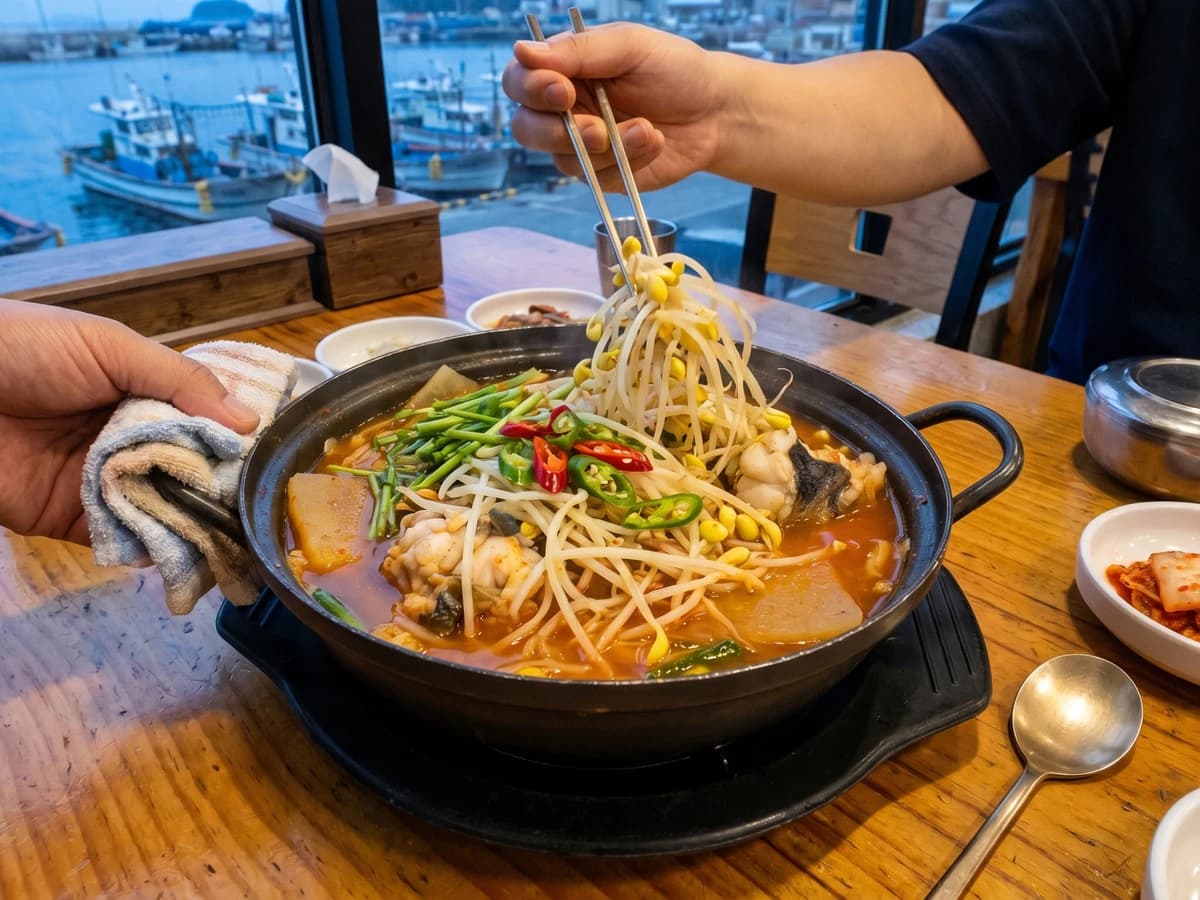
A Masan coast monkfish stew with firm white meat, gelatin at the bones, soybean sprouts for crunch, and a red broth seasoned to carry the fish, not bury it.

Chef Jeong-sun
A weeknight fish roe stew with radish and crown daisy in a clean spicy broth, where the whole success depends on adding the roe late enough that it sets tender, not chalky.

Chef Jeong-sun
Late-summer mallow leaves rubbed with salt until the bitter green water runs off, then simmered in a clean doenjang broth with dried shrimp, the quiet soup a Korean weeknight deserves.