
Chef Graziella
Panuozzo with Sausage and Friarielli
The stuffed bread of Gragnano, where Neapolitan pizza dough becomes a pocket for crumbled sausage and bitter greens. This is what the pizza makers eat when they are hungry.
A cooking platform built around craft, culture, and the stories behind what we eat.

Created by
The Neapolitan art of frying cheese in a bread carriage, where the simplest ingredients become something that pulls into golden strings when you break it apart.
The name means 'mozzarella in a carriage,' and the carriage is two slices of bread. This is Neapolitan street food at its most honest: fresh cheese, encased in bread, dipped in egg, and fried until the outside shatters and the inside stretches. The pulling cheese is the point. If your mozzarella does not stretch when you pull the halves apart, you have failed.
Americans see this and think of grilled cheese. They are not the same. Grilled cheese is butter and patience. Mozzarella in carrozza is hot oil and speed. The bread is not toasted slowly on a griddle. It is fried quickly until it becomes something closer to a fritter. The crust should crackle when you bite through it.
This requires fresh mozzarella, what Italians call fior di latte. The rubbery blocks sold in American supermarkets will not do. They do not melt into strings. They turn to something resembling plastic. If you cannot find proper fresh mozzarella, packed in water and soft to the touch, make something else.
Mozzarella in carrozza appeared in Naples during the 1800s, likely invented to use day-old bread and fresh mozzarella that needed eating before it turned. The 'carriage' of the name refers to enclosed horse-drawn carriages of the era, the bread enclosing the cheese like a passenger inside. It spread from street carts to trattorias across Campania, remaining a beloved quick meal and merenda, the late-afternoon snack Italians take seriously.
Quantity
8 slices
crusts removed
Quantity
8 ounces
sliced 1/4-inch thick
Quantity
3
Quantity
1/2 cup
Quantity
to taste
Quantity
about 1 cup
for frying
| Ingredient | Quantity |
|---|---|
| white sandwich breadcrusts removed | 8 slices |
| fresh mozzarella (fior di latte)sliced 1/4-inch thick | 8 ounces |
| large eggs | 3 |
| all-purpose flour | 1/2 cup |
| fine sea salt | to taste |
| olive oil or vegetable oilfor frying | about 1 cup |
Slice the mozzarella into pieces slightly smaller than the bread slices. The cheese must not reach the edges, or it will escape during frying and burn in the oil. Pat the slices dry with paper towels. Mozzarella holds water, and water and hot oil are enemies.
Place mozzarella slices on four pieces of bread. Season lightly with salt. Top with the remaining bread slices and press the edges firmly together. The seal must hold during frying. Some Neapolitan cooks moisten the edges with a bit of beaten egg before pressing. This works.
Beat the eggs in a shallow bowl with a pinch of salt. Spread the flour on a plate. Work in this order: flour first, then egg. The flour helps the egg adhere. Without it, the coating slides off in the pan.
Dredge each sandwich lightly in flour, shaking off the excess. Then dip into the beaten egg, turning to coat all sides completely. Let the excess drip back into the bowl. The coating should be thin and even, not heavy.
Pour oil into a large skillet to a depth of about half an inch. Heat over medium until a small piece of bread dropped in sizzles immediately and turns golden in about 30 seconds. The temperature should be around 350°F. If you do not have a thermometer, the bread test tells you what you need to know.
Carefully lower the coated sandwiches into the hot oil. Do not crowd the pan. Fry two at a time if necessary. Cook until the underside is deeply golden, about 2 minutes. Flip once with a spatula and fry the second side until equally golden, another 2 minutes. The bread should be crisp, the cheese inside molten.
Transfer to a plate lined with paper towels. Let rest for 30 seconds only, enough to drain but not enough for the cheese to seize. Serve at once. Cut in half if you wish to display the stretching cheese. Mozzarella in carrozza waits for no one. Cold, it is merely a greasy sandwich.
1 serving (about 155g)
Culinary guides, cultural storytelling, and the editorial depth that makes cooking meaningful.
Discover Culinary ExplorerChef Graziella
The stuffed bread of Gragnano, where Neapolitan pizza dough becomes a pocket for crumbled sausage and bitter greens. This is what the pizza makers eat when they are hungry.
Chef Juliette
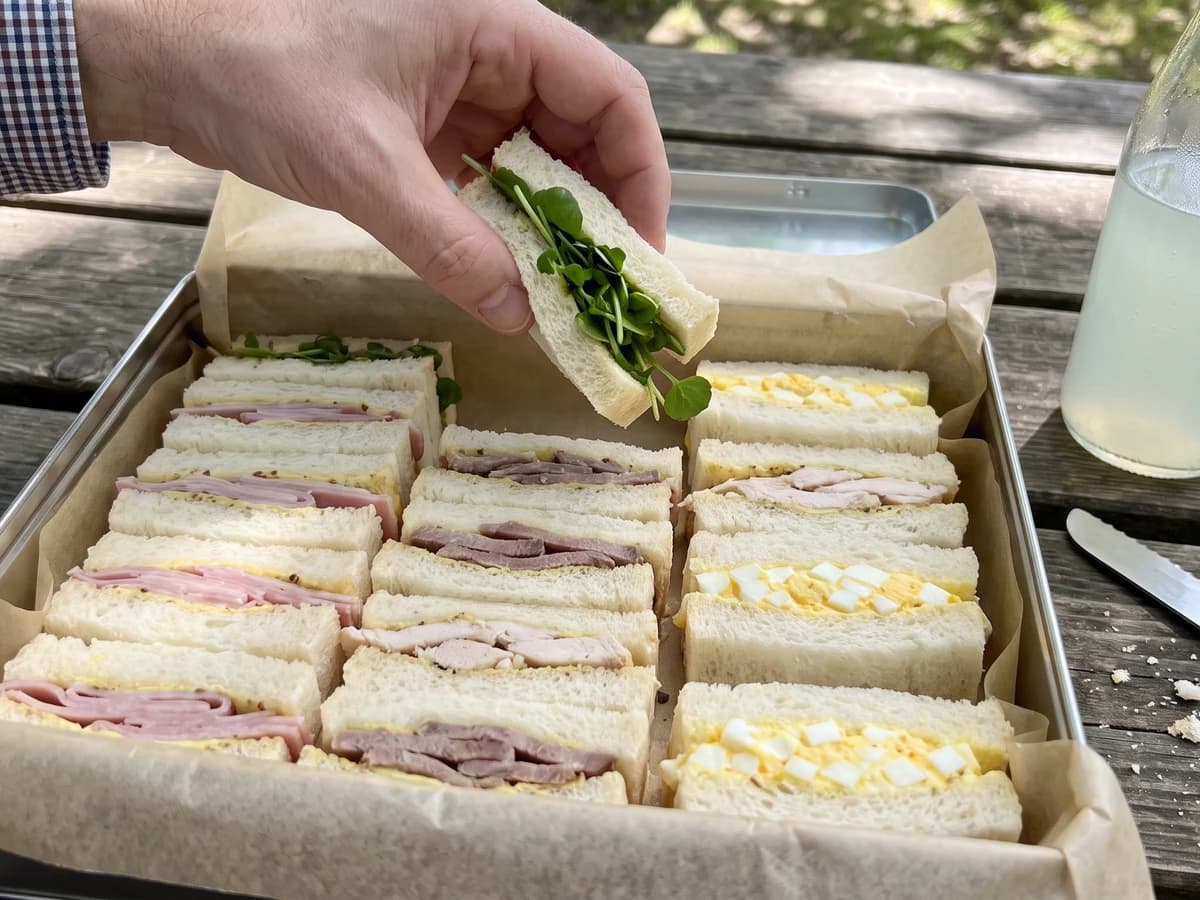
Five classical fillings between bread buttered to every edge, cut into tidy rectangles and held under a light weight: a French buffet lesson in softness, proportion, and restraint.
Chef Juliette
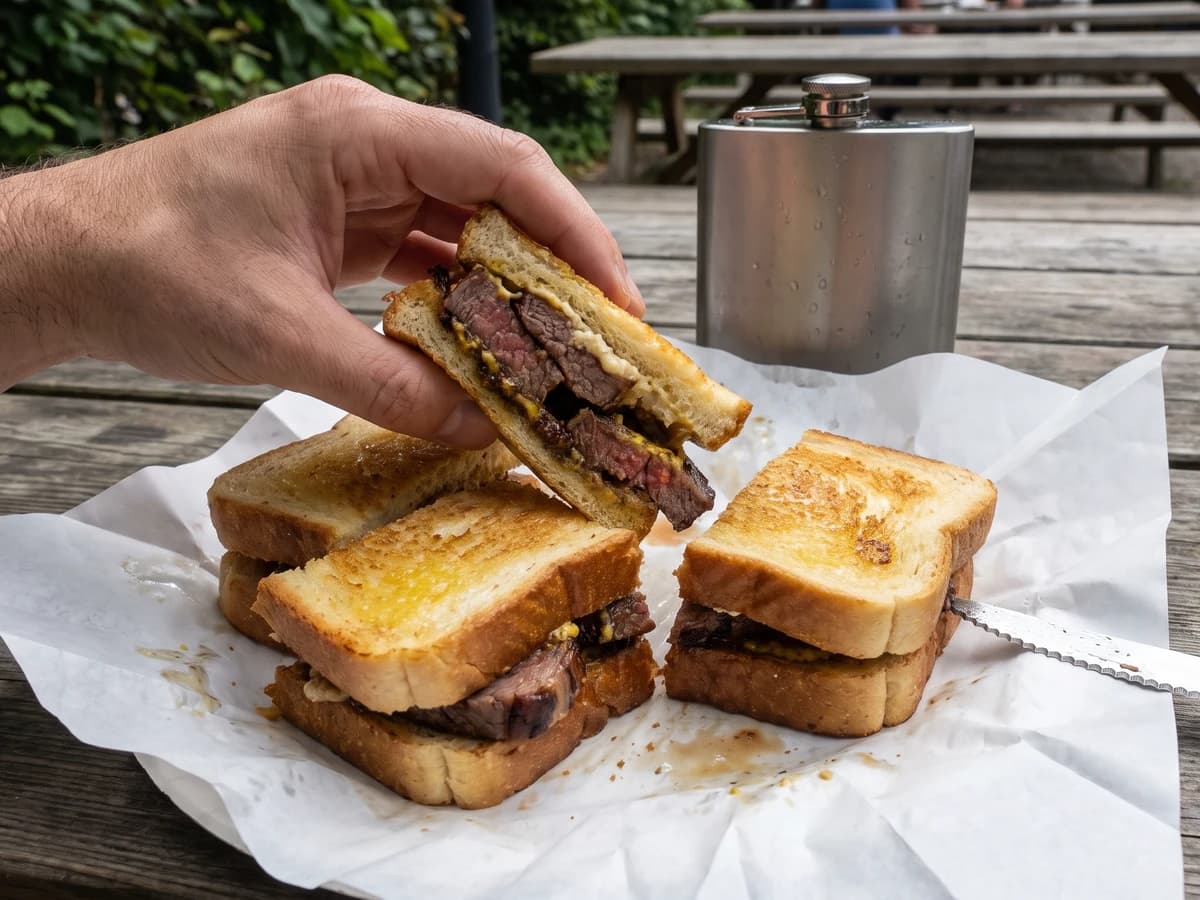
Steak grilled dark at the edges, cooled, sharpened with horseradish and mustard, then pressed between buttered loaf heels until the crumb catches every juice: a race-day sandwich substantial enough to be supper.

Chef Thomas
Back bacon crisped in a hot pan, a ripe tomato that actually tastes of something, crisp lettuce and real butter on proper toast. A sandwich that earns its place in the notebook.