Culinary Explorer
A cooking platform built around craft, culture, and the stories behind what we eat.
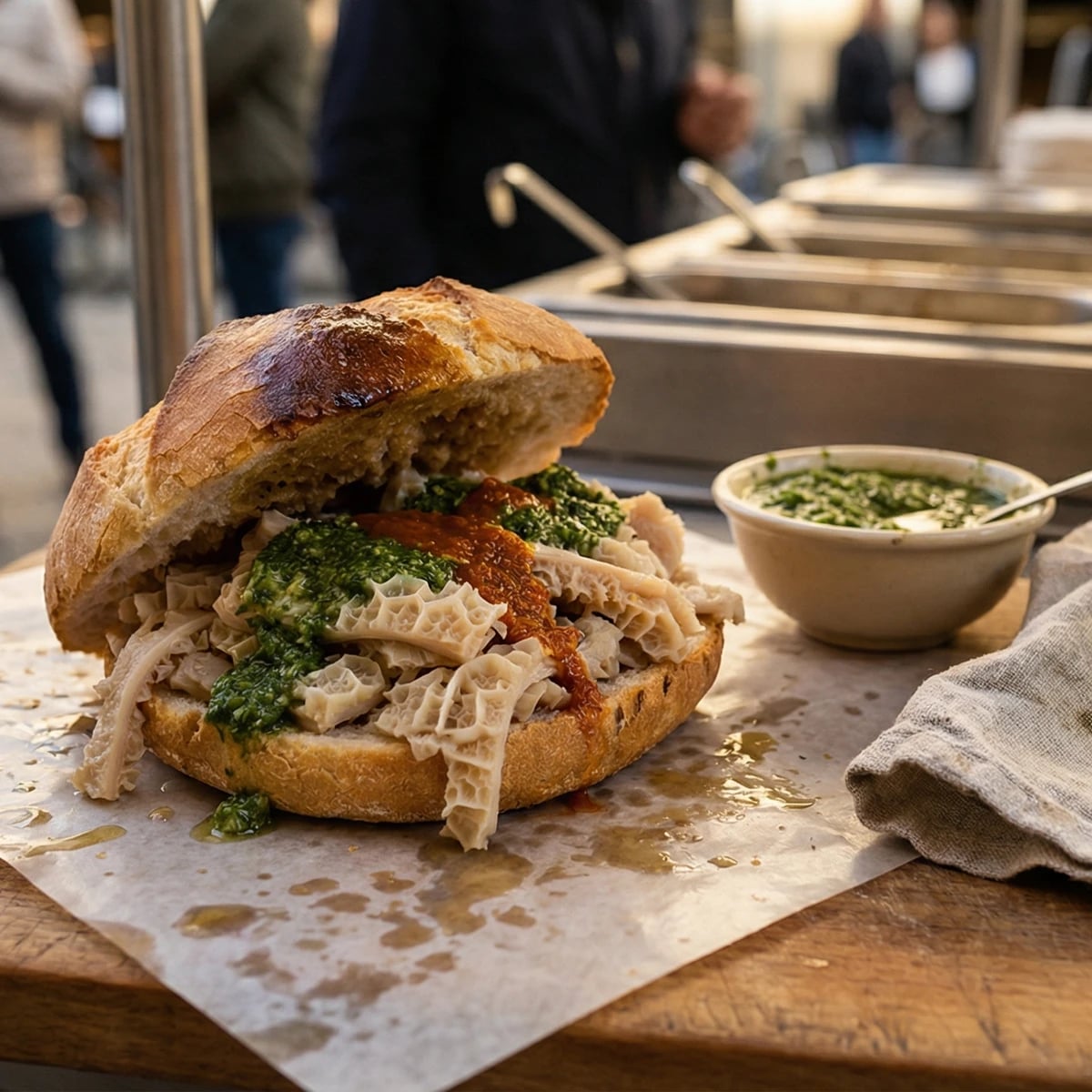
Panino con Lampredotto
Created by Chef Graziella
The workingman's lunch of Florence, where the fourth stomach of a cow becomes something noble through hours of patient braising and the alchemy of salsa verde.
Lampredotto is not for the timid. It is the fourth stomach of a cow, the abomasum, and it looks exactly like what it is. If this troubles you, stop reading now. But if you understand that cucina povera, the cooking of the poor, produced some of Italy's most profound dishes, then you will recognize lampredotto as a triumph of thrift and technique.
The trippaio, the tripe seller, stands at his cart in every Florentine market. He has been there since before your grandparents were born. He fishes the braised lampredotto from its simmering broth, slices it onto a crusty semelle, dips the top half of the roll into the cooking liquid so it becomes soft and saturated, then spoons salsa verde over everything. He asks if you want it piccante. You say yes. He hands you something wrapped in wax paper that costs almost nothing and tastes like everything.
This is not restaurant food. This is what Florentine laborers eat standing at the cart, broth dripping down their wrists, before returning to work. The roll must be crusty enough to hold together when wet. The tripe must be braised until it surrenders completely. The salsa verde must be sharp enough to cut through the richness. When these three elements align, you understand why this humble sandwich has survived centuries.
Ingredients
lampredotto (beef fourth stomach)
Quantity
2 pounds
cleaned
yellow onion
Quantity
1 large
halved
carrots
Quantity
2
peeled and cut into large chunks
| Ingredient | Quantity |
|---|---|
| lampredotto (beef fourth stomach)cleaned | 2 pounds |
| yellow onionhalved | 1 large |
| carrotspeeled and cut into large chunks | 2 |
Where cooking meets culture.
Culinary guides, cultural storytelling, and the editorial depth that makes cooking meaningful.
Discover Culinary Explorer