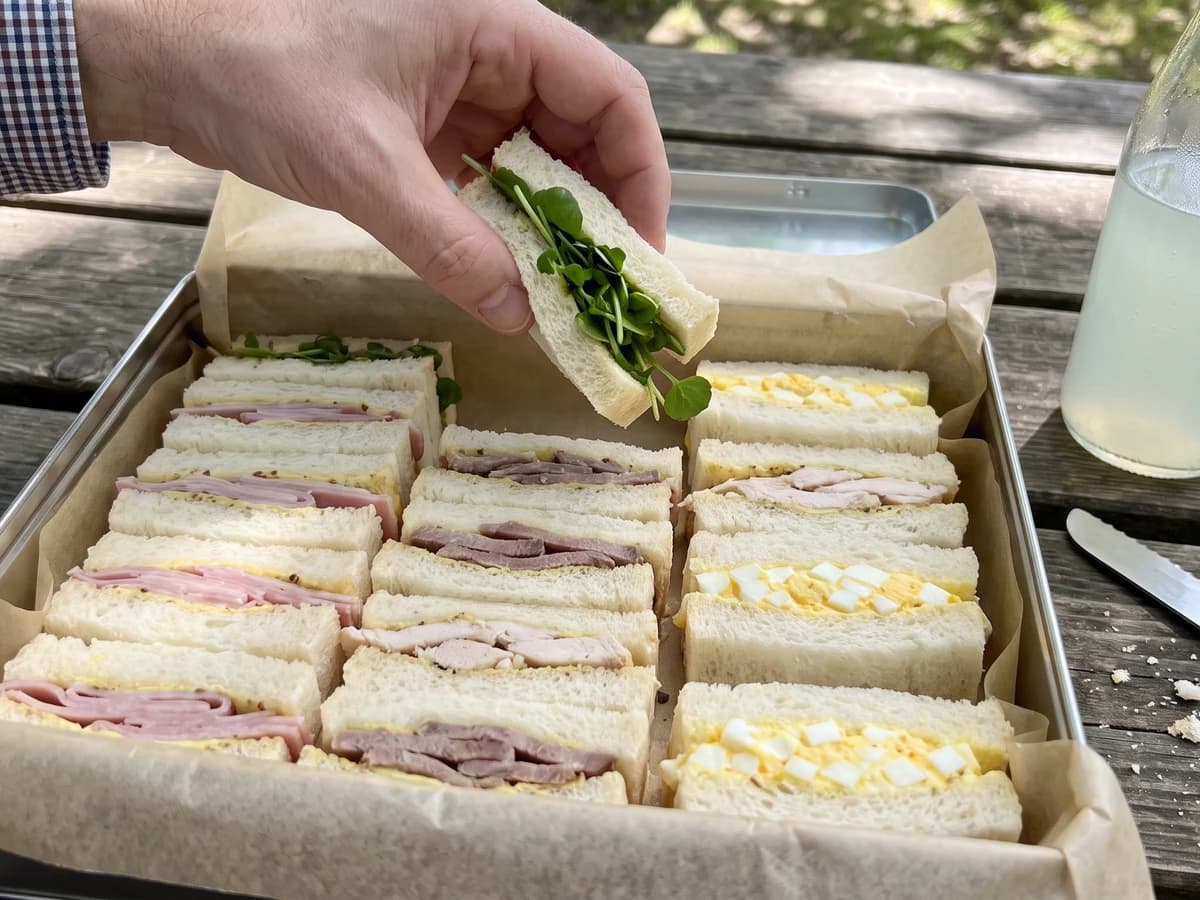
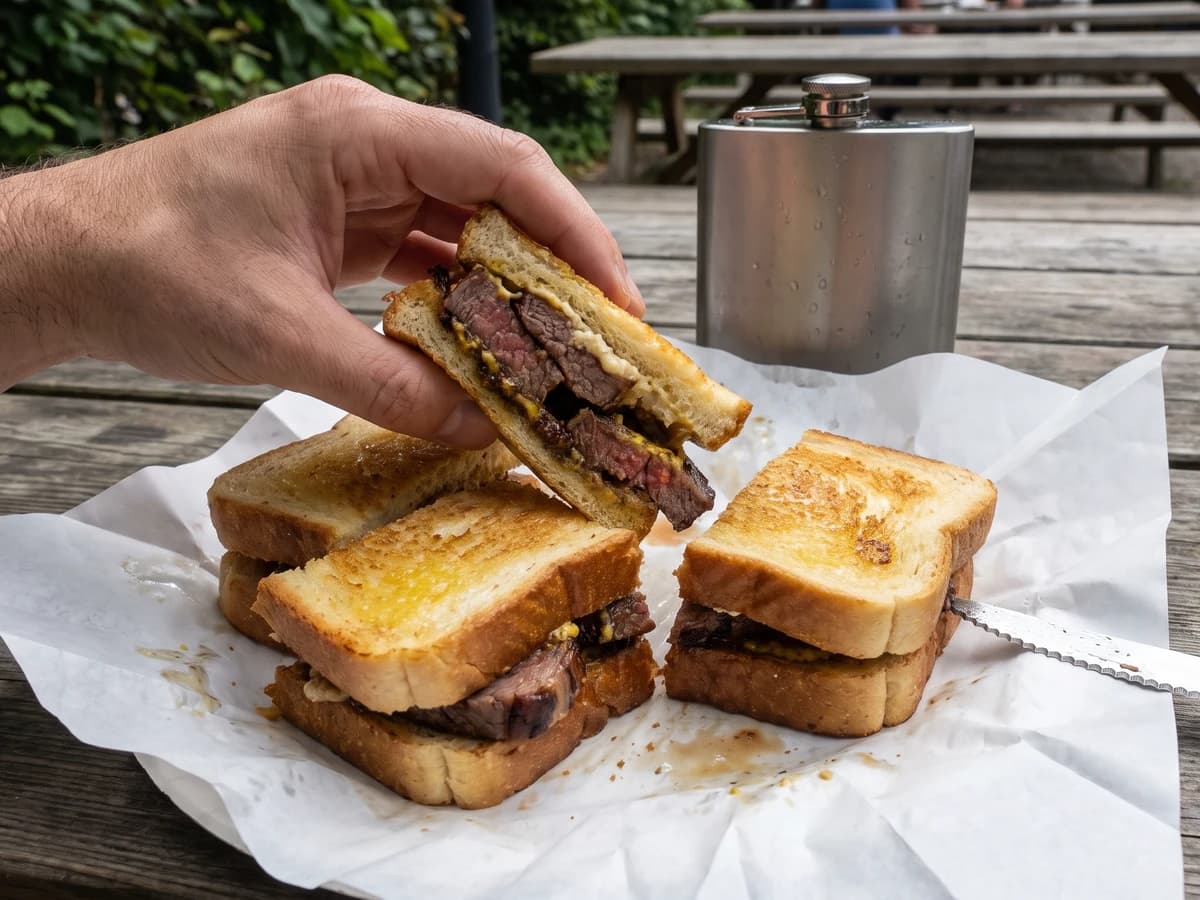
Liguria's olive-oil-drenched focaccia, dimpled and golden, split and piled with thick-sliced mortadella from Bologna. Two regional masterpieces that need nothing else.
Sandwiches & Wraps
Italian, Ligurian
Quick Meal
Picnic
2 hr 30 min
Active Time
25 min cook•3 hr total
Yield6 sandwiches
In Genoa, focaccia is not bread. It is a category unto itself, baked in great sheets in bakeries that have made nothing else for generations. The dough is wet, nearly a batter, stretched into pans slicked with enough olive oil to make cautious cooks nervous. The dimples hold pools of oil that fry the surface while the interior stays soft. The bottom crisps against the hot pan. The top blisters with salt.
Mortadella is the great pork sausage of Bologna, two hundred kilometers east. Ground so fine it becomes a mousse, studded with cubes of pure white fat, sometimes pistachios, scented with myrtle and coriander. It is not the rubbery pink disk that Americans call bologna. That insult shares only a name.
This sandwich requires no sauce, no cheese, no lettuce or tomato. The focaccia, still warm from the oven or cooled to room temperature, provides richness and texture. The mortadella provides pork fat and aromatic depth. What you keep out is as significant as what you put in. The Genovese and the Bolognese understood this long before either of us arrived.
Focaccia Genovese dates to at least the medieval period, when Ligurian bakers discovered that abundant local olive oil transformed simple flatbread into something extraordinary. The pairing with mortadella bridges two regions that rarely agreed on anything except this: when the bread is this good and the salume this honest, you add nothing else.
The technique, the tradition, and the story behind every dish.
•30 by 40 centimeter rimmed baking sheet (half sheet pan)
•Wire cooling rack
•Serrated bread knife
Instructions
1
Make the dough
In a large bowl, combine the flour, fine salt, and yeast. Add the warm water and mix with your hands until a shaggy, sticky dough forms. Add half the olive oil and work it in with your fingers, squeezing and folding until the oil is absorbed. The dough will be very wet. This is correct. Genovese focaccia is not a stiff dough.
2
First rise
Cover the bowl tightly with plastic wrap. Let the dough rise at room temperature until doubled, about one and a half hours. The time depends on your kitchen. In summer it will be faster. In winter, slower. Watch the dough, not the clock.
3
Prepare the pan
Pour half of the remaining olive oil into a 30 by 40 centimeter rimmed baking sheet (a half sheet pan). Tip the pan to coat the bottom completely. The oil should pool generously. Focaccia Genovese demands olive oil. Do not be timid.
A proper Genovese focaccia requires a pan with low sides. High-sided pans trap steam and prevent the characteristic crisp bottom.
4
Shape the dough
Scrape the risen dough into the oiled pan. With oiled fingers, gently stretch it toward the edges. The dough will resist. Let it rest five minutes, then stretch again. Repeat until the dough reaches the edges of the pan. If it springs back stubbornly, wait. Patience with dough is never wasted.
5
Second rise
Drizzle the remaining olive oil over the surface. Using all ten fingertips, press straight down into the dough to create the characteristic dimples. The dimples should reach nearly to the bottom of the pan. These pockets hold olive oil and create the texture that defines this bread. Cover loosely and let rise 45 minutes.
6
Bake the focaccia
Heat your oven to 220°C (425°F). Dimple the dough again, pressing firmly. Scatter flaky salt over the surface. Bake until deeply golden on top and the bottom is crisp and caramelized, 22 to 25 minutes. The underside should be as golden as the top. If not, your oven runs cool. Give it more time.
The focaccia should release easily from the pan. If it sticks, you did not use enough oil. Learn from this for next time.
7
Cool properly
Transfer the focaccia to a wire rack immediately. If left in the pan, steam will soften the bottom. Let it cool at least 20 minutes before cutting. Hot bread, though tempting, does not slice cleanly and the crumb is still setting.
8
Assemble the sandwich
Cut the focaccia into six rectangles, then split each horizontally. The interior should be open and slightly chewy, the bottom crisp. Fold thick slices of mortadella loosely and pile them generously on the bottom half. Do not flatten the mortadella. The folds create texture and allow the fat to be appreciated. Close with the top half. That is all.
The mortadella must be at room temperature. Cold mortadella cannot release its perfume. Remove it from the refrigerator 30 minutes before assembling.
Chef Tips
•If you cannot make focaccia, buy it from an Italian bakery that bakes it fresh. Supermarket focaccia is better used as a doorstop. The bread is half the sandwich.
•Mortadella must be sliced thick, about 3 millimeters. Paper-thin slices disappear against the substantial bread. Ask your salumiere to cut it properly, or find a new salumiere.
•Do not heat the mortadella. Italians do not warm quality cured meats. The fat should be soft from room temperature, not melted from a grill.
•Some add stracchino, the runny Ligurian cheese that melts into the warm bread. This is acceptable but not necessary. The sandwich is complete without it.
Advance Preparation
•Focaccia is best the day it is baked. It can be wrapped and stored at room temperature for one day, but the bottom loses its crispness.
•To refresh day-old focaccia, warm it in a 180°C oven for 5 minutes. It will not be as good as fresh, but acceptable.
•Once assembled, eat the sandwich immediately. This is not food that waits.
Frequently Asked Questions
Nutrition Information
1 serving (about 225g)
Calories
690 calories
Total Fat
39 g
Saturated Fat
9 g
Trans Fat
0 g
Unsaturated Fat
28 g
Cholesterol
47 mg
Sodium
1650 mg
Total Carbohydrates
66 g
Dietary Fiber
2 g
Sugars
1 g
Protein
20 g
Where cooking meets culture.
Culinary guides, cultural storytelling, and the editorial depth that makes cooking meaningful.