
Chef Makoa
Dough Boys (Māori Boil-Up Dumplings from Aotearoa)
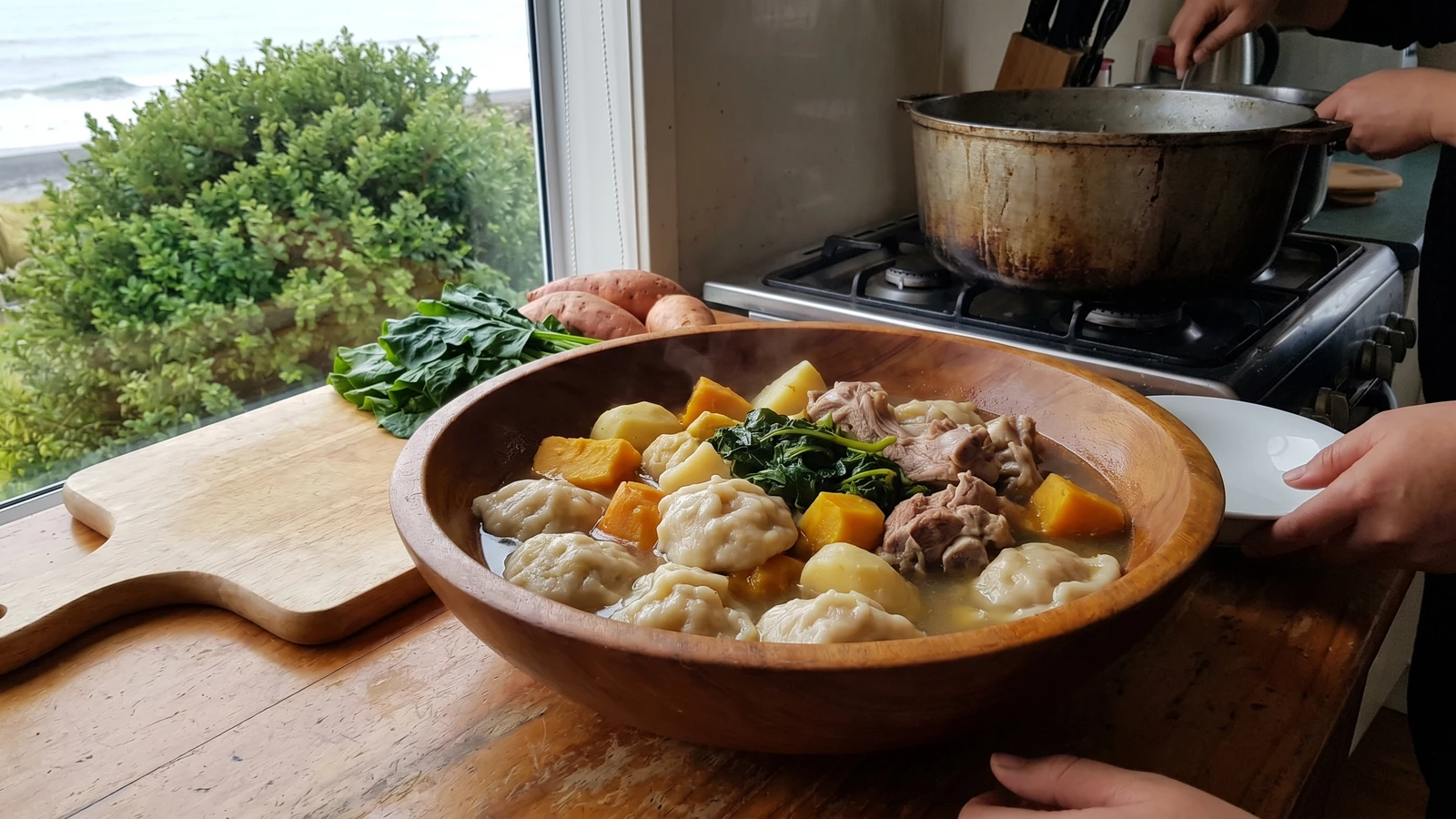
Soft Māori boil-up dumplings from Aotearoa, dropped over pork, kūmara, and pūhā so they steam tender on top and drink in the broth underneath.
A cooking platform built around craft, culture, and the stories behind what we eat.
Created by
Soft Māori doughboys dropped into the boil-up pot, where flour, fat, and broth turn into tender motumotu beside pork bones, kūmara, and greens from Aotearoa.
Apot like this teaches you whose table you're at. In Aotearoa, the Māori boil-up is whānau food, not fancy, not precious, just the big kōhua, the cooking pot, doing its work while people come through the kitchen and somebody keeps saying, eat, eat, still get plenty.
This one belongs to Māori hands. Kūmara, the sweet potato carried through the Pacific and grown strong in the cooler whenua, the land, stands where kalo and talo stand for many of us farther north. Pūhā, watercress, pork bones, potatoes, whatever the house has, they all give themselves to the broth. Then the motumotu, the doughboys, go in last and swell soft, soaking up the pot like little pillows with manners.
I'll cook this open-handed, because Aotearoa is cousin water, but the deep tikanga, the protocols and meanings, those belong to Māori elders to teach. What I can tell you is the kitchen truth: don't overwork the dough, don't boil it angry, and don't rush the pot. Same ocean, different weather. Same family, different bowl.
Māori boil-up grew from older gathered kai in Aotearoa, especially greens such as pūhā and watercress, kūmara from the ancestral canoe crops, and later pork bones, flour, potatoes, and doughboys from colonial and mission-era pantries. That mix is part of the honest modern Māori table: deep food and introduced food sitting in the same pot because whānau still had to be fed. Motumotu carry that history plainly, flour dumplings made soft in broth, budget food turned generous by time, bones, greens, and sharing.
Quantity
2 pounds
Quantity
10 cups
plus more as needed
Quantity
1 large
quartered
Quantity
1 teaspoon
plus more to taste
Quantity
1 pound
peeled and cut into large chunks
Quantity
1 pound
peeled and cut into large chunks
Quantity
1 bunch
tough stems trimmed
Quantity
2 cups
Quantity
2 teaspoons
Quantity
1/2 teaspoon
Quantity
2 tablespoons
rubbed into the flour
Quantity
3/4 cup
plus 1 to 2 tablespoons if needed
| Ingredient | Quantity |
|---|---|
| meaty pork bones or smoked bacon bones | 2 pounds |
| cold waterplus more as needed | 10 cups |
| onionquartered | 1 large |
| sea saltplus more to taste | 1 teaspoon |
| kūmarapeeled and cut into large chunks | 1 pound |
| potatoespeeled and cut into large chunks | 1 pound |
| pūhā or watercresstough stems trimmed | 1 bunch |
| all-purpose flour | 2 cups |
| baking powder | 2 teaspoons |
| sea salt | 1/2 teaspoon |
| cold butter or pork fatrubbed into the flour | 2 tablespoons |
| cold water or cooled boil-up brothplus 1 to 2 tablespoons if needed | 3/4 cup |
Put the pork bones, water, onion, and 1 teaspoon salt in a heavy pot. Bring it up gently, then lower to a steady simmer and skim the top as the broth clears. Let it go about 1 hour, until the meat starts loosening from the bone and the kitchen smells like the pot has settled into itself.
Add the kūmara and potatoes and keep the pot at a calm simmer, not a hard boil. Cook 20 to 25 minutes, until the chunks are tender when pierced but not falling apart. Kūmara is the old canoe crop here in Aotearoa, so treat it with the same patience we'd give kalo back home.
While the roots cook, stir the flour, baking powder, and 1/2 teaspoon salt in a bowl. Rub in the cold butter or pork fat with your fingertips until the flour feels lightly sandy, then stir in the cold water or cooled broth just until a soft dough gathers. No knead it hard. Tough hands make tough doughboys.
Taste the broth and adjust the salt. With wet hands or two spoons, drop walnut-size pieces of dough onto the surface of the simmering pot, leaving a little room between them. They will puff and float, then settle into the broth with a soft, dull shine.
Cover the pot and simmer gently for 15 to 18 minutes without lifting the lid. The motumotu need their quiet time. When done, they should be swollen, tender through the middle, and heavy with broth, not floury at the center.
Tuck the pūhā or watercress around the dumplings for the last 5 minutes, just until the greens soften and turn deep green. If the pot looks too tight, loosen it with a splash of hot water. Serve the bones, roots, greens, broth, and motumotu in wide bowls, enough for one more person at the table.
1 serving (about 650g)
Culinary guides, cultural storytelling, and the editorial depth that makes cooking meaningful.
Discover Culinary ExplorerChef Makoa
Soft Māori boil-up dumplings from Aotearoa, dropped over pork, kūmara, and pūhā so they steam tender on top and drink in the broth underneath.
Chef Makoa
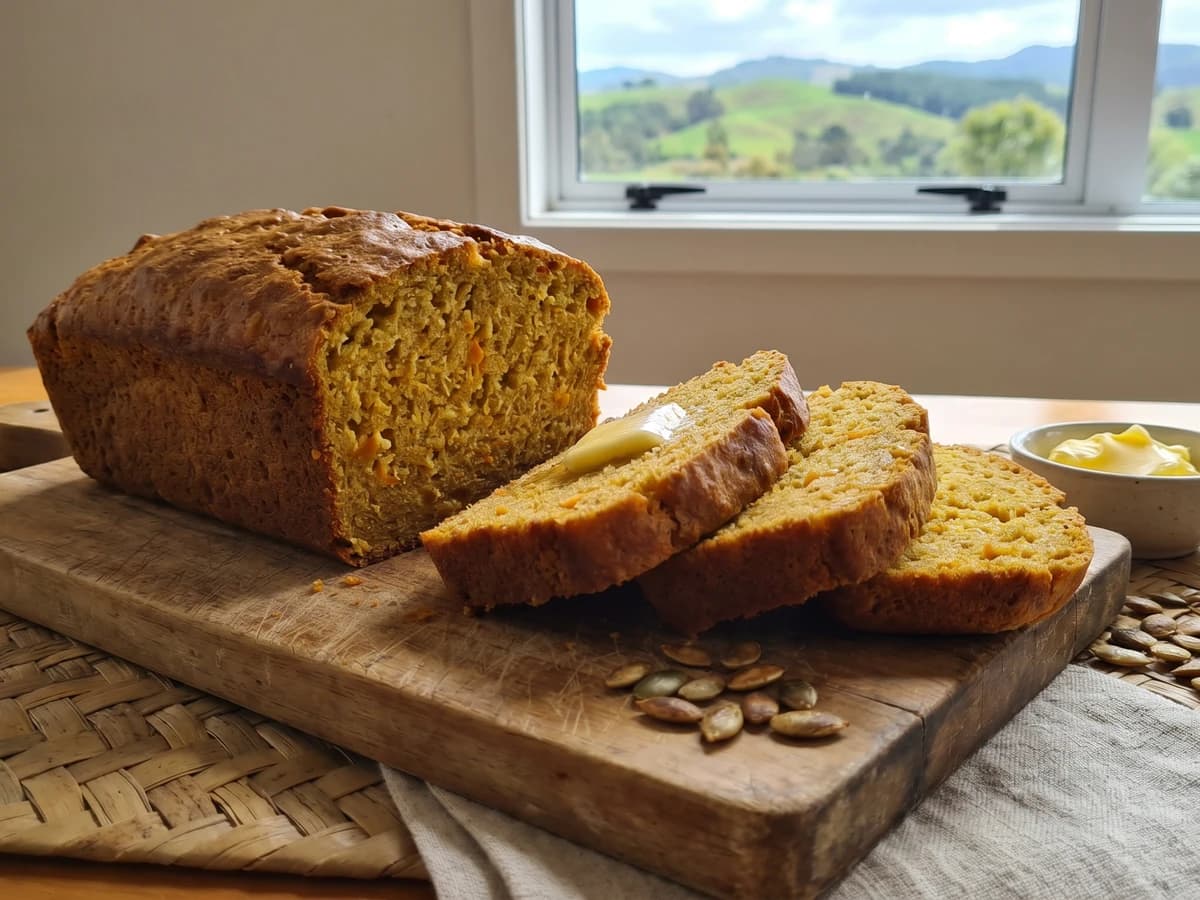
Māori kūmara, the sweet potato of Aotearoa, folded into a soft quick bread with a tender crumb, a little sweetness, and enough loaf for the whānau table.

Chef Makoa
Māori rēwena parāoa from Aotearoa, raised by a living kūmara bug instead of commercial yeast, folded with mashed sweet potato and wholemeal until the loaf bakes tangy, tender, and ready for a shared table.
Chef Makoa
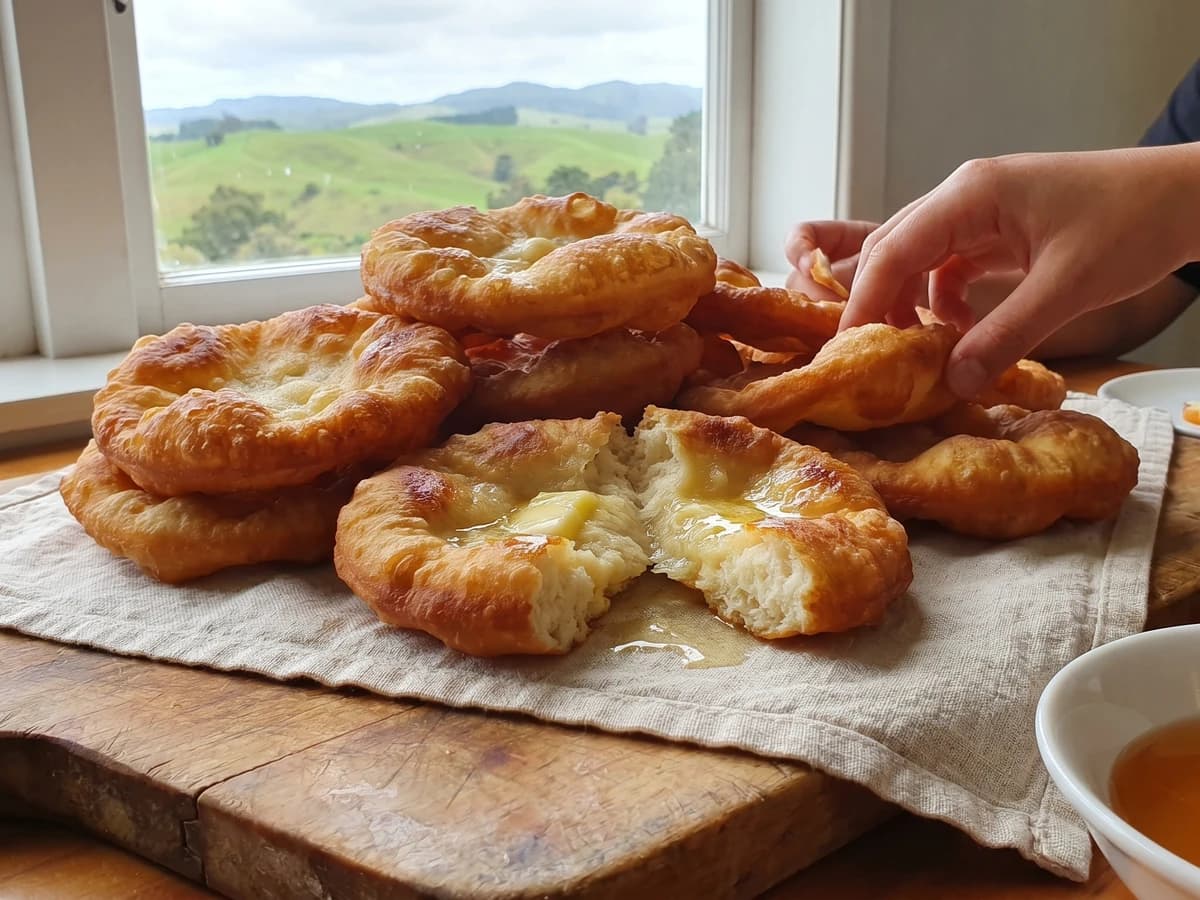
Aotearoa's parāoa parai is kai Māori for the marae table and the whānau kitchen, risen dough fried golden, split warm, and eaten with butter.