Chef Lupita
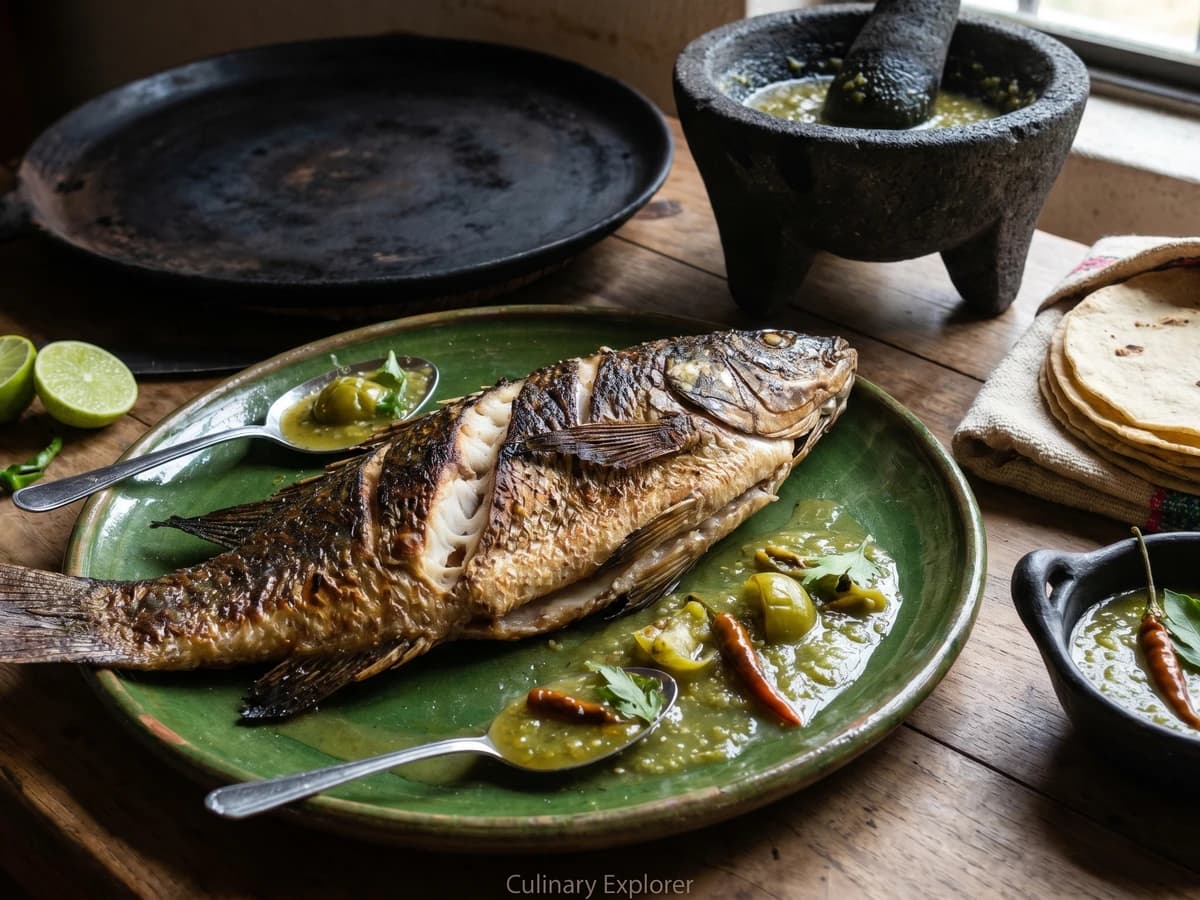
Acúmara Tatemada al Comal
Michoacán's Lake Pátzcuaro acúmara, a whole kurucha from the lago tatemada on a comal de leña and served with chile perón atápakua, corn tortillas, and P'urhépecha discipline.
A cooking platform built around craft, culture, and the stories behind what we eat.
Created by
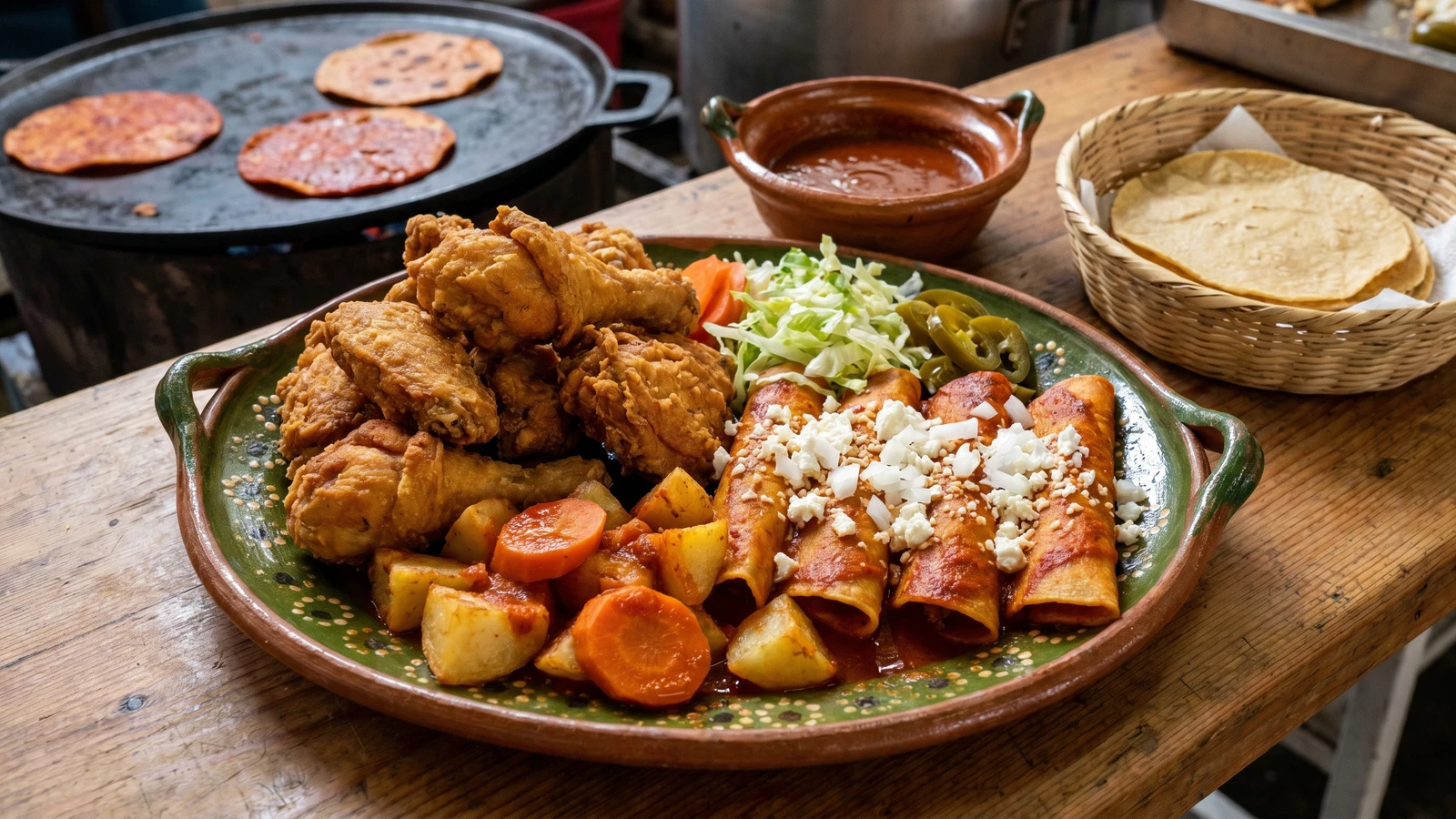
Morelia's market-plate chicken, fried in lard and served with guajillo-dipped enchiladas, potatoes, carrots, lettuce, queso fresco, and chiles en vinagre.
Michoacán gives you this dish in Morelia, in the plazas and market fondas where the plate comes crowded and unapologetic. Pollo placero means plaza chicken. Not restaurant chicken. Not banquet chicken. Market chicken, built to feed people who have been walking, selling, bargaining, and carrying bags since morning.
The color belongs to chile guajillo, with a little chile ancho for body. The tortillas are dipped in that sauce, fried in manteca de cerdo, folded with queso fresco and onion, then served beside chicken that has been gently cooked and finished in hot lard until the skin turns golden. The potatoes and carrots go through the same pan because a Michoacán cook does not waste seasoned fat. La manteca es el sabor.
I learned a version like this from a señora near the Mercado Independencia in Morelia. She did not plate it carefully. She built it. Chicken, enchiladas, vegetables, lettuce, queso, pickled jalapeños. A full plate with no vanity. This is a 32-state cuisine, and this one is Michoacán speaking clearly. Cada estado, su propia cocina.
The word placero comes from plaza, the public market square, and in central Mexico it identifies dishes sold around markets rather than formal dining rooms. Morelia's pollo placero developed as a practical market plate in the late 19th and early 20th centuries, when urban fondas combined fried poultry with enchiladas placeras, vegetables, and preserved chiles to make one complete meal. Its use of guajillo-dipped tortillas connects it to the broader Bajío and Michoacán tradition of red enchiladas, but the crowded plate with fried chicken is distinctly Moreliano.
Quantity
1, about 3 1/2 pounds
cut into 8 pieces
Quantity
1/2 medium
Quantity
3
Quantity
2
Quantity
1 tablespoon, plus more to taste
Quantity
10
stemmed and seeded
Quantity
2
stemmed and seeded
Quantity
2
Quantity
1/4 medium
Quantity
1/2 teaspoon
Quantity
1
Quantity
1 teaspoon
Quantity
1 1/2 cups, plus more as needed
Quantity
1 1/2 cups
divided
Quantity
18
preferably day-old
Quantity
12 ounces
crumbled and divided
Quantity
1/2 small
finely chopped and divided
Quantity
1 pound
boiled until just tender and cut into wedges
Quantity
4 medium
peeled, boiled until just tender, and sliced thick
Quantity
2 cups
shredded
Quantity
for serving
Quantity
for serving
| Ingredient | Quantity |
|---|---|
| whole chickencut into 8 pieces | 1, about 3 1/2 pounds |
| white onion for the chicken broth | 1/2 medium |
| garlic cloves for the chicken broth | 3 |
| bay leaves | 2 |
| kosher salt | 1 tablespoon, plus more to taste |
| dried chile guajillostemmed and seeded | 10 |
| dried chile anchostemmed and seeded | 2 |
| garlic cloves for the chile sauce | 2 |
| white onion for the chile sauce | 1/4 medium |
| dried Mexican oregano | 1/2 teaspoon |
| whole clove | 1 |
| apple cider vinegar | 1 teaspoon |
| chicken cooking broth | 1 1/2 cups, plus more as needed |
| pork lard (manteca de cerdo)divided | 1 1/2 cups |
| corn tortillaspreferably day-old | 18 |
| queso frescocrumbled and divided | 12 ounces |
| white onionfinely chopped and divided | 1/2 small |
| small waxy potatoesboiled until just tender and cut into wedges | 1 pound |
| carrotspeeled, boiled until just tender, and sliced thick | 4 medium |
| romaine lettuceshredded | 2 cups |
| chiles en vinagre (optional) | for serving |
| lime wedges (optional) | for serving |
Put the chicken pieces in a large pot with the half onion, 3 garlic cloves, bay leaves, salt, and enough water to cover by one inch. Bring to a gentle simmer and skim the foam from the surface. Cook 25 to 30 minutes, until the chicken is just cooked through. Do not boil it hard. You want tender meat that can survive the frying pan.
Lift the chicken onto a tray and pat it very dry. Strain and reserve the broth. Wet chicken in hot lard spits and tears the skin. Dry chicken browns. This is not a mystery, it is attention.
Heat a dry comal over medium. Toast the chile guajillo and chile ancho one or two at a time, about 20 to 30 seconds per side, until they soften, darken slightly, and smell sweet and earthy. Do not blacken them. Guajillo gives Morelia's enchiladas their red color without making the plate aggressively hot.
Cover the toasted chiles with hot water and soak for 15 minutes. Drain them and put them in a blender with 2 garlic cloves, the quarter onion, Mexican oregano, clove, vinegar, and 1 1/2 cups reserved chicken broth. Blend until completely smooth, then strain through a fine-mesh sieve. The sauce should be thin enough to coat a tortilla, not sit on it like paste.
Melt 3 tablespoons of lard in a wide skillet over medium heat. Add the strained chile sauce carefully. It will jump a little. Cook 8 to 10 minutes, stirring often, until the red deepens and the raw garlic edge disappears. Taste for salt. If it gets too thick, loosen it with a little more broth.
In a second wide skillet, melt enough lard to come about 1/4 inch up the pan. Fry the dried chicken pieces skin side down first, turning once, until the skin is golden and the edges are crisp, 8 to 10 minutes total. The chicken is already cooked, so you are building color and texture now. Keep it warm on a tray.
In the same chicken pan, add the potato wedges and carrot slices. Fry until the potatoes pick up golden edges and the carrots shine with the seasoned lard, 6 to 8 minutes. Spoon in 2 or 3 tablespoons of the chile sauce and toss just to stain them red. The vegetables should taste like they belong on the plate, not like they were boiled in another room.
Warm the tortillas briefly so they bend without cracking. Dip each tortilla into the warm guajillo sauce, coating both sides. Let the excess drip back into the pan. Work with one tortilla at a time. If you stack them wet, they tear, and then you blame the tortilla when the problem was your hurry.
Melt more lard in a clean skillet over medium heat. Lay each dipped tortilla into the fat for 20 to 30 seconds per side, just until supple and glossy at the edges. Fill with a spoonful of queso fresco and chopped white onion, then fold in half. These are enchiladas placeras, not baked enchiladas under a blanket of cheese. Así se hace y punto.
On each plate, set one piece of fried chicken, three folded enchiladas, a spoonful of potatoes and carrots, and a handful of shredded lettuce. Scatter more queso fresco and chopped white onion over the enchiladas. Serve chiles en vinagre and lime wedges on the side. The plate should look generous. Plaza food is not timid.
1 serving (about 430g)
Culinary guides, cultural storytelling, and the editorial depth that makes cooking meaningful.
Discover Culinary ExplorerChef Lupita
Michoacán's Lake Pátzcuaro acúmara, a whole kurucha from the lago tatemada on a comal de leña and served with chile perón atápakua, corn tortillas, and P'urhépecha discipline.

Chef Lupita
Puebla's weekday adobo of pork shoulder braised in a thick guajillo and ancho sauce sharpened with vinegar, cumin, and clove. The deep red of a market spice stall, the dish a poblana cooks without thinking.

Chef Lupita
Loreto's pit-roasted clams, planted hinge-up in beach sand and tatemadas under a fast fire of dried romerillo brush, the resinous Baja desert shrub that gives this dish its smoke.

Chef Lupita
Oaxaca's eighth mole, the silky, almond-and-cinnamon almendrado, served over poached chicken. Mild, sweet, restrained, and a quiet rebuttal to anyone who thinks Mexican food has to be hot to be Mexican.