
Chef Lupita
Camarones a la Diabla Nayaritas
Nayarit's Pacific shrimp, seared quickly and coated in a red sauce of chile de arbol, chipotle, tomato, and garlic, the kind of heat that belongs beside white rice and warm corn tortillas.
A cooking platform built around craft, culture, and the stories behind what we eat.
Created by
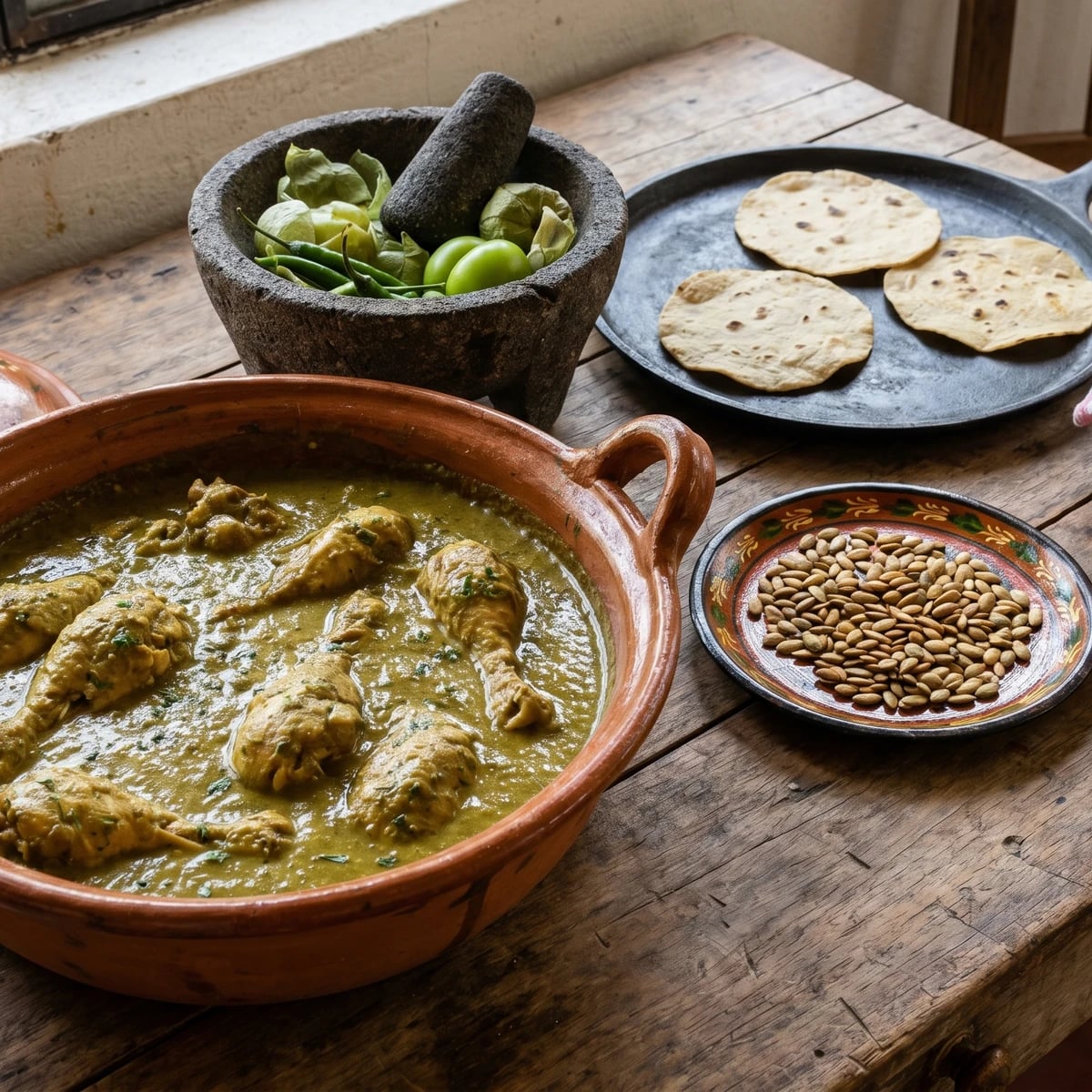
Guerrero's green mole is a pumpkin-seed pepian from the central valleys, bright with tomatillo and hoja santa, thickened with masa, and poured over chicken without pretending every mole needs chocolate.
Guerrero's mole verde lives in the central valleys, around Chilpancingo, Tixtla, and the road kitchens that feed families traveling between the mountains and the coast. This is not the green mole of Oaxaca and it is not a salsa verde with a fancy name. It is a pepian: pumpkin seeds toasted, ground, and cooked until they give the sauce body.
The color comes from tomatillo, chile serrano, cilantro, epazote, hoja santa, and sometimes a little radish leaf or romaine when the market is honest about what is fresh. The thickness comes from pepitas and masa, not cream, not flour, not a spoonful of cornstarch. If the sauce tastes raw, you didn't fry it long enough. If it turns gray, you boiled the herbs to death. No me vengas con atajos.
I learned a version of this mole from a señora in Chilpancingo who stirred it in a clay cazuela with the calm of someone who had fed baptisms, funerals, and Sunday tables for forty years. She told me, "que no pique mucho," because this mole is not about heat. It is green, fragrant, nutty, and deep. Cada estado, su propia cocina.
Pepianes in Mexico descend from pre-Columbian seed-thickened sauces made with pumpkin seeds, chiles, herbs, and ground corn, long before wheat flour or dairy entered Mexican kitchens. Guerrero's green version reflects the state's central and southern pantry: tomatillo from milpa cooking, hoja santa from humid lowlands, and pumpkin seeds used as both flavor and thickener. Unlike mole poblano, which became nationally famous through colonial convent stories, mole verde guerrerense stayed closer to home kitchens and fiesta tables, where chicken and guajolote were dressed with whatever the season and the market provided.
Quantity
1, about 4 pounds
cut into 8 pieces
Quantity
10 cups
Quantity
1 medium
halved
Quantity
1
halved crosswise
Quantity
2
Quantity
1 tablespoon, plus more to taste
Quantity
1 pound
husked and rinsed
Quantity
3
stemmed
Quantity
1
Quantity
1 cup
Quantity
2 tablespoons
Quantity
3 tablespoons
Quantity
1/2 cup
or 1/3 cup masa harina mixed with 1/2 cup warm broth
Quantity
1 packed cup
Quantity
1/2 cup
Quantity
4 large
center ribs removed
Quantity
2 sprigs
leaves only
Quantity
1 small
chopped
Quantity
1/2 teaspoon
Quantity
3
Quantity
6
Quantity
for serving
Quantity
for serving
| Ingredient | Quantity |
|---|---|
| whole chickencut into 8 pieces | 1, about 4 pounds |
| cold water | 10 cups |
| white onionhalved | 1 medium |
| head of garlichalved crosswise | 1 |
| bay leaves | 2 |
| kosher salt | 1 tablespoon, plus more to taste |
| tomatilloshusked and rinsed | 1 pound |
| fresh chile serranostemmed | 3 |
| fresh chile poblano | 1 |
| hulled raw pumpkin seeds (pepitas) | 1 cup |
| sesame seeds | 2 tablespoons |
| manteca de cerdo (pork lard) | 3 tablespoons |
| fresh masaor 1/3 cup masa harina mixed with 1/2 cup warm broth | 1/2 cup |
| cilantro leaves and tender stems | 1 packed cup |
| parsley leaves | 1/2 cup |
| hoja santa leavescenter ribs removed | 4 large |
| fresh epazoteleaves only | 2 sprigs |
| romaine lettuce heartchopped | 1 small |
| whole cumin seed | 1/2 teaspoon |
| whole cloves | 3 |
| black peppercorns | 6 |
| warm corn tortillas (optional) | for serving |
| white rice (optional) | for serving |
Put the chicken pieces in a large pot with the cold water, onion, garlic, bay leaves, and salt. Bring to a gentle simmer over medium heat. Skim the foam during the first 15 minutes. Lower the heat and cook until the chicken is tender but not falling apart, 35 to 45 minutes. Pull the chicken out and strain the broth. Keep both warm.
Put the tomatillos and serrano chiles in a small pot and cover with water. Simmer 8 to 10 minutes, just until the tomatillos turn olive green and soften. Do not boil them until they collapse into bitterness. Drain them. Guerrero cooks want brightness here, not sour mud.
Roast the chile poblano directly over a gas flame or on a hot comal until the skin blisters all over. Put it in a covered bowl for 10 minutes, then peel, stem, and seed it. The poblano gives depth without making the mole hot. Not all Mexican food is trying to burn your mouth. That idea is lazy.
Heat a dry comal or heavy skillet over medium. Toast the pepitas, stirring constantly, until they puff, turn patchy golden, and smell nutty, 3 to 5 minutes. Toast the sesame seeds separately until pale gold, about 1 minute. Seeds burn fast. If they go dark brown, start again. Bitter pepitas will ruin the whole cazuela.
Toast the cumin seed, cloves, and peppercorns for 30 seconds, just until fragrant. Grind them in a molcajete or spice grinder. Do not leave the cloves whole. One bite into a whole clove and the table will remember your mistake more than your mole.
In a blender, combine the cooked tomatillos, serranos, roasted poblano, toasted pepitas, sesame seeds, ground spices, cilantro, parsley, hoja santa, epazote, romaine, and 2 cups of the warm chicken broth. Blend longer than you think, until the sauce is smooth and thick. If the blender struggles, add another splash of broth. You want a pourable paste, not chopped salad.
Melt the manteca de cerdo in a wide clay cazuela or heavy pot over medium heat. Pour in the green paste carefully. It will sputter. Stir with a wooden spoon for 8 to 10 minutes, until the color deepens and the sauce smells cooked, nutty, and herbal instead of raw. La manteca es el sabor. Oil will cook it, yes, but lard gives it the roundness Guerrero cooks expect.
Whisk the fresh masa with 1 cup warm chicken broth until smooth, then stir it into the cazuela. Add 2 more cups of broth and simmer gently for 15 minutes, stirring often so the seed paste does not stick. The mole should coat the spoon like heavy cream. If it gets too thick, add broth a little at a time. Masa thickens slowly, so give it time.
Nestle the poached chicken pieces into the green mole. Spoon sauce over every piece and simmer 10 minutes more, just enough for the chicken to absorb the flavor. Taste for salt. The sauce should be green, nutty, slightly tart from tomatillo, and fragrant from hoja santa. It should not taste like raw herbs.
Bring the cazuela to the table with warm corn tortillas and white rice. Spoon the mole generously over the chicken. This is family food for a serious table, not a tiny stripe on a white plate. Recetas probadas y garantizadas.
1 serving (about 440g)
Culinary guides, cultural storytelling, and the editorial depth that makes cooking meaningful.
Discover Culinary Explorer
Chef Lupita
Nayarit's Pacific shrimp, seared quickly and coated in a red sauce of chile de arbol, chipotle, tomato, and garlic, the kind of heat that belongs beside white rice and warm corn tortillas.

Chef Lupita
Guerrero's Tierra Caliente cecina is thin beef salted, dried until the surface tightens, then grilled over coals and served the way the region knows it: with crema, enchiladas, avocado, and rice.

Chef Lupita
Colima's chilayo is pork backbone and ribs simmered in guajillo broth, sharpened with cumin and vinegar, then thickened with ground rice and served over white morisqueta.

Chef Lupita
Colima's coastal pescado en vara, small whole fish skewered upright beside a wood fire, brushed with chile guajillo, chile de arbol, garlic, lime, and eaten on the sand.