Chef Lupita
Acúmara Tatemada al Comal
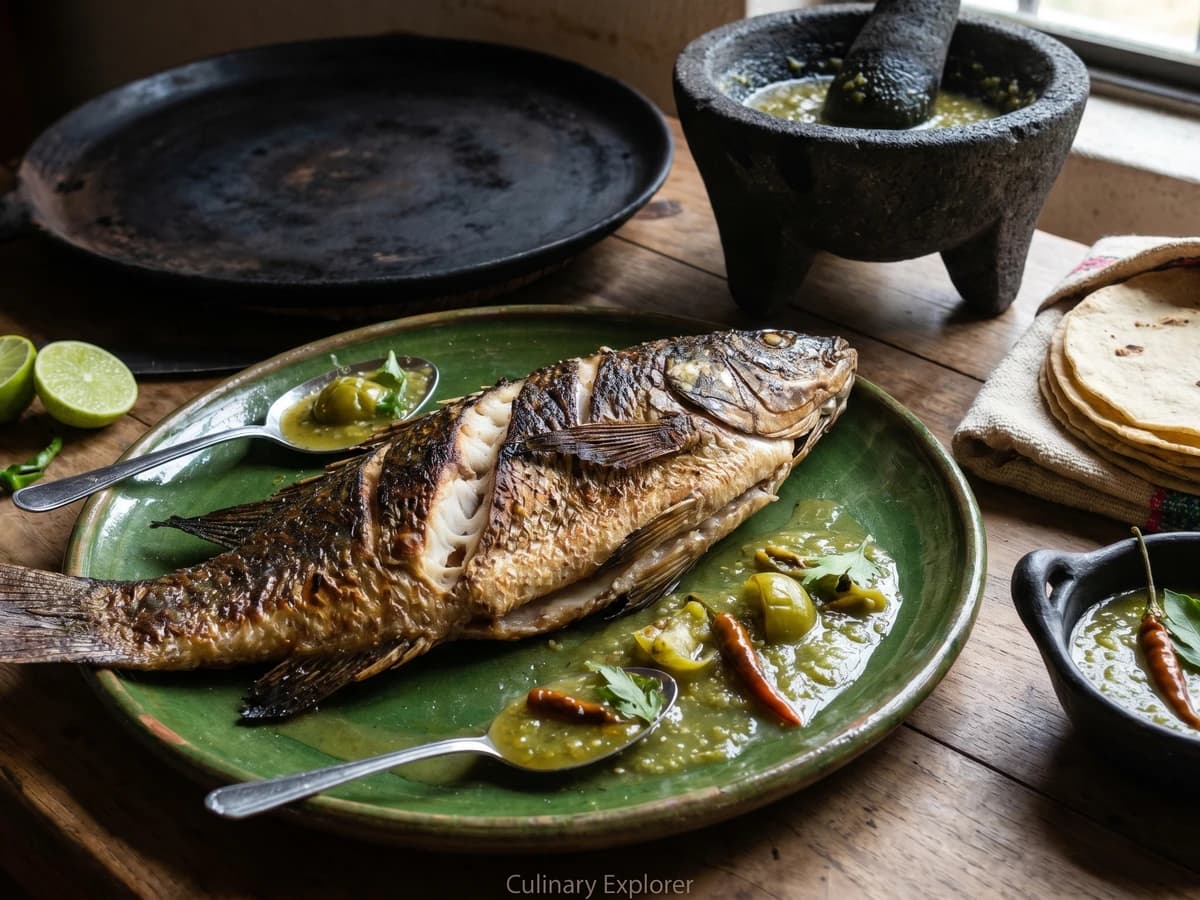
Michoacán's Lake Pátzcuaro acúmara, a whole kurucha from the lago tatemada on a comal de leña and served with chile perón atápakua, corn tortillas, and P'urhépecha discipline.
A cooking platform built around craft, culture, and the stories behind what we eat.

Created by
Tlaxcala's ritual black mole, built on burned tortillas, four dried chiles, and fresh corn masa, slow-cooked with turkey and pork for the village fiestas of Carnaval and the great family celebrations of the central highlands.
Mole prieto belongs to Tlaxcala. Not to Puebla, which sits across the valley and gets all the credit for moles, and not to Oaxaca, which has its own seven. Tlaxcala is the smallest state in the republic and its mole is one of the oldest and most overlooked dishes in the country. That is the injustice this recipe corrects.
The color is the first thing. Prieto means dark, almost black, and the color comes from two places: the burned tortillas you char on the comal until they smoke, and the deep toast of pasilla and mulato chiles. The body is the second thing. Where the moles of Puebla and Oaxaca lean on nuts, seeds, chocolate, and bread for thickness, mole prieto is thickened with fresh corn masa. That masa is what makes this a Tlaxcalteca dish. It is a dish from a state where corn has been cultivated for more than nine thousand years and where the masa is never far from the table.
This is the mole of Carnaval. Of mayordomias, the rotating sponsorships that hold a village fiesta together. Of weddings and baptisms and the long Sundays when an entire extended family gathers in one kitchen. It is cooked in clay cazuelas over wood fires in the small towns of the Sierra Norte de Tlaxcala, and the women who guard the recipe do not write it down. They cook it for their daughters and their daughters cook it for their daughters. That is how it survives.
My mother was from Jalisco and she did not cook mole prieto. I learned it from a senora named Don~a Esperanza in the town of San Bernardino Contla, who let me sit in her kitchen for three days during Carnaval one February and write down what she did. She measured nothing. She tasted constantly. When I asked her why she burned the tortillas instead of just toasting them dark, she looked at me like I was slow. "Porque asi se hace y punto." That is in the notebook now, in her words. Cada estado, su propia cocina.
Mole prieto is among the oldest documented moles in central Mexico, with pre-Columbian roots in the Tlaxcalteca tradition of grinding burnt corn and chiles together as ritual food. Sixteenth-century Spanish chronicles describe Tlaxcalteca cooks preparing dark, masa-thickened sauces with turkey for ceremonial occasions, and the dish survived the conquest largely intact because its core ingredients, corn, chile, turkey, avocado leaf, were native and central to the agricultural economy of the altiplano. The masa thickener distinguishes mole prieto from the better-known moles of Puebla, Oaxaca, and Tlaxcala's own mole rojo, and reflects a regional culinary identity in which corn is not merely an accompaniment but the structural element of the sauce itself. The dish remains tied to the mayordomia system and to the Carnaval celebrations of the Sierra Norte, where entire villages still cook it in copper cazos and clay ollas over wood fires.
Quantity
3 pounds
cut into large pieces
Quantity
2 pounds
cut into 2-inch chunks
Quantity
1 head halved crosswise, plus 6 cloves
Quantity
2 medium
1 halved, 1 roughly chopped
Quantity
2
Quantity
1 tablespoon, plus more to taste
Quantity
10
stemmed and seeded
Quantity
6
stemmed and seeded
Quantity
6
stemmed and seeded
Quantity
4
stemmed and seeded
Quantity
2
stemmed
Quantity
3 medium
charred on the comal
Quantity
4
husked and charred on the comal
Quantity
1 stick, about 2 inches
Quantity
4
Quantity
6
Quantity
1 teaspoon
Quantity
1 tablespoon
Quantity
1/4 cup, plus extra for garnish
Quantity
1/4 cup
Quantity
1/4 cup
Quantity
2
Quantity
1 slice
Quantity
1/4 cup
Quantity
1 cup
or 1/2 cup masa harina mixed with 3/4 cup warm water
Quantity
2 large sprigs
Quantity
2
lightly toasted
Quantity
1 (about 2 ounces)
or 2 tablespoons dark brown sugar
Quantity
for serving
warmed
Quantity
for serving
Quantity
for serving
| Ingredient | Quantity |
|---|---|
| bone-in turkey legs and thighscut into large pieces | 3 pounds |
| bone-in pork shouldercut into 2-inch chunks | 2 pounds |
| head of garlic, plus extra cloves | 1 head halved crosswise, plus 6 cloves |
| white onions1 halved, 1 roughly chopped | 2 medium |
| bay leaves | 2 |
| kosher salt | 1 tablespoon, plus more to taste |
| dried chile guajillostemmed and seeded | 10 |
| dried chile anchostemmed and seeded | 6 |
| dried chile pasillastemmed and seeded | 6 |
| dried chile mulatostemmed and seeded | 4 |
| dried chile chipotle mecostemmed | 2 |
| tomatoescharred on the comal | 3 medium |
| tomatilloshusked and charred on the comal | 4 |
| Mexican cinnamon (canela) | 1 stick, about 2 inches |
| whole cloves | 4 |
| black peppercorns | 6 |
| cumin seeds | 1 teaspoon |
| dried Mexican oregano | 1 tablespoon |
| raw sesame seeds | 1/4 cup, plus extra for garnish |
| pumpkin seeds (pepitas) | 1/4 cup |
| raw peanuts, skins on | 1/4 cup |
| day-old corn tortillas | 2 |
| white bread (bolillo or pan blanco) | 1 slice |
| lard (manteca de cerdo) | 1/4 cup |
| fresh corn masaor 1/2 cup masa harina mixed with 3/4 cup warm water | 1 cup |
| fresh epazote | 2 large sprigs |
| avocado leaves (hojas de aguacate)lightly toasted | 2 |
| piloncillo coneor 2 tablespoons dark brown sugar | 1 (about 2 ounces) |
| hand-pressed corn tortillas (optional)warmed | for serving |
| diced raw white onion (optional) | for serving |
| lime wedges (optional) | for serving |
Place the turkey and pork in a large stockpot or clay olla. Cover with cold water by two inches. Add the halved garlic head, halved onion, bay leaves, and salt. Bring to a slow simmer over medium heat. Skim the gray foam that rises in the first twenty minutes. Cover partially and cook at a lazy simmer for ninety minutes, until the turkey loosens from the bone and the pork is fork-tender. Cold water draws the flavor out. A rolling boil clouds the broth and tightens the meat.
Heat a dry comal or heavy cast iron skillet over medium. Toast each chile variety separately. The guajillo takes about 30 seconds per side. The ancho and mulato puff faster and burn quickly. The pasilla is thin and turns bitter the moment you look away. The chipotle meco only needs a kiss of heat. You want the skins fragrant and pliant, never blackened. Burned chile is bitter chile. There is no recovering from it later.
On the same comal, char the whole tomatoes and the husked tomatillos until the skins are blackened in patches and the flesh has collapsed. This takes about ten minutes. Turn them as they go. The char is part of the color of mole prieto. A clean blanched tomato will not give you the same depth.
Transfer the toasted chiles to a heatproof bowl. Cover with hot tap water, not boiling. Hot water softens the flesh and lets the flavor come through clean. Boiling water cooks the skin and the salsa turns bitter. Let them sit for 20 minutes. Drain and reserve the chiles. Discard the soaking water. It carries the bitter notes you toasted out.
On the comal, toast the sesame seeds, pumpkin seeds, and peanuts in separate batches until each one is fragrant and lightly browned. The sesame turns gold. The pepitas pop. The peanut skins darken. Reserve a tablespoon of sesame seeds for garnish. Toast the cinnamon stick, cloves, peppercorns, and cumin seeds for about thirty seconds, just until they wake up. The kitchen should smell like the spice aisle of any mercado in Tlaxcala or Puebla.
Here is the step that separates mole prieto from every other mole. Take the day-old corn tortillas and lay them directly on the comal over high heat. Let them char until they are nearly black. Not toasted. Burned. This is intentional. The burned tortilla gives the mole its dark color and the deep, faintly bitter note that defines the prieto. Toast the bread slice until dark brown. Pass the avocado leaves over the flame for a few seconds until they release their anise scent. Avocado leaf is essential. It is the herb of Tlaxcala and the central Mexican highlands.
Work in batches. In a high-powered blender, combine the drained chiles, charred tomatoes and tomatillos, chopped onion, the six garlic cloves, toasted seeds and nuts, toasted spices, the burned tortillas broken into pieces, the toasted bread, and the avocado leaves. Add about a cup of the meat broth to each batch to help it move. Blend each batch until completely smooth, then strain through a medium-mesh sieve into a clean bowl. Press on the solids with the back of a ladle. Discard what does not pass through. A grainy mole is a lazy mole.
Heat the lard in a wide, heavy cazuela or Dutch oven over medium heat until it shimmers. La manteca es el sabor. Add the strained mole base all at once. Stand back. It will sputter and pop violently for the first minute. Stir constantly with a wooden spoon for ten to twelve minutes, scraping the bottom so nothing sticks. The paste will darken from rust-red to a deep brown-black and the fat will start to bead at the edges. This is when the mole becomes prieto. Skip this step and the flavors stay raw and separate.
Ladle in the warm meat broth, two cups at a time, stirring after each addition. You want the consistency of heavy cream that coats the back of a spoon. Most of a six-quart pot. Add the piloncillo, broken into pieces, and the dried oregano. Bring to a slow simmer. Cook uncovered for thirty minutes, stirring often. The mole will thicken and the surface will develop a thin sheen of dark fat. Taste for salt. It will need more than you expect.
This is the step that makes it mole prieto and not mole poblano. Mix the fresh masa with about a cup of warm broth or water in a bowl, whisking with your hand until it is the consistency of thin pancake batter and there are no lumps. Pour the masa mixture into the simmering mole in a slow stream, stirring constantly. The mole will thicken and turn glossy. The toasted corn masa gives the prieto its body and that faint, sweet corn-note that distinguishes it from the moles of Puebla and Oaxaca. Cook for another fifteen minutes, stirring often so the masa does not sit on the bottom.
Lower the cooked turkey and pork into the simmering mole. Tuck the epazote sprigs into the pot. Cover and cook over very low heat for thirty minutes, so the meat drinks the mole and the mole drinks the meat. Do not stir hard now. Just turn the pieces gently. This is the marriage step. The longer it sits, the better it gets. Mole prieto cooked today and eaten tomorrow is a different and better dish.
Pull out the epazote sprigs. Ladle the mole and meat into wide barro plates. Scatter the reserved toasted sesame seeds across the top. Serve with a stack of hand-pressed corn tortillas wrapped in a woven servilleta, raw white onion, and lime wedges. In Tlaxcala this is the dish of Carnaval, of mayordomias, of bodas. It is what you bring to the table when something matters. Saber cocinar es saber vivir.
1 serving (about 320g)
Culinary guides, cultural storytelling, and the editorial depth that makes cooking meaningful.
Discover Culinary ExplorerChef Lupita
Michoacán's Lake Pátzcuaro acúmara, a whole kurucha from the lago tatemada on a comal de leña and served with chile perón atápakua, corn tortillas, and P'urhépecha discipline.

Chef Lupita
Puebla's weekday adobo of pork shoulder braised in a thick guajillo and ancho sauce sharpened with vinegar, cumin, and clove. The deep red of a market spice stall, the dish a poblana cooks without thinking.

Chef Lupita
Loreto's pit-roasted clams, planted hinge-up in beach sand and tatemadas under a fast fire of dried romerillo brush, the resinous Baja desert shrub that gives this dish its smoke.

Chef Lupita
Oaxaca's eighth mole, the silky, almond-and-cinnamon almendrado, served over poached chicken. Mild, sweet, restrained, and a quiet rebuttal to anyone who thinks Mexican food has to be hot to be Mexican.