Chef Lupita
Acúmara Tatemada al Comal
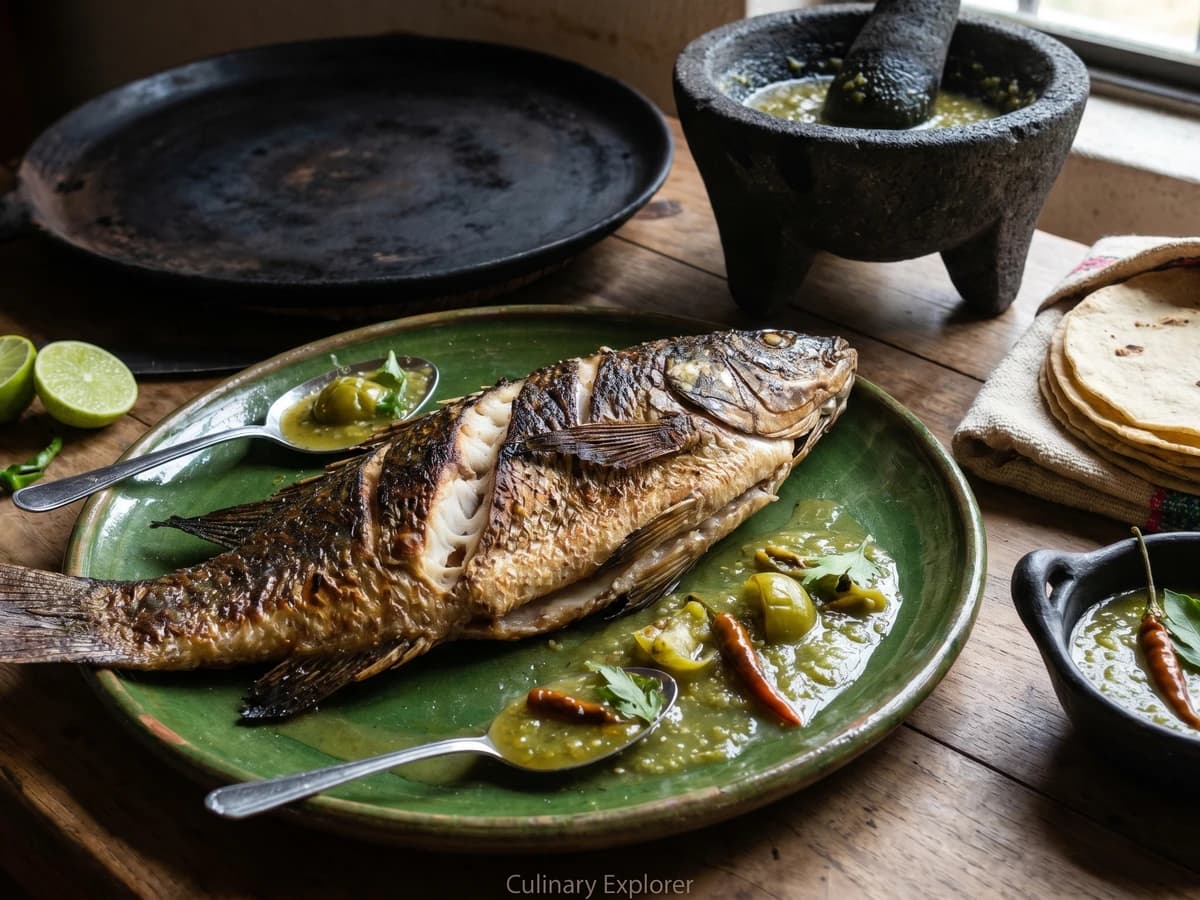
Michoacán's Lake Pátzcuaro acúmara, a whole kurucha from the lago tatemada on a comal de leña and served with chile perón atápakua, corn tortillas, and P'urhépecha discipline.
A cooking platform built around craft, culture, and the stories behind what we eat.
Created by
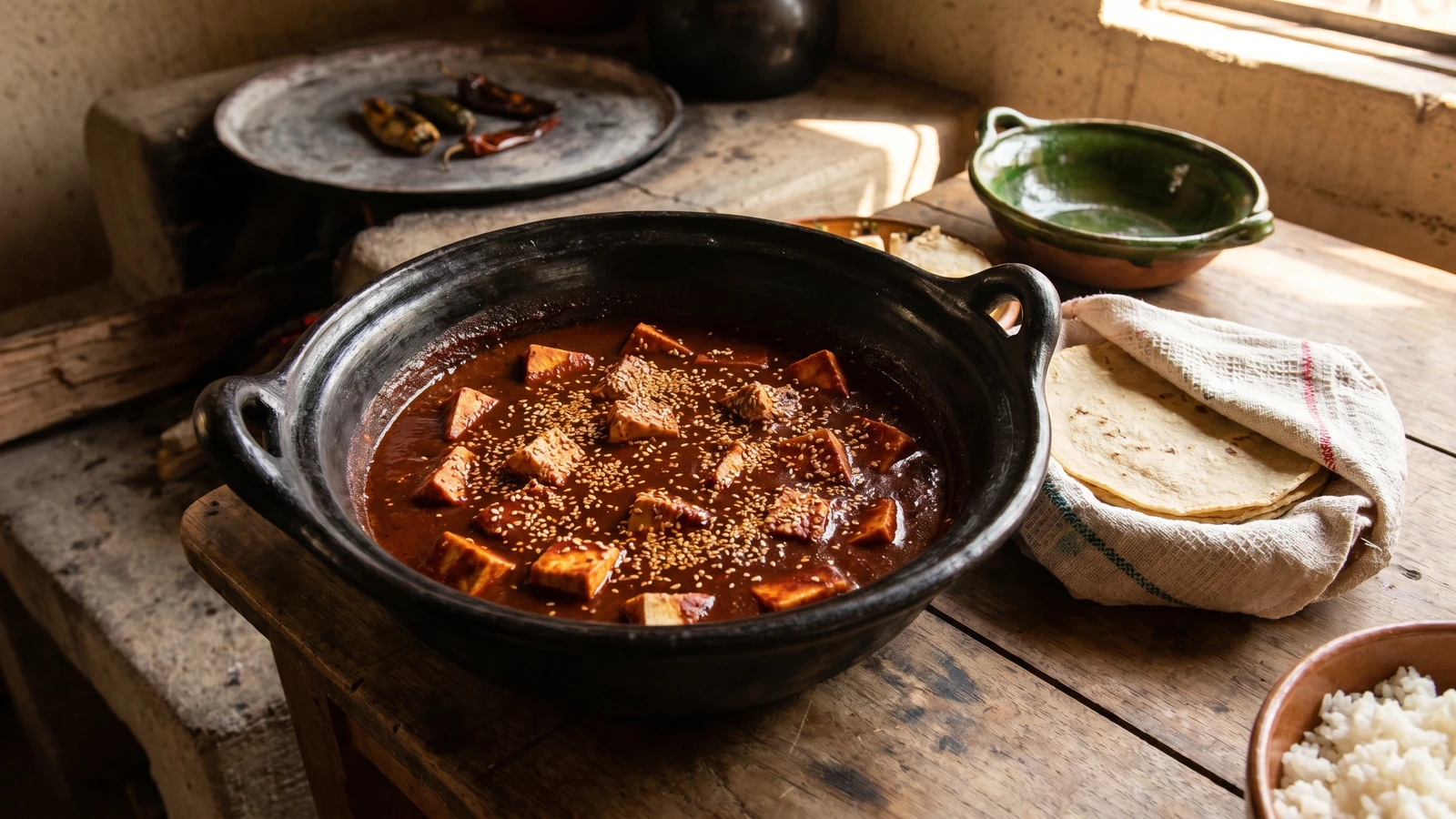
Michoacán's Meseta P'urhépecha funeral mole, thickened with maize from the milpa and served with queso de rancho when the mourning kitchen does not cook meat.
This comes from Michoacán, from the Meseta P'urhépecha, the cold highland towns around Zacán, Cocucho, Cherán, and Uruapan where the fogón is still the center of the kitchen. Mole de queso de sepelio is not party mole. It is mourning food, made in big cazuelas when a family has a death and the neighborhood women arrive with masa, chiles, tortillas, and hands ready for work.
The cheese replaces meat. Understand that before you start. This is not a vegetarian restaurant idea. This is the mourning kitchen doing what it knows: feeding many people with dignity when nobody in the house has the strength to think. The chile ancho, guajillo, and pasilla come from the market. The maize comes from the milpa. The epazote may come from the patio. The technique belongs to the cocineras tradicionales of Zacán, Janitzio, Cocucho, Cherán, and Uruapan, the women who kept this food alive by repeating it at births, wakes, weddings, patron-saint days, and funerals.
I learned versions of this mole from Meseta cooks who spoke of atápakua, thick sauces held together by masa, with the same seriousness other people reserve for French sauces. They are right. Masa is not filler. It is structure. It gives the mole its body and its P'urhépecha logic. Kurucha belongs to the lago, acúmara and quelites to the monte and milpa, but this dish belongs to the fogón during grief.
Use a firm queso fresco or queso de rancho that can sit in hot sauce without disappearing. Serve it in barro, not on a white restaurant plate. La cocina no es decoración, es trabajo. Cada estado, su propia cocina.
P'urhépecha cooking in Michoacán was central to Mexico's 2010 UNESCO inscription of Traditional Mexican Cuisine, which cited the Michoacán paradigm built around milpa agriculture, nixtamalized maize, community cooks, and ritual foodways. The P'urhépecha state, ruled by the Cazonci before the Spanish conquest, developed independently from the Mexica world, and its language isolate still marks the Meseta and Lake Pátzcuaro region as a distinct culinary territory. Funeral foods such as mole de queso preserve the communal obligation of feeding mourners, with cheese standing in for meat and masa-thickened sauces carrying the older logic of atápakua.
Quantity
6
stemmed and seeded
Quantity
4
stemmed and seeded
Quantity
2
stemmed and seeded
Quantity
3 tablespoons
Quantity
1/2 medium
thickly sliced
Quantity
4
unpeeled
Quantity
2
roasted
Quantity
1/4 cup, plus 1 tablespoon
divided
Quantity
2 tablespoons
Quantity
1
toasted until dark in spots
Quantity
3 tablespoons
dissolved in 1/2 cup water
Quantity
1 small sprig
Quantity
1/2 teaspoon
Quantity
1/4 teaspoon
Quantity
1/2 teaspoon
Quantity
5 cups
Quantity
1 1/2 teaspoons, plus more to taste
Quantity
1 1/2 pounds
cut into 1-inch cubes
Quantity
for serving
Quantity
for serving
| Ingredient | Quantity |
|---|---|
| dried chile anchostemmed and seeded | 6 |
| dried chile guajillostemmed and seeded | 4 |
| dried chile pasilla mexicanostemmed and seeded | 2 |
| vegetable oil or locally pressed avocado oil | 3 tablespoons |
| white onionthickly sliced | 1/2 medium |
| garlic clovesunpeeled | 4 |
| Roma tomatoesroasted | 2 |
| raw sesame seedsdivided | 1/4 cup, plus 1 tablespoon |
| raw pumpkin seeds | 2 tablespoons |
| corn tortillatoasted until dark in spots | 1 |
| fresh nixtamal masa or masa harinadissolved in 1/2 cup water | 3 tablespoons |
| epazote | 1 small sprig |
| dried Mexican oregano | 1/2 teaspoon |
| ground clove | 1/4 teaspoon |
| ground canela | 1/2 teaspoon |
| vegetable broth or water | 5 cups |
| sea salt | 1 1/2 teaspoons, plus more to taste |
| firm queso fresco or queso de ranchocut into 1-inch cubes | 1 1/2 pounds |
| warm hand-pressed corn tortillas (optional) | for serving |
| Mexican red rice or white rice (optional) | for serving |
Heat a dry comal over medium. Toast the ancho, guajillo, and pasilla separately, 20 to 30 seconds per side, just until the skins puff and the smell turns deep and raisiny. Do not blacken them. Funeral mole is solemn food, not bitter food. The chile ancho gives body, guajillo gives red color, pasilla gives the dark edge.
Put the toasted chiles in a bowl and cover with hot water. Let them soften for 20 minutes. Hot water, not boiling. Boiling water pulls bitterness from the skins. Drain the chiles and save 1 cup of the soaking liquid only if it tastes clean. If it tastes harsh, throw it out and use broth.
On the same comal, roast the onion slices, unpeeled garlic, and tomatoes until blistered in spots and softened. Peel the garlic. This is fogón logic: one hot surface, every ingredient taking its turn. The women in Cherán and Zacán do not waste firewood, leña costs work.
Toast the sesame seeds and pumpkin seeds in a dry skillet over medium-low heat until the sesame turns pale gold and smells nutty. Stir constantly. Seeds burn fast, and burned sesame will take over the whole cazuela. Toast the tortilla until dark brown in spots, then tear it into pieces.
Blend the softened chiles, roasted onion, peeled garlic, roasted tomatoes, toasted sesame, pumpkin seeds, tortilla, oregano, clove, canela, salt, and 2 cups of broth until completely smooth. Blend longer than you think. A funeral mole must pour like velvet, not like salsa with pieces of skin floating in it.
Heat the oil in a wide clay cazuela or heavy pot over medium. Pour in the blended paste carefully. It will sputter. Stir with a wooden spoon for 10 to 12 minutes, until the color deepens from brick red to brown-red and the fat begins to shine at the edges. This frying is where the mole becomes mole. No me vengas con atajos.
Add the remaining 3 cups broth and the epazote sprig. Bring to a gentle simmer, then whisk in the dissolved masa. Cook 25 to 30 minutes, stirring often so the masa does not catch on the bottom. The sauce should coat the spoon heavily but still move. This is close to an atápakua in spirit, thickened by maize from the milpa.
Lower the heat. Add the queso fresco cubes and simmer 5 minutes, just until the cheese warms through and softens at the edges. Do not boil after the cheese goes in. You want pieces that hold their shape in the mole, not a broken pot of salty milk.
Taste for salt. Remove the epazote. Spoon the mole into a black-clay cazuela or green-glazed Michoacán barro dish and scatter the reserved sesame seeds over the top. Serve with rice and warm corn tortillas wrapped in a servilleta. The table stays quiet for a reason. This is food for mourning, memory, and work.
1 serving (about 400g)
Culinary guides, cultural storytelling, and the editorial depth that makes cooking meaningful.
Discover Culinary ExplorerChef Lupita
Michoacán's Lake Pátzcuaro acúmara, a whole kurucha from the lago tatemada on a comal de leña and served with chile perón atápakua, corn tortillas, and P'urhépecha discipline.

Chef Lupita
Puebla's weekday adobo of pork shoulder braised in a thick guajillo and ancho sauce sharpened with vinegar, cumin, and clove. The deep red of a market spice stall, the dish a poblana cooks without thinking.

Chef Lupita
Loreto's pit-roasted clams, planted hinge-up in beach sand and tatemadas under a fast fire of dried romerillo brush, the resinous Baja desert shrub that gives this dish its smoke.

Chef Lupita
Oaxaca's eighth mole, the silky, almond-and-cinnamon almendrado, served over poached chicken. Mild, sweet, restrained, and a quiet rebuttal to anyone who thinks Mexican food has to be hot to be Mexican.