
Chef Jeong-sun
Agwi-jjim (Braised Monkfish with Bean Sprouts)
Firm monkfish buried under crisp soybean sprouts, minari, and a red gochugaru sauce thickened at the end; Masan's market dish asks for heat, timing, and a steady hand.
A cooking platform built around craft, culture, and the stories behind what we eat.
Created by
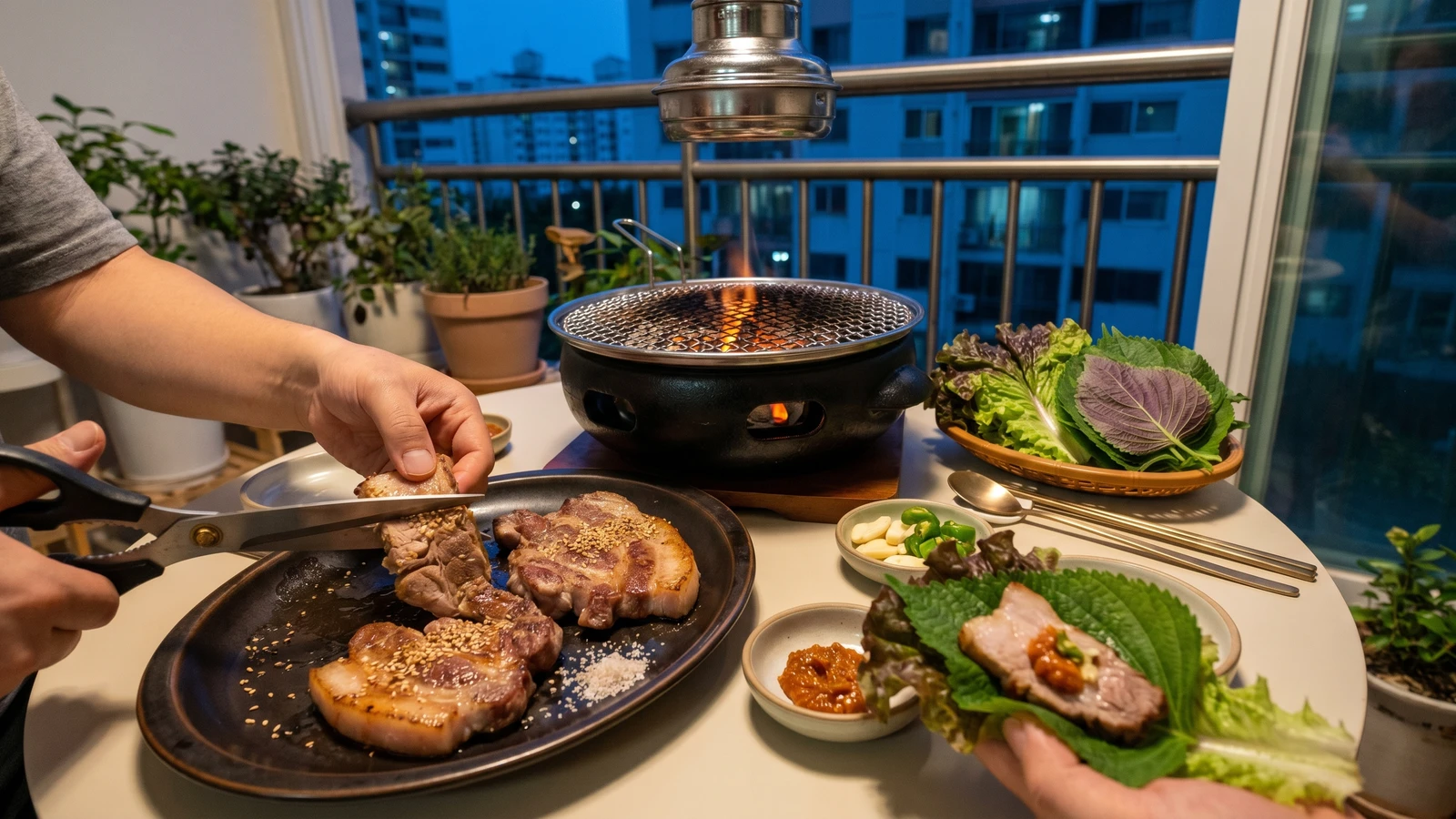
Pork neck collar cut thick, salted with restraint, grilled until the edges brown and the center stays juicy, then wrapped in lettuce with ssamjang, garlic, and a little patience.
At the butcher's counter, moksal doesn't flatter itself. It sits beside samgyeopsal (pork belly), quieter, less striped with fat, easy to overlook if you think Korean barbecue begins and ends with belly. But pork collar has a better balance for many tables: enough fat to stay juicy, enough lean meat to taste clean after the second wrap.
This dish lives or dies by thickness and heat. Cut the pork too thin and it dries before it browns. Crowd the pan or grill and it weeps instead of searing. Ask for 1.5 to 2 cm slices, salt them evenly, then leave them alone long enough to color before you start fussing. 정성이 첫째예요. Sincerity comes first, and here sincerity means not poking good meat to death.
Moksal-gui is weeknight barbecue, not ceremony. The table needs rice, ssam (leaf wraps), ssamjang (seasoned soybean dipping paste), garlic, chilies, and something sour or fermented beside it. I give you the measures for the salt because "to taste" is too late once pork is on the grill. 손맛 is real, the hand knows, but I still measure it so the next cook can carry the dish without guessing.
Moksal means neck meat, and in Korean barbecue it refers to the pork collar cut from the neck and shoulder area, a leaner alternative to samgyeopsal with enough intramuscular fat to grill well. Pork tabletop grilling grew with Korea's urban restaurant culture in the late twentieth century, when cuts like samgyeopsal, moksal, and galmaegisal became familiar choices at butcher shops and casual grill houses. Moksal has no palace story to borrow; its history is the modern Korean meat table, practical, social, and built around sharing wraps straight from the grill.
Quantity
800g
cut into 1.5 to 2 cm thick slices
Quantity
1 1/2 teaspoons
divided
Quantity
1/2 teaspoon
Quantity
1 tablespoon
for pan cooking only
Quantity
1 teaspoon
crushed
Quantity
1/2 teaspoon
Quantity
1/4 teaspoon
Quantity
12
washed and dried
Quantity
12
washed and dried
Quantity
4 tablespoons
Quantity
4 cloves
thinly sliced
Quantity
2
sliced on the diagonal
Quantity
2 cups
to serve
Quantity
4 bowls
to serve
| Ingredient | Quantity |
|---|---|
| pork collar (moksal)cut into 1.5 to 2 cm thick slices | 800g |
| kosher saltdivided | 1 1/2 teaspoons |
| freshly ground black pepper | 1/2 teaspoon |
| neutral oil (optional)for pan cooking only | 1 tablespoon |
| toasted sesame seedscrushed | 1 teaspoon |
| fine sea salt | 1/2 teaspoon |
| gochugaru (Korean chili flakes) (optional) | 1/4 teaspoon |
| lettuce leaveswashed and dried | 12 |
| perilla leaves (kkaennip)washed and dried | 12 |
| ssamjang (seasoned soybean dipping paste) | 4 tablespoons |
| garlicthinly sliced | 4 cloves |
| green chiliessliced on the diagonal | 2 |
| well-fermented napa cabbage kimchito serve | 2 cups |
| steamed short-grain riceto serve | 4 bowls |
Pat the pork collar dry on both sides. Sprinkle it evenly with 1 1/4 teaspoons kosher salt and the black pepper, then let it stand at room temperature for 20 minutes. This short rest seasons the surface and pulls off the chill, so the pork browns before the center overcooks.
While the pork rests, wash and dry the lettuce and perilla leaves. Put out the ssamjang, sliced garlic, sliced chilies, kimchi, and rice. Mix the crushed sesame seeds, fine sea salt, remaining 1/4 teaspoon kosher salt, and gochugaru if using in a small dish. Moksal waits for no one after it comes off the grill, so the table must be ready first.
Heat a charcoal grill, tabletop grill, grill pan, or heavy cast-iron skillet over medium-high heat. If using a skillet, film it with the neutral oil. The surface should be hot enough that the pork gives a steady sizzle the moment it touches, but not so fierce that the fat scorches before the meat cooks through.
Lay the pork slices down with space between them. Cook 3 to 4 minutes on the first side without moving them, until the underside is deeply browned at the edges. Turn once and cook 3 to 4 minutes more. If the slices are thick, stand them briefly on their fatty edges with tongs to render and brown that strip.
Move the browned pork to the cooler side of the grill or lower the heat under the pan. Cut each slice into bite-size pieces with kitchen scissors, then cook 1 to 2 minutes more, turning the pieces so the cut sides lose their raw look. Pork collar should be juicy, lightly springy, and cooked through; use a thermometer if you are unsure and pull it at 63 C, then rest it.
Transfer the pork to a warm plate and let it rest 3 minutes. This is not restaurant fussing. The juices settle, and the first wrap will taste of pork instead of leaking across the plate.
Make each ssam with one lettuce or perilla leaf, a spoonful of rice, one piece of pork, a small dab of ssamjang, a slice of garlic, and chili if you like heat. Do not bury the pork under paste. Moksal is leaner than belly, and its good taste is in the clean meat and the browned edge. Let it taste like itself.
1 serving (about 490g)
Culinary guides, cultural storytelling, and the editorial depth that makes cooking meaningful.
Discover Culinary ExplorerChef Jeong-sun
Firm monkfish buried under crisp soybean sprouts, minari, and a red gochugaru sauce thickened at the end; Masan's market dish asks for heat, timing, and a steady hand.

Chef Jeong-sun
A quick Korean rice bowl built on contrast: warm rice, cold popping flying-fish roe, chopped vegetables, gim, sesame oil, and the crisp rice bottom a hot stone bowl gives you.
Chef Jeong-sun
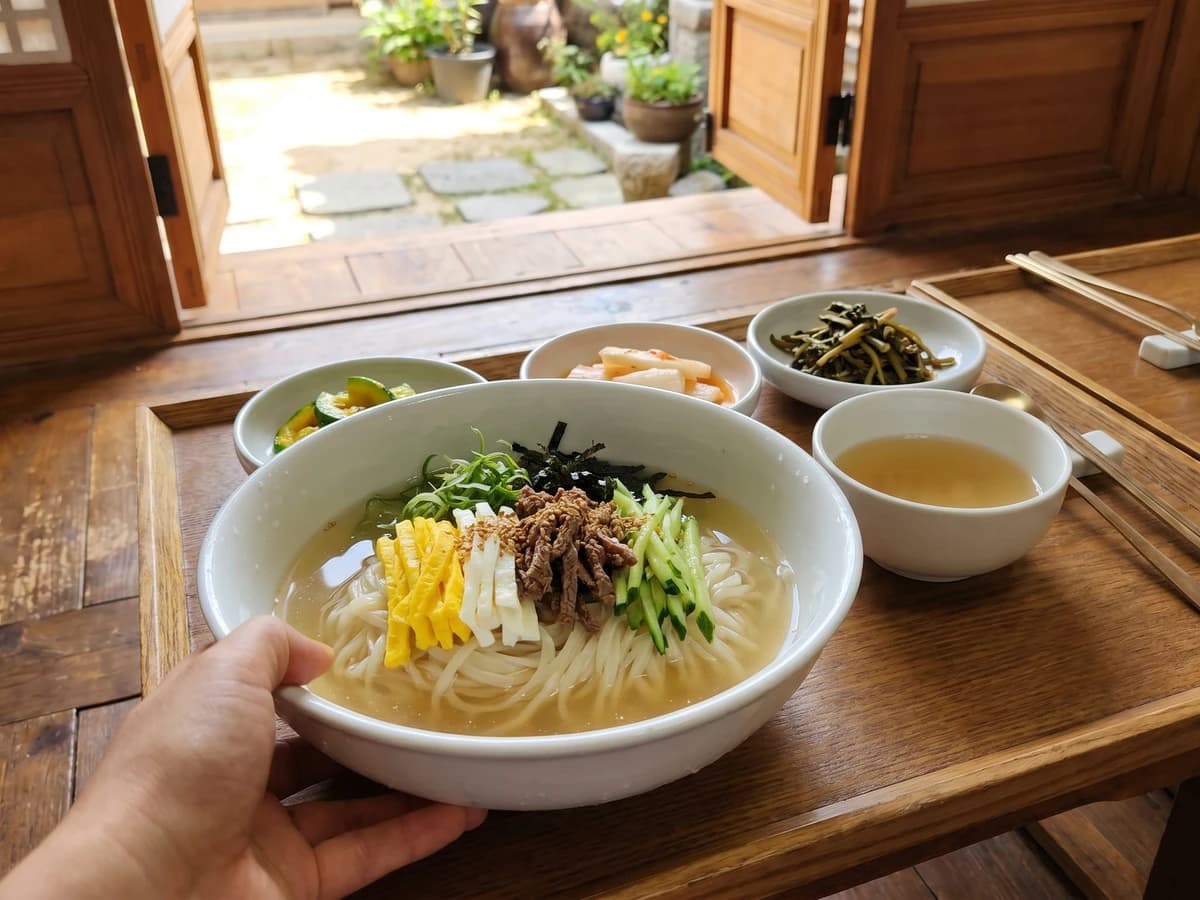
Andong's guest noodles, wheat and roasted soybean flour rolled thin, boiled and rinsed cold, then set in a clear chilled anchovy broth with careful strips of beef, egg, and cucumber.

Chef Jeong-sun
Andong's ritual-table rice served on an ordinary day: separate soy-sesame namul, warm rice, and clear radish soup, mixed without gochujang so every vegetable keeps its own voice.