
Chef Jeong-sun
Agwi-jjim (Braised Monkfish with Bean Sprouts)
Firm monkfish buried under crisp soybean sprouts, minari, and a red gochugaru sauce thickened at the end; Masan's market dish asks for heat, timing, and a steady hand.
A cooking platform built around craft, culture, and the stories behind what we eat.

Created by
Thin-sliced pork shoulder in a measured gochujang and soy marinade, cooked hard and fast so the chili clings, the edges char, and the pork still tastes like pork.
Dwaeji-bulgogi lives or dies by heat. The marinade is wet, the pork is thin, and if the pan is timid, everything boils red and tired. Get the pan hot, cook in batches, and let the edges catch. That little char is not decoration. It is where the gochujang (red chili paste), soy, garlic, and pork finally become one dish.
People think spicy pork means more gochujang, more sugar, more red. No. The chili should read against the meat, not bury it. My teacher, Master Seong-nyeo, would taste the raw marinade with the end of a chopstick, then say nothing until the pork was cooked. Only then did she correct it, because pork fat changes the seasoning once it melts. I still do it that way, but I measure first so you don't have to guess in front of a hungry table.
Use pork shoulder, collar, or belly sliced thin, 2 to 3 millimeters if the butcher will do it. Marinate briefly, not overnight, because thin pork takes seasoning quickly and too much time makes it salty. Tonight this asks for a sharp knife or a helpful butcher, a wide pan, and enough patience not to crowd it. Serve it in ssam (leaf wraps) with rice, lettuce, garlic, and one quiet banchan beside it. Write it down. Memory is a borrowed bowl.
Dwaeji-bulgogi is part of Korea's twentieth-century family of marinated grilled meats, shaped by restaurant grilling, home stovetop cooking, and the wider availability of pork after the Korean War. The gochujang-heavy version is closely tied to the modern popularity of spicy pork dishes such as jeyuk-bokkeum, while regional and household versions may use more soy, pear, onion, or gochugaru depending on the table. It is everyday food, not court food, and its place is the busy home table, the work lunch, and the grill shared with lettuce wraps.
Quantity
700g
sliced 2 to 3 mm thick against the grain
Quantity
1/2 medium
thinly sliced
Quantity
3
cut into 2-inch lengths
Quantity
2 tablespoons, divided
Quantity
3 tablespoons
Quantity
1 tablespoon
preferably coarse
Quantity
3 tablespoons
Quantity
1 tablespoon
Quantity
1 tablespoon
Quantity
2 tablespoons
Quantity
1 tablespoon
Quantity
5 cloves
minced
Quantity
1 teaspoon
grated
Quantity
1/2 small
grated
Quantity
1/2
grated, about 1/3 cup
Quantity
1/2 teaspoon
freshly ground
Quantity
1 teaspoon, plus more for serving
Quantity
to serve
Quantity
to serve
Quantity
to serve
| Ingredient | Quantity |
|---|---|
| pork shoulder, pork collar, or pork bellysliced 2 to 3 mm thick against the grain | 700g |
| onionthinly sliced | 1/2 medium |
| scallionscut into 2-inch lengths | 3 |
| neutral oil | 2 tablespoons, divided |
| gochujang (Korean red chili paste) | 3 tablespoons |
| gochugaru (Korean chili flakes)preferably coarse | 1 tablespoon |
| soy sauce | 3 tablespoons |
| maesil-cheong (green plum syrup) or honey | 1 tablespoon |
| sugar | 1 tablespoon |
| mirin or rice wine | 2 tablespoons |
| toasted sesame oil | 1 tablespoon |
| garlicminced | 5 cloves |
| fresh gingergrated | 1 teaspoon |
| oniongrated | 1/2 small |
| Korean pear or sweet applegrated, about 1/3 cup | 1/2 |
| black pepperfreshly ground | 1/2 teaspoon |
| toasted sesame seeds | 1 teaspoon, plus more for serving |
| lettuce or perilla leaves (optional) | to serve |
| cooked short-grain rice (optional) | to serve |
| ssamjang, sliced raw garlic, and sliced green chili (optional) | to serve |
If the pork is not already sliced, freeze it 30 to 40 minutes until firm but not hard, then slice it 2 to 3 mm thick against the grain. Thin pork cooks before the sugar burns, and slicing against the grain keeps it tender. If your butcher can slice it for bulgogi, let the butcher do it. That is a safe corner to cut.
In a large bowl, stir together the gochujang, gochugaru, soy sauce, maesil-cheong or honey, sugar, mirin, sesame oil, garlic, ginger, grated onion, grated pear, black pepper, and sesame seeds. Taste the marinade before the pork goes in. It should be salty, gently sweet, garlicky, and hot, but not muddy. Three tablespoons gochujang is enough for 700g pork; more makes the dish taste only of paste.
Add the sliced pork, sliced onion, and scallions to the marinade. Mix by hand until every fold of pork is coated, then cover and refrigerate 30 minutes, or up to 2 hours. Do not marinate overnight. Thin pork absorbs salt quickly, and the grated fruit will soften it too far if you forget it until tomorrow.
Set a wide cast-iron skillet, grill pan, or heavy stainless pan over medium-high heat. Add 1 tablespoon oil and wait until the oil moves thinly across the surface. The pan must be hot enough that the pork sizzles the moment it lands. If it only sighs, wait.
Lay in half the pork in a loose single layer, leaving excess marinade in the bowl for now. Cook 2 to 3 minutes without fussing, then turn and cook another 2 minutes, until the pork is cooked through and the edges are dark red-brown with a little char. Move it to a platter and repeat with the remaining oil and pork. Crowding is the mistake that turns dwaeji-bulgogi into a wet stir-fry.
When all the pork is cooked, return it to the pan with 2 tablespoons of the leftover marinade from the bowl. Cook 30 to 60 seconds, tossing until the sauce clings and looks glossy. This final reduction is small on purpose. You want a coating, not a puddle.
Pile the pork onto a warm platter and scatter with a little more toasted sesame. Serve at once with rice, lettuce or perilla leaves, ssamjang (thick seasoned soybean paste), sliced garlic, and green chili. Fold one leaf around rice, pork, and a small dab of ssamjang. Too much sauce in the wrap hides the meat, and we did not cook carefully for that.
1 serving (about 430g)
Culinary guides, cultural storytelling, and the editorial depth that makes cooking meaningful.
Discover Culinary ExplorerChef Jeong-sun
Firm monkfish buried under crisp soybean sprouts, minari, and a red gochugaru sauce thickened at the end; Masan's market dish asks for heat, timing, and a steady hand.

Chef Jeong-sun
A quick Korean rice bowl built on contrast: warm rice, cold popping flying-fish roe, chopped vegetables, gim, sesame oil, and the crisp rice bottom a hot stone bowl gives you.
Chef Jeong-sun
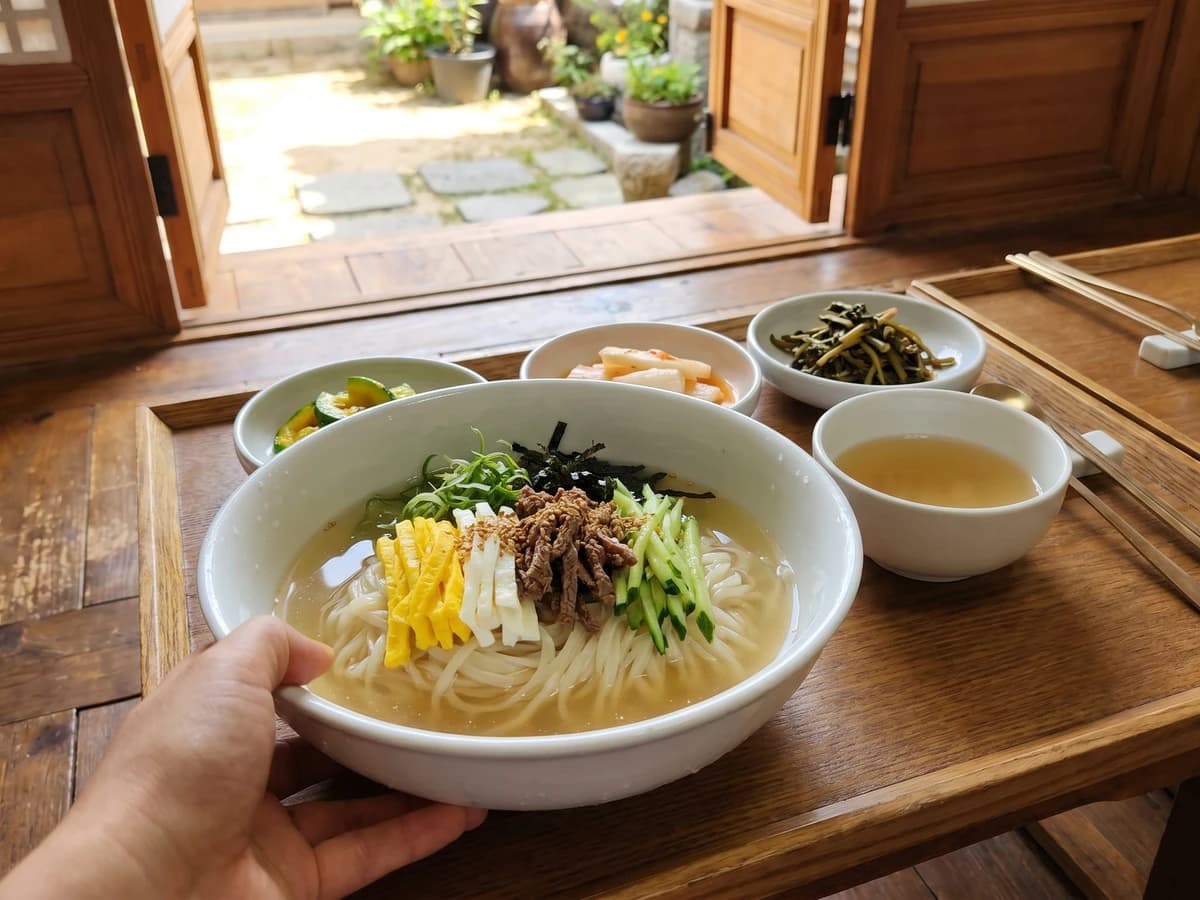
Andong's guest noodles, wheat and roasted soybean flour rolled thin, boiled and rinsed cold, then set in a clear chilled anchovy broth with careful strips of beef, egg, and cucumber.

Chef Jeong-sun
Andong's ritual-table rice served on an ordinary day: separate soy-sesame namul, warm rice, and clear radish soup, mixed without gochujang so every vegetable keeps its own voice.