
Chef Jeong-sun
Chadolbagi-gui (Grilled Thin-Sliced Brisket)
Brisket point shaved paper-thin, grilled bare until the fat curls and turns nutty, then eaten immediately with sesame-salt, scallion salad, lettuce, and rice.
A cooking platform built around craft, culture, and the stories behind what we eat.
Created by
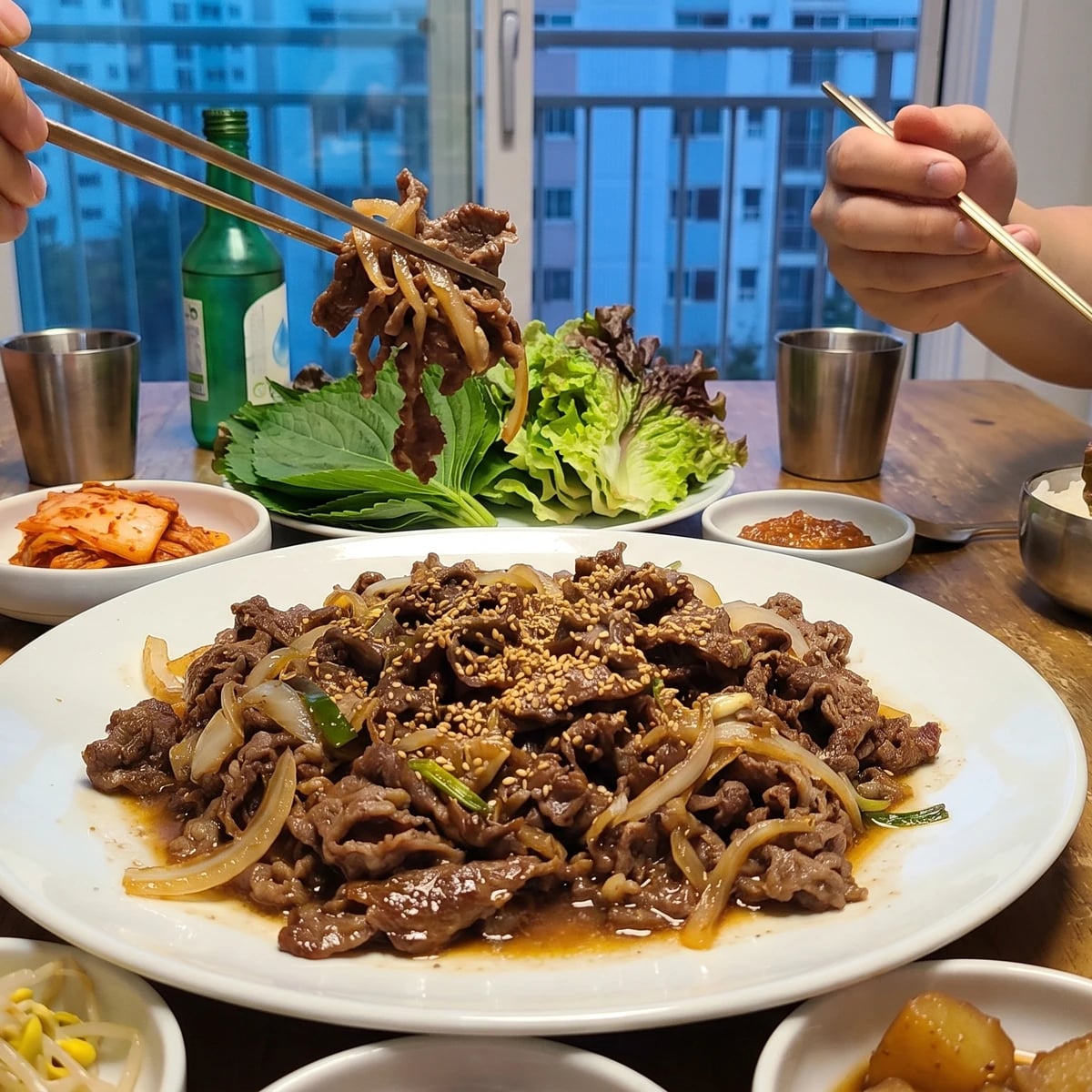
Paper-thin beef in soy, sesame, garlic, and grated pear, cooked fast until the edges caramelize and served in lettuce wraps at the kind of table people lean into.
Bulgogi is the dish that makes a table move. The platter lands in the middle, lettuce leaves open, rice bowls shift closer, and chopsticks begin before the eldest person has quite finished speaking. I pretend to scold this. I also understand it. Beef this thin waits for no one.
The misunderstanding is that bulgogi lives or dies by a sweet marinade. No. It lives or dies by the cut and the heat. Slice the beef paper-thin against the grain, then cook it hard and fast so the edges brown before the meat gives up all its juice. Crowd the pan and you will have gray beef boiling in its own sauce. Give it space and you get the gloss and caramelized edges people remember.
My teacher, Master Seong-nyeo, used pear when the market had good ones and onion when it did not. She allowed that much. She did not allow a heavy hand with sugar. The beef should still read as beef, with soy, garlic, sesame, and fruit sweetness carrying it, not covering it. When times change, food must change too: a cast-iron skillet is fine if you do not have a grill, and a short marinade is fine for a weeknight. The knife work and the batch cooking are not the corners to cut.
Serve it with rice, ssamjang (seasoned soybean paste for wraps), lettuce or perilla, and enough banchan that the table feels awake. 음식을 나누면서 정도 나눕니다. When we share food, we share affection, and bulgogi was built for that kind of reaching.
Bulgogi belongs to Korea's long history of seasoned grilled beef; one early ancestor often named is maekjeok, a skewered marinated meat associated with the Goguryeo era. A closer court and yangban predecessor, neobiani, used scored slices of beef seasoned with soy, garlic, sesame, and pear, while the thinner, sweeter bulgogi widely known today took shape in the twentieth century as sliced beef and tabletop grilling became more common. The dish is now eaten both at home and in restaurants, but its grammar remains simple: thin beef, restrained sweetness, high heat, and the shared wrap.
Quantity
600g
sliced paper-thin against the grain
Quantity
1/2, about 1/2 cup grated
peeled and grated
Quantity
1/2 medium, about 1/4 cup grated
grated
Quantity
1/2 medium
thinly sliced
Quantity
5 tablespoons
Quantity
1 tablespoon
Quantity
1 tablespoon
Quantity
2 tablespoons
Quantity
2 tablespoons
Quantity
4 cloves
minced
Quantity
2
cut into 2-inch lengths
Quantity
1 teaspoon, plus more for finishing
Quantity
1/4 teaspoon
Quantity
1 tablespoon
only if pan-searing
Quantity
8 to 12 leaves
washed and dried
Quantity
to serve
| Ingredient | Quantity |
|---|---|
| beef ribeye, sirloin, or tenderloinsliced paper-thin against the grain | 600g |
| Korean pear or Asian pearpeeled and grated | 1/2, about 1/2 cup grated |
| yellow oniongrated | 1/2 medium, about 1/4 cup grated |
| yellow onionthinly sliced | 1/2 medium |
| Korean soup soy sauce or regular soy sauce | 5 tablespoons |
| sugar | 1 tablespoon |
| maesil-cheong (Korean green plum syrup) or honey (optional) | 1 tablespoon |
| toasted sesame oil | 2 tablespoons |
| mirim or rice wine | 2 tablespoons |
| garlicminced | 4 cloves |
| scallionscut into 2-inch lengths | 2 |
| toasted sesame seeds | 1 teaspoon, plus more for finishing |
| freshly ground black pepper | 1/4 teaspoon |
| neutral oil (optional)only if pan-searing | 1 tablespoon |
| red leaf lettuce or perilla leaves (optional)washed and dried | 8 to 12 leaves |
| ssamjang, sliced raw garlic, and sliced green chili (optional) | to serve |
If the butcher has not sliced the beef for bulgogi, put the meat in the freezer for 30 minutes until firm but not frozen solid. Slice it paper-thin, always against the grain. This is not decoration. Thin meat takes the marinade quickly and cooks before it toughens; meat sliced with the grain chews like rope.
In a wide bowl, stir together the grated pear, grated onion, soy sauce, sugar, maesil-cheong if using, sesame oil, mirim, garlic, sesame seeds, and black pepper. Taste a drop. It should be salty first, gently sweet second, with sesame at the end. Go easy on the sugar. Pear and onion sweeten the beef cleanly, while too much sugar burns before the meat browns.
Add the beef, sliced onion, and scallions to the marinade. Separate the slices with your fingers and turn them until every piece is coated. Let the beef sit 30 minutes at room temperature, or refrigerate it for 1 to 4 hours. Do not marinate this thin cut overnight; the soy will make it salty and the pear will soften it too far.
Heat a wide cast-iron skillet, grill pan, or tabletop grill over high heat until properly hot. If using a skillet, brush in 1 tablespoon neutral oil. The pan must be ready before the meat arrives, because bulgogi should sear fast. A warm pan makes soup, not dinner.
Lift a portion of beef from the marinade, letting the excess drip back into the bowl, and spread it in a single layer. Cook 1 to 2 minutes, then turn and cook 1 minute more, just until the edges caramelize and the onion softens. Repeat with the remaining beef. Do not crowd the pan. Meat this thin releases liquid quickly; give it room and that liquid becomes glaze instead of a puddle.
Pile the bulgogi onto a warm platter and scatter with a little more toasted sesame. Serve at once with rice, lettuce or perilla leaves, ssamjang, sliced garlic, green chili, and a few banchan. Wrap the first bite while the beef is still glossy: leaf, rice, beef, a small dab of ssamjang, then one mouthful. Ssambap should not be polite and enormous. It should fit.
1 serving (about 245g)
Culinary guides, cultural storytelling, and the editorial depth that makes cooking meaningful.
Discover Culinary Explorer
Chef Jeong-sun
Brisket point shaved paper-thin, grilled bare until the fat curls and turns nutty, then eaten immediately with sesame-salt, scallion salad, lettuce, and rice.

Chef Jeong-sun
Thin-sliced pork shoulder in a measured gochujang and soy marinade, cooked hard and fast so the chili clings, the edges char, and the pork still tastes like pork.

Chef Jeong-sun
Bone-in pork ribs scored, soaked in pear-soy marinade, and grilled patiently until the edges lacquer without burning; the practical galbi that feeds a noisy table well.

Chef Jeong-sun
Hand-chopped beef from Ulsan cattle country, seasoned with restraint, pressed thin on a wire gridiron, and grilled until the edges brown without losing the beef's own voice.