
Chef Jeong-sun
Agwi-jjim (Braised Monkfish with Bean Sprouts)
Firm monkfish buried under crisp soybean sprouts, minari, and a red gochugaru sauce thickened at the end; Masan's market dish asks for heat, timing, and a steady hand.
A cooking platform built around craft, culture, and the stories behind what we eat.
Created by
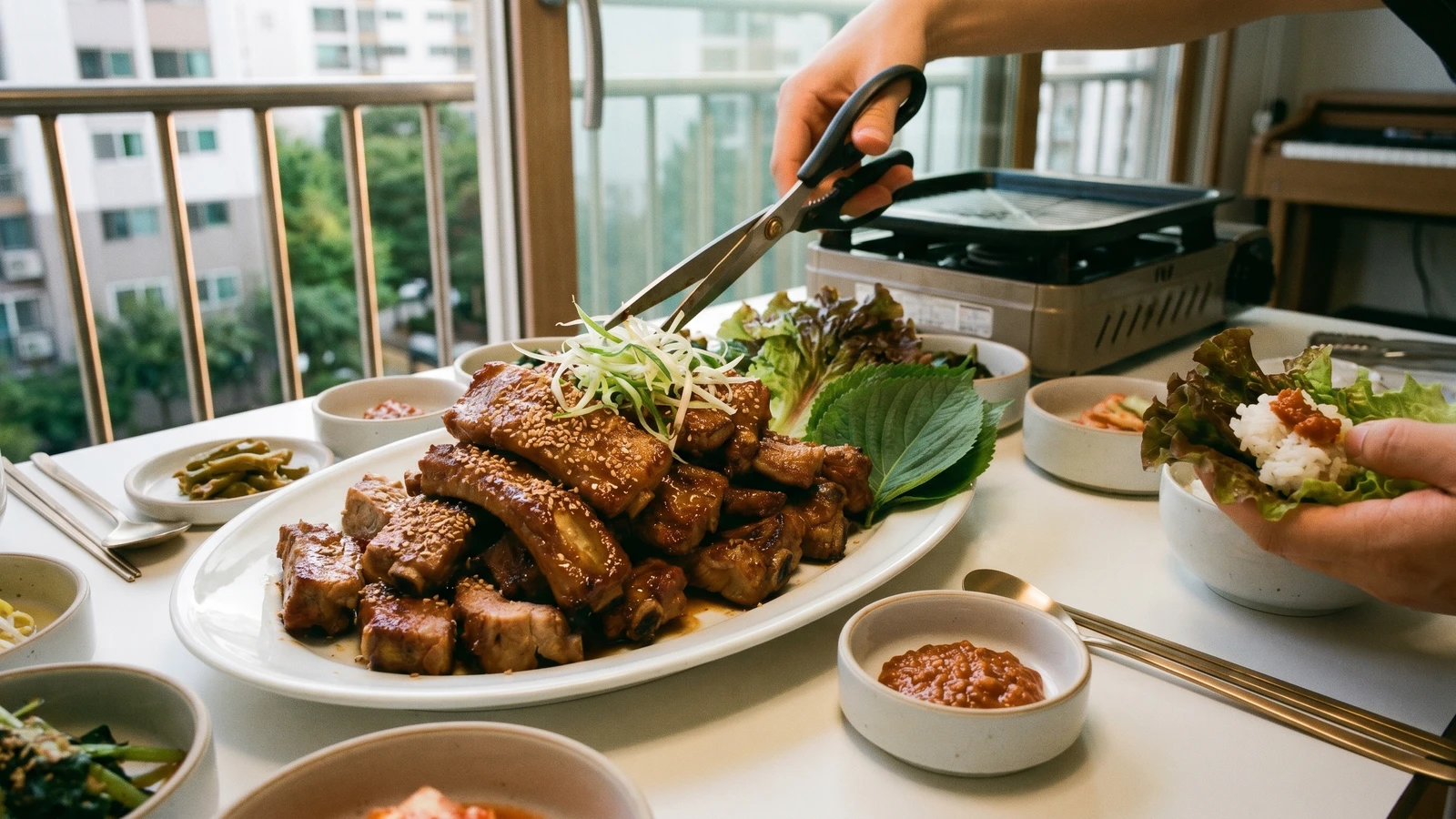
Bone-in pork ribs scored, soaked in pear-soy marinade, and grilled patiently until the edges lacquer without burning; the practical galbi that feeds a noisy table well.
Dwaeji-galbi lives or dies by the knife before it ever meets the fire. A rib left thick drinks marinade only on the surface, then burns outside while the meat near the bone stays stubborn. Cut between the bones, open the meat like a thin book, and score it lightly. That is not restaurant fussing. That is how the seasoning reaches the pork.
This is the galbi many families could afford when beef galbi was for payday or a holiday. Pork ribs, soy sauce, pear, onion, garlic, a little sweetness, then a hot grill and watchful hands. The sugar makes the shine, and the sugar is also why you cannot wander away. My teacher would tap the tongs on the edge of the grill when a student let one blacken. No speech. The sound was enough.
Use enough marinade to season, not drown. The pork should still taste like pork, rich near the bone, sweet-salty at the edges, with garlic and sesame following behind. Serve it with lettuce, perilla leaves, ssamjang (seasoned soybean-chili paste), raw garlic, and rice. 음식을 나누면서 정도 나눕니다. When we share food, we share affection, and ribs make people reach across the table without asking permission.
Dwaeji-galbi grew from Korea's broader galbi-gui tradition of marinated grilled ribs, but its modern popularity belongs mostly to the twentieth century, when pork became a more affordable restaurant and home-grill meat than beef. In the post-war decades, pork-rib houses spread through working neighborhoods and market streets, serving sweet soy-marinated ribs cooked over charcoal for tables that wanted the pleasure of galbi without the price of beef. The dish remains especially tied to casual group meals, where ssam wraps and banchan matter as much as the ribs themselves.
Quantity
1.5 kg
cut into individual ribs or Korean-style strips
Quantity
1/2
peeled, cored, and grated
Quantity
1/2 medium
grated
Quantity
6 tablespoons
Quantity
3 tablespoons
Quantity
2 tablespoons
Quantity
2 tablespoons
Quantity
1 tablespoon
Quantity
6 cloves
minced
Quantity
1 teaspoon
grated
Quantity
1/2 teaspoon
freshly ground
Quantity
2
finely chopped
Quantity
1 tablespoon, plus more for serving
Quantity
1 tablespoon
for the grill or pan
Quantity
to serve
| Ingredient | Quantity |
|---|---|
| pork spare ribs or baby back ribscut into individual ribs or Korean-style strips | 1.5 kg |
| Korean pear or Asian pearpeeled, cored, and grated | 1/2 |
| oniongrated | 1/2 medium |
| soy sauce | 6 tablespoons |
| brown sugar | 3 tablespoons |
| rice syrup or honey | 2 tablespoons |
| mirin or rice wine | 2 tablespoons |
| toasted sesame oil | 1 tablespoon |
| garlicminced | 6 cloves |
| fresh gingergrated | 1 teaspoon |
| black pepperfreshly ground | 1/2 teaspoon |
| scallionsfinely chopped | 2 |
| toasted sesame seeds | 1 tablespoon, plus more for serving |
| neutral oilfor the grill or pan | 1 tablespoon |
| lettuce leaves, perilla leaves, ssamjang, sliced raw garlic, and green chilies (optional) | to serve |
Pat the ribs dry. If using whole spare ribs, cut between the bones, then butterfly the thick meat along each rib so it opens flatter but stays attached to the bone. Score the meat 3 mm deep in a crosshatch, about 1 cm apart. This is the step people skip, then blame the marinade. The cuts let seasoning reach the pork and help the ribs cook evenly before the sugar darkens too far.
In a large bowl, mix the grated pear, grated onion, soy sauce, brown sugar, rice syrup, mirin, sesame oil, garlic, ginger, black pepper, scallions, and sesame seeds. Taste a drop. It should be sweet-salty and garlicky, but not candy-sweet. Pear and onion soften the pork and give a round sweetness, which is why the sugar stays measured.
Add the ribs and rub the marinade into every cut with your hands. Cover and refrigerate at least 3 hours, or overnight for thicker spare ribs. Turn the ribs once if you remember. Do not marinate past 24 hours; the soy tightens the meat and the pear can soften the surface too much.
Heat a charcoal grill, gas grill, grill pan, or broiler to medium-high. Oil the grate lightly. Lift the ribs from the marinade and let the heavy bits of garlic and onion drip back into the bowl. Keep the marinade for basting only if you boil it hard for 2 minutes first. Raw pork marinade does not go on cooked meat.
Grill the ribs 4 to 6 minutes per side for thin Korean-style strips, or 6 to 8 minutes per side for thicker individual ribs, turning often once the glaze begins to darken. Move them to a cooler part of the grill if the edges color too fast. The goal is lacquered brown with a few charred spots, not black sugar. Pork near the bone should reach 63 C for juicy meat, or 71 C if you prefer ribs cooked more firmly.
Rest the ribs 5 minutes on a platter so the juices settle. Cut larger strips into bite-size pieces with kitchen scissors, keeping some bone pieces for the people who like to gnaw. Scatter with a little more toasted sesame. Serve at once with rice, ssam greens, ssamjang, garlic, chilies, and two or three sharp banchan to cut the richness.
1 serving (about 330g)
Culinary guides, cultural storytelling, and the editorial depth that makes cooking meaningful.
Discover Culinary ExplorerChef Jeong-sun
Firm monkfish buried under crisp soybean sprouts, minari, and a red gochugaru sauce thickened at the end; Masan's market dish asks for heat, timing, and a steady hand.

Chef Jeong-sun
A quick Korean rice bowl built on contrast: warm rice, cold popping flying-fish roe, chopped vegetables, gim, sesame oil, and the crisp rice bottom a hot stone bowl gives you.
Chef Jeong-sun
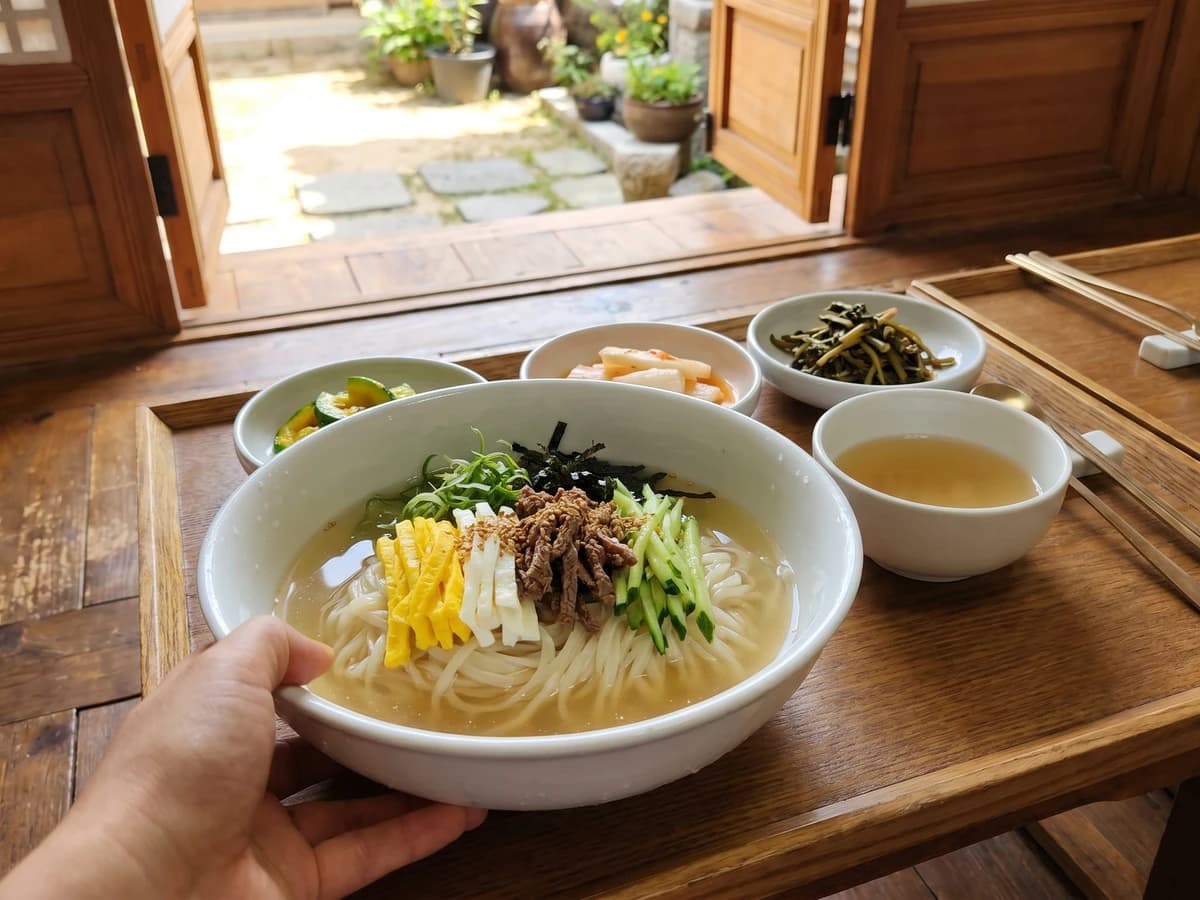
Andong's guest noodles, wheat and roasted soybean flour rolled thin, boiled and rinsed cold, then set in a clear chilled anchovy broth with careful strips of beef, egg, and cucumber.

Chef Jeong-sun
Andong's ritual-table rice served on an ordinary day: separate soy-sesame namul, warm rice, and clear radish soup, mixed without gochujang so every vegetable keeps its own voice.