
Chef Takumi
Aji Fry (アジフライ, panko-fried horse mackerel)
Aji fry is weeknight fish with no mystery: fresh horse mackerel opened cleanly, breaded lightly, and fried until the panko crackles while the flesh stays sweet.
A cooking platform built around craft, culture, and the stories behind what we eat.

Created by
This is not eel pretending badly. It is temple cooking's clever answer: tofu and mountain yam shaped on nori, fried until tender inside, then glazed like kabayaki.
Mock eel sounds like a trick, which is why people mistrust it. Good. We should mistrust tricks. Unagi modoki is better than that: a shōjin ryōri dish, born from Buddhist vegetarian cooking, that studies what eel gives the table and answers it with plants. Tender body, dark glaze, a suggestion of skin from nori, and nothing hidden under sauce.
The one detail that decides it is the texture of the paste. Tofu alone fries up dull and dry. Grated yamaimo, the sticky Japanese mountain yam, gives stretch and tenderness; lotus root gives a faint bite; burdock brings the earthy depth that keeps the sweetness from becoming childish. Press the tofu well and grate the vegetables finely, and the mixture will hold together without bullying it.
This dish belongs especially well around Doyō no Ushi no Hi, the midsummer Day of the Ox, when eel is traditionally eaten for strength against the heat. We make the meatless table with konbu and dried shiitake dashi, the way the temple kitchens do it, and call it honmono, the real thing. Not because it is eel. Because it understands the method.
Unagi modoki belongs to the broader Japanese practice of modoki dishes in shōjin ryōri, Buddhist vegetarian cuisine that developed strongly in temple kitchens after Zen practice took root in medieval Japan. Modoki means an imitation or counterpart, and these dishes used tofu, yamaimo, vegetables, and nori to echo the form and eating pleasure of fish without using animal ingredients. Its association with kabayaki-style glaze connects it to the Edo-period custom of eating eel on Doyō no Ushi no Hi, a summer observance popularized in the eighteenth century.
Quantity
350g
well drained and pressed
Quantity
80g
peeled and finely grated
Quantity
60g
peeled and finely grated
Quantity
40g
scraped and finely grated
Quantity
1 tablespoon
Quantity
1/2 teaspoon
Quantity
2 sheets
cut into 8 rectangles
Quantity
for shallow frying
Quantity
1/3 cup
Quantity
1/3 cup
Quantity
3 tablespoons
Quantity
2 tablespoons
Quantity
1/4 cup
Quantity
1 teaspoon
Quantity
for serving
| Ingredient | Quantity |
|---|---|
| firm tofuwell drained and pressed | 350g |
| yamaimo (Japanese mountain yam)peeled and finely grated | 80g |
| lotus rootpeeled and finely grated | 60g |
| burdock rootscraped and finely grated | 40g |
| potato starch | 1 tablespoon |
| sea salt | 1/2 teaspoon |
| noricut into 8 rectangles | 2 sheets |
| neutral oil | for shallow frying |
| soy sauce | 1/3 cup |
| mirin | 1/3 cup |
| sake | 3 tablespoons |
| sugar | 2 tablespoons |
| konbu-shiitake dashi | 1/4 cup |
| toasted sesame seeds (optional) | 1 teaspoon |
| sanshō pepper (optional) | for serving |
Wrap the tofu in a clean cloth, set a light weight on top, and press it for 20 to 30 minutes. You want it damp, not wet. Too much water loosens the paste and makes it sputter in the oil, and then everyone blames the tofu, poor innocent block.
Finely grate the yamaimo, lotus root, and burdock. Grate the burdock last, because it darkens quickly once cut. The yamaimo's stickiness is not a nuisance here; it is the binder that gives the mock eel its soft pull.
Crumble the pressed tofu into a bowl and mash it until smooth. Stir in the grated yamaimo, lotus root, burdock, potato starch, and salt. The mixture should be thick, sticky, and able to mound on a spoon. If it slumps like batter, add another teaspoon of potato starch; if it is stiff and dry, add a teaspoon of dashi.
Lay the nori rectangles shiny-side down. Spread a modest layer of paste over each piece, leaving a narrow border, then score shallow lines down the paste with the back of a knife to suggest the grain of eel. The nori acts as the skin, and the scoring lets the glaze settle into little ridges instead of sliding off.
Combine the soy sauce, mirin, sake, sugar, and konbu-shiitake dashi in a small pan. Bring it to a lively simmer and cook until glossy and lightly thickened, 6 to 8 minutes. The alcohol must cook off and the sugar must dissolve fully, or the glaze tastes sharp at the front and flat at the finish.
Heat 1/2 inch of oil to 170°C. Slide in the pieces paste-side down first and fry until lightly browned, about 2 minutes. Turn carefully and fry the nori side for 30 to 45 seconds. Paste-side down sets the shape first, so the nori stays attached instead of peeling away like a bad idea.
Drain the pieces briefly on a rack, then brush both sides with tare while they are still warm and glossy. Return them to a clean pan over low heat for a minute if you want the glaze more lacquered. Do not drown them. Kabayaki tare should shine on the surface, not bury the vegetables that earned their place.
Arrange two pieces per person, slightly overlapping, and scatter with sesame seeds and a small pinch of sanshō if you like. Serve with rice and a clear soup. The dish is rich from the glaze and oil, so leave space around it and let the plate breathe.
1 serving (about 175g)
Culinary guides, cultural storytelling, and the editorial depth that makes cooking meaningful.
Discover Culinary ExplorerChef Takumi
Aji fry is weeknight fish with no mystery: fresh horse mackerel opened cleanly, breaded lightly, and fried until the panko crackles while the flesh stays sweet.
Chef Takumi
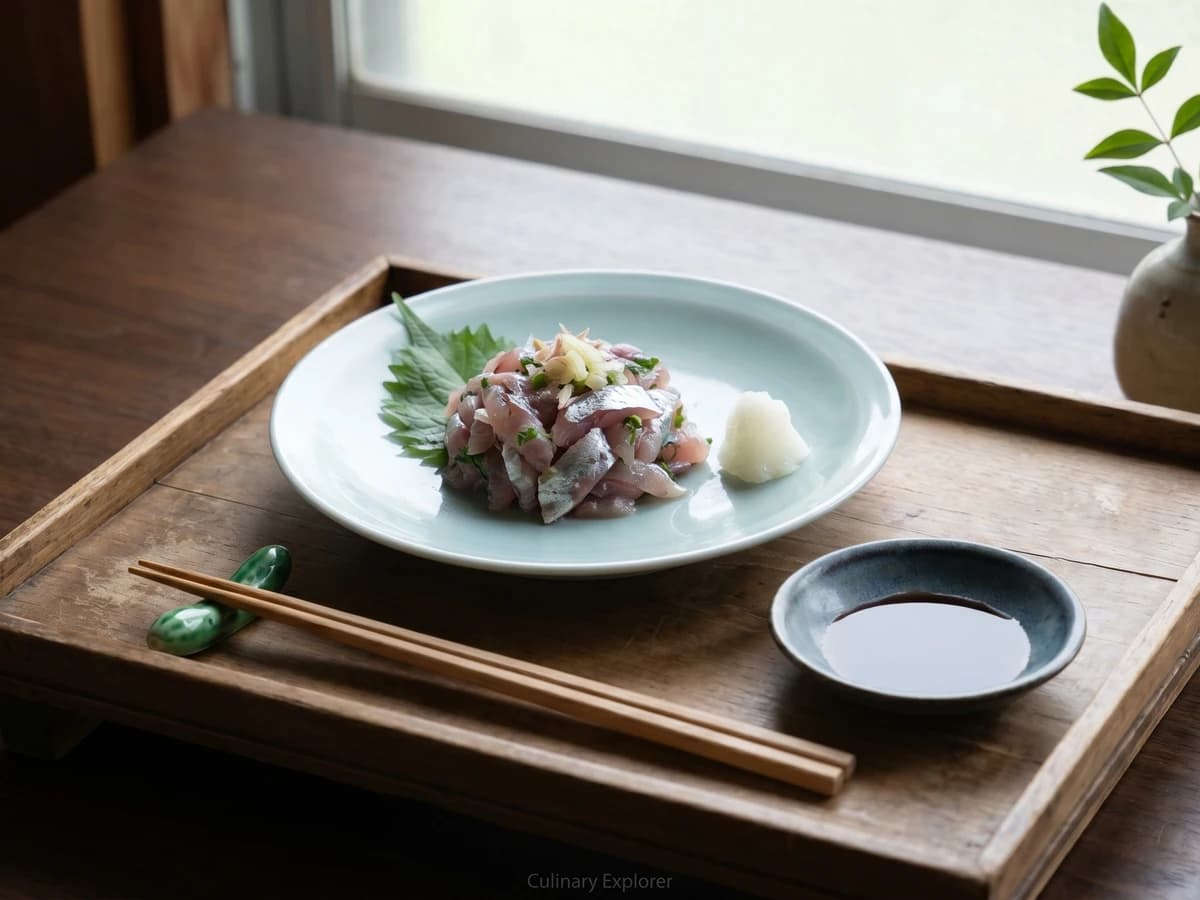
Summer horse mackerel, chopped just enough to catch ginger and scallion, becomes a cool, clean main dish with rice. The secret is fresh fish and a knife that does not bruise it.
Chef Takumi
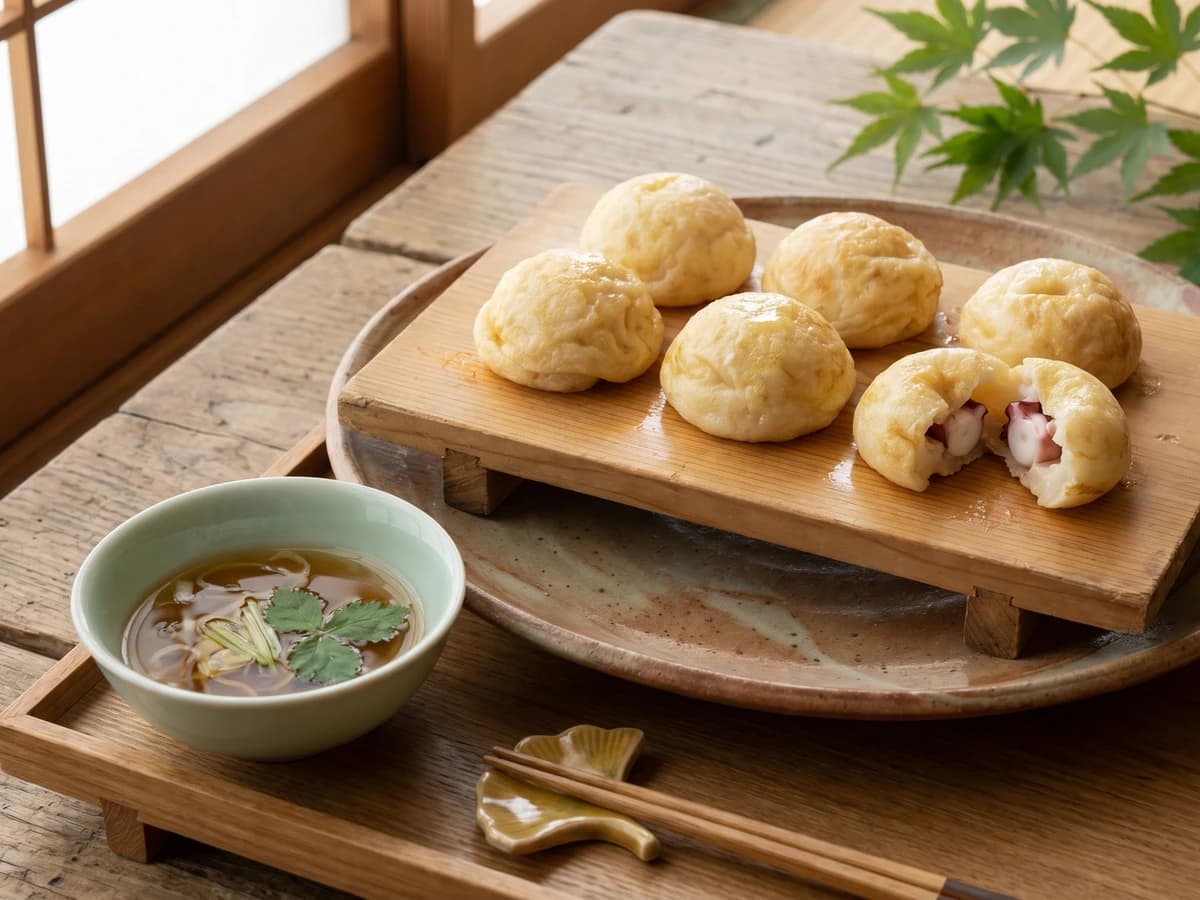
Akashi-yaki is not sauced takoyaki. It is egg-rich batter, tender octopus, and clear dashi, cooked pale and soft so each ball can be dipped like a small custard dumpling.

Chef Takumi
A whole anago looks like a test of nerve. It is mostly good sourcing, a dry skin, cold batter, and oil hot enough to leave the eel sweet under its lace.