
Chef Takumi
Ago Dashi (あごだし, grilled flying fish stock)
Ago dashi is quiet luxury: roasted flying fish, konbu, and patient water. Steep it slowly and you get a clear stock that tastes sweet, clean, and full without heaviness.
A cooking platform built around craft, culture, and the stories behind what we eat.
Created by
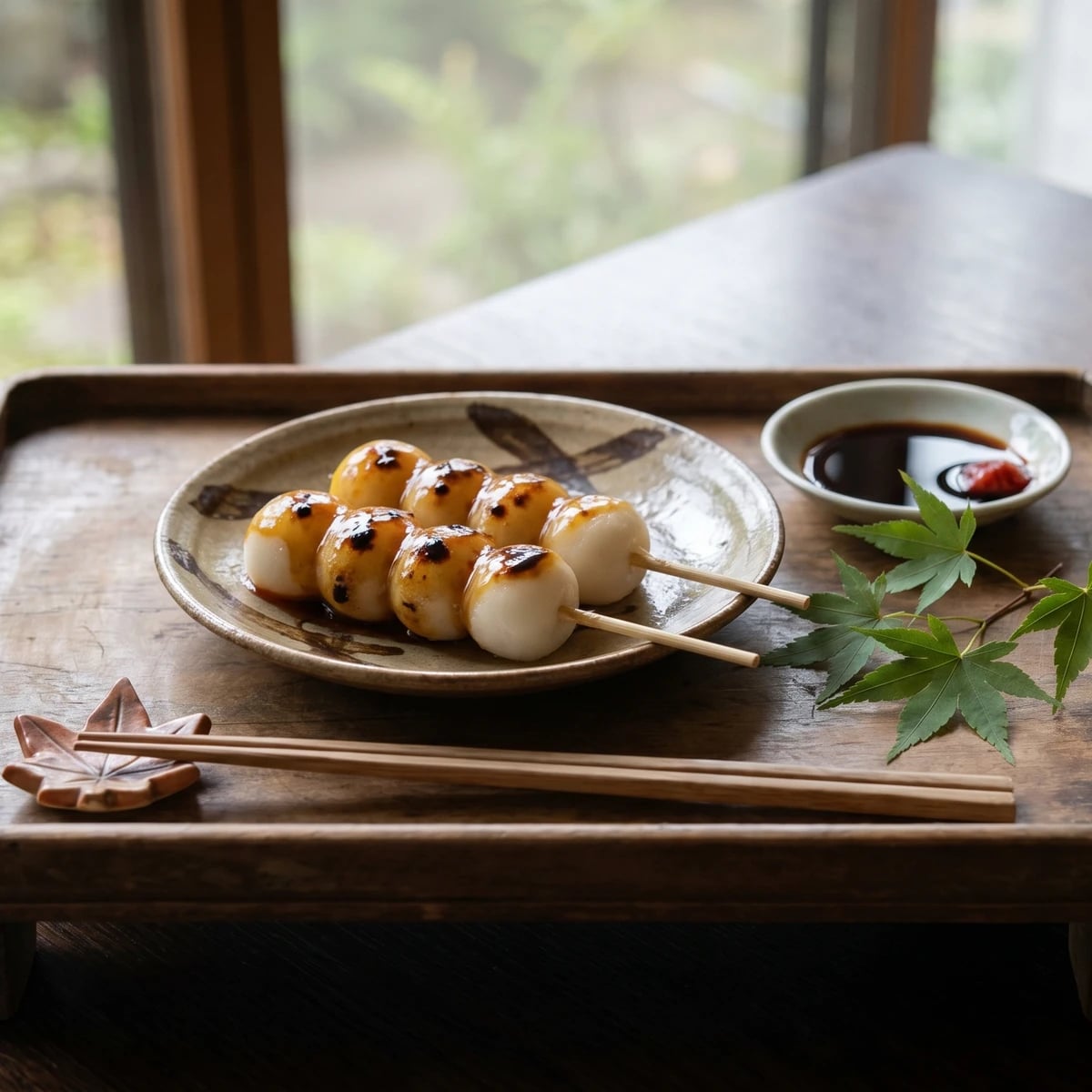
Mitarashi tare is a small sauce with one job: cling to grilled rice dumplings in a clear soy-brown gloss, sweet first, salty after, never heavy.
This sauce looks like ceremony and behaves like arithmetic. Soy sauce, sugar, mirin, water, and a little kuzu. The difficulty people imagine is not there. What matters is the thickness, because mitarashi tare must coat a grilled dango without turning into glue.
The one detail that decides it is the starch. Kuzu, the powdered root starch we use for a clean, supple set, must be dissolved cold before it meets heat. Add it dry to a hot pan and it clumps like a nervous student. Stir it in cold, then warm it gently, and the sauce turns glassy as the starch swells evenly.
This is a tare, a glaze, not a heavy syrup. Let the soy keep its edge and the sugar round it, then stop cooking as soon as the sauce leaves a clear line on the back of a spoon. Brush it over grilled dango while both are warm. The rice dumplings give you smoke and chew; the tare gives shine, salt, and sweetness. Nothing hidden, only balance.
Mitarashi dango is closely associated with Shimogamo Shrine in Kyoto, where the name mitarashi refers to the shrine's purification water, the Mitarashi pond. The skewered dumplings are traditionally linked to the shrine's summer rites, and one common explanation says their round shapes recall bubbles rising from that water. The sweet soy glaze became the form most widely recognized at stalls and sweet shops, especially as grilled dango spread as everyday festival food.
Quantity
1/2 cup
Quantity
3 tablespoons
Quantity
2 tablespoons
Quantity
1 tablespoon
Quantity
2 teaspoons
finely crushed
Quantity
1 tablespoon
for dissolving the kuzu
| Ingredient | Quantity |
|---|---|
| water | 1/2 cup |
| sugar | 3 tablespoons |
| soy sauce | 2 tablespoons |
| mirin | 1 tablespoon |
| kuzu starchfinely crushed | 2 teaspoons |
| cold waterfor dissolving the kuzu | 1 tablespoon |
Break the kuzu into a fine powder with the back of a spoon, then stir it with 1 tablespoon cold water until smooth. Kuzu dissolves cleanly when cold; if it meets heat in dry grains, it forms stubborn lumps before the sauce has a chance to become glossy.
Combine the 1/2 cup water, sugar, soy sauce, and mirin in a small saucepan. Warm over medium heat, stirring until the sugar disappears completely. Don't boil it hard. A fierce boil dulls the soy's clean edge and reduces the sauce before the starch has done its work.
Stir the kuzu slurry once more, because starch settles quickly, then pour it into the warm sauce while stirring. Keep the heat moderate and stir for 1 to 2 minutes, until the sauce turns clear, glossy, and lightly thickened.
Use the tare warm, brushing it over grilled dango just before serving. The warm glaze clings to the toasted surface and settles into the small charred spots. If it cools and tightens, warm it gently with a spoonful of water and stir until it loosens again.
1 serving (about 13g)
Culinary guides, cultural storytelling, and the editorial depth that makes cooking meaningful.
Discover Culinary Explorer
Chef Takumi
Ago dashi is quiet luxury: roasted flying fish, konbu, and patient water. Steep it slowly and you get a clear stock that tastes sweet, clean, and full without heaviness.

Chef Takumi
A white daikon, a red chili, and a grater. Momiji oroshi looks like a small flourish, but it brings clean heat, fresh bite, and autumn color to the table.

Chef Takumi
Daikon oroshi is only grated radish, which is why it matters. Choose a firm daikon, grate it fresh, drain it lightly, and let its cool bite brighten the meal.

Chef Takumi
Rich where ponzu is sharp, goma dare is sesame made calm and useful: toasted paste, clear dashi, soy, vinegar, and enough sugar to round the edge.