
Chef Takumi
Aji Fry (アジフライ, panko-fried horse mackerel)
Aji fry is weeknight fish with no mystery: fresh horse mackerel opened cleanly, breaded lightly, and fried until the panko crackles while the flesh stays sweet.
A cooking platform built around craft, culture, and the stories behind what we eat.

Created by
Red miso gives chicken thigh a deeper cure than sweet white miso: two quiet days in the refrigerator, a clean wipe before the grill, and a glossy mahogany finish.
Two days in miso sounds like a project. It is mostly patience. Chicken thigh is forgiving, red miso is sturdy, and the refrigerator does the quiet work while you get on with your life.
Red miso is saltier and deeper than the pale Saikyō miso used for the famous Kyoto fish, so use a thinner coat and give it time. The miso seasons the surface, draws out a little moisture, and leaves behind a rounded sweetness from sake and mirin. We are not making a sauce to hide the chicken. We are giving good thigh meat a darker, grill-ready skin.
The one detail that decides the dish comes just before the fire: wipe the miso off. People leave it on because it looks like flavor. On the grill it turns bitter before the meat is cooked, the sort of kitchen joke nobody laughs at twice. What has entered the chicken is enough; the surface only needs a faint stain, then moderate heat until the glaze turns mahogany and glossy.
Serve it sliced beside rice, soup, and something sharp or green. In the method, not the menu, this is yakimono, the grilled dish that brings a little char and appetite to the table. Honmono need not be solemn. It asks you to wait, wipe, and not burn dinner.
Misozuke, curing ingredients in miso, belongs to the older Japanese practice of letting salt-rich seasonings preserve as well as flavor food before mechanical refrigeration. Saikyō-zuke, the pale Kyoto style often used for fish, takes its name from Saikyō, "western capital," a Meiji-period name for Kyoto after the imperial court moved to Tokyo in 1869. Red-miso chicken is a sturdier branch of the same idea, suited to the home grill and bento because poultry stands up to a longer, saltier cure.
Quantity
4 (about 700g total)
excess fat trimmed
Quantity
1/2 cup (about 120g)
Quantity
2 tablespoons
Quantity
2 tablespoons
Quantity
1 tablespoon
Quantity
1 teaspoon
Quantity
1 teaspoon
Quantity
1 teaspoon
for oiling the grill or rack
Quantity
1
cut into wedges
| Ingredient | Quantity |
|---|---|
| boneless skin-on chicken thighsexcess fat trimmed | 4 (about 700g total) |
| red miso (aka miso) | 1/2 cup (about 120g) |
| sake | 2 tablespoons |
| mirin | 2 tablespoons |
| sugar | 1 tablespoon |
| shōyu (Japanese soy sauce) | 1 teaspoon |
| fresh ginger juice (shōga-jiru) (optional) | 1 teaspoon |
| neutral oilfor oiling the grill or rack | 1 teaspoon |
| sudachi or small lemon (optional)cut into wedges | 1 |
Trim away only large knobs of fat; leave the skin if you have it, because it protects the thigh meat from the salty cure and gives the glaze something to cling to. Pat the chicken very dry, then make two or three shallow cuts on the meat side of each thigh where it is thickest. Those cuts are not decoration. They even the thickness so the center cooks before the miso sugars darken too far.
Put the sake and mirin in a small pan and bring them to a brief boil, about 30 seconds. Stir in the sugar until dissolved, take the pan off the heat, and let it cool until warm, not hot. Whisk this into the red miso with the shōyu and ginger juice, if using. Do not boil the miso itself; its aroma is part of the dish, and flattening it before it ever touches the chicken is poor economy.
Spread a thin layer of the miso mixture in a nonreactive container or zip-top bag. Coat the chicken on all sides, using just enough paste to cover it, then refrigerate for 36 to 48 hours, turning once. Red miso has muscle. Two days gives full seasoning; much longer and the surface begins to taste more salted than cured.
About 20 minutes before cooking, take the chicken from the refrigerator. Scrape and wipe off all visible miso with your fingers or a paper towel, but don't rinse it. A faint stain should remain. Miso paste burns before chicken cooks through, and wiping is the difference between mahogany glaze and black bitterness. Discard the used marinade.
Heat a grill to medium, or heat a broiler with the rack about 6 inches from the element. Oil the grate or rack lightly. On a grill, cook the chicken skin-side down for 4 to 5 minutes, then turn and cook 6 to 8 minutes more, moving it to a cooler spot whenever the glaze darkens too quickly. Under a broiler, set the thighs skin-side up on an oiled rack over a lined tray and broil 10 to 14 minutes, turning once and finishing skin-side up. In either case, cook until the thickest part reaches 165°F/74°C and the surface is glossy, reddish-brown, and only lightly charred.
Rest the chicken for 5 minutes, then slice each thigh across the grain into broad strips. Resting keeps the juices in the meat instead of washing the glaze onto the plate. Arrange three or five pieces slightly overlapping, skin side up, with a sudachi wedge if you have one. Leave it room.
1 serving (about 155g)
Culinary guides, cultural storytelling, and the editorial depth that makes cooking meaningful.
Discover Culinary ExplorerChef Takumi
Aji fry is weeknight fish with no mystery: fresh horse mackerel opened cleanly, breaded lightly, and fried until the panko crackles while the flesh stays sweet.
Chef Takumi
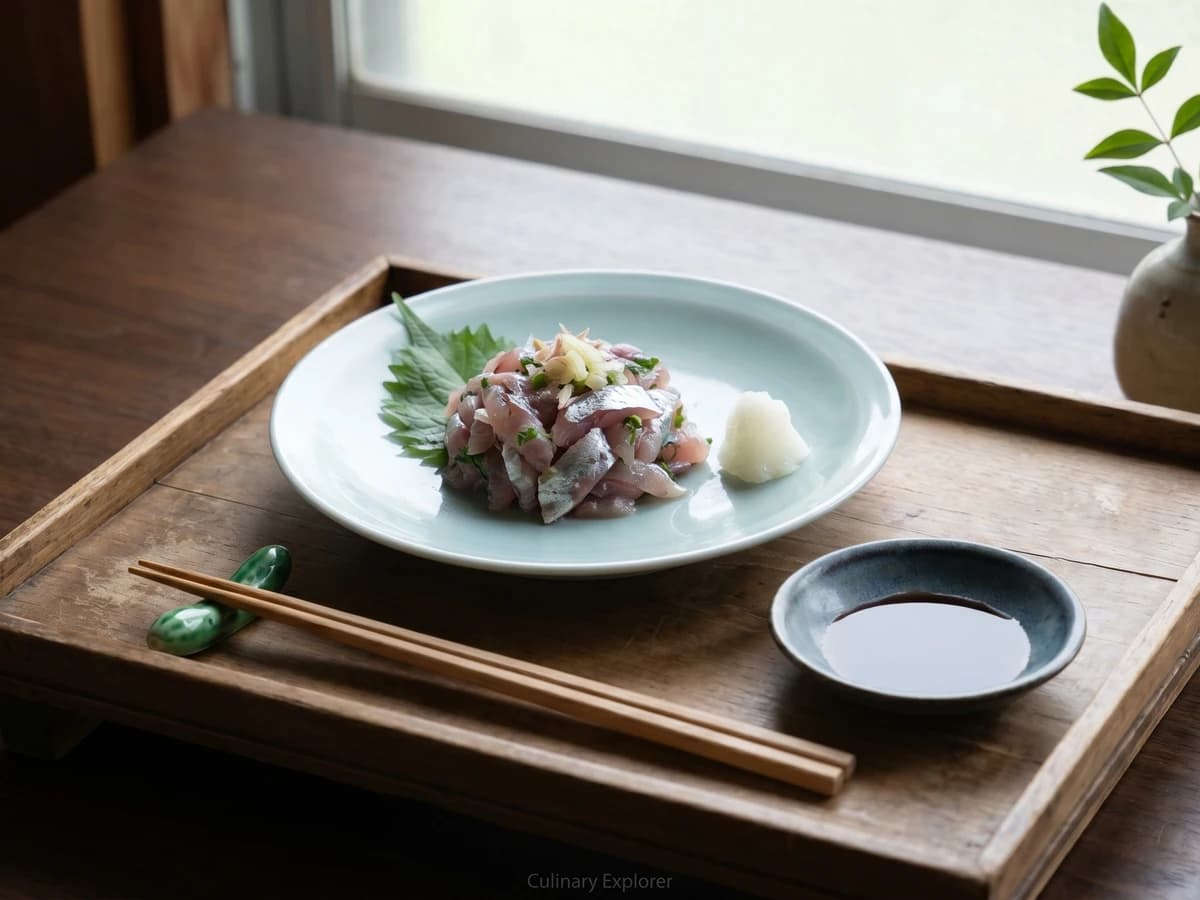
Summer horse mackerel, chopped just enough to catch ginger and scallion, becomes a cool, clean main dish with rice. The secret is fresh fish and a knife that does not bruise it.
Chef Takumi
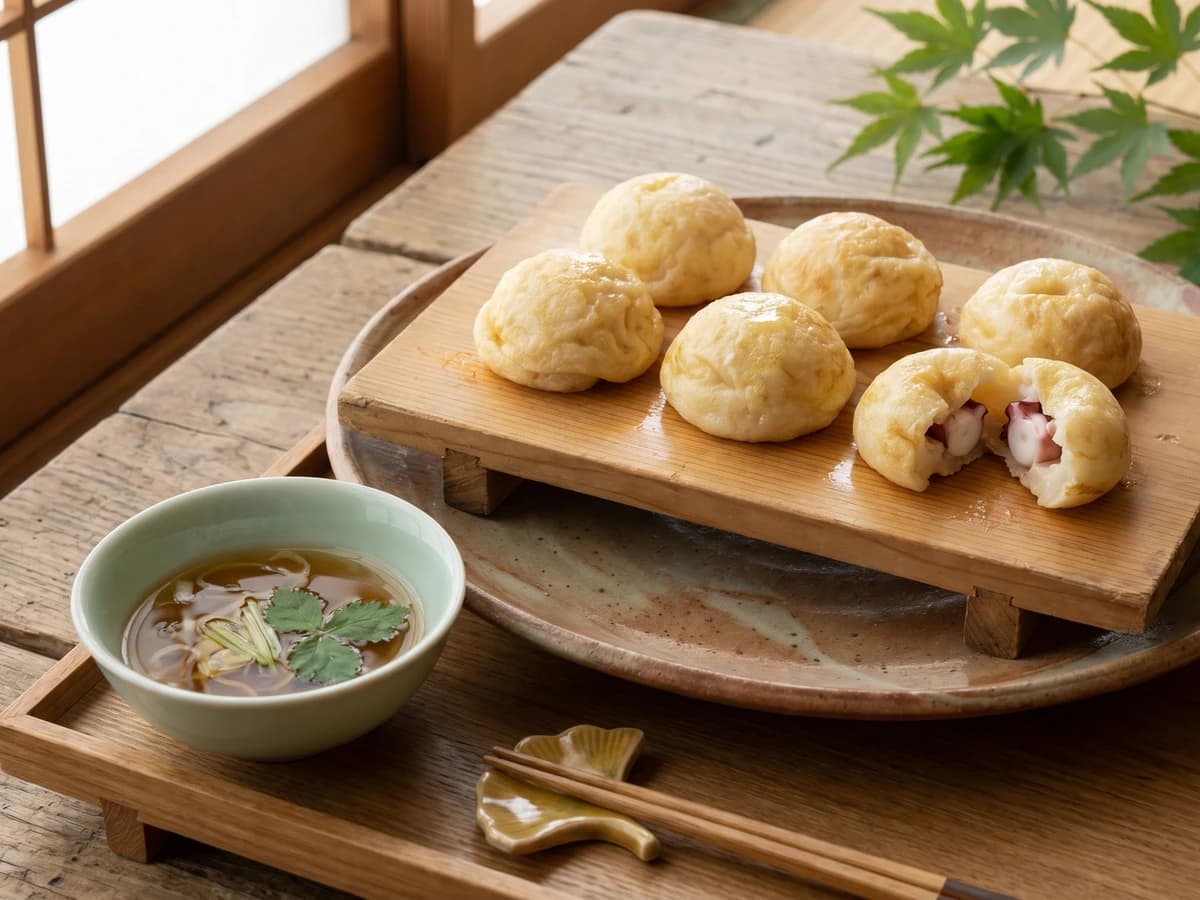
Akashi-yaki is not sauced takoyaki. It is egg-rich batter, tender octopus, and clear dashi, cooked pale and soft so each ball can be dipped like a small custard dumpling.

Chef Takumi
A whole anago looks like a test of nerve. It is mostly good sourcing, a dry skin, cold batter, and oil hot enough to leave the eel sweet under its lace.