
Chef Lupita
Bomba Veracruzana
Veracruz's sweet concha split open and filled with refried black beans, epazote, manteca de cerdo, and queso fresco, the quick jarocho answer to a torta.
A cooking platform built around craft, culture, and the stories behind what we eat.
Created by
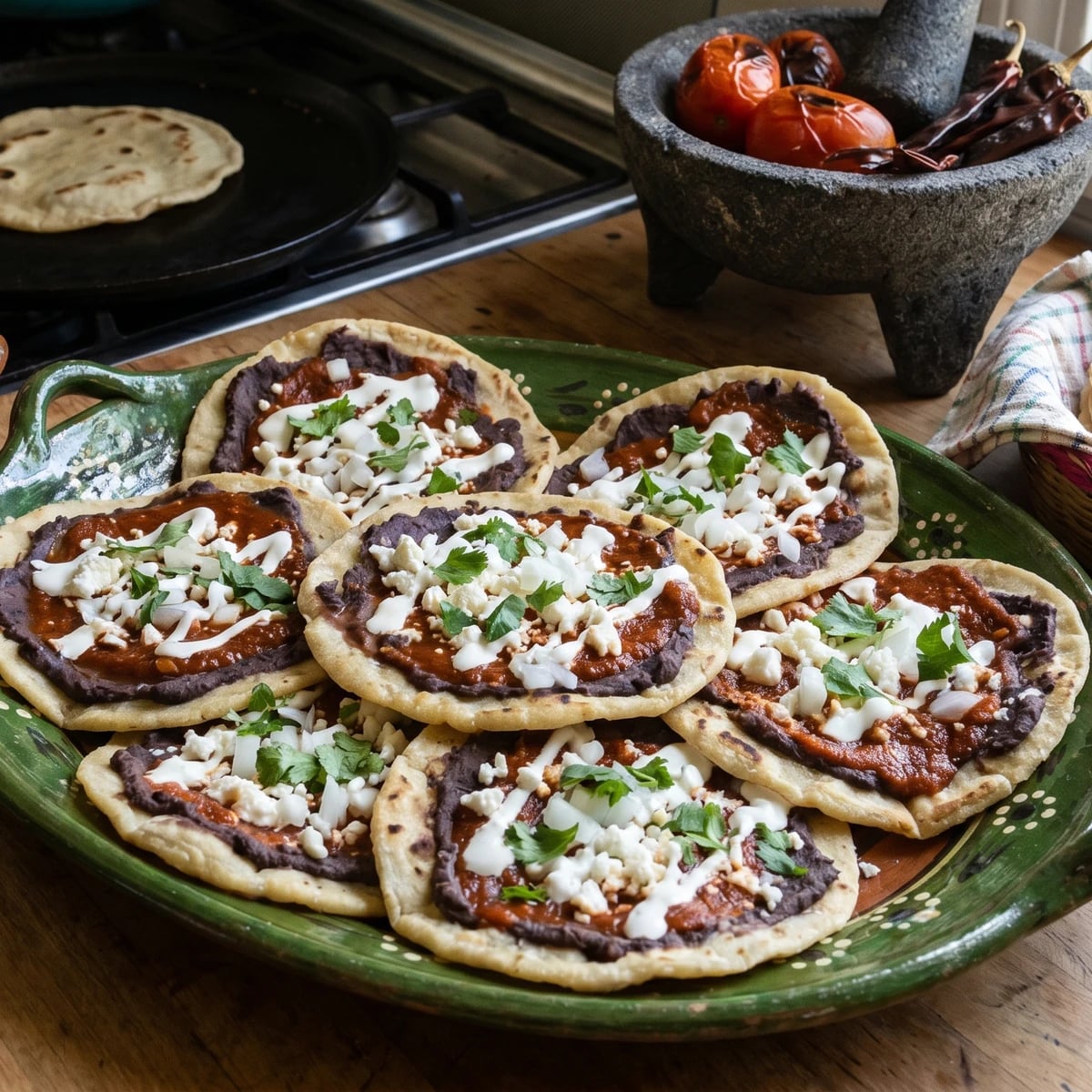
Veracruz's comal-built masa flatbreads, pinched while hot so the salsa and frijol negro stay where they belong. Cheap, filling, regional, and not trying to be anyone's taco.
Veracruz, especially the coastal Sotavento from the port toward Tlacotalpan and Alvarado, knows this antojito by the work of the hand: masa pressed thick, cooked on the comal, then pinched at the edge while it is still hot. In many towns they call the smaller sauced version picada. This memela is the jarocho cousin, broader, sturdier, made to carry frijol negro, salsa roja, queso fresco, and a little manteca de cerdo without collapsing.
The corn matters first. If you can find masa made from Tuxpeño corn, the heirloom landrace of northern Veracruz, use it. If not, buy fresh masa from a tortilleria that nixtamalizes its own corn. Masa harina works for a weeknight, yes, but know the compromise. The comal will tell you the truth. Fresh masa smells like wet corn and lime. Powder from a bag needs help.
I learned this version from a woman near the Mercado Unidad Veracruzana who pinched the rims with fingers toughened by fifty years of comal work. She used black beans cooked with epazote, not pinto beans, not refried beans from a can. Then salsa roja made with jitomate, chile guajillo, and a little chile de arbol. Veracruz is not one flavor. It is port food, corn food, seafood, mountain coffee, cañaverales, and black beans scented with epazote. Cada estado, su propia cocina.
No me vengas con atajos. The rim is not decoration. It holds the salsa. The manteca is not optional if you want the surface to taste like the comal at the market. La cocina no es decoración, es trabajo. But this is weeknight work, honest work, the kind that feeds a table with very little money.
Veracruz has been Mexico's Atlantic door since 1519, which is why its cuisine carries both deep corn traditions and port influences from Spain, the Caribbean, and Africa. Memelas and picadas belong to the older Mesoamerican family of comal-cooked masa antojitos, related to sopes, pellizcadas, and gorditas, with regional names shifting from town to town. In Veracruz, black beans with epazote became a defining daily food, while wheat breads such as canilla, pambazo, hojaldra veracruzana, and pan de Xico entered through port baking traditions rather than replacing the corn comal.
Quantity
2 cups masa harina or 1 1/2 pounds fresh masa
preferably Tuxpeño-style masa if available
Quantity
1 1/3 cups, plus more as needed
for masa harina only
Quantity
1/2 teaspoon
for the masa
Quantity
2 tablespoons, plus more for brushing
softened
Quantity
2 cups
with some of their broth
Quantity
1 tablespoon
for the beans
Quantity
1/4 small
finely chopped
Quantity
1 small
finely chopped
Quantity
1 sprig
Quantity
1/2 teaspoon, plus more to taste
Quantity
4
ripe
Quantity
2
stemmed and seeded
Quantity
2
stemmed
Quantity
1/4 medium
for the salsa
Quantity
1
unpeeled, for the salsa
Quantity
1 tablespoon
for frying the salsa
Quantity
1/2 cup
crumbled
Quantity
1/4 cup
finely chopped, for serving
Quantity
for serving
Quantity
for serving
| Ingredient | Quantity |
|---|---|
| masa harina or fresh nixtamalized corn masapreferably Tuxpeño-style masa if available | 2 cups masa harina or 1 1/2 pounds fresh masa |
| warm waterfor masa harina only | 1 1/3 cups, plus more as needed |
| fine sea saltfor the masa | 1/2 teaspoon |
| manteca de cerdosoftened | 2 tablespoons, plus more for brushing |
| cooked black beanswith some of their broth | 2 cups |
| manteca de cerdofor the beans | 1 tablespoon |
| white onionfinely chopped | 1/4 small |
| garlic clovefinely chopped | 1 small |
| fresh epazote | 1 sprig |
| kosher salt | 1/2 teaspoon, plus more to taste |
| Roma tomatoesripe | 4 |
| dried chile guajillostemmed and seeded | 2 |
| dried chile de arbolstemmed | 2 |
| white onionfor the salsa | 1/4 medium |
| garlic cloveunpeeled, for the salsa | 1 |
| manteca de cerdofor frying the salsa | 1 tablespoon |
| queso frescocrumbled | 1/2 cup |
| white onionfinely chopped, for serving | 1/4 cup |
| Mexican crema (optional) | for serving |
| fresh cilantro leaves (optional) | for serving |
If using masa harina, mix it with the warm water and salt until it forms a soft dough. Knead in the softened manteca de cerdo. Cover and rest for 20 minutes so the corn hydrates properly. If using fresh masa from a tortilleria, knead in the salt and manteca, adding a spoonful of warm water only if it feels dry. The masa should feel like soft clay, not sticky paste and not cracking at the edges.
Melt 1 tablespoon manteca in a small clay cazuela or heavy skillet over medium heat. Add the chopped onion and garlic and cook until sweet-smelling, about 3 minutes. Add the black beans, a splash of bean broth, epazote, and salt. Mash them until thick but still a little loose. They should spread across the memela without running off the edge. Remove the epazote stem before serving.
Heat a dry comal over medium. Toast the guajillo chiles for about 20 seconds per side, just until fragrant and flexible. Toast the chile de arbol for only a few seconds. Do not blacken them. Burned chile turns the salsa bitter and then you are cooking from behind.
On the same comal, roast the tomatoes, onion, and unpeeled garlic until the tomatoes blister and collapse, the onion has dark spots, and the garlic softens in its skin. Soak the toasted chiles in hot water for 10 minutes, then drain. Peel the garlic. Blend the tomatoes, onion, garlic, guajillo, chile de arbol, and 1/2 teaspoon salt until mostly smooth.
Melt 1 tablespoon manteca in a small saucepan over medium heat. Pour in the blended salsa carefully. It will sputter. Cook 6 to 8 minutes, stirring, until the red color deepens and the salsa thickens enough to cling to a spoon. This is not decoration. Frying wakes up the chile and tomato. Así se hace y punto.
Divide the masa into 8 balls. Press each one between plastic in a tortilla press to about 1/4 inch thick and 5 inches wide, thicker than a tortilla. If you do not have a press, pat them by hand. The edges can be uneven. A market comal is not a factory.
Cook the masa rounds on a hot dry comal for about 1 minute per side, then flip again and cook until pale brown spots appear and the surface looks dry. While each memela is still hot, pinch up the rim with your fingers to make a shallow border. Work quickly. That little wall is what holds the beans and salsa. Use a folded towel if your fingertips are tender.
Brush each pinched memela lightly with melted manteca de cerdo and return it to the comal for 30 to 45 seconds. The surface should take on a faint sheen and the bottom should crisp in spots while the inside stays tender. La manteca es el sabor.
Spread each memela with warm black beans. Spoon salsa roja over the top, letting the pinched rim catch it. Finish with crumbled queso fresco and chopped white onion. Add a thin line of Mexican crema and a few cilantro leaves if your table likes them. Serve immediately from the comal, because masa waits for nobody.
1 serving (about 300g)
Culinary guides, cultural storytelling, and the editorial depth that makes cooking meaningful.
Discover Culinary Explorer
Chef Lupita
Veracruz's sweet concha split open and filled with refried black beans, epazote, manteca de cerdo, and queso fresco, the quick jarocho answer to a torta.

Chef Lupita
Veracruz port bread baked long and lean, with a crisp crust, pale open crumb, and enough strength to survive a dunk in café lechero without falling apart.

Chef Lupita
Veracruz's sweet cemita is a piloncillo-darkened wheat roll scented with anise and nuts, born from cane country and the old bread ovens of the Gulf coast.

Chef Lupita
Central Veracruz's rhombus-shaped pan dulce, sweetened with piloncillo from the cañaverales, scented with anise and clove, and baked the way old panaderías kept port wheat traditions alive.