
Chef Lupita
Acambaritas de Acámbaro
Guanajuato's daily bread from Acámbaro, a small glazed roll built on pata, enriched with manteca de cerdo, and baked until the top shines lightly for merienda.
A cooking platform built around craft, culture, and the stories behind what we eat.
Created by
Veracruz port bread baked long and lean, with a crisp crust, pale open crumb, and enough strength to survive a dunk in café lechero without falling apart.
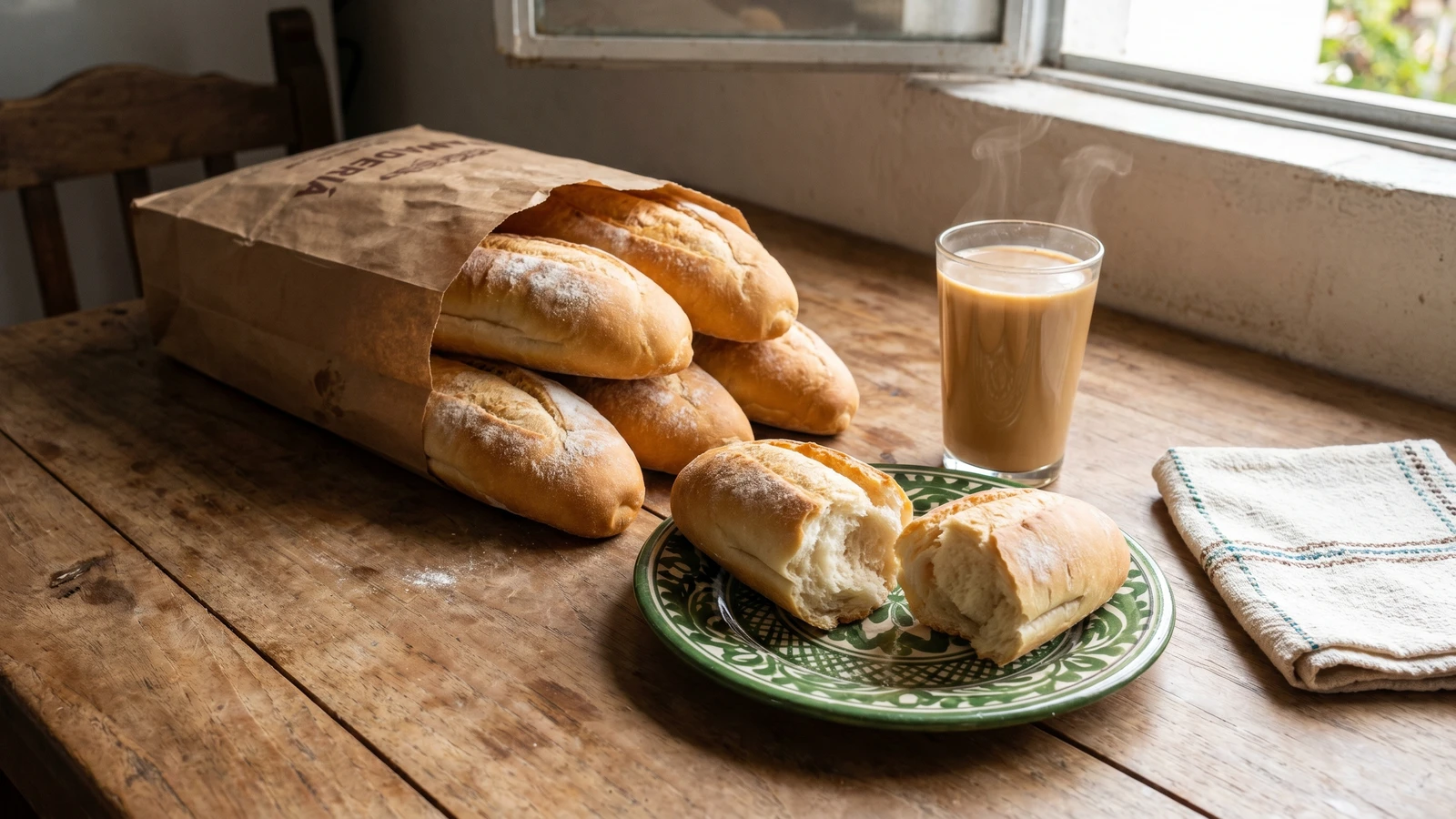
Veracruz, the port, is where this bread belongs. Not the mountains first, not the north, not the capital. The canilla lives in the mornings of the puerto jarocho, in paper bags carried from the panadería, beside a tall glass of café lechero at La Parroquia, close enough to the muelle that you can smell salt and coffee in the same hour.
This is wheat bread from Mexico's first Atlantic door. The flour came through the port, the habit of crusty daily rolls settled into Veracruz kitchens, and the piloncillo comes from the sugarcane country that surrounds the state. One tablespoon is enough. Canilla is not pan dulce. It should be long, lean, lightly crisp, with a pale crumb that tears clean and drinks coffee without turning to paste.
I learned this shape from panaderas near Mercado Hidalgo who worked before sunrise, hands moving faster than conversation. They did not treat bread as romance. They weighed, rolled, slashed, baked, and packed. La cocina no es decoración, es trabajo. The lesson was plain: keep the dough alive, keep the shape narrow, keep the crust honest.
No me vengas con atajos. If you under-knead, the loaf tears. If you skip the hot oven, the crust sulks. If you add too much fat, you make soft dinner bread, not canilla Veracruzana. Recetas probadas y garantizadas, but only if you respect the bread.
Veracruz was founded as Villa Rica de la Vera Cruz in 1519 and became Mexico's first Atlantic door, where wheat, coffee, sugar, and European bread habits entered and adapted to local daily life. Canilla belongs to the Veracruz family of wheat breads that also includes hojaldra veracruzana, pambazo, pan de Xico, and the sweet Veracruz cemita, each one separate from namesakes in Puebla or elsewhere. The Gran Café de la Parroquia traces its origins to 1808, and the café lechero ritual helped fix crusty rolls like canilla into the public breakfast culture of the port.
Quantity
500 grams (4 cups)
plus more for dusting
Quantity
320 milliliters (1 1/3 cups)
95F to 100F
Quantity
2 1/4 teaspoons
Quantity
1 tablespoon
Quantity
2 teaspoons
Quantity
1 tablespoon
softened
Quantity
1 teaspoon
for greasing the bowl
Quantity
1 cup
for the oven pan
| Ingredient | Quantity |
|---|---|
| unbleached bread flourplus more for dusting | 500 grams (4 cups) |
| warm water95F to 100F | 320 milliliters (1 1/3 cups) |
| active dry yeast | 2 1/4 teaspoons |
| finely grated piloncillo | 1 tablespoon |
| fine sea salt | 2 teaspoons |
| manteca de cerdosoftened | 1 tablespoon |
| manteca de cerdofor greasing the bowl | 1 teaspoon |
| very hot waterfor the oven pan | 1 cup |
Stir the warm water, grated piloncillo, and yeast together in a large bowl. Let it stand for 8 to 10 minutes, until the surface looks foamy and smells faintly sweet. The piloncillo is not there to make a sweet bread. It wakes the yeast and gives the crust a quiet cane-sugar color, the kind you taste in Veracruz because the cañaverales are not decoration on a map.
Add the flour and salt to the bowl. Mix with your hand or a wooden spoon until no dry patches remain, then work in the tablespoon of manteca de cerdo. The dough should feel slightly tacky, not wet, and not stiff like pasta dough. La manteca es el sabor, but here it is used with discipline. Too much softens the crust, and canilla needs to crackle.
Turn the dough onto a lightly floured table and knead for 8 to 10 minutes. Push, fold, turn. Do not bury it in flour. The dough is ready when it feels smooth, stretches without tearing right away, and springs back when you press it with one finger. If using a stand mixer, knead on medium-low for 6 minutes. A machine is allowed. Laziness is not.
Grease the bowl with the teaspoon of manteca. Set the dough inside, turn it once to coat, cover with a cotton servilleta, and let it rise in a warm kitchen for 1 to 1 1/4 hours, until doubled. It should look swollen and alive. If your kitchen is cool, give it time. Bread obeys temperature, not your impatience.
Turn the dough out and divide it into 10 pieces, about 85 grams each. Cover them and let them rest for 10 minutes so the gluten relaxes. Flatten one piece into a small rectangle, roll it tightly from the long side, pinch the seam closed, then roll it under your palms into a long narrow loaf, 7 to 8 inches, with tapered ends. Canilla means shinbone. The shape tells you the name. Set each loaf seam side down on a parchment-lined baking sheet.
Cover the shaped canillas with the servilleta and let them rise for 35 to 45 minutes, until puffy but still holding their long shape. While they rise, heat the oven to 450F with a baking stone or heavy sheet pan on the middle rack and an empty metal pan on the lower rack. Give the oven at least 30 minutes. A weak oven gives you pale bread with no authority.
Slash each canilla once down the length with a sharp knife or lame, about 1/4 inch deep, holding the blade at a slight angle. Slide the loaves onto the hot stone or hot sheet pan. Pour the cup of very hot water into the lower metal pan and close the oven immediately. Bake for 10 minutes at 450F, then lower the heat to 425F and bake 12 to 15 minutes more, until the crust is pale gold, crisp, and hollow-sounding when tapped underneath.
Move the canillas to a rack and let them cool at least 20 minutes. Do not trap them in plastic while warm or you will ruin the crust you worked for. Serve them in a paper bag beside café lechero, with frijoles negros, or split for a small torta. This is Veracruz bread, not a French baguette in costume. Cada estado, su propia cocina.
1 serving (about 76g)
Culinary guides, cultural storytelling, and the editorial depth that makes cooking meaningful.
Discover Culinary ExplorerChef Lupita
Guanajuato's daily bread from Acámbaro, a small glazed roll built on pata, enriched with manteca de cerdo, and baked until the top shines lightly for merienda.

Chef Lupita
Michoacan's Tinguindin aguacatas are flat, leaf-scored sweet breads made with harina de trigo, piloncillo, anise, and manteca de cerdo, shaped by hand for the wood oven.

Chef Lupita
From Ajijic on Lake Chapala, Pan Tachihual is a lightly sweet wedding loaf built with harina de trigo, harina de maiz, piloncillo, manteca, anise, and the old Guadalajara pata.

Chef Lupita
Comitán's pan de yema shaped into little pigs, birds, and rabbits, a Chiapas bakery bread rich with egg yolks, manteca de cerdo, and anís, baked golden on hoja de plátano.