
Chef Lupita
Acambaritas de Acámbaro
Guanajuato's daily bread from Acámbaro, a small glazed roll built on pata, enriched with manteca de cerdo, and baked until the top shines lightly for merienda.
A cooking platform built around craft, culture, and the stories behind what we eat.
Created by
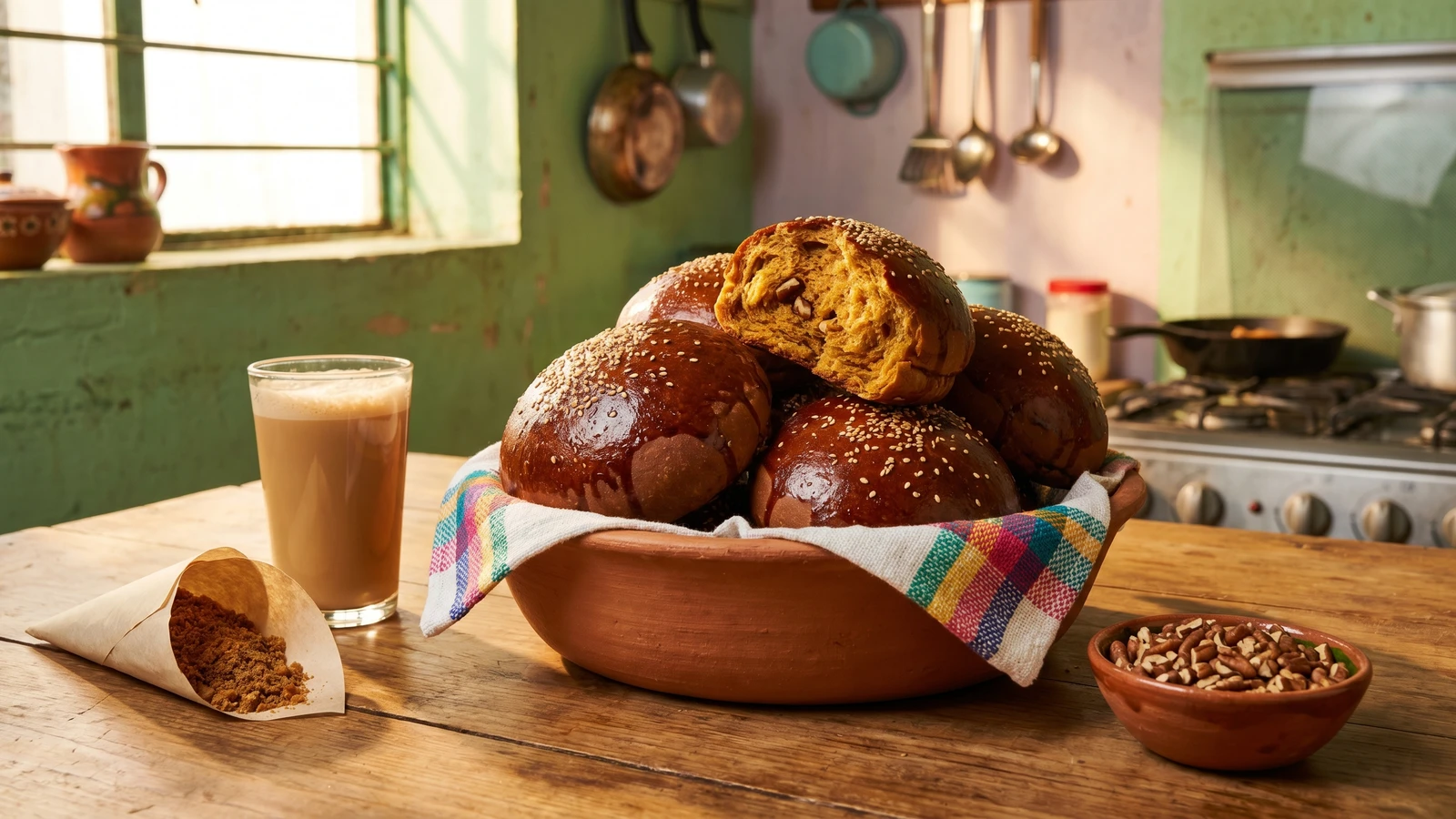
Veracruz's sweet cemita is a piloncillo-darkened wheat roll scented with anise and nuts, born from cane country and the old bread ovens of the Gulf coast.
Veracruz, from the port inland toward Xico, Coatepec, and the Huasteca, knows wheat bread because the port was Mexico's first Atlantic door. This cemita is not Puebla's sesame sandwich roll. No milanesa. No quesillo. No papalo. This is a sweet pan de panela, built from piloncillo from the cañaverales, anise, nuts, and a dough enriched with manteca de cerdo.
Panela here means unrefined cane sugar, piloncillo, not cheese. I say it because someone will make that mistake and then blame the recipe. The piloncillo gives the crumb its brown color and molasses smell. The anise cuts through the sweetness. The nuts give the bread weight, the kind you want with café lechero in the morning or with a clay jarro of chocolate at night.
I learned a version like this from a woman near Xico who baked for her family in a wood oven once a week. She did not measure the anise with spoons. She rubbed it between her palms, smelled it, and said, "ya está." You will measure because you are learning. Later, your hands will know. Saber cocinar es saber vivir.
Do not confuse Veracruz with Puebla just because both say cemita. Cada estado, su propia cocina. This is Gulf bread, cane bread, home bread, the kind that sits under a cotton servilleta on the table and disappears slice by slice.
Wheat bread entered Veracruz through the port founded by Hernán Cortés in 1519, when Spanish grain, milling habits, and bakery techniques met local sugarcane production along the Gulf coast. Veracruz developed its own bread vocabulary, including canilla, pambazo, hojaldra, pan de Xico, and sweet cemitas made with piloncillo or panela from regional cañaverales. The Veracruz cemita should not be confused with Puebla's cemita poblana, a sesame-topped roll used for sandwiches, or with Veracruz hojaldra, a sweet Day-of-the-Dead bread with ajonjolí rather than Puebla's puff pastry.
Quantity
1 cup
Quantity
1 cup
Quantity
1 tablespoon
Quantity
4 cups, plus more for shaping
Quantity
2 1/4 teaspoons
Quantity
1 teaspoon
Quantity
2
room temperature
Quantity
1/2 cup
softened
Quantity
3/4 cup
chopped
Quantity
1 tablespoon
for topping
Quantity
1 egg plus 1 tablespoon milk
for brushing
| Ingredient | Quantity |
|---|---|
| grated piloncillo or panela | 1 cup |
| water | 1 cup |
| anise seed | 1 tablespoon |
| bread flour | 4 cups, plus more for shaping |
| active dry yeast | 2 1/4 teaspoons |
| kosher salt | 1 teaspoon |
| large eggsroom temperature | 2 |
| manteca de cerdosoftened | 1/2 cup |
| pecans or walnutschopped | 3/4 cup |
| sesame seedsfor topping | 1 tablespoon |
| egg beaten with milkfor brushing | 1 egg plus 1 tablespoon milk |
Put the grated piloncillo or panela, water, and anise seed in a small saucepan. Warm over medium heat until the sugar dissolves and the liquid smells like cane molasses and licorice. Do not boil it hard. You want syrup, not candy. Let it cool until warm to the touch, about 100F to 110F, so it does not kill the yeast.
In a large bowl, mix the flour, yeast, and salt. Add the warm panela syrup and the eggs. Stir until a rough dough forms. It will look sticky and uneven at first. That is fine. Wheat dough needs time before it shows you what it is.
Knead the dough for 5 minutes, then add the softened manteca de cerdo a spoonful at a time. Keep kneading until the dough becomes smooth, elastic, and lightly tacky, 8 to 10 minutes by hand or 6 to 7 minutes in a stand mixer. La manteca es el sabor. Butter makes a different bread. Oil makes a poorer one.
Flatten the dough slightly and scatter the chopped pecans or walnuts over it. Fold and knead just until the nuts are evenly distributed. Do not beat the dough to death now. The nuts should stay in pieces, not disappear into the crumb.
Place the dough in a lightly greased bowl and cover with a clean cotton servilleta. Let it rise in a warm place until doubled, 1 1/2 to 2 hours. The dough should feel airy when you press it with one finger, and the indentation should come back slowly. If your kitchen is cool, wait. Bread follows temperature, not your impatience.
Turn the dough onto a lightly floured table and divide it into 10 equal pieces. Shape each piece into a tight round, pulling the surface smooth and tucking the seam underneath. Set the rounds on a parchment-lined baking sheet with space between them. Veracruz cemitas should be generous, not tiny bakery decorations.
Cover the shaped cemitas and let them rise until puffy, 35 to 45 minutes. Heat the oven to 375F. Brush each cemita with the egg and milk mixture, then sprinkle lightly with sesame seeds. The glaze gives the crust its café-colored shine, and the ajonjolí tells the eye this is pan dulce, not a sandwich bun.
Bake for 22 to 25 minutes, rotating the pan once, until the cemitas are deep golden brown and sound hollow when tapped on the bottom. The crust should be glossy and the kitchen should smell of piloncillo, anise, toasted nuts, and wheat. Cool on a rack for at least 20 minutes before tearing one open. Hot bread lies about its texture.
Serve warm or at room temperature with café lechero, hot chocolate, or plain milk. Keep the rest under a cotton servilleta so the crust softens slightly without sweating. Recetas probadas y garantizadas.
1 serving (about 115g)
Culinary guides, cultural storytelling, and the editorial depth that makes cooking meaningful.
Discover Culinary ExplorerChef Lupita
Guanajuato's daily bread from Acámbaro, a small glazed roll built on pata, enriched with manteca de cerdo, and baked until the top shines lightly for merienda.

Chef Lupita
Michoacan's Tinguindin aguacatas are flat, leaf-scored sweet breads made with harina de trigo, piloncillo, anise, and manteca de cerdo, shaped by hand for the wood oven.

Chef Lupita
From Ajijic on Lake Chapala, Pan Tachihual is a lightly sweet wedding loaf built with harina de trigo, harina de maiz, piloncillo, manteca, anise, and the old Guadalajara pata.

Chef Lupita
Comitán's pan de yema shaped into little pigs, birds, and rabbits, a Chiapas bakery bread rich with egg yolks, manteca de cerdo, and anís, baked golden on hoja de plátano.